US Open Tennis Locations by Year: Newport, Philadelphia, Forest Hills and Queens
Explore the US Open's changing venues with event-specific dates, including Newport, Philadelphia, Forest Hills, Longwood and the modern Flushing Meadows home.
The main venue timeline needs an event label
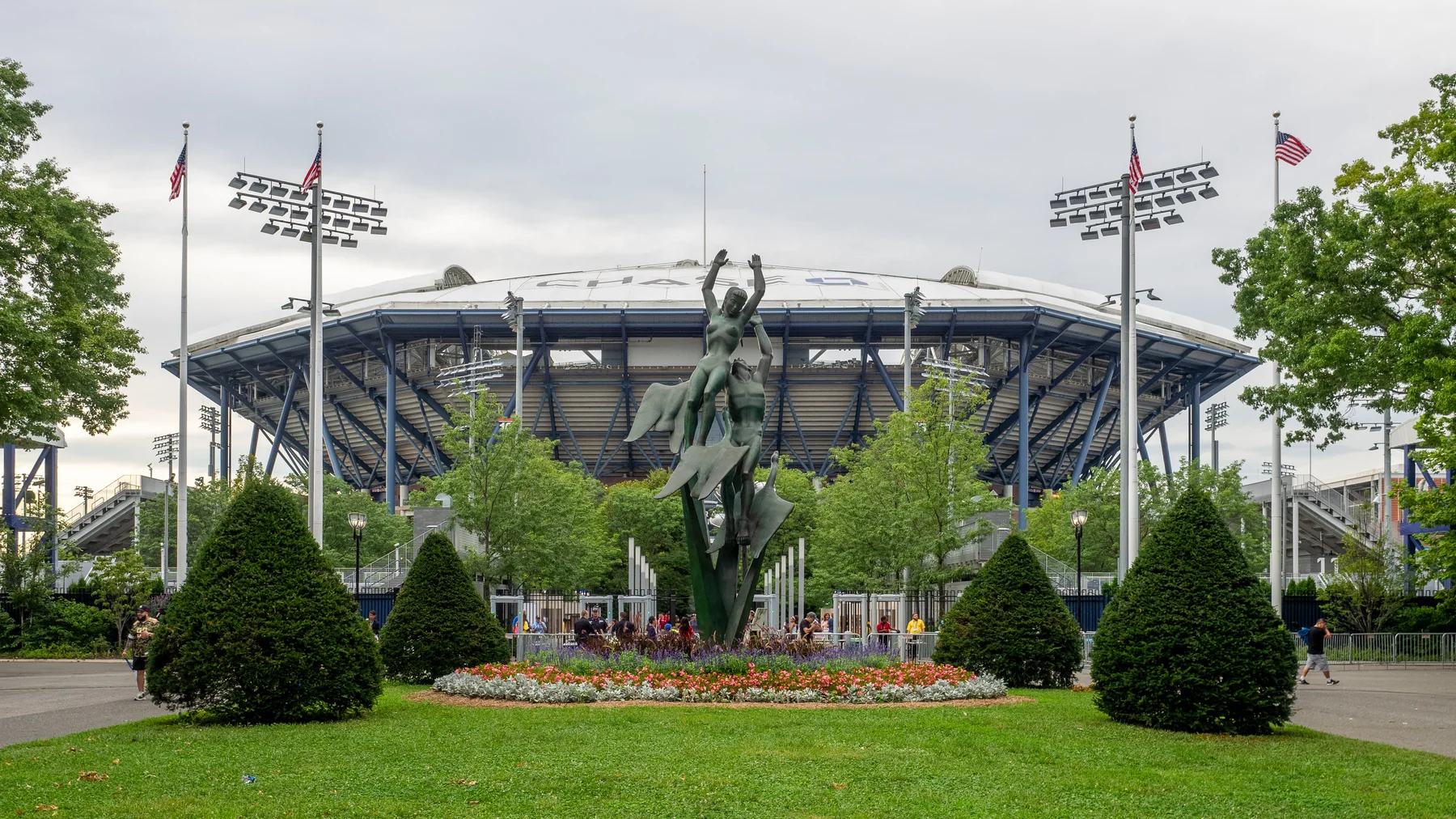
The US Open has been played at Flushing Meadows in Queens since 1978, but its earlier history includes Newport, Philadelphia, Forest Hills and several separate doubles venues. A single list of cities can conceal an important detail: the men's, women's and doubles championships did not always share one location.
The table below follows the men's singles championship, the route commonly used in short tournament histories. It covers the U.S. National Championships and the later US Open through the completed 2026 event. Read the women's and doubles sections before applying these dates to another discipline.
| Men's singles years | Venue | Location |
|---|---|---|
| 1881–1914 | Newport Casino | Newport, Rhode Island |
| 1915–1920 | West Side Tennis Club | Forest Hills, Queens, New York |
| 1921–1923 | Germantown Cricket Club | Philadelphia, Pennsylvania |
| 1924–1977 | West Side Tennis Club | Forest Hills, Queens, New York |
| 1978–2026 | USTA National Tennis Center, named for Billie Jean King in 2006 | Flushing Meadows, Queens, New York |
The US Open's official account of the 1978 move provides that main sequence. The women's championship creates an immediate exception to a simplified reading: Philadelphia Cricket Club records that its event moved to Forest Hills in 1921, just as the men's singles championship began its three-year stay at a different Philadelphia club.
Keep three questions separate when reading an old match report: which event was contested, at which club, and on what surface? A change from grass to clay did not necessarily involve a move to another city. A different stadium name did not necessarily mean the tournament left its grounds. Those distinctions make historical photographs, results and anniversary articles much easier to place correctly.
If your purpose is attending today's tournament rather than tracing its past, use our Flushing Meadows location and transport guide. A historic club address is an interesting destination in its own right, but it is not the address attached to a modern US Open session ticket.
Newport hosted the first men's championships
The tournament's starting point was the Newport Casino in Rhode Island. The International Tennis Hall of Fame's club history dates the social club's opening to July 26, 1880, and the first U.S. National Men's Singles Championship to August 31, 1881. The inaugural field contained 25 players. Richard “Dick” Sears became the first champion and won the first seven editions.
Here, “Casino” describes the historic social-club setting; it should not lead a modern reader to imagine a tennis court attached to a gambling resort. The grass courts and surrounding architecture belonged to the early culture of American lawn tennis. Men's singles remained at Newport through 1914, producing a 34-edition opening chapter before the move to Forest Hills in 1915.
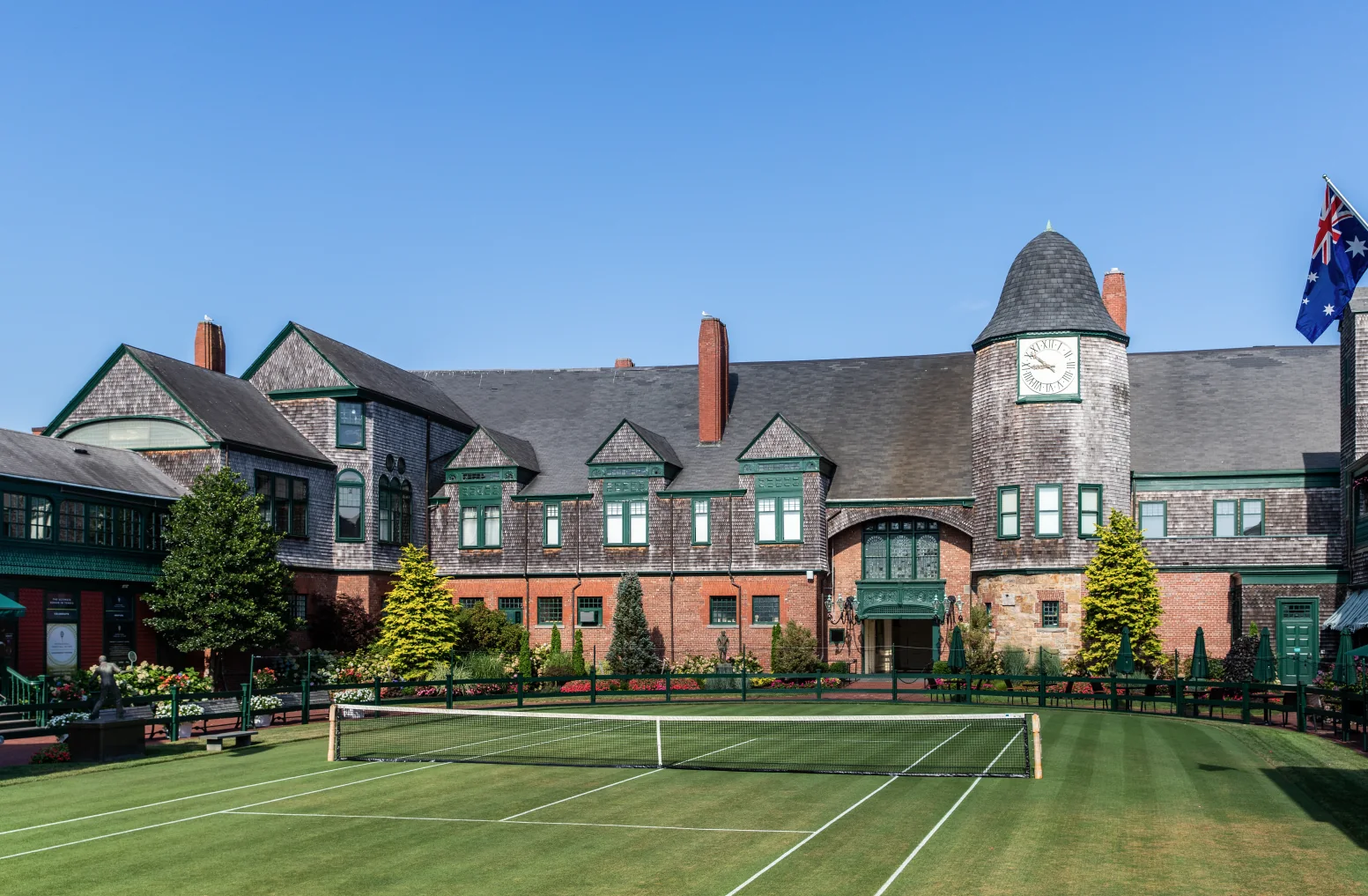
Newport's tennis story continued after the national championship departed. The Hall of Fame's tournament history identifies the Casino Invitational from 1915 to 1967. That continuity explains why photographs of later stars playing in Newport do not mean the US Open returned there. A venue can host important tennis across many decades while the particular championship you are tracking has moved elsewhere.
For historical lookup, attach the competition name to the year. A Newport men's singles champion from 1910 belongs to the national-championship sequence; a later Newport tournament winner may belong to a different event. Our US Open winners guide helps distinguish the championship record from a venue's broader tournament history.
The same care applies to the women's competition. Newport is the origin of the men's national championship, but it is not a complete starting point for every event that eventually formed the modern US Open. Philadelphia supplies a separate and essential part of that story.
Women's championships followed a Philadelphia-to-Queens route
The women's national championship began at Philadelphia Cricket Club in 1887. The club's historical timeline also identifies the first women's doubles championship there in 1889 and the first mixed doubles championship in 1892. Those beginnings belonged to Philadelphia, even while the men's singles championship was building its early history in Newport.
According to the club's historian's account, it hosted the women's national championship from 1887 until the move to Forest Hills in 1921. Expressed as completed editions at Philadelphia Cricket Club, the range is 1887–1920. The distinction between “until 1921” and “through 1921” matters when assigning an individual year's tournament to a city.
This was not simply the women's event following the men from one stop to the next. In the very year the women's singles event arrived at Forest Hills, the men's singles championship went to another Philadelphia club. A single timeline labeled only “US Open location” can therefore give a misleading answer for 1921, 1922 or 1923.
Philadelphia Cricket Club was not Germantown Cricket Club
The similar city and club descriptions make these venues easy to confuse. Philadelphia Cricket Club and Germantown Cricket Club are separate institutions. Germantown's role in this history is the men's singles championship of 1921–1923; Global Philadelphia's heritage profile connects those three editions with Bill Tilden's titles on his home club's courts.
| Event in 1921 | Championship venue | What had changed |
|---|---|---|
| Men's singles | Germantown Cricket Club, Philadelphia | Moved from Forest Hills for a three-year stay |
| Women's singles | West Side Tennis Club, Forest Hills | Moved from Philadelphia Cricket Club |
That comparison supplies a useful check on historical captions. If a source describes “the Philadelphia championships” without naming the event and club, look for the original draw or a more specific institutional history before assigning a venue. Women's singles, women's doubles and mixed doubles also need their own records when studying later years. Their shared Philadelphia beginnings do not mean all three disciplines followed an identical route for the rest of the century.
Doubles created a wider map of championship venues
Following doubles expands the championship's geography well beyond the familiar Newport–Forest Hills–Flushing Meadows sequence. It also changes how a historical venue list should be read: a club might stage a national doubles championship without hosting the men's singles tournament. The event label is part of the answer, rather than an optional footnote.
Early stops in New Jersey, Staten Island and Chicago
The Grand Slam History venue reference records three short men's doubles stops outside Newport during the nineteenth century:
| Year | Men's doubles venue | Location |
|---|---|---|
| 1887 | Orange Lawn Tennis Club | Mountain Station, New Jersey |
| 1888–1889 | Staten Island Cricket Club | Staten Island, New York |
| 1893 | St. George Cricket Club | Chicago, Illinois |
These entries explain why a thorough history includes New Jersey and Chicago even though neither appears in the men's singles table above. They do not establish that the whole championship traveled to those places. A researcher following one doubles partnership may need a different map from someone following that year's singles champion.
Historic club names can also survive a change of address or facilities. For an old tournament, the relevant question is where that edition was played, not simply where a club with the same name can be found today. This matters particularly when using a present-day map to illustrate a nineteenth-century sporting event.
Longwood and the exceptions to its long run
Longwood Cricket Club in Chestnut Hill, Massachusetts, supplies the longest additional chapter. The event-specific ranges are:
| Competition at Longwood | Years |
|---|---|
| Men's doubles | 1917–1933; 1935–1941; 1946–1967 |
| Women's doubles | 1935–1941; 1946–1967 |
| Mixed doubles | 1935–1941 |
The gaps are meaningful: Germantown staged men's and women's doubles in 1934, while Forest Hills brought the five principal singles and doubles events together in 1942–1945. Describing Longwood as the doubles venue “from 1917 to 1967” without the exceptions obscures those editions.
Longwood's own account also places its national doubles history alongside Davis Cup and U.S. Pro tennis. These were separate competitions. Arthur Ashe's 1968 National Amateur Championship victory at Longwood likewise belongs to a different event from his US Open triumph at Forest Hills that year.
For a precise year-by-year lookup, begin with the discipline, then identify the championship, and only then assign the venue. That method lets a Longwood doubles photograph, a Forest Hills singles result and an account of the same tennis season coexist without forcing them into an inaccurate single-location story.
Forest Hills linked the amateur era to the first US Opens
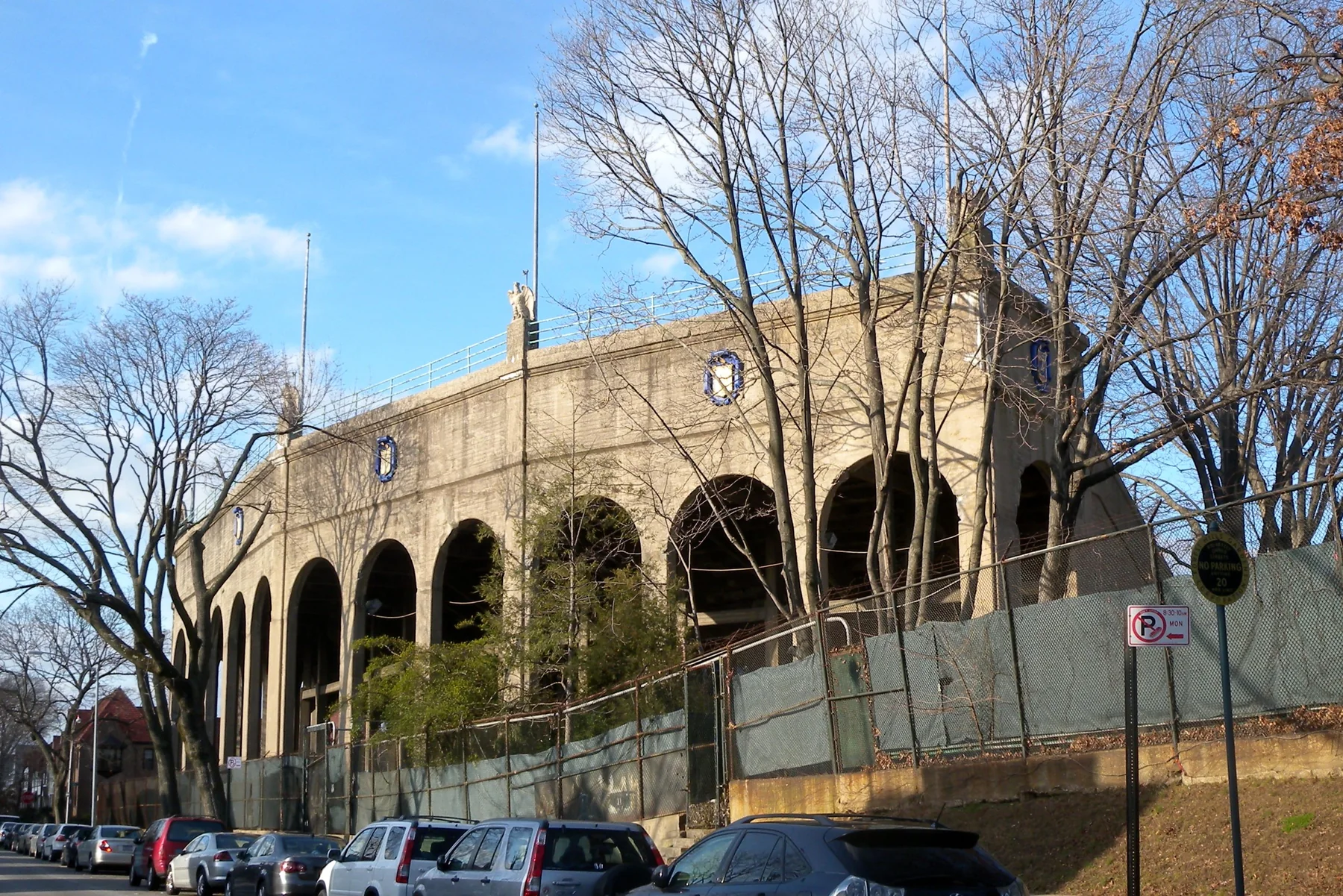
Forest Hills connects two eras of the championship. The West Side Tennis Club first hosted men's singles in 1915, and its club timeline dates the stadium to 1923. When professionals and amateurs began competing together in 1968, the tournament stayed at Forest Hills. The change to an “Open” championship did not immediately produce a new address.
The first ten US Opens, 1968 through 1977, were held there. Another transition arrived before the eventual move: the event changed from grass to Har-Tru green clay for 1975–1977. The USTA's account of the 1978 relocation explains that the final Forest Hills edition came as growing crowds exceeded what the club grounds could accommodate.
Keep three dates separate when reading results or watching archival footage: 1968 changed eligibility, 1975 changed the playing surface at Forest Hills, and 1978 changed both the venue and surface. The first date is the start of the Open Era at this championship; the last marks the move to Flushing Meadows and hard courts.
This sequence helps explain why a champion described as a US Open winner might appear on grass, clay or a hard court in different years. Court color alone is not enough to identify the edition, but the year and venue together sharply narrow the possibilities. It also prevents an easy geographical mistake: Forest Hills and Flushing Meadows are both in Queens, yet they are different sites.
The older venue has its own continuing life. West Side's history records the stadium's 2013 reopening for concerts after renovation. A modern photograph or event listing for Forest Hills therefore should not be read as evidence that the US Open has moved back. The historical association remains strong while the championship's current home is elsewhere.
Flushing Meadows has been the home since 1978
The modern geographical chapter began in 1978 at the USTA National Tennis Center in Flushing Meadows. In 2006, the facility took the name USTA Billie Jean King National Tennis Center. That honor changed the name, rather than the tournament's location. Both names therefore appear in records describing the same Queens complex at different points in its history.
The word “center” is useful: this is a campus containing multiple match courts and supporting facilities. Arthur Ashe Stadium is its most recognizable arena, but “Arthur Ashe” and “National Tennis Center” describe different levels of the same venue hierarchy. A match on a field court is still a match at the US Open's Flushing Meadows home.
New stadiums changed the grounds, not the location
The US Open's Arthur Ashe Stadium retrospective dates its opening to 1997 and its retractable roof's debut to 2016. These milestones transformed the main show court while leaving the event in Flushing Meadows.
The USTA's review of the 2018 transformation records another important change: the new Louis Armstrong Stadium opened with a retractable roof, completing a program that also included the new Grandstand and extensive improvements around the grounds.
Consequently, photographs taken at the same named venue can show different buildings, court arrangements and roof structures. When identifying an archival match, use the edition and stadium as well as the overall site. An old Louis Armstrong image and a recent Louis Armstrong image do not necessarily depict the same structure.
The unusual 2020 season did not move the US Open
The 2020 US Open remained at Flushing Meadows. The exceptional feature was the absence of on-site spectators and the staging of the relocated Western & Southern Open at the same complex immediately beforehand. The USTA's 2020 announcement, available in Spanish, explicitly identifies both events' New York setting.
This explains why 2020 footage can show familiar US Open courts with a different tournament's branding. The Western & Southern Open came to the US Open venue; the US Open did not move to Cincinnati. Empty stands likewise indicate the special operating conditions of that edition, not a new host city.
For an annual location list, 2020 therefore stays in the Flushing Meadows row. When moving from history to a more recent edition, our 2026 US Open results guide provides a separate starting point for match records, rather than treating a venue chronology as a results archive.
Use historical venues and current travel information differently
A visit inspired by US Open history can have several destinations; a trip to attend the modern championship points to the National Tennis Center in Queens. Decide which experience you want before booking transportation. Newport's International Tennis Hall of Fame visitor information covers its museum, historic grounds and tennis opportunities. Those experiences tell the sport's story in Rhode Island, rather than providing admission to the US Open in New York.
The National Tennis Center's official website describes a public facility active throughout the year. Everyday court bookings and programs are a different activity from attending a ticketed championship session. Check the event, date and admission product together, even when the facility name is identical.
For 2027, the announced changes concern modernization at the existing site. The official hospitality FAQ explicitly says Arthur Ashe Stadium is not being relocated. An August 2026 update describes further concourse and amenity developments expected for 2027. These plans should not be interpreted as a move to another city, or as confirmation that every previous entrance and seating detail will remain identical.
Use the map and ticket conditions issued for the edition you intend to attend. Our 2026 grounds pass guide explains that year's admission context; it should not substitute for the eventual 2027 product terms. A historical timeline can establish where an event belonged, but it cannot establish tomorrow's gate access, parking arrangement or session inventory.
For your own historical notes, retain four fields: year, competition, venue and city. Add the particular stadium or court when the record supports it. That small amount of detail preserves the distinctions this history needs: Newport's men's championship origins, Philadelphia's women's championship origins, the separate doubles circuit of venues, and the long modern home at Flushing Meadows.
Loading comments…