US Open Tennis Winners by Year: Men's and Women's Singles Champions
A reliable US Open singles champions reference with recent winners, Open Era records and context for the men's and women's title lists.
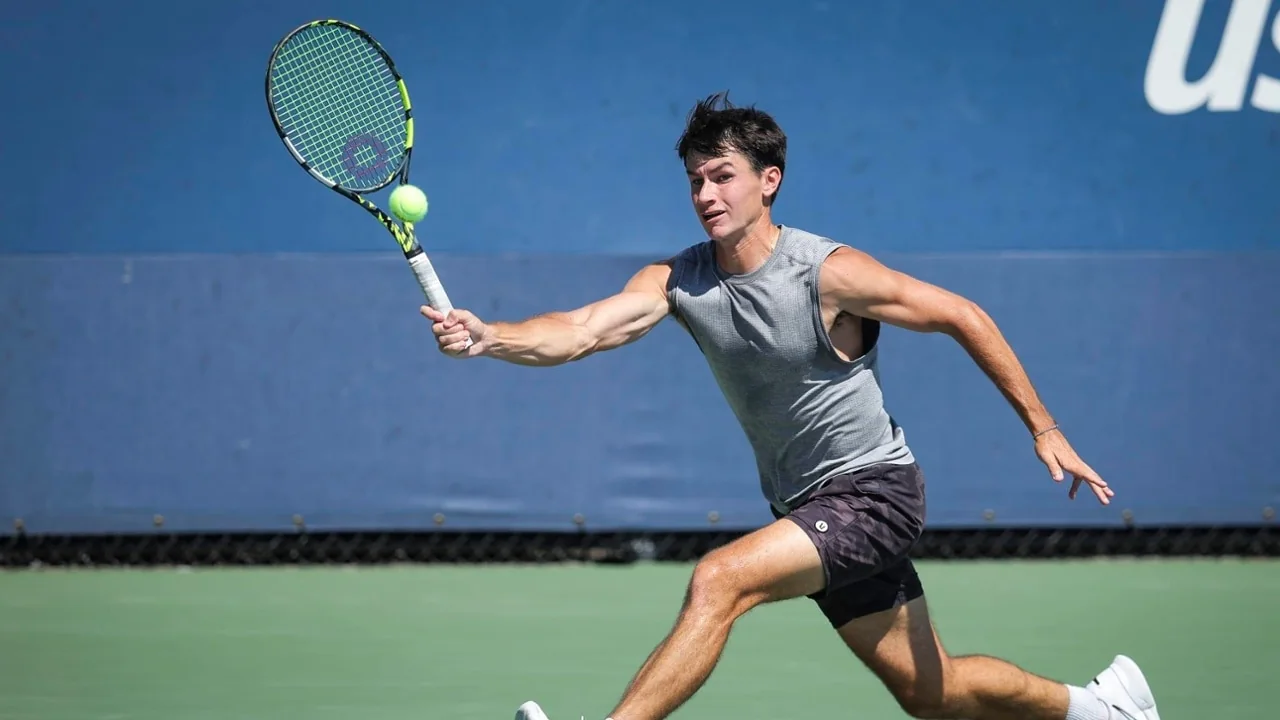
US Open Singles Winners from 2016 to 2025
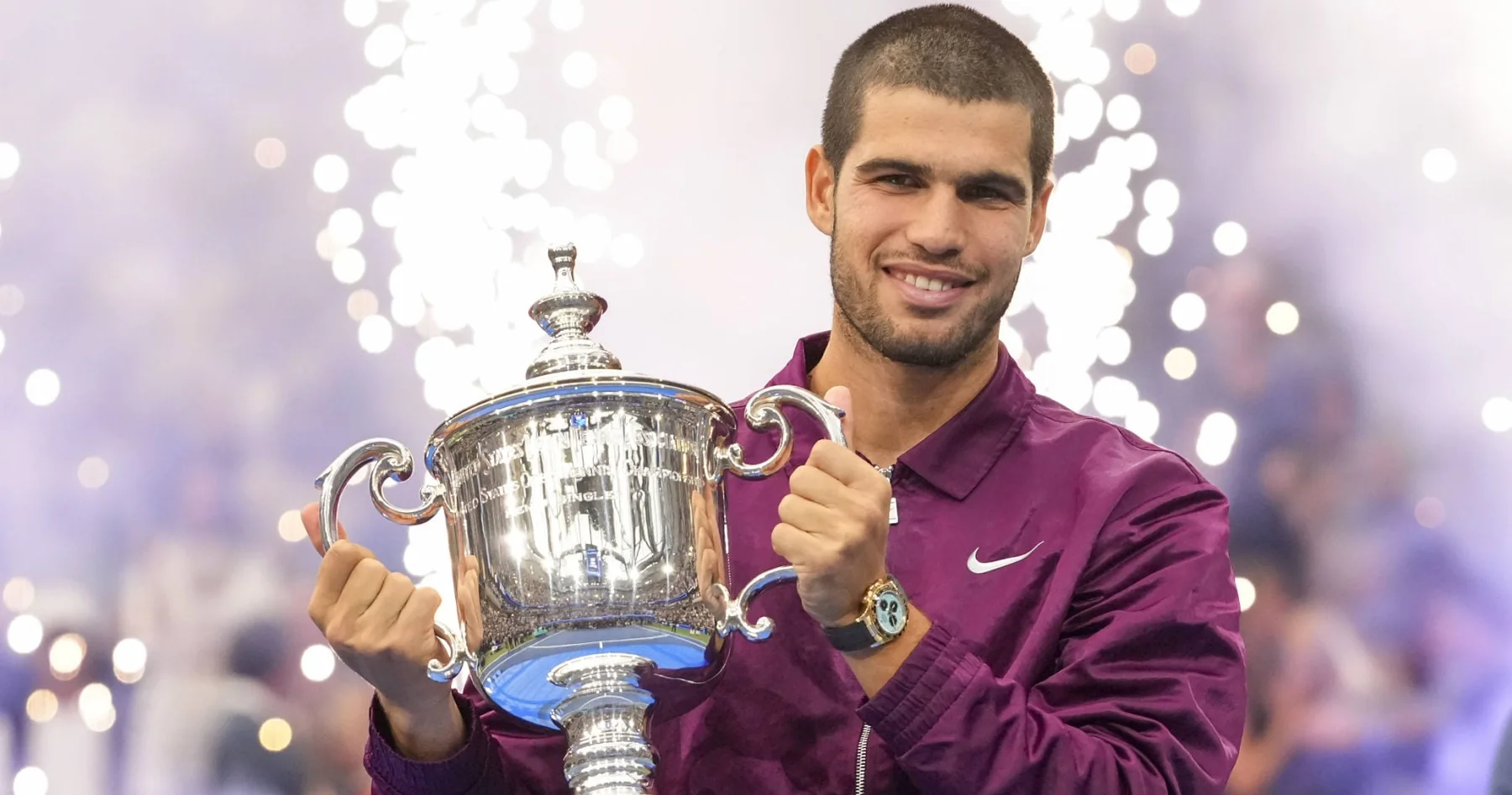
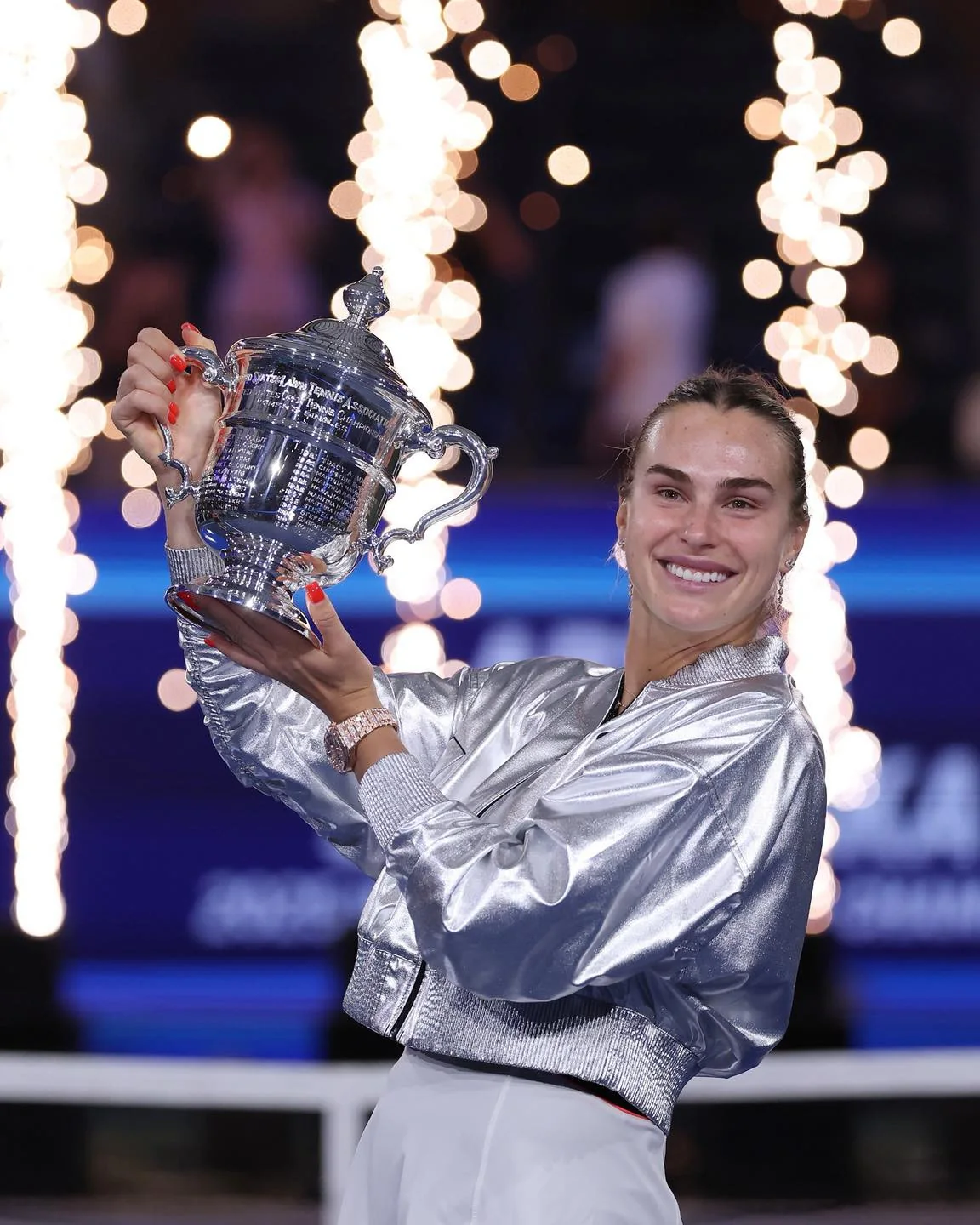
Carlos Alcaraz and Aryna Sabalenka are the latest completed US Open singles champions. Alcaraz won the 2025 men's final over Jannik Sinner, while Sabalenka defeated Amanda Anisimova to retain the women's title. The 2026 singles champions are deliberately absent from this table because, at the August 26 cutoff, those titles have not been decided.
| Year | Men's singles champion | Women's singles champion |
|---|---|---|
| 2025 | Carlos Alcaraz | Aryna Sabalenka |
| 2024 | Jannik Sinner | Aryna Sabalenka |
| 2023 | Novak Djokovic | Coco Gauff |
| 2022 | Carlos Alcaraz | Iga Swiatek |
| 2021 | Daniil Medvedev | Emma Raducanu |
| 2020 | Dominic Thiem | Naomi Osaka |
| 2019 | Rafael Nadal | Bianca Andreescu |
| 2018 | Novak Djokovic | Naomi Osaka |
| 2017 | Rafael Nadal | Sloane Stephens |
| 2016 | Stan Wawrinka | Angelique Kerber |
What this decade reveals
The men's list records a genuine handover. Nadal and Djokovic collected four of the six titles from 2016 through 2021, but the next four editions belonged to Alcaraz, Djokovic, Sinner and Alcaraz. The 2025 final made the transition especially clear: Alcaraz beat Sinner 6-2, 3-6, 6-1, 6-4, reclaimed the No. 1 ranking and secured his second New York crown. Yet no man in this ten-year window defended the title. New York's pace, late-night scheduling, boisterous conditions and best-of-five physical demands have resisted sustained control.
The women's pattern is different. Eight distinct champions won from 2016 through 2024, with Osaka the only repeat winner during that span. The list includes established No. 1s, first-time major champions and two teenage breakthroughs: Raducanu in 2021 and Gauff in 2023. Sabalenka then won in 2024 and 2025, becoming the first woman to defend at Flushing Meadows since Serena Williams completed a three-title run in 2014.
A winners table cannot capture every path. Raducanu came through qualifying; Stephens returned from a long injury absence; Andreescu beat Serena Williams in her first US Open main-draw appearance; Thiem recovered from two sets down in an empty-stadium 2020 final. Those routes are why the US Open results matter alongside the names. A champion is the final line of a seven-match story, not merely the last entry in a year column.
Men's US Open Champions in the Open Era
Jimmy Connors, Pete Sampras and Roger Federer share the men's Open Era record with five US Open singles titles each. The tie looks simple in a record book, but each player owns a different version of New York mastery.
Five-time champions
- Jimmy Connors: 1974, 1976, 1978, 1982, 1983
- Pete Sampras: 1990, 1993, 1995, 1996, 2002
- Roger Federer: 2004, 2005, 2006, 2007, 2008
Four-time champions
- John McEnroe: 1979, 1980, 1981, 1984
- Rafael Nadal: 2010, 2013, 2017, 2019
- Novak Djokovic: 2011, 2015, 2018, 2023
Connors' achievement spans the tournament's most disruptive transition. He won the 1974 title on Forest Hills grass, the 1976 title on green clay and the 1978 title on the new hard courts at Flushing Meadows, then added two more hard-court crowns. The left-hander's flat return, early ball-striking and appetite for crowd energy travelled across conditions better than almost anyone's game.
Sampras supplied the longevity record. His first New York title came in 1990 at age 19 and his last in 2002, the final match of his career. That 12-year gap ties the longest span between a man's first and last Open Era US Open titles. The fast hard courts rewarded his serve, first volley and explosive running forehand, but the deeper lesson is his ability to reproduce those weapons across three stages of a career. He remains the only Open Era man to win the event in his teens, 20s and 30s.
Federer's five were compressed into an unbeaten championship run from 2004 through 2008. No man has defended the US Open since. His streak came from taking time away on return, transitioning forward and controlling the first strike without depending on one-dimensional serve-volley patterns. Juan Martín del Potro ended the run in the 2009 final, and the title has moved every year since.
McEnroe, Nadal and Djokovic form the four-title tier, again by contrasting means: serve-and-volley pressure, heavy topspin plus defense, and elastic baseline control. Arthur Ashe, the first men's champion of the Open Era in 1968, carries a different historical weight. A useful champions list therefore does more than rank totals. It shows that New York has repeatedly rewarded players who impose a clear identity under noisy, shifting conditions. Fans can compare the current generation through the site's US Open player profiles, while remembering that even two titles already represent rare repeat success.
Women's US Open Champions in the Open Era
Chris Evert and Serena Williams share the women's Open Era record with six US Open singles titles. Their identical totals frame two very different dynasties. Evert's six arrived between 1975 and 1982, built on ruthless baseline depth and anticipation. Serena's stretched from 1999 to 2014, a 15-year span that crossed multiple generations and confirmed how well her serve-return combination travelled through changing conditions.
| Champion | Open Era titles | Winning years |
|---|---|---|
| Chris Evert | 6 | 1975, 1976, 1977, 1978, 1980, 1982 |
| Serena Williams | 6 | 1999, 2002, 2008, 2012, 2013, 2014 |
| Steffi Graf | 5 | 1988, 1989, 1993, 1995, 1996 |
| Martina Navratilova | 4 | 1983, 1984, 1986, 1987 |
| Margaret Court | 3 | 1969, 1970, 1973 |
| Billie Jean King | 3 | 1971, 1972, 1974 |
| Kim Clijsters | 3 | 2005, 2009, 2010 |
Evert owns the Open Era women's record of four consecutive championships, from 1975 through 1978. The sequence is historically rich because it straddles the surface move from green clay at Forest Hills to hard court at Flushing Meadows. Graf's five titles showcased first-strike aggression built around a devastating forehand and athletic defense. Navratilova's four came through serve, volley and relentless forward pressure. Clijsters' three include the remarkable 2009 comeback title as a mother and unseeded wild card.
New York has also been a teenager's stage
The dynasty list is only half the women's story. The US Open has repeatedly introduced teenage champions to the world. Tracy Austin beat Evert in the 1979 final; Monica Seles won at 17 in 1991; Serena captured her first major at 17 in 1999. More recently, Bianca Andreescu won on her US Open main-draw debut at 19, qualifier Emma Raducanu completed an unprecedented title run at 18 in 2021, and Coco Gauff recovered from a set down against Sabalenka to win at 19 in 2023.
Those breakthroughs share an ability to absorb New York's emotional load, but not one tactical formula. Raducanu won with clean direction changes and exceptional return positioning; Gauff turned defense into pressure until Sabalenka's error count rose; Andreescu disrupted Serena with variety and fearless ball-striking. The winners list rewards adaptability as much as raw power. Fans browsing today's US Open players should treat youth as possibility rather than destiny: a teenage title is extraordinary precisely because sustaining it across seasons is harder still.
Before 1968: National Championship Winners and Changing Conditions
Champions before 1968 belong in the US Open's history, but their records need an amateur-era label. The men's U.S. National Singles Championship began in 1881, the women's competition followed in 1887, and the name “US Open” arrived when professionals and amateurs were admitted together in 1968. The official champions list joins those eras; careful analysis distinguishes them.
Richard Sears won the first seven men's championships from 1881 through 1887. Bill Larned and Bill Tilden also finished with seven, the all-time men's tournament record. Molla Bjurstedt Mallory leads every singles champion, man or woman, with eight women's titles from 1915 through 1926. Helen Wills won seven. These are monumental achievements, but their route was not the modern seven-round, 128-player path.
The early “challenge round” illustrates the problem with direct comparison. For much of the championship's formative period, the defending champion could wait in the final while an all-comers field produced a challenger. Sears needed only six total matches to capture his final six titles from 1882 through 1887. Federer, by contrast, won seven matches in each of his five title runs. The record book correctly counts both streaks; it does not claim they required identical work.
The venue and surface timeline changed the winning game
| Period | Primary setting | Surface | Historical meaning |
|---|---|---|---|
| 1881-1914 | Newport for men; women's venues differed | Grass | National championships and challenge-round traditions |
| 1915-1974 | Mainly Forest Hills, with 1921-23 in Philadelphia | Grass | From amateur prestige into the first seven Open Era editions |
| 1975-1977 | Forest Hills | Har-Tru green clay | A brief three-year baseline-oriented experiment |
| 1978-present | Flushing Meadows | Hard court | The modern New York championship identity |
The US Open is the only major to have been played on three surfaces. Grass rewarded low contact points, first-strike serving and net play. Har-Tru gave the ball more time and made movement, patience and heavy baseline patterns more influential. Flushing Meadows hard courts created a broader test: servers still receive value, but elite returning and movement through a long rally remain essential.
Jimmy Connors is the bridge between all three. He won on grass in 1974, clay in 1976 and hard court in 1978, then added two more hard-court titles. No other singles champion owns that three-surface feat. It is a reminder that the conditions around a winner matter. The current US Open schedule describes one standardized modern event; the historical list contains several versions of the championship layered together.
How to Read the Winners List Like a Tennis Historian
A title count is the starting point, not the final verdict. To compare US Open champions intelligently, read four details together: consecutive wins, the span between first and last titles, the player's age and route, and the conditions of the era. Each answers a different question about greatness.
Repetition measures control; span measures reinvention
Consecutive titles show whether a player could solve the same major while the field actively adjusted. Federer's five straight from 2004 through 2008 remain the Open Era standard for any singles player. Evert won four straight from 1975 through 1978, an arguably stranger sequence because the tournament changed from green clay to hard court for the last title. McEnroe, Ivan Lendl and Serena each built three-year runs.
A long span asks a different question: could the champion remake a winning game as equipment, opponents and their own body changed? Sampras' 1990 and 2002 titles bookend 12 years. Serena's 1999 and 2014 championships span 15. Those achievements cannot be reduced to a streak because their value lies in returning after losses and solving a transformed tour.
One title can still rewrite the tournament
The best champion is not always the player with the biggest total. Arthur Ashe's 1968 victory was the inaugural men's title of the Open Era and the first major won by a Black man. Raducanu's 2021 run remains singular because she started in qualifying and won ten matches without dropping a set. Alcaraz became champion at 19 in 2022 after three consecutive five-set matches, including an overnight quarterfinal epic against Sinner, then returned in 2025 to win a second title with a far more authoritative service performance.
Age is context, not proof of a future dynasty. Sampras converted his teenage breakthrough into five New York titles; other young champions never won the event again. Similarly, a runner-up name helps reveal the difficulty of a final but cannot summarize six earlier rounds. Federer defeated past or future major champions in each final during his five-year run, while an unseeded or lower-ranked opponent may have arrived by beating several contenders.
A practical four-question test
- Was the title part of a streak or a long-span comeback?
- What surface, venue, draw format and eligibility rules applied?
- Which opponents and match demands shaped the run?
- Does the claim refer to all tournament history or only the Open Era?
Keep 2026 separate until the trophy is won
The official record pages used here are complete through 2025. The current US Open draw may show a favorite advancing, and the finals page may identify the last matchup, but neither makes someone champion before match point is converted. Predictions, defending champions and top seeds belong in previews. A winners-by-year article should remain stricter: it records completed championships, then updates once the result is official.
That discipline keeps the list useful. It also preserves what makes the history compelling. From Sears under challenge-round rules to Sabalenka defending in a 128-player modern draw, the names share a championship lineage without sharing identical tests. The responsible comparison celebrates both continuity and difference.
Loading comments…