US Open Juniors Explained: Age Limits, Rankings and Prize Money
Understand who can enter the US Open junior championships, how junior rankings and scoring work, and why a junior trophy does not carry the senior prize purse.

US Open juniors is a separate international championship for eligible teenagers. This guide explains the age window, entry routes, rankings, prize-money policy and scoring under the 2026 rules, checked October 19, 2026.
What are US Open juniors, and who can play?
The US Open Junior Championships are the international boys' and girls' competition held alongside the New York major. A junior entry belongs to its own draw: a teenager playing women's or men's singles is competing in the senior championship, even if that player is still young enough to enter juniors. That distinction matters when reading a result, a seed number or a prize-money headline.
For the international junior circuit, the age window begins at 13 and ends with the calendar year in which a player turns 18. The ITF's junior FAQ explains both boundaries. Age eligibility is only the first test; it does not entitle someone to a place in a Grand Slam draw.
The minimum age is measured at the tournament
A player must have reached their 13th birthday by the first day of the singles main draw. Imagine a prospective entrant whose birthday falls halfway through championship week: turning 13 before their own possible second-round match would not satisfy that starting-date test. This is a hypothetical example, but it shows why the tournament's main-draw date matters more than a vague description such as “turns 13 this season.”
The regulations also require a valid junior IPIN membership and the applicable educational requirements, while younger players have limits on the number of tournaments they can contest. A ranking, a wild-card invitation and permission to compete all answer different questions. They should be checked separately.
The upper limit follows the calendar year
A player does not automatically age out on their 18th birthday. They may continue through December 31 of that year. Consequently, two opponents can both be listed as 18 while being at quite different points in their final junior season. A January birthday and a December birthday produce different lengths of time spent playing juniors at that age.
For 2026, the regulations specify the eligible birth-year range as 2008 through 2013, with the lower-age birthday condition still applying. That is a dated example, rather than a birth-year range to reuse indefinitely. Consult the current year's rulebook for a later edition and use the US Open date and session guide to keep the surrounding senior tournament in context.
How players earn a place in the junior draw
Players reach the US Open junior draw through the event's acceptance process, qualifying competition or a wild card. It is not a public tournament in which every eligible teenager can reserve a place by paying an entry fee. The field brings together players whose results have already earned them a position in a demanding international pathway.
The USTA's international junior guide provides a useful starting point for understanding IPIN and entry procedures. The current event factsheet and acceptance list remain essential for the actual dates and conditions. A general coaching article cannot tell a player that an application was accepted.
A direct acceptance enters through the relevant ranking and acceptance criteria. A qualifier wins through the preliminary competition into a main-draw place. A wild card is a place awarded under the tournament's rules. These routes explain how someone arrived; they do not tell you, on their own, how dangerous that opponent will be on a particular afternoon.
A qualifier might have useful match practice on the surface, while a direct entrant might be managing a busy summer. Those are possibilities to investigate through the player's actual results, rather than conclusions to draw automatically from the letter beside a name. A wild card can introduce a home prospect to a stronger level, but it is still necessary to watch the tennis.
There are also alternates and lucky losers. An alternate waiting for acceptance is not already a member of the main draw. A lucky loser fills a permitted vacancy after losing in qualifying, subject to the applicable selection procedure. Readers checking a developing draw should therefore distinguish an initial acceptance list from the completed bracket.
Be especially careful with a claimed universal ranking cutoff. The final accepted ranking depends on who enters, who withdraws and the current rules; last year's boundary is a planning guide, not a promise. The junior Grand Slams also have special provisions, so a change affecting entry-level junior events should not automatically be applied to New York. Use our US Open draw hub for the senior championships, then choose the explicitly labelled junior event in the official tournament or ITF draw pages when following juniors.
What junior rankings actually measure
The ITF junior world ranking measures results across the international junior calendar. Its combined calculation gives singles the larger role while also rewarding doubles. Under the 2026 regulations, it uses the best six singles results from the preceding 52 weeks, plus one quarter of the points from the best six doubles results.
A hypothetical calculation: 1,200 counted singles points + 25% of 800 counted doubles points = 1,400 combined junior points. These invented totals illustrate the arithmetic; they are not the record of a named player.
The formula helps explain why a player can have a strong junior ranking without winning every recent singles match. Doubles contributes, and the ranking considers a selected group of results across a rolling period. Equally, playing more tournaments does not mean that every additional result will improve the total. A result needs to be valuable enough to enter the counted set.
There are also conditions for earning points. The ITF FAQ says a player must reach a round carrying points and win a main-draw match, with specified treatment for walkovers and retirements; merely receiving a bye is not a match victory. A bracket position alone therefore needs context before it becomes a ranking calculation.
A junior world ranking is not an ATP or WTA ranking
Junior No. 1 means first on the junior list. It does not mean the player outranks established professionals on the ATP or WTA tour. A teenager can have records in both junior and professional tennis, but points earned in one competition are not automatically the same currency as points earned in the other.
A seed is different again: it describes a position within an individual tournament's draw arrangement. When following a prospect, write down which list a number belongs to and the date of that list. “World No. 12,” “No. 12 seed” and “junior No. 12” are not interchangeable descriptions.
For evaluating a match, use ranking as background and then examine the opponent, surface and actual performance. A close return game against a powerful server may reveal more than the difference between two nearby positions on a list. Our US Open player directory provides senior-event context when a junior prospect later appears in the professional championship; it should not be mistaken for a complete international junior ranking list.
Do US Open juniors receive prize money?
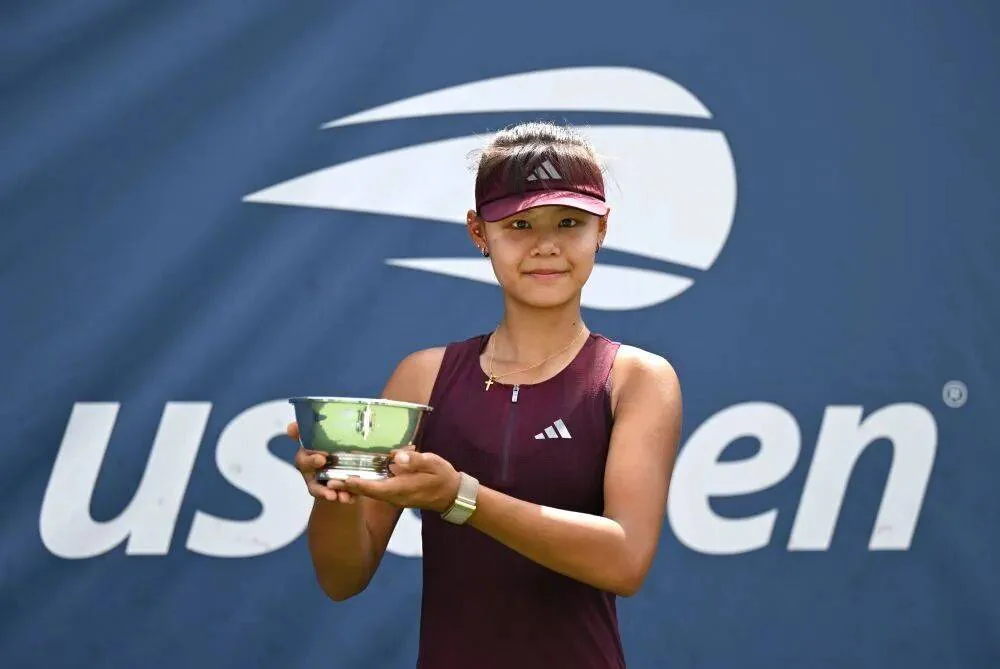
US Open junior competitors do not receive a junior prize-money purse. Rule 58 of the 2026 ITF junior regulations prohibits prize money at junior tour events, whether paid to the players or their national associations. A championship trophy should not be confused with a cheque from the senior prize table.
The distinction is easy to miss because the junior and senior championships share a tournament name and venue. When a headline announces a record US Open compensation package, a reader naturally assumes that everyone holding a trophy benefits in the same way. The event category must be checked before attaching any dollar amount to a result.
In 2026, the USTA announced $108 million in overall player compensation and a $5.5 million award to each senior singles champion. Those figures describe the professional tournament's compensation arrangements. They do not create a matching junior payment, nor should a senior first-round payout be assigned to a junior who loses their opening match. Our 2026 US Open prize-money guide addresses that separate senior context.
No junior prize money does not mean that all forms of support are identical or prohibited. The regulations address hospitality and travel assistance separately, and they explicitly distinguish professional-event wild cards from prize money. Support, an opportunity to play and a cash award for finishing in a particular round are different benefits. None should be invented from the presence of a sponsor's logo.
The player's age alone is not the decisive test either. A junior-eligible teenager can enter a professional event under its applicable conditions; that appearance belongs to a different competition. It is therefore possible to read a professional earnings report about a teenager without contradicting the junior tournament's rule.
For fans, the useful question is “Which draw produced this result?” For families, details of travel support, grants, gifts or any educational eligibility consequences require the relevant program's own terms. The junior title itself recognizes achievement and can attract attention, but it should never be presented as a guaranteed income stream or a promise of a professional career.
How junior draws and match scoring work
The US Open junior championships have separate boys' and girls' singles and doubles draws. The official event overview lists 64 players in each singles draw and 32 teams in each doubles draw. In a complete knockout bracket, that means six singles victories or five doubles victories to take the title.
Those sizes matter when comparing a junior title run with the senior singles championship. The draw category and number of rounds provide the frame for the achievement. A junior champion has won a major junior competition; that is a substantial result in its own right, without borrowing the senior tournament's draw size or match length.
Singles still rewards a complete match
Main-draw junior singles is played over the best of three sets. Boys do not play the senior men's best-of-five format. A match can therefore turn on the ability to respond after one poor set: there is room to recover, but much less time to do so than in the men's championship.
Marcel Latak's 2026 boys' final supplies a useful example. He beat Guto Miguel 3-6, 7-5, 7-6(13). The last set was a full set ending in a tiebreak; the parenthetical number describes the losing player's points in that tiebreak, which finished 15-13. It does not mean that the players contested a 13-game tiebreak or a fourth set.
Doubles has its own deciding format
Junior doubles uses two tiebreak sets followed, when required, by a 10-point match tiebreak instead of a third set, with no-ad scoring. Read a deciding score such as [11-9] as points in that match tiebreak, rather than games in a normal set. Reaching 10 is insufficient unless the team also leads by two points.
That distinction was visible in the 2026 boys' final, when Aaron Gabet and Valentin Gonzalez-Galino won the deciding match tiebreak 11-9 against Latak and Tanishk Konduri. The doubles title was settled by that concentrated final phase, after the teams had split the opening two sets.
The editorial lesson is to identify the format before judging a comeback or predicting a finish time. A doubles decider can change quickly, and the returner's preparation for a single deciding point deserves attention. When moving between our senior US Open results and official junior records, check the competition label and the brackets around a deciding score.
How to follow juniors and assess future potential
To follow US Open juniors, start with the competition name, then check the date, round and court. A search for a teenager's surname can lead to senior qualifying, junior singles, junior doubles or an older year's match. Those are different records, even when the same player appears in more than one.
During the tournament, the official junior event pages and ITF championship listing are the clearest way to select the right bracket. Use our Order of Play guide for the surrounding senior tournament, and check the official daily court list for junior assignments. A court's first advertised start is not a guaranteed start time for every match listed underneath it.
For replays or live viewing, check that the listing names the junior event, the correct match and the correct year. A senior television subscription or a US Open highlights channel should not be assumed to include every junior court. A short clip can establish who won a point without showing the broader match pattern.
The historical appeal is real. Stefan Edberg won the US Open boys' title in 1983 and the men's title in 1991 and 1992. Andy Roddick progressed from the 2000 boys' trophy to the 2003 men's championship; Andy Murray's equivalent titles came in 2004 and 2012. Lindsay Davenport won girls' singles in 1992 and women's singles in 1998. Those different intervals are a useful reminder that development does not follow one timetable.
Nor is winning the junior championship a prerequisite for a great senior career. Roger Federer was the 1998 boys' runner-up before his later men's singles successes. The official history offers reasons to pay attention, rather than a formula for predicting the next champion.
Our editorial approach is to watch skills that can be tested again: the quality of a second serve under pressure, the ability to return with depth, court position after a short ball and the response to a lost service game. These are observation prompts, not statistics assigned to every prospect. Revisit them across opponents and surfaces before making a sweeping judgment.
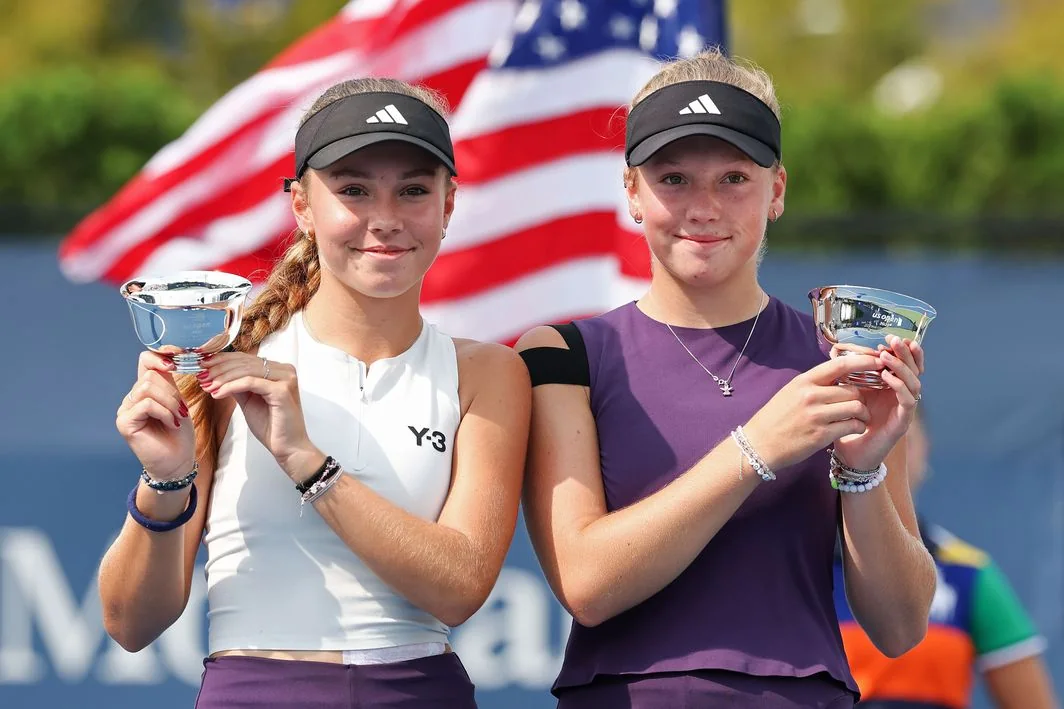
A junior trophy establishes an achievement already earned. What comes next depends on the player's subsequent results and choices. Enjoy the championship on its own terms, then let the professional record develop.
Loading comments…