2026 US Open Schedule Guide: Key Dates, Sessions and Finals
A clear 2026 US Open schedule guide to Fan Week, the main draw, day and night sessions, singles rounds, finals and daily planning.
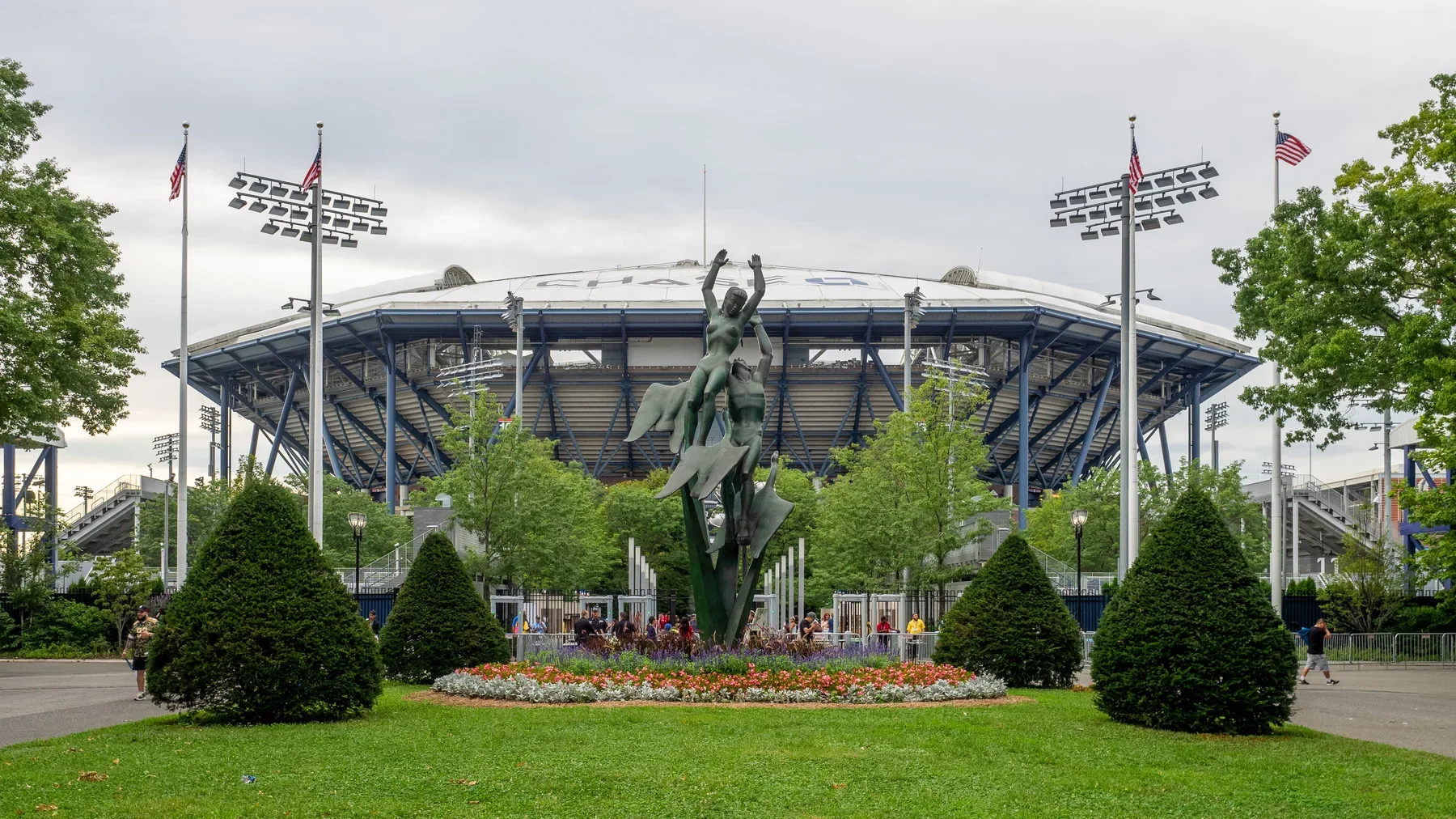
The 2026 US Open schedule spans August 23-September 13, but a smart fan separates Fan Week, qualifying, the 15-day singles main draw and the daily Order of Play. This guide locks down the official dates, explains day and night ticket sessions, maps every singles round and shows where doubles, juniors and wheelchair tennis create the tournament’s deepest days.
What Are the Key Dates on the 2026 US Open Schedule?
The full 2026 US Open event runs from Sunday, August 23 through Sunday, September 13, but the singles main draw runs August 30-September 13. That distinction is the first thing a fan should fix in the diary. The USTA is presenting 22 days of tennis and entertainment: seven days of Fan Week followed by a 15-day main draw. Qualifying sits inside Fan Week rather than adding another block outside it.
| Phase | 2026 dates | What it means |
|---|---|---|
| Fan Week | Aug. 23-29 | Free grounds access with an adult Fan Access Pass; practices, qualifying and selected events |
| Singles qualifying | Aug. 24-27 | 128-player men's and women's fields compete for main-draw places |
| Singles main draw | Aug. 30-Sept. 13 | Fifteen competition days, beginning with a three-day first round |
| Women's singles final | Sept. 12 | Saturday championship session |
| Men's singles final | Sept. 13 | Sunday finale of the tournament |
For a fan asking “when does the US Open start?”, there are therefore three honest answers. The grounds experience starts August 23 with Fan Week. Competitive qualifying starts August 24. The championship bracket most viewers mean—the 128-player men's and women's singles draws—starts August 30. Stating which one you mean prevents the classic mistake of buying travel for qualifying week while expecting first-round stars.
Fan Week is not a ceremonial warm-up. It offers practices, the singles qualifying tournament and the reworked mixed-doubles competition, plus ticketed exhibitions and free activities. Grounds admission is free, but adults need the tournament's free digital Fan Access Pass, and selected stadium events require their own paid ticket. It is best understood as a distinct festival whose competitive value is strongest for fans who enjoy scouting, practice-court detail and close-up outer-court tennis.
Main-draw play begins on a Sunday for the second consecutive year, spreading the opening singles round across August 30, August 31 and September 1. The middle weekend leads into Labor Day on September 7. The closing spine is women's semifinals on September 10, men's semifinals on September 11, the women's singles final on September 12 and the men's singles final on September 13.
One unusual planning date is Thursday, September 10. The USTA labels the daytime period “Open for All Day,” with free grounds admission, while the Arthur Ashe evening session containing the women's semifinals remains ticketed. That can be a smart low-cost grounds visit, but it should not be confused with free entry to the headline matches.
Use these dates as anchors, then consult the live US Open schedule for changes. A tournament date is stable; a player's date, court and exact start are not known until the draw and daily Order of Play do their work. The useful calendar locks the phases and finals first, then leaves room for match-level updates.
How Do Day and Night Sessions Work?
A US Open day session and night session are separate ticketed products, even when they fall on the same date. From August 30 through September 9, the published gate pattern is 9:30 a.m. for day-ticket holders and 6 p.m. for evening-ticket holders. Main daytime play begins around 11 a.m.; Arthur Ashe Stadium starts at 11:30 a.m. on most of those dates. The evening show-court program generally begins at 7 p.m.
Think of the day as a festival and the night as a double bill. An early-round day ticket creates hours to move among Grandstand and the outer courts, where a fan can see seeded players, emerging qualifiers, doubles and practice activity at close range. A reserved Ashe or Armstrong ticket also gives you a guaranteed seat for that stadium's assigned matches, subject to the exact product and access rules printed on the ticket. The schedule is dense enough that leaving a lopsided show-court match can be the best tennis decision.

A night ticket changes the equation. The stadium assignment is usually built around prominent singles matches, the crowd arrives together, and the New York atmosphere rises as the roofline darkens. You sacrifice much of the outer-court volume, because many day matches will be finished or deep into their final sets by the 6 p.m. gate. In return, the reserved program is easier to understand: arrive for the evening block and stay through its scheduled matches, even if the last ball comes after midnight.
Choose the session by your tennis priority
- Maximum match count: first-week day session.
- Named show-court seat: reserved Ashe or Armstrong session after assignments are known.
- Prime-time atmosphere: night session, with tolerance for a late finish.
- Flexible budget: compare Grounds Admission with upper reserved seats for the same day.
Do not read “day” as a promise that every court stops at 6 p.m. Outer-court matches can continue, but admission and reserved-seat rights depend on the ticket terms and session. Equally, an evening ticket does not retroactively admit you for an 11 a.m. match. Official ticket-plan language also notes that stadium plans include general-admission access around the grounds, but that does not turn a reserved seat in one stadium into a reserved seat in another.
Most importantly, tickets are sold by session rather than by player. The tournament can place a favorite in the day or night after the draw, and match order can change. A rain delay may close the roofs over Ashe and Armstrong while outer-court play pauses, changing the amount of tennis without changing your ticket's basic session. Before buying, compare the date and session number on our US Open ticket guide, then recheck the official listing. The fan who understands the session boundary buys an experience; the fan who ignores it is gambling on a name.
When Are Each Singles Round and the Finals?
The 2026 singles draw advances in two-day blocks after a three-day opening round, then narrows to one marquee stage per day. First-round play is August 30-September 1, the second round is September 2-3, the third round is September 4-5, and the round of 16 occupies September 6-7. Quarterfinals follow September 8-9 before the four championship days.
| Singles round | 2026 date(s) | Fan planning note |
|---|---|---|
| First round | Aug. 30-Sept. 1 | Three days, maximum player field and court choice |
| Second round | Sept. 2-3 | Still broad grounds action; women's doubles begins Sept. 3 |
| Third round | Sept. 4-5 | Labor Day weekend begins; singles match quality rises |
| Round of 16 | Sept. 6-7 | Last two-day singles round before the quarterfinals |
| Quarterfinals | Sept. 8-9 | Show-court focus; Sept. 9 night play begins at 7:30 p.m. |
| Women's semifinals | Sept. 10, 7 p.m. ET | Both semifinals in the evening session |
| Men's semifinals | Sept. 11, 3 p.m. and 7 p.m. ET | Separate afternoon and evening starts |
| Women's final | Sept. 12, 4 p.m. ET | Saturday championship on ESPN |
| Men's final | Sept. 13, 2 p.m. ET | Sunday championship on ABC |
The dates tell you the round, not the identity of the players. The 128-player singles draw is divided into halves, and the tournament assigns those halves across the relevant days. A first-round ticket for August 30 therefore does not guarantee a specific champion or local favorite. Once the draw is released, you can narrow the possible date; once the daily Order of Play arrives, you can know the court and scheduled position.
From an editor's perspective, the best date depends on whether you value volume or consequence. The first three days can produce dozens of singles matches across the campus, including dangerous seed-versus-qualifier contests that never reach television's main feed. The quarterfinals offer only the last eight players in each draw, so every match has obvious stakes but fewer parallel escape routes if one contest becomes one-sided. Finals weekend gives absolute event certainty and almost no lineup flexibility.
The semifinal structure deserves special attention. Women's semifinal night places both matches into the September 10 evening program. The men play on September 11 with one semifinal scheduled for 3 p.m. and the second for 7 p.m. That split creates two distinct time commitments, and ticket buyers must read the session number rather than assume “semifinals” means a single continuous reserved-seat block.
Finals timing is clear as of August 26: the women's championship begins at 4 p.m. Eastern on Saturday, and the men's championship at 2 p.m. Sunday. International viewers should convert the date as well as the time; a late New York match can fall on the next calendar day elsewhere. Our US Open finals hub follows the field as it narrows.
All official schedule times remain subject to change, but that caveat should not erase useful certainty. The round dates, semifinal structure and published finals starts are the right anchors. Player assignments are the movable layer. Build travel around the anchors and build daily watching around the movable layer.
Where Do Qualifying, Mixed Doubles, Doubles and Wheelchair Events Fit?
The wider 2026 schedule starts with qualifying and mixed doubles in Fan Week, then layers doubles, juniors and wheelchair tennis into the second half of the singles main draw. That overlap is not background noise. It is the reason an informed grounds fan can still build a full day after singles has contracted to a handful of stadium matches.
Singles qualifying runs Monday, August 24 through Thursday, August 27. The men's and women's qualifying fields start with 128 players each, fighting for 16 main-draw places per draw. Admission to the field courts is free during Fan Week with the required Fan Access Pass for adults. For serious followers, this is where form, fitness and hard-court adaptability are easiest to read from close range—before a qualifier becomes the first-week story everyone claims to have spotted.
Mixed doubles now occupies a compressed three-day championship. An eight-team qualifying event on August 24 sends two pairs into the 16-team main draw. The first round and quarterfinals are played August 25, with matches in Louis Armstrong and Arthur Ashe Stadiums; the semifinals and final follow in Ashe on the evening of August 26. It is a separate competitive arc with its own ticket conditions, not an event sprinkled through the second week.

Traditional men's and women's doubles begin after singles is underway. Women's first-round doubles appears September 3, while both men's and women's first-round matches are listed September 4. The draws advance alongside singles, but their finals have distinct slots: the women's doubles championship is Friday, September 11 at noon, and the men's doubles final is Saturday, September 12 at noon before the women's singles final.
Junior tennis fills the second week. Boys' and girls' main-draw singles run September 6-12, with doubles September 7-12 after preceding qualifying dates. These are not exhibitions; they are Grand Slam titles contested by 64-player singles fields and 32-team doubles draws. A fan who enjoys tactical projection can compare a junior's patterns with the mature point construction seen in Ashe later that day.
The adult wheelchair championships run September 8-12, while junior wheelchair competition runs September 9-11. The adult program includes men's, women's and quad singles and doubles. On September 12, wheelchair singles finals share the daytime schedule with the men's doubles final and junior championships. This is one of the richest examples of why “only one singles final today” badly understates what is happening across the venue.
Use the US Open draws to understand each bracket, then the daily schedule to find courts. The editorial takeaway is straightforward: first-week buyers get breadth from the enormous singles field; second-week grounds fans recover breadth through doubles, juniors and wheelchair tennis. If you follow only the two singles draws, you are reading less than half the tournament's competitive calendar.
How Should Fans Use the Order of Play and Plan a Visit?
Use the tournament schedule to choose a date, then use the Order of Play released the day before to choose matches. The long-range calendar can promise that September 4 contains third-round singles, for example. It cannot honestly promise that your favorite plays in the day session, at night, or even on that half of the two-day round. The official Order of Play supplies those missing names, courts and positions.
Read match position like a tennis editor, not an airline timetable. “First match, 11 a.m.” is the strongest start-time commitment. “Second match” means after the first match ends and the court turns over. “Not before 3 p.m.” means the match cannot begin earlier, not that first ball is guaranteed at 3:00. A five-set battle, medical timeout or rain interruption can move everything behind it. Build a window, not a single alarm.
A practical evening-before checklist
- Confirm that the ticket date and session number match the official schedule.
- Mark one priority match and two alternatives on nearby courts.
- Check the court's seating rule and expected walking time.
- Save the matches in the official app and enable useful alerts.
- Check weather, gate time, transport and the permitted-bag rules.
On an early-round day, choose an A match, a nearby B match and a roofed fallback. If your A match is on Court 17, select an adjacent outer-court contest you would genuinely enjoy rather than planning to cross the entire campus between sets. Arthur Ashe and Louis Armstrong can continue under retractable roofs, while rain can suspend exposed courts. A roofed-stadium ticket therefore has insurance value, but a weather delay can also make open seating scarce when thousands of fans seek cover.
Arrive for the gate, not for the first serve. Through September 9, day gates are scheduled at 9:30 a.m. and evening gates at 6 p.m. That buffer absorbs security, mobile-ticket problems, food and the walk to a distant court. It also gives a day-session fan time to check practice assignments. Practice can be the best close-range sighting of a star who is scheduled in Ashe beyond your access or on the opposite day.
The official app is useful because it combines tickets, court assignments, scores, practice information, favorites and an interactive map. Do not let it become a substitute for looking up. Live tennis creates information: a doubles team changing return position, a junior's footwork under pressure or a qualifier's willingness to take a forehand early. Plan enough structure to avoid confusion and enough slack to follow a compelling match.
Refresh the schedule before leaving and again after entering. Court moves, weather and preceding matches can change the best route. Save major dates with our timezone-aware US Open calendar, but treat the daily Order of Play as the final operational document. The best itinerary is not the one with the most names typed into it; it is the one that still works after the first match runs an hour long.
The schedule editor’s verdict
Choose a phase before choosing a date: Fan Week for access and scouting, the first main-draw week for match volume, and the closing days for championship certainty. Then choose day or night by the experience you want, not by an unconfirmed player rumor.
The tournament calendar is your map; the prior-day Order of Play is your turn-by-turn navigation. Keep both, and leave enough flexibility for the long matches and weather shifts that make New York tennis feel alive.
Loading comments…