US Open Prize Money 2026: Singles, Doubles and Round-by-Round Payouts
The complete 2026 US Open prize-money breakdown for singles, doubles, mixed doubles and qualifying, with round-by-round analysis.

What Is the Total US Open Prize Money in 2026?
The confirmed 2026 US Open player compensation package is $108 million. The USTA announced that figure on August 20, calling it the largest package in professional tennis history. It is 20% higher than the 2025 record of $90 million and 44% above the 2024 level. Those are unusually large consecutive jumps for a major that was already the sport's richest event in dollar terms.
2026 total
$108 million
Year-on-year
+20%
Two-year rise
+44%
The wording matters. This is a player compensation package, not merely one pot divided among the competitors who win matches in the men's and women's singles draws. It spans main-draw singles, doubles, mixed doubles, qualifying and wheelchair events, while also accounting for broader player benefits. For that reason, a clean comparison with another tournament requires checking what each organizer includes in its headline total.
A new element in 2026 is a $2 million Player Support Program. The money is being split equally between men's and women's players and held in escrow while the program is shaped with input from the new Grand Slam Player Council. The stated aim is to help with mid-career life events and retirement transitions, and the planned eligibility pool includes main-draw singles and doubles competitors without ranking tiers. The broad direction is confirmed; the precise benefits and operating rules were still being developed at this article's August 26 information cutoff.
For fans, the headline is therefore bigger than the champion's check. The $108 million figure describes how the tournament values the whole competitive field, from qualifiers trying to reach the 128-player draw to established stars playing for the title. The US Open schedule shows where those different events sit in the fortnight; the sections below explain what a player earns at each stage. The most revealing question is not simply “Who gets the most?” but “Where did the extra money go?” In 2026, the answer leans meaningfully toward first-round players, qualifiers and wheelchair competitors as well as the champions.
2026 US Open Singles Prize Money by Round
Men and women receive the same singles prize money at every round: $5.5 million for the champion and $140,000 for a player who exits in the first round of the 128-player main draw. The amount in the table is the player's gross tournament award for reaching that stage; it is not a bonus paid for each individual victory.
| Round reached | 2026 payout per player | What it means |
|---|---|---|
| Champion | $5,500,000 | Wins seven main-draw matches |
| Finalist | $2,800,000 | Wins six matches |
| Semifinal | $1,450,000 | Wins five matches |
| Quarterfinal | $780,000 | Wins four matches |
| Round of 16 | $480,000 | Wins three matches |
| Round of 32 | $290,000 | Wins two matches |
| Round of 64 | $190,000 | Wins one match |
| Round of 128 | $140,000 | Main-draw first-round exit |
The sharpest dollar jump comes at the very end: the champion receives $2.7 million more than the runner-up. That reflects the enormous commercial value attached to lifting the trophy. Yet the more revealing 2026 policy choice is at the opposite end of the bracket. The first-round award rose 27% to $140,000, faster than the 10% increase in the winner's check. A player who reaches the main draw therefore earns a serious six-figure sum even without winning a match.
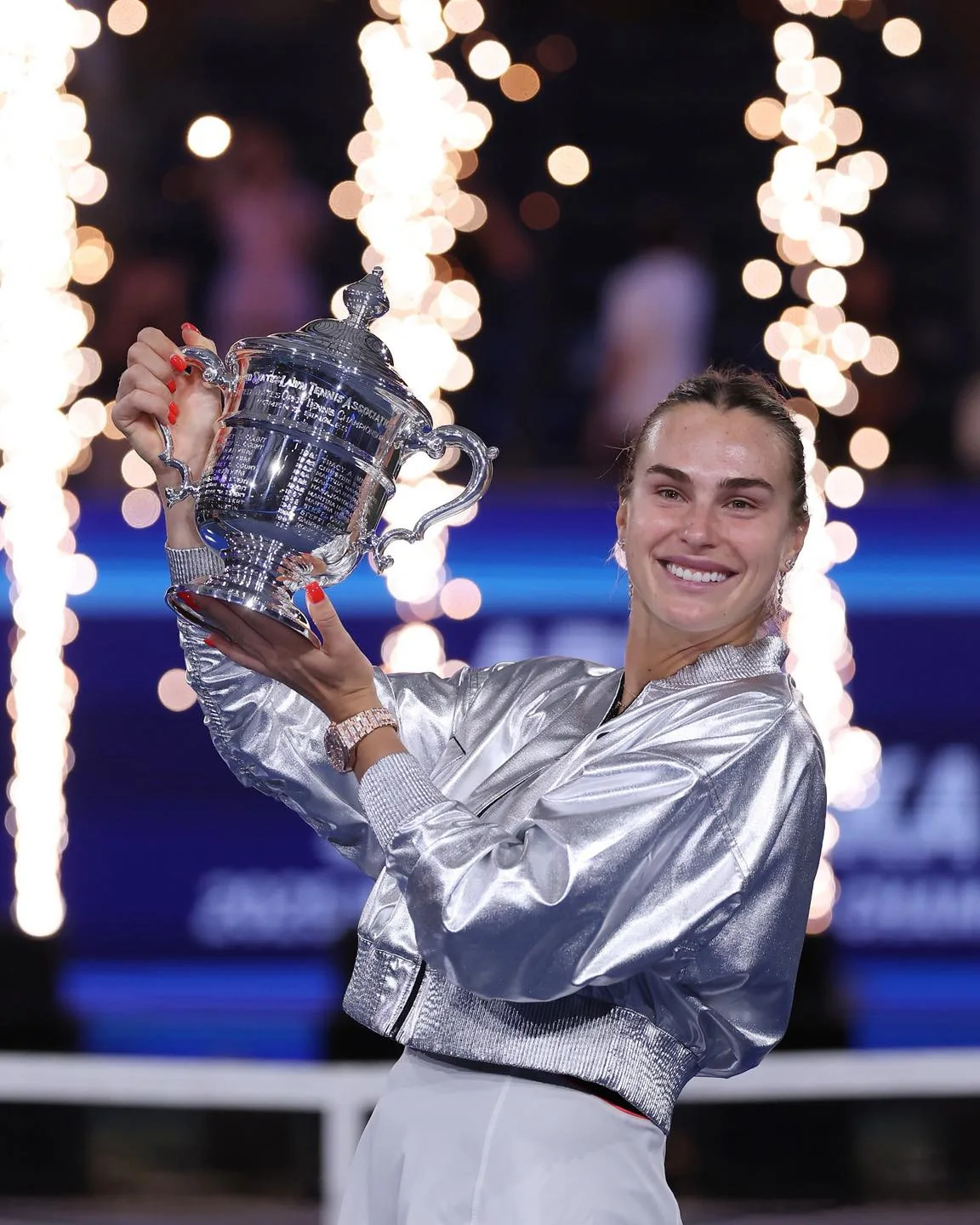
Reading the payout curve like a tennis fan
The ladder changes how pressure feels across the fortnight. Winning a first-round match adds $50,000, while moving from the fourth round into the quarterfinals adds $300,000. One match later, a semifinal berth is worth another $670,000. Those differences help explain why a tense final set in week two can carry career-level financial consequences even before rankings points, endorsements or appearance opportunities enter the picture.
There is also an important accounting caveat. The listed figure is not take-home pay. Players fund coaches, physiotherapists, travel and other professional costs, and their tax position varies. The official table properly avoids guessing at those deductions. Fans tracking the US Open draw should read the payout as guaranteed gross earnings once a player reaches a round—not as the amount that ultimately lands untouched in a bank account.
Doubles and Mixed Doubles Payouts Explained
The 2026 men's, women's and mixed doubles champions each earn $1 million per team. “Per team” is the phrase that prevents the most common misunderstanding: the official amount covers two partners together. An equal split would be $500,000 each for the champions and $250,000 each for the runners-up, before taxes and professional expenses, although private team arrangements can differ.
| Round | Men's/women's doubles | Mixed doubles |
|---|---|---|
| Champions | $1,000,000 per team | $1,000,000 per team |
| Finalists | $500,000 | $500,000 |
| Semifinalists | $250,000 | $250,000 |
| Quarterfinalists | $125,000 | $120,000 |
| Round of 16 | $80,000 | $40,000 |
| Round of 32 | $50,000 | Not applicable |
| Opening round | $35,000 | $40,000 |
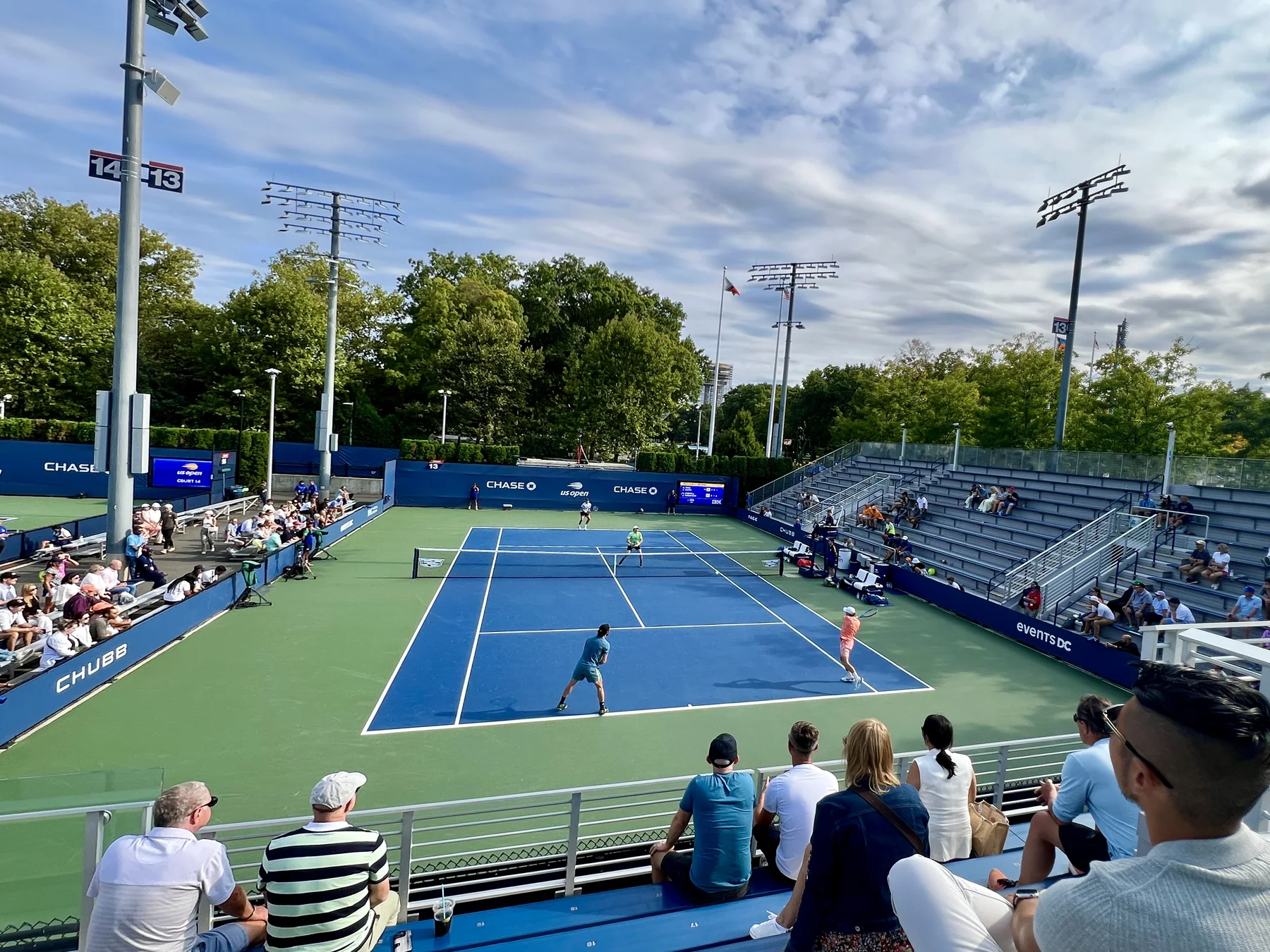
Why the identical winner's checks are not identical competitions
Men's and women's doubles are conventional 64-team main draws built across the main tournament. Their payout ladders reward repeated wins and the accumulated problem-solving that defines elite doubles: protecting the server with planned first volleys, controlling the middle, reading return positions and switching formations under pressure. The $35,000 opening-round team award works out to $17,500 each on a simple 50-50 illustration, far below the $140,000 guarantee for a main-draw singles player.
The 16-team mixed doubles championship is a different product. In 2026 it is staged on August 25-26, before singles begins, with abbreviated sets to four games in the first three rounds, sudden-death deuce and a 10-point match tiebreak replacing a third set. The final uses sets to six but retains no-ad scoring and the deciding match tiebreak. Its compressed format creates immediate upset pressure and puts the seven-figure top award within four wins, not six.
That distinction does not cheapen either title; it explains the spectacle. Regular doubles tests a partnership over a longer campaign, while mixed doubles is deliberately built as an intense, star-focused event. Fans checking the US Open results should keep the event labels separate. A quarterfinalist earns $125,000 per team in men's or women's doubles and $120,000 in mixed, but the routes, draw sizes and scoring demands are not interchangeable.
Qualifying, Wheelchair Tennis and the Player Support Program
Qualifying, wheelchair events and the new support fund all sit inside the $108 million package. They are not footnotes. They are the clearest evidence that the 2026 increase was designed to reach players whose season economics look very different from those of a seeded singles star.
Qualifying
Opening-round loss: $32,000
Second-round loss: $48,000
Final-round loss: $66,000
Wheelchair events
Total 2026 compensation: $2,309,200
Increase from 2025: 44%
Player support
Initial commitment: $2 million
Split equally between men and women
The qualifying numbers are stage guarantees
Each men's and women's qualifying draw contains 128 players competing for 16 main-draw places. The listed award corresponds to the stage at which a player finishes. It is not a cumulative payment added after every match. A player who loses immediately receives $32,000; one who falls in the final qualifying round receives $66,000. A qualifier who wins three matches advances into the main draw and is then guaranteed at least the $140,000 main-draw first-round amount rather than collecting both a qualifying-loss award and a main-draw award.
That $32,000 starting figure is up 16% from 2025. For a player outside the top tier, it can underwrite a meaningful portion of a travel-heavy season: airfare, accommodation, coaching weeks and medical work continue regardless of whether rankings points arrive. The tennis remains brutally simple—three wins earn entry—but the financial floor makes the attempt less punishing.
Wheelchair investment and support beyond competition
The official wheelchair allocation rises 44% to $2,309,200 across men's, women's and quad competition. That percentage is more revealing than a comparison with the singles-champion check. It signals that growth is reaching disciplines that receive fewer prime-time windows but still demand Grand Slam-level preparation and performance. Fans should consult the US Open Order of Play rather than assuming wheelchair matches follow the same daily sequence as the main singles draws.
The separate $2 million support fund moves beyond match results altogether. The USTA says it is intended to complement existing end-of-career pension arrangements and assist with mid-career life events and retirement transitions. Eligibility is expected to cover main-draw singles and doubles competitors without ranking tiers, but the detailed program was still being developed with player input as of August 26. That caveat matters: the money is committed, while the precise benefits are not yet a finished rulebook.
Taken together, these areas tell a coherent story. New York is still paying record checks at the summit, but it is also raising the floor and testing longer-term support. For the health of the tour, that lower half of the equation may prove more consequential than another half-million dollars at the top.
How the 2026 Purse Changed—and Why Fans Should Care
US Open player compensation has risen from $75 million in 2024 to $90 million in 2025 and $108 million in 2026. That is a $33 million increase in two years, with consecutive 20% jumps. The scale is striking, but the structure of the increase is more important to the sport than another record label.
| Year | Total player compensation | Singles champion | First-round singles |
|---|---|---|---|
| 2024 | $75 million | $3.6 million | $100,000 |
| 2025 | $90 million | $5 million | $110,000 |
| 2026 | $108 million | $5.5 million | $140,000 |
The 2026 champion's award rose 10%, while the first-round amount rose 27%. That does not flatten the ladder—the champion still receives roughly 39 times the opening-round guarantee—but it directs the fastest growth toward competitors who have less margin for a poor week. Tennis players are independent professionals, not salaried members of a club roster. A first-round loss does not erase coaching, fitness, travel and accommodation costs. Raising the floor can therefore preserve careers and strengthen the depth fans see in qualifying and the main draw.
Equal prize money is part of the US Open's competitive identity
The men's and women's figures in every table are identical by design. In 1973, the US Open became the first Grand Slam to pay equal prize money to its men's and women's champions. The contrast with 1972 was stark: Ilie Năstase received $25,000 for the men's title while Billie Jean King earned $10,000 for the women's title. In 1973, both champions received $25,000. That decision, driven by King's campaign and the leverage of women players, turned a payout table into a statement about how the tournament valued its competitions.
More than half a century later, equality at the US Open extends round by round, not merely to the two champions displayed during trophy weekend. It is worth stating because the men's best-of-five and women's best-of-three formats differ, yet the tournament rewards achievement in the two draws equally. The policy treats the commercial and sporting status of the championships as equivalent.
What the money tells us before a ball is struck
Prize money cannot predict who will win, but it helps explain the stakes. A player crossing from the third round into the fourth secures an additional $190,000. A doubles pair reaching the quarterfinal moves from $80,000 to $125,000. A qualifier trying to win a third match is playing for main-draw entry and a guaranteed jump from the final-round qualifying award to at least $140,000. Those are not abstract numbers when momentum swings at 5-all in a deciding set.
Read the 2026 package as two connected promises: New York will pay a premium for champions, and it will put more protection under the players who make the tournament possible.
That balance is the strongest feature of the 2026 structure. The $5.5 million champion's check creates the headline; the early-round, qualifying and wheelchair increases provide the substance. As fans browse the US Open players, the payout ladder adds another layer to every result: each match can alter a season's finances as surely as it changes rankings points and a place in the draw.
Loading comments…