US Open Grandstand Guide: Seating Chart, Capacity, Tickets and Shade
Choose a Grandstand seat with a clear understanding of reserved and general admission access, changing shade and the daily court order. Includes the official 2026 seating chart and practical weather planning.
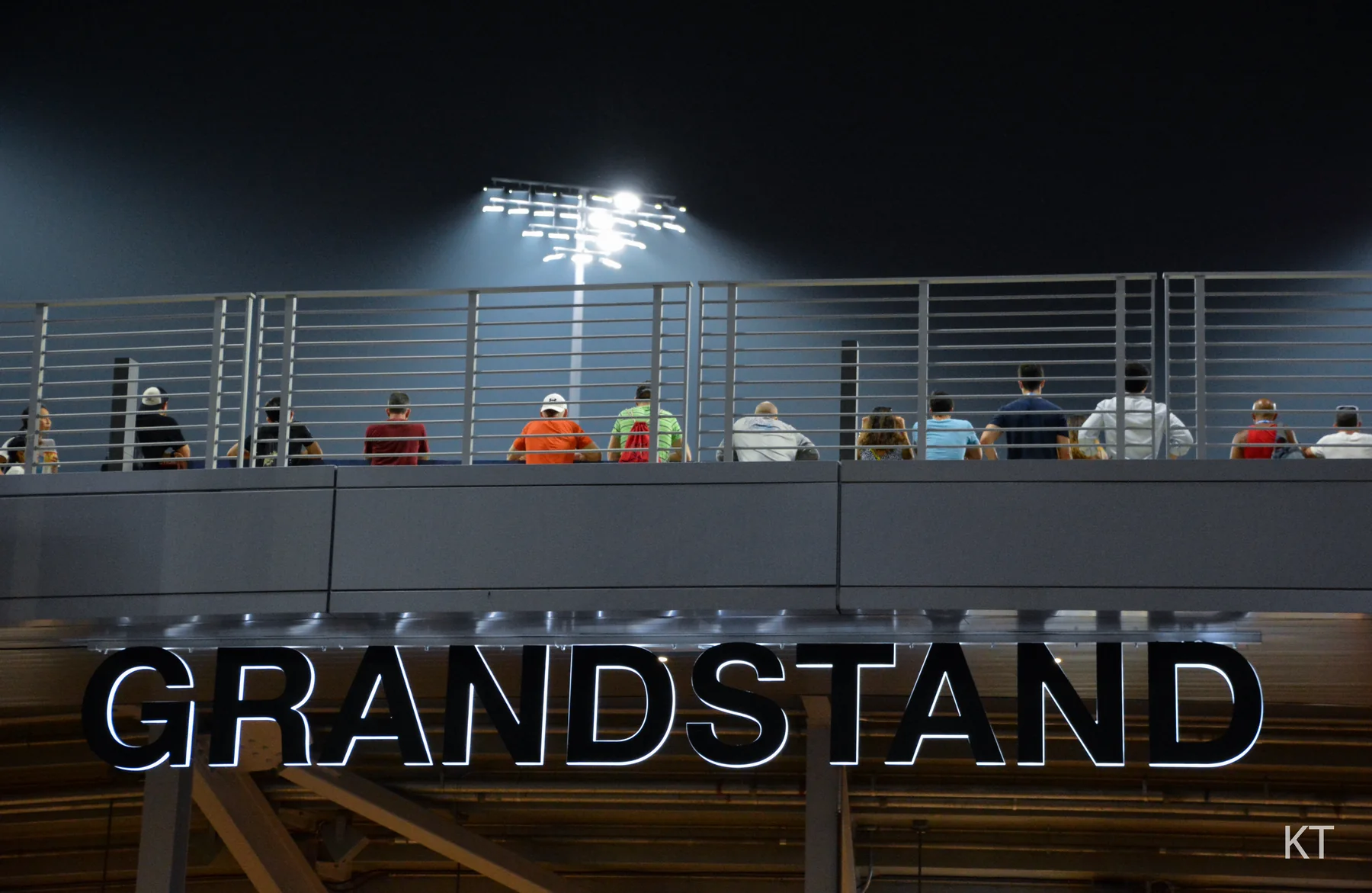
Grandstand rewards a little planning: choose the right seating category, then think about shade, match order and how much certainty you need. This guide uses information checked on October 19, 2026; season-specific examples refer to the completed 2026 US Open.
Where Grandstand is and how many spectators it holds
Grandstand is the 8,125-seat stadium in the southwest corner of the USTA Billie Jean King National Tennis Center. It is the US Open's third-largest show court, below Arthur Ashe Stadium and Louis Armstrong Stadium in capacity. The current stadium opened on August 29, 2016. If a photograph or a favorite tennis memory predates that opening, it may show the former Grandstand beside the original Armstrong, rather than the venue on today's seating chart.
The capacity comes from the USTA's opening report and is also listed in the official ticketing partner's 2026 venue guide. That continuity is useful when comparing listings that round the stadium to 8,000 seats. A rounded description does not mean there are two different modern Grandstand arenas.
For a spectator, its position between the bigger arenas and the smaller field courts is the attraction. You can follow an entire rally across a compact bowl and still feel part of a substantial crowd. My preference for a first visit would be to choose a clear viewing angle before chasing the lowest possible row: seeing the depth of a second serve or how a returner changes position can be more rewarding than being closest to one player for half the match.
Do not read 8,125 as the number of general admission places available when you arrive. The stadium contains different seating categories, and spectators already inside occupy part of the bowl. A quiet-looking photograph also tells you nothing reliable about the next match's demand. Your practical question is which seating area your ticket permits you to use and whether that area has room.
Start with the US Open location and grounds guide if you are still orienting yourself. Once on site, follow the current grounds map and Grandstand signs. Looking for the historic stadium's former location can send a returning visitor toward the wrong part of the complex.
How to read the official Grandstand seating chart
Use the official 2026 Grandstand seating chart as your starting point. It is labeled “2026 US Open” and carries version V1-032326. The tournament's seat-map hub is the place to check for a newer edition when planning another year. Saving a familiar-looking image from a search result can leave you working from an older chart.
Reserved courtside seats and general admission
Read the legend before studying the section numbers. The official diagram separates Courtside Reserved, General Admission and Wheelchair Accessible areas. Those categories answer different questions: where an assigned ticket puts you, where eligible spectators can look for an available seat, and where accessible positions are marked.
For a reserved purchase, match the stadium name, date or session, section, row and seat against the listing. A section label alone is insufficient. For general admission, treat the chart as an orientation aid: it does not reserve the particular place you would like to occupy. If a listing appears to offer a numbered seat while describing itself as general admission, ask the seller to clarify the actual entitlement before paying.
Baseline, sideline and corner views
Choose your angle around how you enjoy watching tennis. From behind a baseline, it is easier to follow crosscourt patterns, recovery position and how much space a player leaves down the line. A sideline view emphasizes the speed of exchanges and gives a different appreciation of the service motion, though your attention travels more from end to end. A corner view can balance those priorities. These are viewing preferences, rather than a ranking of every seat.
The USTA's seat-map help page directs fans to charts and virtual views. Use that view to inspect the relationship between the court, barriers, aisles and your proposed row. Ask about any stated obstruction or access restriction. A broad stadium photograph cannot settle a question about one specific seat.
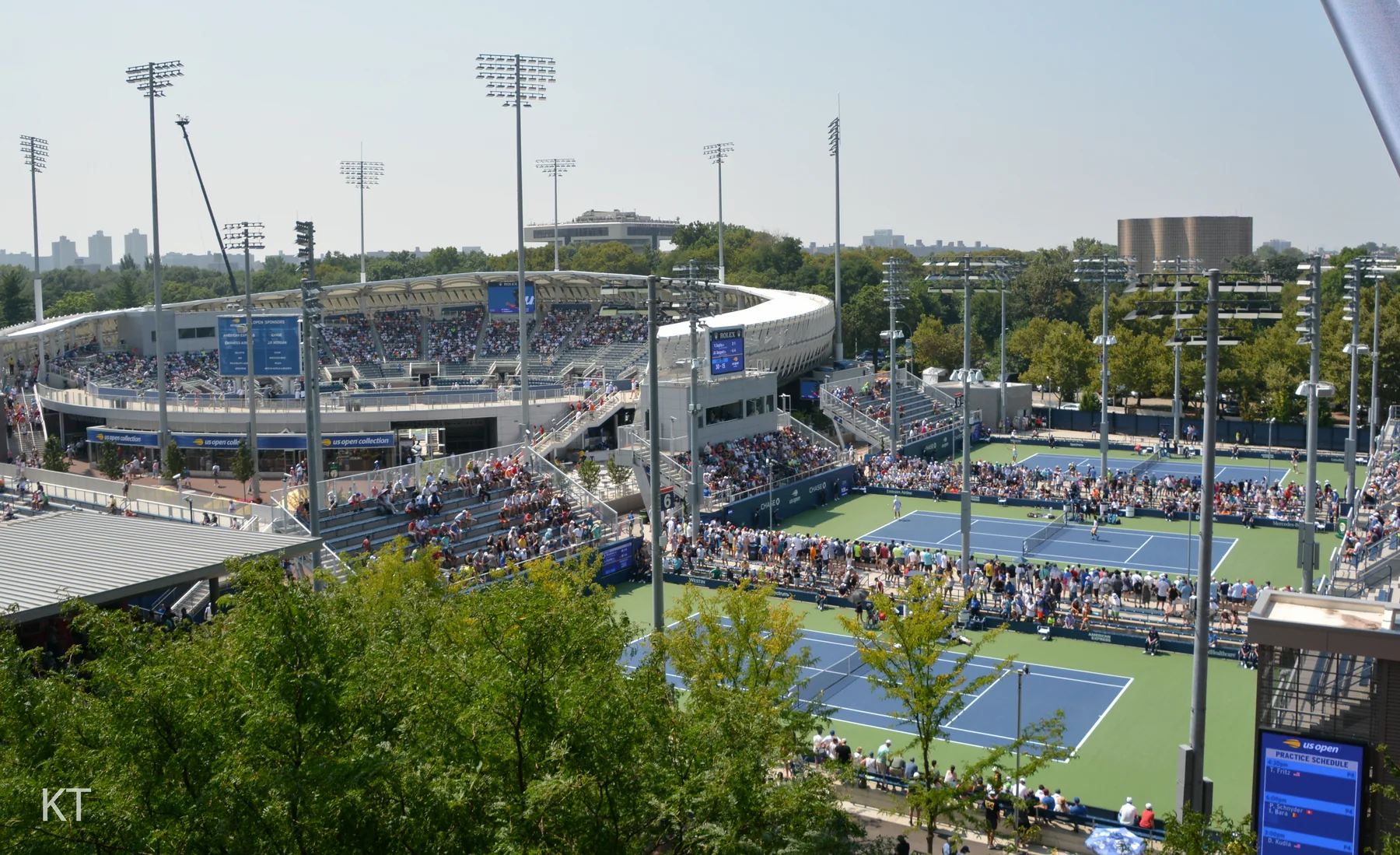
Which tickets let you into Grandstand
A reserved Grandstand ticket buys an assigned seat for the session it covers. Several other eligible tickets allow you to seek a general admission place in Grandstand, subject to capacity. Permission to try the general admission area is different from a guaranteed chair. That distinction matters more than the wording “access to Grandstand” on a brief sales description.
| 2026 ticket type | Grandstand entitlement | Decision to make |
|---|---|---|
| Grandstand reserved | Assigned Grandstand seat | Useful when staying here is the priority |
| Grounds Admission | First-come general admission | Keep another court in mind if full |
| Louis Armstrong reserved | First-come Grandstand admission | Your reserved seat remains in Armstrong |
| Arthur Ashe reserved | First-come Grandstand admission | Your reserved seat remains in Ashe |
The official 2026 ticket explanation described Grounds Admission day sessions from August 30 through September 8 and reserved Grandstand tickets for the tournament's first seven days. These are the published 2026 boundaries, rather than a promise about a future sale. Check the date and permitted entry time on the ticket you are considering.
A Grandstand or grounds ticket does not include Arthur Ashe entry. Equally, buying an Ashe ticket does not turn Grandstand's reserved courtside rows into open seating. Ask an usher which area your ticket permits, even if you can see unoccupied chairs below. Those chairs may belong to spectators away from their seats.
For two visitors who want to watch the same match together, the value of a reserved pair is the certainty of sitting together in that assigned location. For a solo spectator happy to move between courts, flexibility may be more valuable. Compare the final price, viewing position and access conditions as one decision; do not assume the ticket with the smallest headline price is automatically the best fit.
Our grounds-pass guide explains roaming access in more detail, while the US Open ticket-buying guide covers the wider purchase process. Keep the actual seller's session description open while comparing options, particularly when day and evening labels appear together in search results.
Where to look for shade and what the canopy cannot promise
For shade, start by examining the upper seating on the west side and positions beneath the canopy, then check the specific row and time of day. Grandstand has an open-air court. Its partial canopy is a useful comfort feature, but it is not a retractable roof and does not make an assigned seat a rain-protected reservation.
The USTA's construction interview explains the design intention: an asymmetrical bowl, with seating concentrated toward the southwest and a canopy intended to create substantial shade. That architectural aim should not be read as a promise that every chair beneath a broad section label stays shaded throughout a long match.
The independent ShadedSeats Grandstand guide describes a useful tendency: west-side upper general admission seats pick up shade before lower reserved seats, while the opposite side remains exposed longer. Treat that as a starting preference. A lower row can deliver a closer tennis view while leaving you in direct sun for part of the afternoon.
A practical shade check before buying
First, establish the seat's position on the official chart rather than judging “left” or “right” from a photograph. Next, look at the row's relationship to the canopy. Finally, consider when you are likely to be sitting there. The listed beginning of a session and the start of your preferred match can be hours apart, so a single photographed shadow is an unreliable full-session forecast.
My advice is to decide how much flexibility you need before choosing proximity. If prolonged direct sun would spoil the visit, put shade access ahead of a lower row and plan breaks between matches. If you choose general admission, remember that other spectators can have exactly the same shade preference; the most attractive positions may already be occupied. Bring suitable sun protection and plan where to refill water, rather than relying on a late move across the bowl.
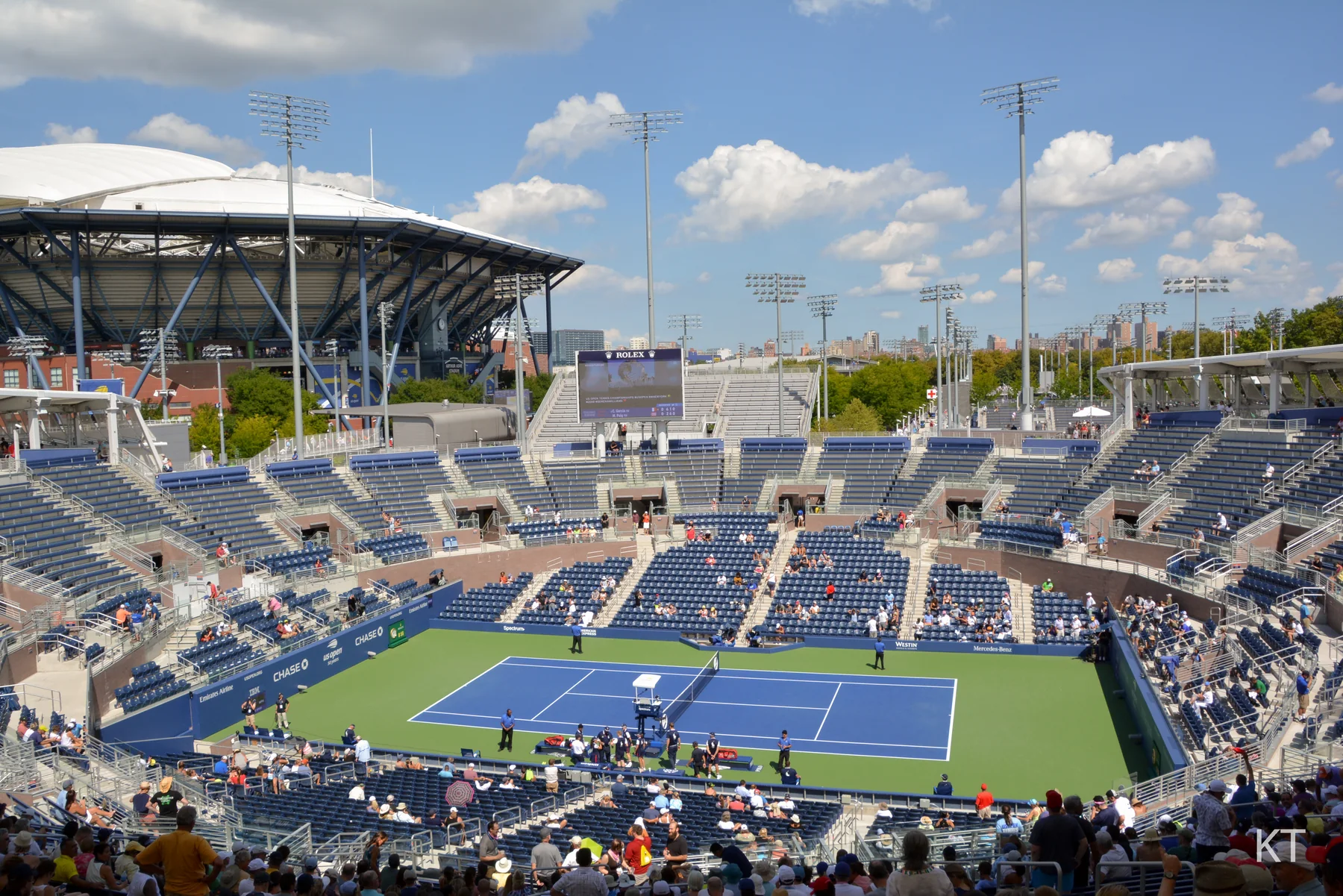
How to follow Grandstand matches on the Order of Play
Use the court-by-court Order of Play to find the matches actually assigned to Grandstand on your date. A tournament calendar tells you which rounds are due; a draw shows possible opponents. Neither establishes that a particular player will appear in this stadium. Until the daily assignment is published, a ticket purchase is a choice of access and session rather than a booking to see one named player.
Read the court heading, event and round before the time. Men's singles, women's singles and doubles can create quite different running orders. A familiar player name on a draw page is not evidence that the player has been scheduled on Grandstand. When planning a later tournament date, inspect that day's program instead of extrapolating from the busy opening rounds.
Following a match is not a fixed starting time
The first match has the clearest published start. Later matches can depend on the contest before them. “Following” identifies sequence; “not before” sets an earliest permitted time and can still be followed by a delay. Neither label is an appointment that ignores a five-set match, rain interruption or revised court assignment. A TBA entry remains unconfirmed.
For a practical plan, choose the Grandstand match you most want to watch and check what precedes it. If you also want to see another court, leave yourself room to return and enter the correct seating area. Watching a tight deciding set elsewhere can be a better use of your day than repeatedly walking between two entrances while both matches move on.
Recheck the published order before traveling and again after any significant interruption. The USTA's schedule help page points to the official tournament schedule. This guide was checked after the 2026 event, on October 19, so it does not imply that live Grandstand matches are taking place now. During the next tournament, use a confirmed daily court assignment rather than a saved prediction about who “usually” plays here.
Getting to your seat and arranging accessible viewing
Plan arrival in two stages: reaching the National Tennis Center, then reaching the correct Grandstand entrance and seating area. Arriving at a station, parking lot or grounds gate is not the same as being ready for the first point. Allow room for security, orientation and the final approach without assuming a universal walking time.
The USTA transportation help page directs visitors to the official travel and directions information for Flushing Meadows. Use that current guidance for the approach, especially if a planned route depends on a particular entrance. For broader transport choices, our parking and grounds map guide keeps those decisions separate from your Grandstand seat selection.
Once through the grounds gate, locate Grandstand on the current map before joining a seating line. Check whether the entrance serves the reserved area or general admission. If you have a designated seat, keep the ticket available until you reach it; if you are seeking a general admission place, follow the usher's capacity instructions rather than assuming every stairway leads to an open section.
For accessible viewing, begin with the wheelchair-accessible positions shown on the official chart and contact the ticket office about the arrangement you require. The USTA accessibility guidance identifies ramps and elevators for vertical access and distinguishes escalators as an option for ambulatory guests. That sitewide provision does not establish that an arbitrary row is step-free.
Ask specific questions: Is this a wheelchair position or a standard seat? Where can a companion sit? Does the route from the entrance involve steps? Which entrance should your party use? Getting those answers before purchase is more useful than relying on a seller's broad “accessible venue” label. Reconfirm the route for the edition you attend, as event operations can change. Build in time for assistance and breaks so that the effort of reaching a favorable viewing position does not consume the visit itself.
Building a Grandstand day that survives weather and schedule changes
Build the day around a preferred court and a workable alternative. Grandstand is an outdoor commitment: buying a reserved seat settles where you can sit, but not whether weather will permit uninterrupted tennis. If watching under a roof is essential to your trip, compare an assigned seat in a roofed stadium before choosing solely on Grandstand proximity.
Read the actual season's weather terms and purchase conditions. The 2026 inclement-weather policy treated eligible direct-purchase Grandstand and Grounds Admission tickets differently from resale, secondary-market and transferred tickets. Its remedies depended on the stated cancellation conditions and availability. Rain did not automatically create a cash refund or a comparable replacement seat.
That same policy allowed changes to the schedule, session dates, match counts and starting times, without making a change alone a reason for an exchange. A revised Grandstand lineup can therefore be disappointing without carrying the remedy a spectator expected. Keep the ticket confirmation and terms together so you can identify the applicable conditions, rather than relying on a general statement made by another fan.
Choose according to the part of the day you most want to protect:
- For a long stay at Grandstand, prioritize a suitable assigned seat and a tolerable sun position.
- For exploring many matches, prioritize eligible grounds access and several realistic court alternatives.
- For weather certainty, evaluate a reserved seat in a roofed stadium; general admission elsewhere still depends on space.
Do not treat a construction announcement as a new seating entitlement. The USTA's announced transformation through the 2027 event concerns wider facilities and Arthur Ashe. It does not establish future Grandstand prices or guarantee unchanged entrances. For your next visit, reconfirm the map edition, ticket's session access and weather policy together. Once those three agree with your priorities, you can spend the day watching the tennis rather than renegotiating the plan after every change.
Loading comments…