US Open Court 17 Guide: Seats, Access and How to Follow the Schedule
Understand Court 17's 2,800-seat, general admission setup and the decisions that matter when a popular match fills the bowl. Includes a real 2026 crowd example, viewing advice and daily schedule planning.
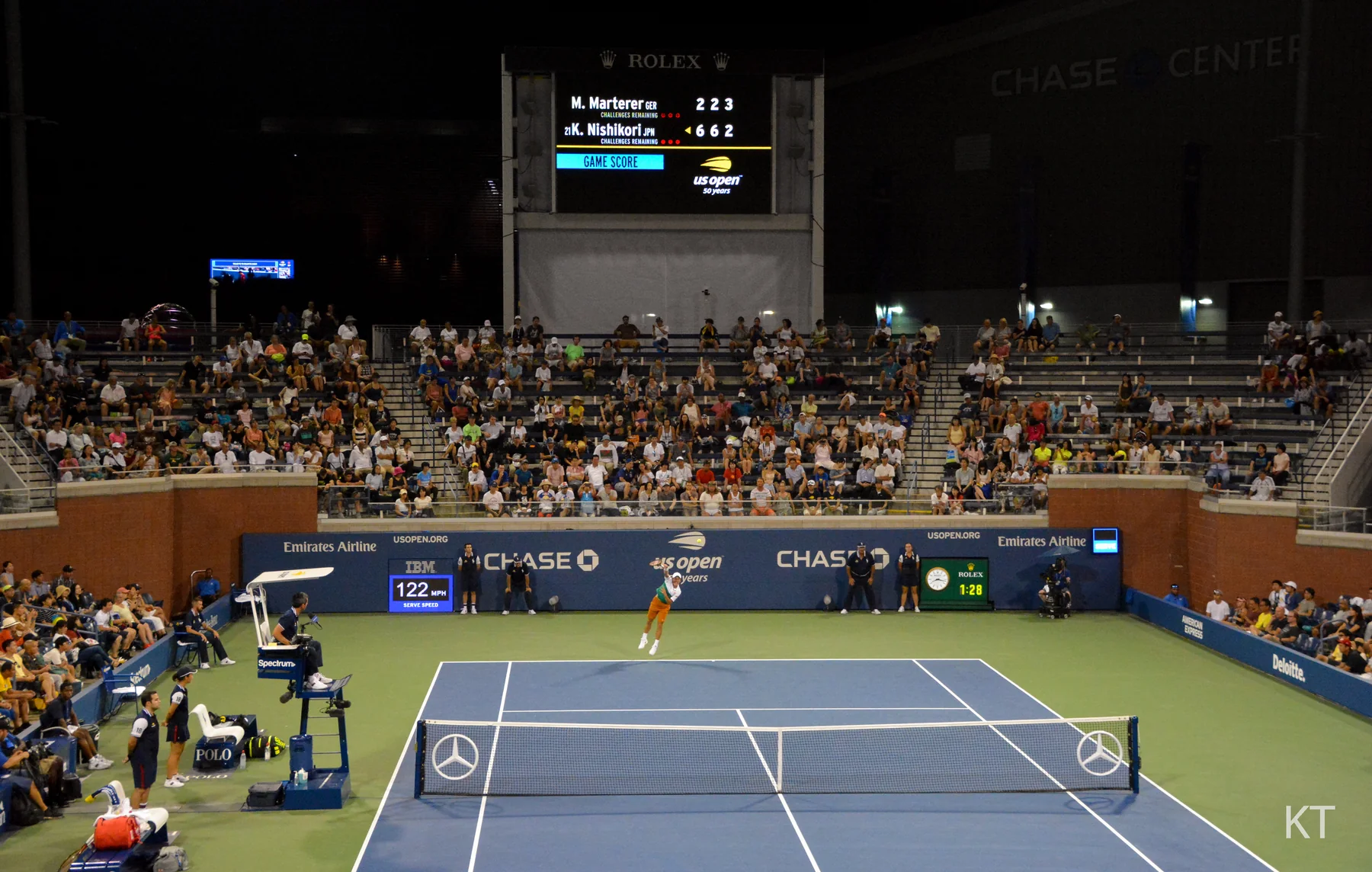
Court 17 offers close-up US Open tennis with an important tradeoff: eligible admission gives you the chance to find a seat, while a popular match can fill the entire bowl. Information was checked on October 19, 2026; the 2026 examples below describe the completed event.
Court 17 and Stadium 17 are the same US Open show court
Court 17 and Stadium 17 refer to the same 2,800-seat US Open show court at the USTA Billie Jean King National Tennis Center. It is the fourth-largest show court, behind Arthur Ashe Stadium, Louis Armstrong Stadium and Grandstand. The high number can make it sound like an incidental practice location; its tournament role and compact stadium bowl tell a different story.
The USTA's facility and grounds media guide records its debut in 2011 and lists 2,800 seats. Ticketmaster's 2026 venue guide retains that capacity. Older coverage commonly uses “Court 17,” while current ticket explanations use “Stadium 17.” When searching a daily program, look for both forms of the name.
The stadium sits toward the southeast of the main tournament grounds. Check the marked venue on the current grounds map, rather than following an unrelated search result for a practice court with the same number. Tennis complexes and other tournaments can reuse court numbers, and a photograph labeled only “Court 17” needs its event and location confirmed.
What makes this court appealing is the relationship between the playing surface and the surrounding crowd. In a compact bowl, you can appreciate the work between shots: the returner's split step, the server recovering from a wide delivery, or a doubles team changing its position at the net. That is a different way of watching from scanning the biggest arena for a familiar face.
My advice is to choose a compelling matchup before choosing a court's prestige. A competitive opening-round contest here can provide more to follow than a one-sided match elsewhere. However, the same small scale that makes the view appealing also limits the number of people who can get inside. Use the US Open venue location guide to orient your visit, then make seating availability part of the plan.
What ticket you need for Court 17
You need a ticket or admission entitlement valid for entering the grounds on the relevant day and at the relevant time. Once admitted, eligible spectators can seek available general admission seating on Court 17. Standard Court 17 seating is first come, first served, rather than a separately assigned stadium seat.
The official 2026 ticket-type explanation included first-come Stadium 17 admission with Grounds Admission and with reserved tickets for Grandstand, Louis Armstrong and Arthur Ashe. The published 2026 Grounds Admission day-session period was August 30 through September 8. That dated rule describes the completed tournament; check the relevant edition and session before making a new purchase.
| Your ticket | What it means for Court 17 | What it does not promise |
|---|---|---|
| Eligible Grounds Admission | Seek a general admission place | An assigned chair or Arthur Ashe entry |
| Grandstand reserved | First-come Court 17 access | A reserved Court 17 row |
| Armstrong or Ashe reserved | First-come Court 17 access | Priority over other eligible spectators here |
Paying for another stadium does not reserve a Court 17 seat
A premium ticket can give you a valuable seat in its named stadium, but that entitlement does not move with you to Court 17. An Ashe ticket holder and a grounds-pass holder can both encounter a full Court 17. The extra price does not make an occupied general admission chair yours or establish a right to skip instructions at the entrance.
If a listing advertises “Court 17 tickets,” inspect what is actually being sold: Grounds Admission, another stadium's session, or a clearly specified separate product. Do not infer an assigned Court 17 seat from a venue name used in a sales headline. Keep the date, entry window and access description together when comparing listings.
Choose a reserved seat elsewhere if you also value watching in that stadium or having a fixed base for the day. Choose flexible admission if moving between available courts is the experience you want. Our grounds-pass guide explains those wider options, including the difference between entering the campus and securing a place at a popular match.
Why the queue can matter more than the ticket price
A first-come stadium can be full even when you hold a perfectly valid ticket to the grounds. Court 17 has room for a small fraction of the tournament's visitors, so a popular matchup can turn the entrance into the decisive part of your plan. The useful question is how much tennis you might miss while waiting, rather than how expensive your ticket was.
A packed 2026 example: Sloane Stephens against Clara Tauson
On August 31, 2026, Sloane Stephens beat Clara Tauson 6-4, 6-1 in one hour and 16 minutes on Stadium 17. The official match report described a packed stadium and a line wrapping around the court as Stephens moved to 5-0 in the second set. For spectators joining then, the contest itself was already close to its finish.
That example shows why a court's demand cannot be read solely from current rankings or from whether it hosts a final. A former champion returning to a supportive New York crowd can draw a substantial audience for a first-round match. In its August 28, 2025 preview, the tournament had already highlighted Stadium 17's coveted first-come seats on a program containing several seeded players.
If a Court 17 match is your priority, aim to reach the court before that contest begins and be prepared to enjoy the preceding tennis. Early arrival improves your options; it does not guarantee a front row or a particular wait. Follow the entry staff's directions and keep steps and circulation routes clear.
If your goal is simply to watch a good match, weigh the remaining score against another court's availability. Waiting through the last games of a lopsided contest may be a poor trade when a close set is available elsewhere. For a group, agree in advance whether staying together matters more than finding individual open places. Do not assume that leaving for refreshments preserves a general admission position or that everyone can rejoin later without checking the court's instructions.
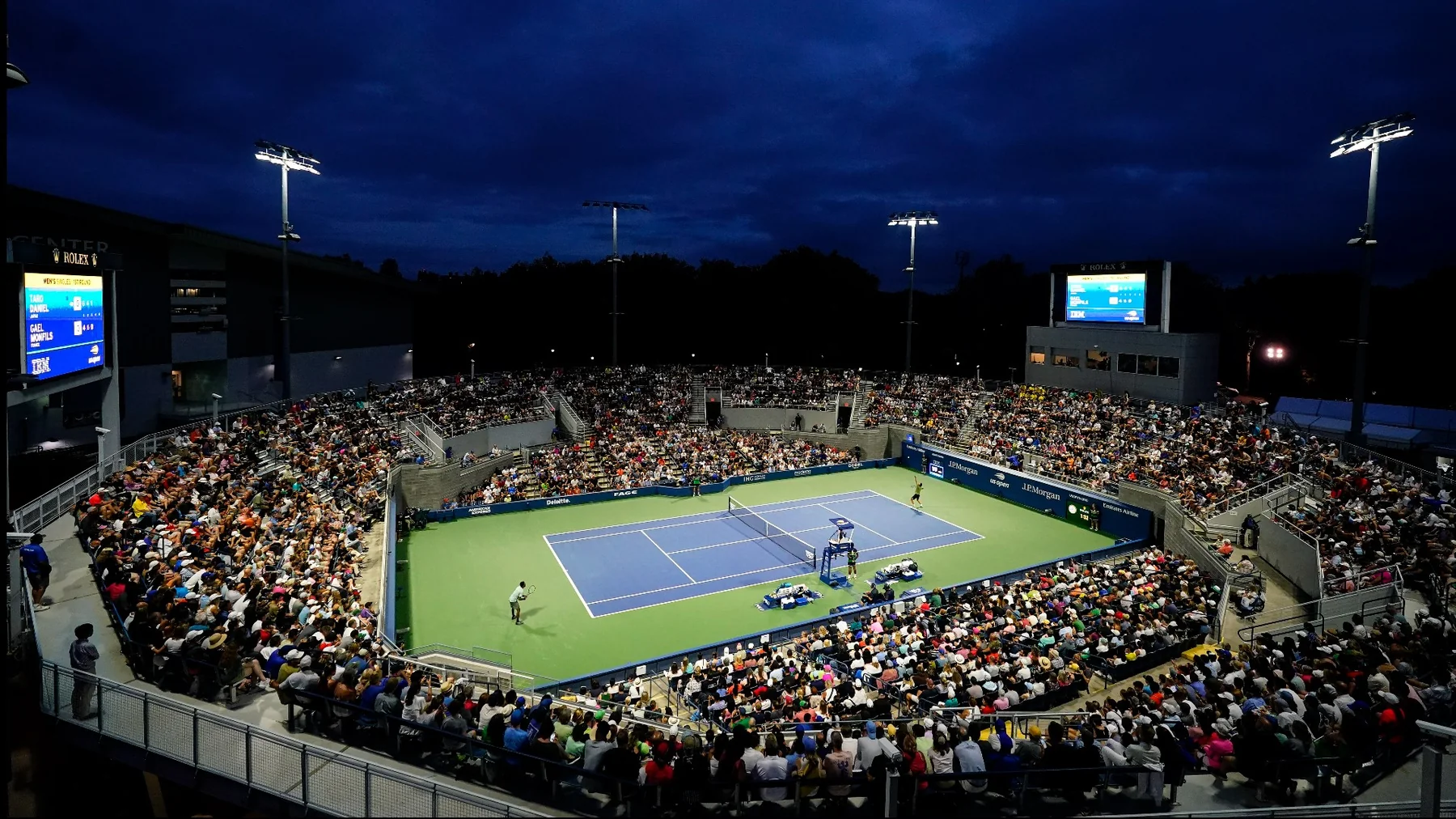
Choosing a seat for the tennis you want to watch
At Court 17, choose an available position that helps you follow the match in front of you. A lower seat emphasizes contact, sound and a player's reactions; a higher position can make the geometry of a rally easier to read. With general admission, the best practical choice is often a useful open view rather than the perfect chair that never becomes available.
Behind a baseline, try watching the returner's position for a full service game. Does the player retreat on a second serve, step inside the baseline, or move differently from the deuce side to the advantage side? Then follow the next recovery step after the return. Court 17's compact, sunken setting, described in the USTA facility guide, rewards that kind of sustained attention.
From a sideline, concentrate on the server's rhythm and the speed of the next shot. You get a different impression of how little preparation time a fast return allows. From a corner, you can balance that close view with a better sense of the spaces being opened across the court. None of those preferences makes another spectator's choice wrong; they simply offer different ways to understand the contest.
Doubles adds an especially good reason to stay. Look beyond the player striking the ball: watch the partner's starting position, the movement before a poach and how the pair react when a return passes the net player. Court 17 has hosted established doubles names as well as singles prospects. The archival photograph below shows Daniela Hantuchova and Martina Hingis in their 2013 match against Sara Errani and Roberta Vinci, with the venue and participants identified by the original photographer.
Check the event's draw to understand the partnership and round, then give yourself a set to learn the patterns. A doubles match can become much more involving once you recognize which return is creating the opening. Avoid leaving just because the names are less familiar: following one developing tactical contest can be more satisfying than collecting a succession of brief courtside photographs.

Sun, shade and rain at an open-air stadium
Plan for an outdoor seat on Court 17. Shade is limited, and an appealing view of the baseline does not necessarily come with protection from the afternoon sun. This is a meaningful difference when deciding how long to stay: a court that feels wonderfully close for one set can become an uncomfortable base for an entire hot day.
Shade is limited and changes through the day
The Stadium 17 shade guide identifies small shadows near the south-side press box and video board, with the west sideline gaining shade later in the day. Those are useful areas to examine, but a moving shadow and a general admission seat cannot be booked as a guaranteed combination. The seats enjoying shade may already be occupied.
Unlike Grandstand's partial canopy, Court 17 offers relatively little cover around the bowl. Judge the actual conditions when you arrive. If comfort is the priority, an available higher place near a shadow can be preferable to a low chair in direct sun. A fixed “shaded after” hour from another visitor's report cannot account for your date, exact position or a match that begins much later than expected.
Bring appropriate sun protection and organize breaks before committing to consecutive matches. For a party with different tolerances for sun, agree on a meeting point outside the court. One person's wish to see another service game should not leave somebody else waiting uncomfortably in the stands.
Rain plans depend on your actual ticket
There is no roof to close over Court 17. Your weather remedy comes from the terms of the ticket you purchased, rather than from the court you happened to visit. The 2026 weather policy set conditions for eligible purchases and cancellation-related exchanges; it did not make every interrupted outdoor match refundable.
If you intend to head to Armstrong during rain, remember that its general admission area can also fill. A grounds pass does not create an assigned seat there, and it does not admit you to Ashe. Keep the confirmation, applicable policy and official session announcement available together. For a future visit, check that season's terms rather than carrying over a remedy described for 2026.
Finding Court 17 matches on the daily schedule
Find the specific day on the Order of Play, then locate “Stadium 17” or “Court 17.” Check the competitors, event and round together. A player appearing in the tournament draw is not yet a player assigned to this court, and a promising matchup on one day does not establish the next day's venue.
For an advance visit, the tomorrow schedule can help you identify published match information. Verify the selected date and timezone before acting on an entry. TBA means a detail still lacks confirmation; it is neither a reliable starting appointment nor proof of cancellation. Outside the tournament, a schedule page may have no current court program. There are no live October matches implied by this guide.
Read the sequence before trusting the clock
A Court 17 match listed after another contest depends on what happens before it. If the preceding men's singles match extends through a deciding set, your target match, the seating turnover and the sunlight conditions may all shift together. “Not before” provides an earliest start, while “following” indicates the next place in the order. Neither removes the uncertainty of unfinished tennis.
Before joining a line, make three checks: is this still the assigned court, how far has the previous match progressed, and do you have a realistic alternative nearby? That is more useful than repeatedly refreshing an estimated start while ignoring the score on court. Recheck after rain or another significant interruption, since the program can change.
The USTA schedule help page provides the route to the official tournament schedule. Use the latest published daily plan for decisions about one specific player. A ticket seller's stadium description or an old Court 17 highlight can explain the venue, but cannot confirm where that player will compete on your visit.
Arrival, accessible seating and a workable backup court
Locate Stadium 17 on the current grounds map before making it your first destination. Once inside the campus, follow the stadium name and the entry staff's directions. A line for a nearby attraction is not necessarily the line for the court, and the view from outside a busy entrance does not establish whether suitable seats remain.
Use our parking and grounds map guide for the wider approach to Flushing Meadows. For Court 17 itself, save your attention for the last part of the journey: identifying the entrance, understanding the seating situation and deciding whether the match is still worth the wait. Avoid spending your first hour crossing the grounds repeatedly because different members of the party have different destinations in mind.
If you need accessible viewing, establish the arrangement before depending on a general admission queue. The USTA accessibility help page describes sitewide ramps and elevators and points to detailed visitor guidance. Ask staff specifically about the route to the Court 17 viewing position, companion arrangements and any availability limits. A photograph of a low courtside seat cannot answer whether its approach meets your needs.
Before separating, agree on three things: the match that makes Court 17 a priority, the point at which you will choose an alternative, and a meeting place if somebody leaves. Select the alternative from that day's actual program, ideally without requiring another long trip across the campus. Keep phones available for the essentials rather than using every break to chase a different rumored player appearance.
Court 17 works best when the plan allows you to settle into the match. If you find a comfortable available view and an engaging contest, stay long enough to follow its changes. The reward is the chance to watch the sport closely, with the surrounding crowd reacting to the same points.
Loading comments…