US Open Tennis Tickets 2026: How to Buy, Sessions, Dates and Packages
A fan-first 2026 US Open ticket guide to official sellers, session access, packages, resale, mobile entry and choosing the right date.
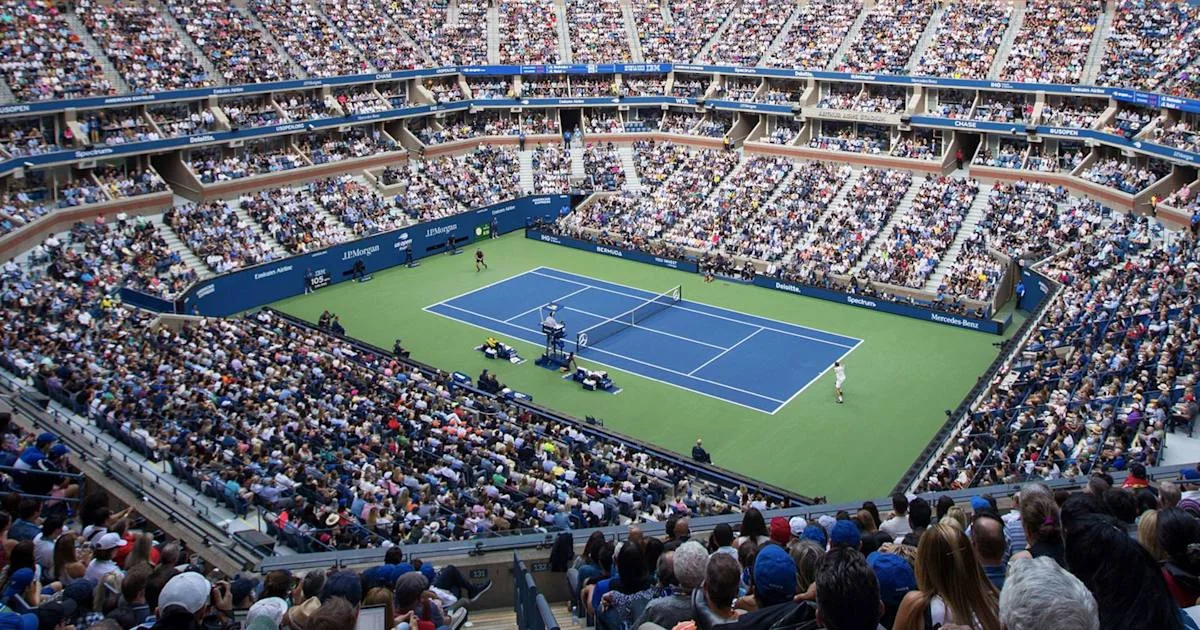
2026 US Open tickets are on public sale now for an event running August 23 through September 13 at the USTA Billie Jean King National Tennis Center. The smartest purchase is not automatically the cheapest seat: it is the session whose court access, round and timing match the tennis you want to watch. This guide explains the official buying route and the choices hidden behind each ticket label.
Where to Buy Official 2026 US Open Tickets Safely
Buy through the ticket links on USOpen.org or the official Ticketmaster US Open hub. That is the cleanest route to primary inventory for the 2026 tournament and, when a session is sold through, to tickets clearly marked as verified resale. The official US Open ticket page says individual tickets are now on public sale and identifies its Ticketmaster-powered marketplace as the only secondary site where purchases are authenticated and verified. That distinction matters more than a familiar-looking logo or a search ad.
Before opening the seat map, confirm the tournament date on our 2026 US Open schedule. A ticket is tied to a session, not to a promised player. A Sunday day ticket and a Sunday evening ticket can lead to entirely different matches, and the final court assignments may not be known when you buy. Check the date, stadium, day-or-evening label, quantity and seat location on the final checkout screen. If any one of those details is wrong, a genuine ticket can still be the wrong purchase.
The safe purchasing hierarchy
- Primary tickets reached from USOpen.org or Ticketmaster's official event hub.
- Ticketmaster listings explicitly identified as verified resale when primary seats are unavailable.
- The National Tennis Center box office during the event, with hours and inventory checked first.
Third-party marketplaces may deliver valid tickets, but the official warning is plain: buyers should use caution, and problems must generally be handled with the original seller. That creates extra exposure when a match is rescheduled, a transfer is delayed or the barcode never appears. A private-message seller who shows a screenshot is an even bigger red flag. The 2026 mobile-ticketing instructions say screenshots and email confirmations are not accepted for entry.
After purchase, sign into the account associated with the order and put each ticket in Apple Wallet or Google Wallet, or access it through the official US Open app. If one person bought for a group arriving separately, transfer the tickets early; the recipient needs a Ticketmaster account to accept them. The editorial rule is simple: do not judge the purchase by whether someone can send an image of a barcode. Judge it by whether the ticket appears inside the official account and can be loaded into the approved mobile entry channel.
Which Ticket Type Matches the Tennis You Want to See?
The right ticket is the one that protects your must-see priority. Choose Arthur Ashe Stadium if guaranteed access to the leading show court matters most; choose Armstrong, Grandstand or Grounds Admission if you value movement and close-range early-round tennis. None of those alternatives admits you to Ashe, so a buyer hoping to follow a top seed cannot treat every grounds-enabled product as equivalent.
| Ticket | Guaranteed anchor | Other access | Best fit |
|---|---|---|---|
| Arthur Ashe | Assigned Ashe seat for that session | General-admission areas in Armstrong, Grandstand and field courts | Marquee names and weather certainty |
| Louis Armstrong | Assigned Armstrong seat | Grandstand and field courts; no Ashe | High-level matches at closer scale |
| Grandstand | Assigned Grandstand seat | Armstrong general admission and field courts; no Ashe | First-week atmosphere and tactical viewing |
| Grounds Admission | No reserved seat | First-come Armstrong, Grandstand and field courts; no Ashe | Maximum variety and roaming |
An Ashe day ticket is often best understood as a grounds pass with a protected center-court seat. You can watch a compelling doubles match from the rail on an outer court, then return to Ashe without having gambled your place there. An evening Ashe ticket is narrower: it is designed around the night program, and entry timing does not provide the same full-day roaming opportunity. Read the session label, not merely the stadium name.
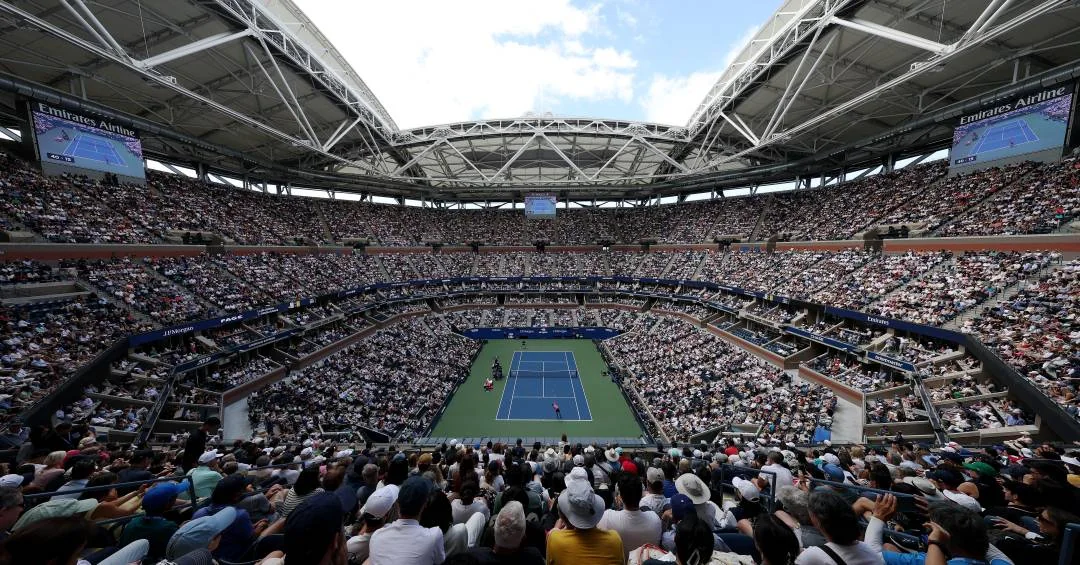
For the opening rounds, the best pure tennis day may come from Armstrong, Grandstand or Grounds Admission. The field is still large, singles and doubles spill across the complex, and the proximity on smaller courts lets fans read return position, footwork and coaching-box tension in a way the top deck of Ashe cannot. Later in the fortnight, singles inventory contracts toward Ashe, so the value calculation changes. Use the live US Open Order of Play to turn your ticket's access rights into a practical court plan.
The 2026 Dates and Rounds That Change Ticket Value
The best date depends on whether “value” means more matches, better odds of seeing a favorite or a bigger occasion. The 2026 event spans August 23 through September 13. Fan Week occupies the opening week, while main-draw singles begins Sunday, August 30 and ends with the women's final on Saturday, September 12 and the men's final on Sunday, September 13. That calendar produces four very different ticket markets.
Fan Week: access and discovery
Qualifying starts August 24, and the reworked mixed-doubles competition has ticketed rounds on August 25-26. Fan Week can show elite practice, emerging players and qualifying pressure at lower cost, but it is not a substitute for a main-draw singles ticket.
Rounds 1-2: maximum inventory
The first round runs August 30-September 1 and the second September 2-3. With both draws still crowded, the field courts carry serious singles. This is the strongest phase for fans who can move quickly and enjoy scouting rather than waiting for one celebrity.
Rounds 3-4: quality meets choice
September 4-7 removes many mismatches without emptying the grounds. Seeds begin meeting dangerous floaters, doubles has texture, and Armstrong or Grandstand can still offer a match worthy of Ashe at a more intimate viewing distance.
Quarterfinals onward: stakes over volume
From September 8, major singles attention narrows sharply toward Ashe. You buy greater certainty about round and occasion, but fewer simultaneous matches. Finals tickets guarantee the championship stage, not a particular finalist bought months ahead.
The three-day first round is especially important for 2026 buying. A fan purchasing before the draw and Order of Play cannot know which of those six opening day/evening Ashe sessions will contain a particular player. Buying multiple sessions improves the probability; buying one session means accepting assignment risk. Conversely, a fan interested in the sport broadly may welcome that uncertainty because almost every opening date has more viable alternatives than one person can watch.
Use the full 2026 schedule to identify the round, then revisit the daily schedule close to your visit. The official timetable remains subject to change, and tennis has no fixed match duration. A five-set men's match can push the next contest deep into the night; weather can move outer-court play; a withdrawal can alter the draw. Buy the phase you want, but leave the exact player itinerary flexible until court assignments are official.
Single Sessions, Multi-Session Plans and Hospitality Packages
A single-session ticket buys flexibility; a multi-session plan buys repetition and seat continuity; a Premier package buys service and amenities around the tennis. These products are often grouped under “packages,” but they solve different problems. Start with how many sessions you will realistically attend, then decide whether the same seat, premium dining or client hosting is worth paying for.
Single sessions are the natural choice for most visiting fans. You can select one date, one stadium and a day or evening program, then build the rest of the trip around it. They are also easier to adjust through verified resale if travel changes. The drawback is assignment risk: one pre-draw purchase cannot guarantee a favorite player, and stitching together several high-demand singles may cost more than an original plan.
Multi-session plans are built for repeat attendance. The official 2026 catalog, for example, describes an Arthur Ashe Opening Sessions plan containing seven first-round sessions from August 30 through September 2, and a Full Series covering all 27 Ashe sessions across 14 days and 13 evenings. The Full Series advertises savings compared with buying singles, account-service benefits and a dedicated entrance. Many plans are already marked sold out, which is an availability signal—not proof that every underlying date is unobtainable. Individual seats and verified resale listings can still appear separately.
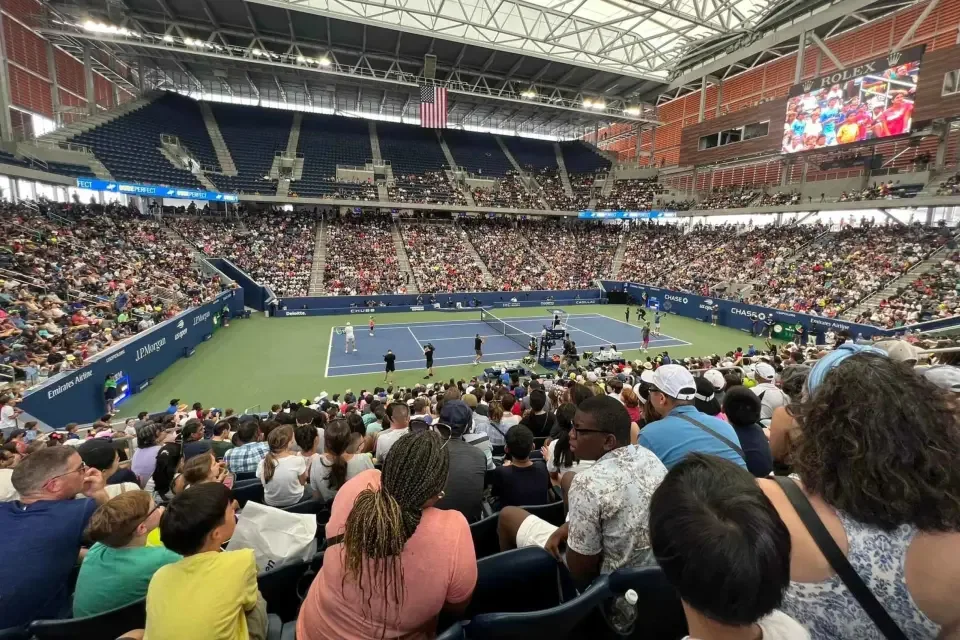
US Open Premier is a different tier. Its 2026 inventory includes Luxury Suites, The Blue Room, The Club, The Overlook and courtside experiences. These pair desirable Ashe seating with elements such as premium dining, dedicated service, private or shared club space and expedited arrival. The tennis ticket remains central, but the premium is justified by comfort and hospitality rather than by receiving more matches. For a fan who spends every changeover scouting Court 17, that may be poor value; for a corporate group needing predictable hosting, it can be the right product.
Put every candidate on the same cost-per-attended-session basis, then add a value for benefits you will actually use. Check all plan dates against the site's US Open calendar, count travel and recovery days, and remember that late-night sessions can make a next-morning ticket feel less attractive. A bundle saves nothing if fatigue or logistics leave several barcodes unused.
A Step-by-Step Buying and Mobile Entry Checklist
A smooth US Open entry begins before checkout. Verify the session twice, use one consistent account email, and save the actual mobile ticket before traveling to Queens. The tournament does not accept screenshots, PDFs or email confirmations at the gate, so “I have the receipt” is not a workable backup.
1. Freeze the event details before paying
Write down date, session number, day or evening, stadium, section, row, seat count and all-in total. Compare the all-in figure rather than the first displayed price. If buying resale, make sure the listing sits inside the official Ticketmaster flow and is labeled accordingly.
2. Match the account to the order
Sign in with the same email used for purchase. The US Open app's Manage Tickets area associates with the Ticketmaster account through that address. An old work email, a spouse's account or an Apple relay address can create avoidable confusion, so resolve it days—not minutes—before play.
3. Distribute the group’s tickets
A single phone can swipe through several tickets when everyone enters together. If arrivals may differ, transfer each ticket in advance. The recipient must accept it into an account; once accepted, the corresponding credential in the sender's account is no longer valid. Confirm acceptance rather than trusting that the invitation email was delivered.
4. Add the credential to the wallet
Apple Wallet or Google Wallet reduces dependence on cellular service. The official app is the alternative and also carries maps, schedules and match updates. Charge the phone, raise screen brightness at the scanner and carry a small permitted power bank if needed.
On the morning of the session, check the US Open schedule today and confirm gate time. Tennis scheduling is fluid: your ticket remains valid for the named session, but individual match times and court assignments can move. Arrive early enough to clear security and walk to the first court. Missing the opening games because a barcode is still trapped in an unaccepted transfer is the least forgivable unforced error of the day.
Weather, Schedule Changes and the Fine Print Fans Miss
A US Open ticket guarantees admission to its named session and the access attached to that product; it does not guarantee a player, a match count or an unchanged start time. The official terms allow the schedule of play, session dates, gate openings and number of matches to change. Those ordinary scheduling changes do not by themselves entitle a holder to a refund or exchange.
That matters because fans often buy an “Alcaraz ticket” or a “Gauff night” before the court assignment exists. In contractual terms, no such product exists. The draw tells you the date range in which a player could appear; only the published Order of Play identifies the court and sequence, and even that can be revised. A withdrawal, a long preceding match or a weather interruption can change the experience without invalidating the session.
Rain protection is not the same as refund protection
Arthur Ashe and Louis Armstrong have roofs, so their ticket holders have a much stronger chance of seeing live stadium play through rain. Yet the 2026 inclement-weather exchange policy specifically excludes Ashe and Armstrong tickets. Its limited exchange framework is aimed at directly purchased Grandstand single-session/mini-plan tickets and single-session Grounds Admission.
Even within that eligible group, a wet day is not automatically a cancelled session. The policy measures whether play started, how many minutes were completed and, in some cases, whether a match finished. It also excludes tickets acquired through resale or Ticket Transfer, including resale bought on Ticketmaster. That is a subtle but consequential distinction: official verified resale addresses authenticity, but it does not recreate every protection attached to a direct primary purchase.
For a weather-anxious visitor with only one available day, the strongest hedge is a day seat in Ashe or Armstrong: a roofed reserved anchor plus access to the rest of the grounds. For a flexible local fan, an early-round Grounds or Grandstand product can offer more tennis per dollar, with the understanding that outdoor inventory bears more interruption risk. Neither choice is universally superior; the decision turns on whether certainty or variety has greater value to you.
Read the current policy at purchase and again before traveling, keep proof of the original channel, and do not assume social-media summaries apply to your ticket. The USTA reserves discretion and states that the policy can change. In tennis terms, the smart buyer manages the conditions: protect the non-negotiable part of the day, then stay flexible enough to follow the best live match available.
For most first-time fans, an early-round day ticket is the strongest starting point because it combines hours on the grounds with a deep menu of matches. Add an Ashe seat when one marquee program is non-negotiable; choose Armstrong, Grandstand or Grounds Admission when variety and proximity matter more. Buy through the official channel, prepare the mobile credential early and let the Order of Play—not guesswork—shape the final court plan.
Loading comments…