Serena and Venus Williams at the 2026 US Open: Doubles Result and Comeback Story
Serena and Venus Williams pushed No. 14 seeds Hao-Ching Chan and Maya Joint through three hours before losing a deciding tiebreak. Here is the verified score, match story and historical context.
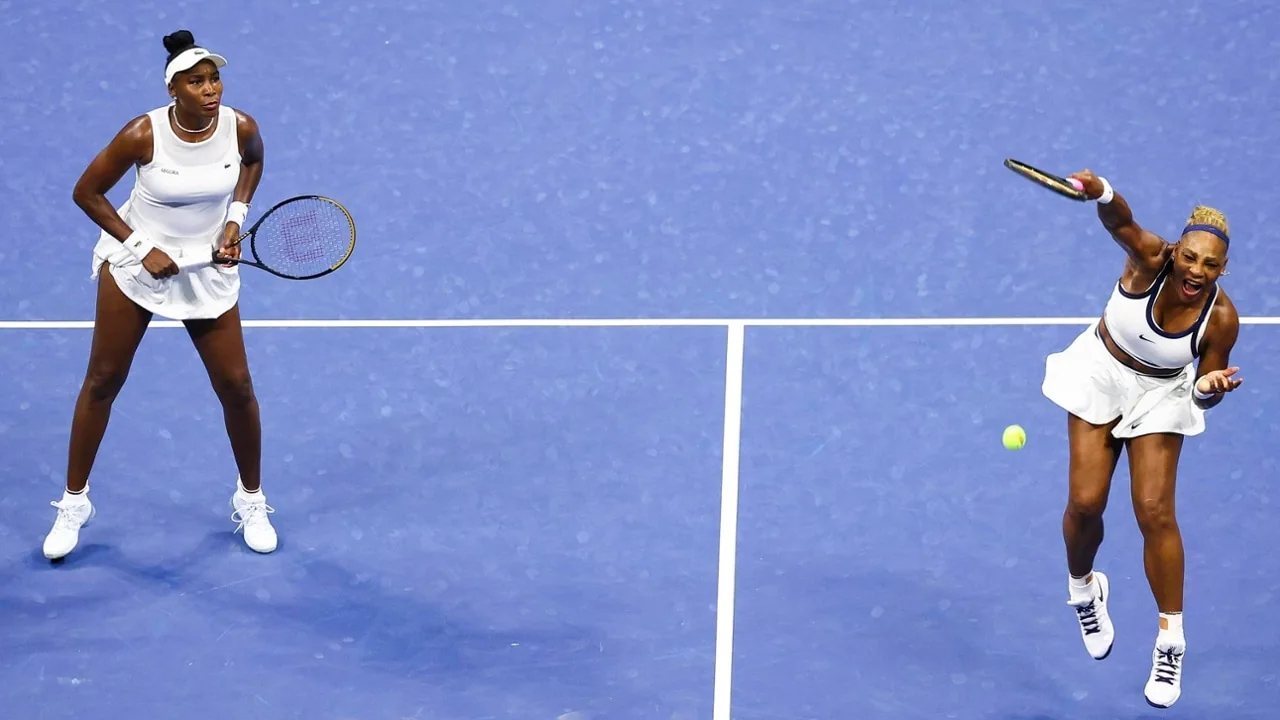
Serena and Venus Williams lost their 2026 US Open women’s doubles first round to Hao-Ching Chan and Maya Joint, 6-3, 6-7(6), 7-6(7). The sisters recovered from 4-1 down in the third set and led the deciding tiebreak 5-0 before the No. 14 seeds won it 10-7.
This completed-result analysis is current through September 12, 2026 at 10:30 p.m. EDT. It covers the women’s doubles main draw and clearly separates it from Serena’s earlier mixed-doubles quarterfinal run with Carlos Alcaraz.
What Was Serena and Venus Williams’ 2026 US Open Doubles Result?
Hao-Ching Chan and Maya Joint defeated Serena and Venus Williams 6-3, 6-7(6), 7-6(7) in the first round of the 2026 US Open women’s doubles draw. The No. 14 seeds won the deciding tiebreak 10-7 after the teams played a full third set to 6-6. The match lasted 3 hours and 2 minutes in Arthur Ashe Stadium on Friday, September 4.
Winners
Hao-Ching Chan / Maya Joint
No. 14 seeds
Final score
6-3, 6-7(6), 7-6(7)
Third-set tiebreak: 10-7
Williams entry
Women’s doubles wild card
First major together since 2022
Time and court
3 hours, 2 minutes
Arthur Ashe Stadium
From the Williams sisters’ perspective, the same score is written 3-6, 7-6(6), 6-7(7). That change of order is only scoring perspective; it does not indicate a different match. The final 7-6 set also should not be compressed into a one-off match tiebreak. They played six games apiece in the third and then used a first-to-10 deciding tiebreak.
The entry was a wild card rather than a seeded return. Serena, 44, and Venus, 46, were playing their first major together since their 2022 US Open first-round appearance. They had reunited on tour in Cincinnati three weeks earlier, but New York was the first time this version of the comeback reached a Grand Slam stage. Chan and Joint advanced to the second round; the Williams campaign was complete after this one match.
This result belongs to the main-draw women’s doubles bracket. It is separate from Serena Williams’ earlier mixed-doubles partnership with Carlos Alcaraz, which used shorter sets and reached the quarterfinals. For the completed tournament picture, use the US Open results hub. For this match, the short answer is clear: the sisters returned together, pushed a seeded team for more than three hours and lost in the first round by three tiebreak points.
How the Three-Hour First Round Became a Thriller
The match earned its “thriller” label through three separate reversals, not celebrity atmosphere alone. Chan and Joint closed the opening set with authority. The Williams sisters survived five set points to force a third. Then each team surrendered a major lead before the seeded pair finally won the deciding tiebreak.
Chan and Joint Took the Cleaner Start
The opening set was level at 3-3 after the Williams sisters recovered from a slow beginning. That was the point at which Chan and Joint established the first durable advantage. They took the next three games, finished the set 6-3 and made the returning team look like what it was: a decorated partnership playing its first major together in four years.
The No. 14 seeds brought relevant doubles form rather than serving as a ceremonial first-round opponent. Chan had been a top-five doubles player and major finalist; Joint entered with recent tour-level doubles success. Their cleaner start came from holding shape through the middle of the court and making the Williams sisters play another ball. With no verified public box score for winners and errors, the honest conclusion is about scoreboard pressure and positioning, not invented shot totals.

The Williams Sisters Fought Back in the Second Set
The second set never offered an easy opening. Venus held through a long service game for 3-2 and then punched a volley winner for 4-3, two moments that kept the scoreboard close while the crowd grew louder. Serena later supplied an aggressive poach and a reflex volley during the push to a tiebreak.
At 6-6, the sisters still needed five set points before finishing the tiebreak 8-6. That detail is more revealing than a generic claim that experience took over. They had to keep solving new pressure points after earlier chances disappeared. When the set ended, 1 hour and 44 minutes had passed, and a match that began as a difficult reunion had become a genuine contest.
A 5-0 Tiebreak Lead Slipped Away
The third set repeated the comeback pattern at a larger scale. From 1-1, Chan and Joint won three games in a row for 4-1. Serena and Venus responded with three straight of their own to reach 4-4. The next game became a hinge: Chan and Joint saved three break points, avoided falling behind and eventually carried the set to 6-6.
The Williams sisters then raced to 5-0 in the first-to-10 tiebreak. It looked commanding but was not close to mathematically complete. Five points represented only half the target, and a deciding tiebreak still had to be won by two. Chan and Joint absorbed the early first strike more effectively, tightened their net play and won 10 of the final 12 points. A 0-5 deficit became a 10-7 victory.
That ending should be described as both a lost opportunity and an earned recovery. Serena and Venus let a major lead go; Chan and Joint still had to construct a 12-point response inside a stadium backing the other team. The women’s doubles draw records only a first-round exit, but the sequence explains why the result felt much larger than an ordinary opening match.
Why the Comeback Was Competitive but Uneven
The Williams sisters did not come within five tiebreak points of victory through reputation alone. Their familiar doubles instincts still produced useful patterns: one player occupying the middle, the other protecting behind her, and both looking to finish before Chan and Joint could settle into a rally. What they could not reproduce consistently was the serve-and-return platform that once made those patterns overwhelming.
Venus Drove the Team Through the Middle
Venus supplied many of the clearest forward-moving moments. The official US Open recap singled out her long service hold for 3-2 in the second set and a punched volley that made it 4-3. The Guardian’s on-site report went further, judging that she was often the best player on court. That is a reporter’s assessment rather than an official performance grade, but the described points support the underlying idea: Venus repeatedly gave the team a way to shorten exchanges.
Her position near the middle also asked Chan and Joint to hit closer to the lines or lift the ball over an experienced volleyer. That pressure helped the sisters turn a tight second set and recover from 1-4 in the third. The same aggression carried risk. The Guardian noted missed late volleys, a reminder that reaching the right finishing position and completing the shot are different skills under score pressure.
Serena’s Serve and Return Rust Changed the Pattern
Serena’s best moments showed why the comeback remained dangerous. The official recap credited her with an aggressive poach and a reflex volley during the closing push in set two. Her anticipation and compact hands could still flip a point before the younger opponents established their preferred formation.
The repeatable first shot was less secure. The Guardian reported that Serena struggled to land returns and, by the third set, was rolling in first serves rather than producing the 120 mph pressure deliveries she had shown in mixed doubles one week earlier. Without an official serve-speed or winner table for this match, the fair reading is qualitative: Chan and Joint received more playable starts than Serena had allowed in her sharper earlier appearance.
What still translated
Poaching instincts, reflex volleys, middle-court presence and the shared recognition of when to close forward.
What fluctuated
First-shot quality on serve and return, plus the ability to finish late volleys after long pressure sequences.
That is what “rust” means here: inconsistent repetition after limited team match play, not an excuse and not a judgment based on age. The Venus Williams profile and Serena Williams profile record far larger careers. This particular night showed that their doubles vocabulary remained intact even when execution moved in and out.
Why This Was Different From Serena’s Mixed Doubles Run With Alcaraz
The Williams sisters’ match was women’s doubles, not a continuation of Serena Williams and Carlos Alcaraz’s mixed-doubles campaign. The two appearances happened in separate draws, with different partners, dates, opponents and scoring formats. Combining their scores would turn two completed tournament records into one inaccurate story.
| Detail | Serena with Venus | Serena with Alcaraz |
|---|---|---|
| Event | Women’s doubles main draw | Mixed Doubles Championship |
| Partner | Venus Williams | Carlos Alcaraz |
| Dates | September 4 | August 25 during Fan Week |
| Set format | Conventional six-game sets | Short sets to four, no-ad scoring |
| Completed result | Lost in Round 1 | Reached the quarterfinals |
With Alcaraz, Serena beat Erin Routliffe and Lloyd Glasspool 5-3, 4-1 before Belinda Bencic and Flavio Cobolli won the quarterfinal 5-4(4), 4-1. Those short sets were part of a redesigned 16-team mixed event. If a third set had been needed, it would have been replaced by a 10-point match tiebreak.
That run produced a 1-1 team record in a tournament completed on one compressed day. The first-round victory mattered because Routliffe and Glasspool brought specialist doubles experience, while the quarterfinal exposed the value of Bencic and Cobolli’s cleaner spacing. It was a real competitive result, but it did not place Serena in the women’s doubles second round or give Venus any share of the mixed result.
With Venus, Serena played a full best-of-three-sets first round. Chan and Joint won the first set 6-3, the sisters took the second 7-6(6), and the third reached 6-6 before its first-to-10 deciding tiebreak. The identical “10-point tiebreak” phrase therefore describes different jobs: a replacement for an entire third set in mixed doubles, but the finish to a completed third set in women’s doubles.
The opponent lists are another quick accuracy check. Any result naming Routliffe, Glasspool, Bencic or Cobolli belongs to mixed doubles. Any 2026 result naming Chan and Joint belongs to the sisters’ women’s doubles return. Keeping those names beside the scores is more reliable than using “Serena’s doubles match” as a catch-all.
The performances also resist a simple one-to-one comparison. Serena served more aggressively in the shorter mixed event, but she had a different partner, less court time per match and different formation decisions. Our complete Serena–Alcaraz mixed-doubles recap preserves those scores and tactics. This article keeps the Williams sisters’ 0-1 women’s doubles result separate.
The Williams Sisters’ US Open Doubles History
The 2026 result sits inside a New York partnership that began nearly three decades earlier. Serena and Venus did not win every time they entered together, but their best US Open runs form part of one of the most efficient championship records in doubles history: 14 major titles and no losses in a major women’s doubles final.
Titles in 1999 and 2009
The sisters’ first US Open team appearance came in 1997, when Julie Hetherington and Kathy Rinaldi beat them 6-4, 7-5 in the first round. Two years later, Serena and Venus won the title by defeating Chanda Rubin and Sandrine Testud in the final. The early loss and rapid championship capture make the 1999 run more useful than a simple “first title” label: their shared game was still becoming a finished product.
They returned to the champions’ list in 2009, defeating defending champions Cara Black and Liezel Huber in the final. A decade between New York trophies shows the unusual span of the partnership. The two US Open titles joined six at Wimbledon, four at the Australian Open and two at Roland Garros for a 14-major women’s doubles collection. Add three Olympic doubles gold medals, and the official US Open recap counts 17 major-or-Olympic finals won without defeat.
1997
US Open team debut
First-round defeat
1999
First New York title
Rubin/Testud beaten in final
2009
Second New York title
Black/Huber beaten in final
From the 2022 Farewell Stage to the 2026 Return
The later chapters have been about returning rather than extending the title count. Their last major doubles trophy came at Wimbledon in 2016. They won a second-round match at Roland Garros in 2018, then played their next major together at the 2022 US Open, where Lucie Hradecka and Linda Noskova won 7-6(5), 6-4 in Round 1.
That 2022 appearance carried the expectation that Serena was closing her career. The next team match did not arrive until Cincinnati in August 2026, when Marta Kostyuk and Peyton Stearns won 6-2, 1-6, [10-8]. Three weeks later, the New York wild card delivered the sisters’ first major together in four years.
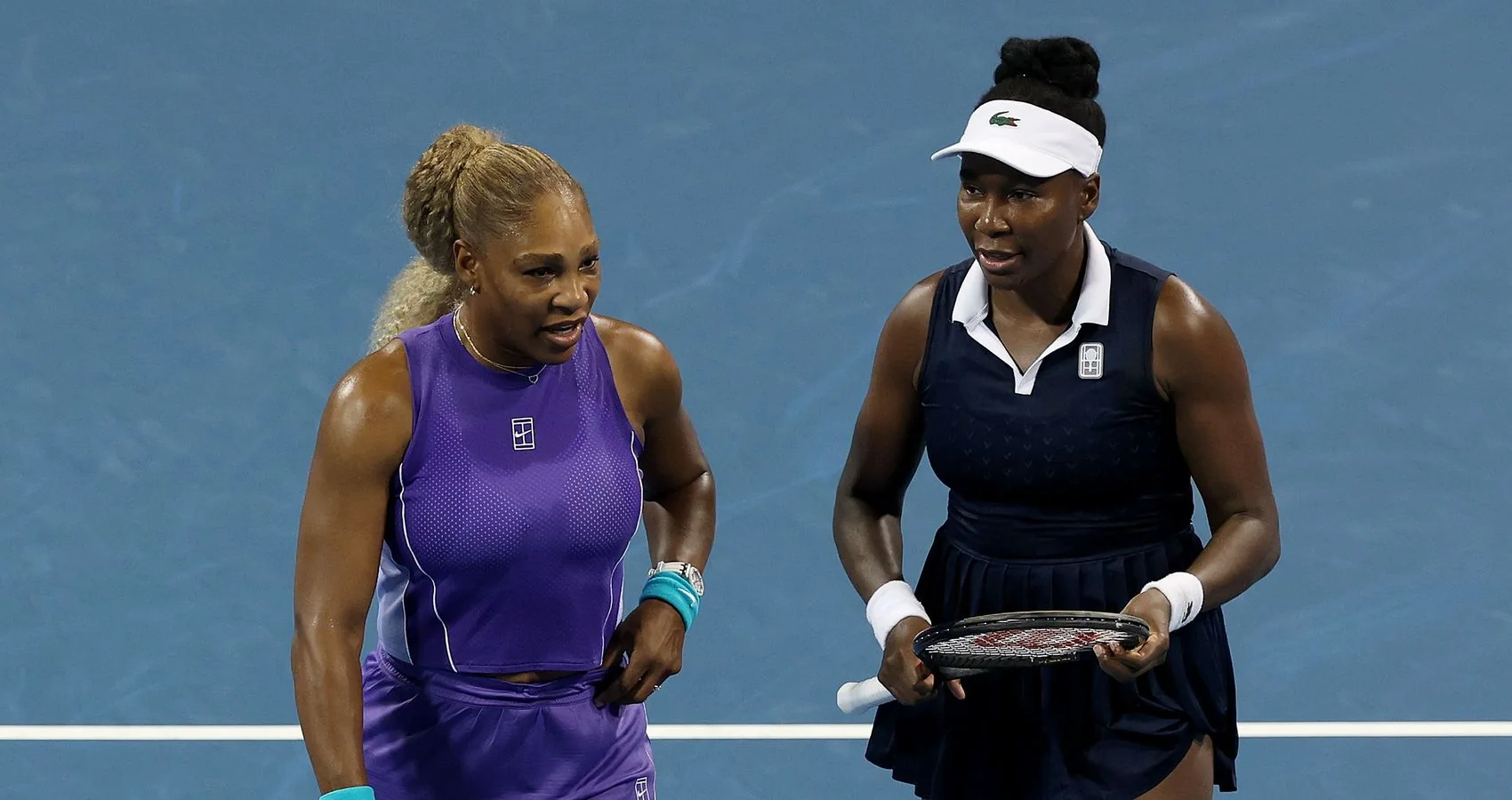
The Chan/Joint defeat leaves them without a team win since 2018, yet it added something the score archive alone cannot show: a seeded pair needed more than three hours to advance. The 2026 women’s doubles draw records an opening-round exit. The longer timeline records a competitive return, while offering no basis to call it their last match together.
Serena and Venus Built Different US Open Singles Legacies
The sisters share two US Open women’s doubles trophies, but their individual New York records should be read separately. Serena’s singles career at Flushing Meadows is a story of title-winning across 15 years. Venus’s is concentrated around an extraordinary early run that produced four finals in six tournaments and consecutive championships.
Serena’s Six Singles Titles and Long Championship Span
Serena won her first major singles title at the 1999 US Open, defeating Martina Hingis in the final. She won again in 2002 and 2008, then completed a three-peat in 2012, 2013 and 2014. Six singles titles tie Chris Evert for the women’s Open Era tournament record.
The numbers matter, but the 15-year gap between the first and last titles explains more. The teenager who broke through in 1999 and the established champion who controlled three consecutive tournaments from 2012 through 2014 did not win with an identical game. The span required changes in movement, point construction and scheduling while new groups of opponents studied her strengths.
Keep the disciplines separate
Serena’s New York résumé includes six singles titles, two women’s doubles titles with Venus and the 1998 mixed-doubles title with Max Mirnyi. Those are three distinct event totals, not nine editions of the same championship.
The Serena Williams player page gives the tournament record behind the comeback. It also explains the weight of the 2026 crowd response: fans were not only welcoming back a famous name, but a player whose first and last US Open singles titles bookended much of the modern tournament’s history.
Venus’s Back-to-Back Singles Championships
Venus reached her first US Open singles final in 1997 as a teenager, losing to Hingis. Three years later she beat Lindsay Davenport for the 2000 title, then defeated Serena in the 2001 final to retain it. Serena reversed the family result in the 2002 championship match, giving Venus three consecutive finals from 2000 through 2002.
That sequence places the sisters’ shared history inside direct competition. They could build an unbeaten major-final record as a doubles team, then occupy opposite baselines with the singles trophy at stake. Venus’s two singles championships are not additions to the 1999 and 2009 doubles wins; they represent a separate achievement under entirely different tactical and physical demands.
Serena singles
6 US Open titles
1999, 2002, 2008, 2012-14
Venus singles
2 US Open titles
2000 and 2001
The Venus Williams player page completes the individual view. Together, the two records explain why the 2026 women’s doubles match felt historic without requiring anyone to pretend a first-round loss changed their championship totals.
What the 2026 Return Means—and What It Does Not Confirm
The strongest comeback conclusion is also the narrowest: Serena and Venus could still change a high-level doubles match. At 44 and 46, in their first major together since 2022, they recovered from a set down, erased a 4-1 third-set deficit and reached 5-0 in the deciding tiebreak against a seeded pair. That is competitive evidence, not a ceremonial appearance dressed up by a large crowd.
The completed result still matters. Chan and Joint won, the sisters’ tournament ended in Round 1, and their most recent team victory remains Roland Garros 2018. A comeback story becomes less credible when it edits out the loss. The achievement was making the match last 3 hours and 2 minutes and forcing experienced opponents to solve pressure repeatedly—not adding a fifteenth major trophy or beginning a confirmed title run.
Confirmed by September 12, 2026
- The sisters returned to a major together.
- They pushed Chan and Joint to 10-7 in the final tiebreak.
- Serena and Venus also followed separate event programs in New York.
Not confirmed
- A 2027 tournament schedule.
- Another major wild card as a team.
- That this was their final match together.
Serena’s 2026 return has included different questions from Venus’s continued tour schedule. Serena played mixed doubles with Alcaraz before partnering her sister; Venus entered singles before the women’s doubles reunion. One shared evening does not merge those individual decisions or prove that either player has chosen the same next step.
For fans, that uncertainty need not diminish the night at all. The Serena and Venus pages can track any confirmed future entries, while the results archive preserves what actually happened. The 2026 return belongs in the Williams story because it was competitive, imperfect and unresolved—not because anyone can already write its sequel.
Loading comments…