Why Jannik Sinner Did Not Play the 2026 US Open
Sinner never entered the 2026 US Open singles draw after a right knee problem kept him out of the North American warmups. Here is what happened and how New York unfolded.
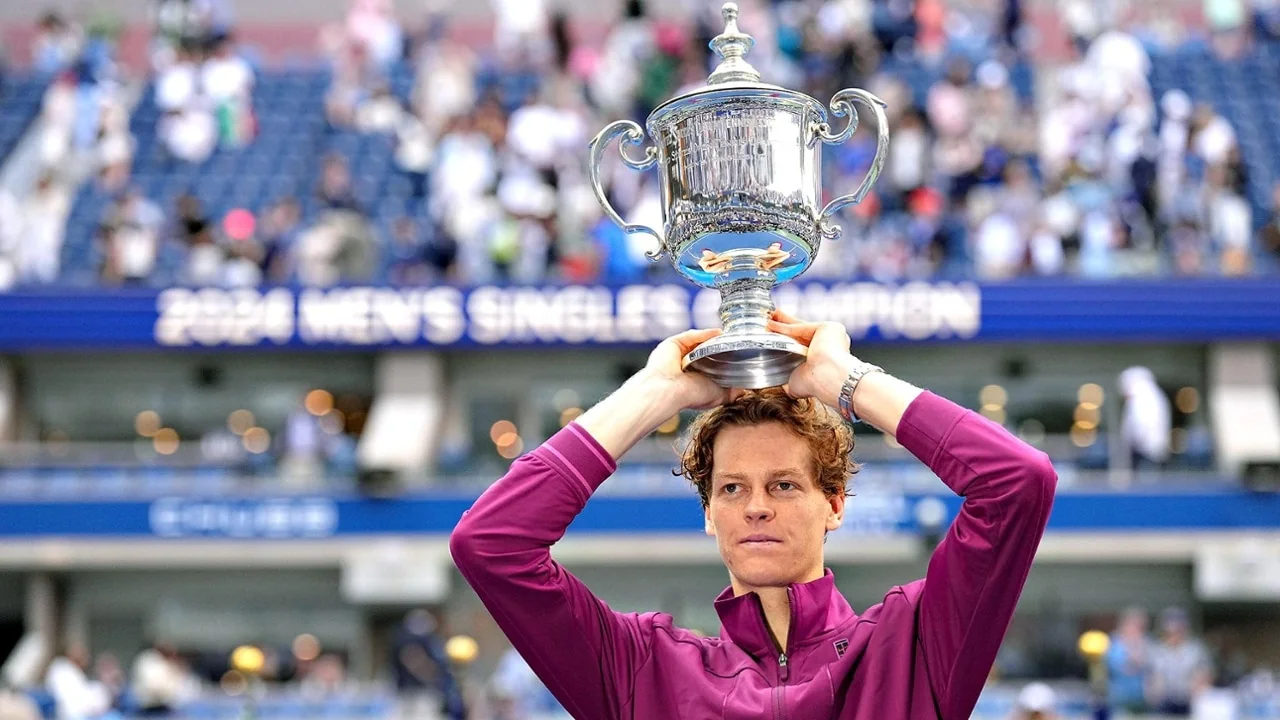
Jannik Sinner missed the 2026 US Open because a right knee injury had not recovered in time. He withdrew on August 21 before the main draw and played no match in New York. This account follows the official decision, the altered men's draw, the completed result and the status of his return as of September 29, 2026.
Why did Jannik Sinner miss the 2026 US Open?
Jannik Sinner did not play the 2026 US Open because a right knee injury had not healed enough for him to compete. He announced his withdrawal on August 21, before the men's singles main draw began. There is therefore no Sinner match, opponent or score to find in the 2026 New York results. As of September 29, the event is over, and that distinction is settled: this was a pre-tournament withdrawal, not an early-round defeat or an on-court retirement.
What Sinner and the tournament confirmed
The US Open's August 21 announcement identified the right knee as the problem. Sinner said that he and his medical staff had worked toward New York and had resumed practice in Monte Carlo, but concluded that he needed more recovery time. He also expressed disappointment about missing a city and crowd that had become important to him. The announcement did not give a detailed medical diagnosis, so it would be misleading to label the condition more specifically than the player did.
The timing matters. Sinner was the world No. 1 and had won six titles in 2026 before the injury interrupted his season. A favorite's late withdrawal changes the composition of an entire 128-player major draw, yet the withdrawal itself is not a tennis result. Readers searching for “Sinner US Open 2026 results” should use the 2026 results page to follow the matches that were played, rather than expect a first-round score under his name.
Why a practice return was not match readiness
Sinner's return to a practice court was an encouraging step, but he and his team judged it insufficient for tournament play. That is a meaningful distinction at a Grand Slam. A men's singles entrant may need to win seven best-of-five-set matches over two weeks, including repeated hard-court movement and quick changes of direction. A short training block cannot establish how an injured knee will respond to that entire load. That last point is an editorial interpretation of the event format, not a claim about Sinner's medical tests.
His absence had already extended through the Canadian and Cincinnati Masters events. According to the contemporaneous PA report, he had not played competitively since the Wimbledon final. New York would have required a first competitive return at the most demanding format on the calendar. The verified explanation is straightforward: his right knee still needed time, and his camp chose not to make the US Open the test case.
How did the injury change his summer schedule?
Sinner's summer stopped after a Wimbledon title and never restarted on the North American hard courts. His last competitive appearance was the July final against Alexander Zverev, which he won to retain his Wimbledon crown. He then missed the Canadian Masters, withdrew from Cincinnati and finally ruled himself out of the US Open. Those are three separate scheduling decisions, not three losses, and the order explains why a New York comeback would have carried so many unknowns.
| Stage | What is confirmed | Why it matters |
|---|---|---|
| July 2026 | Sinner beat Zverev in the Wimbledon final. | This remained his last competitive match before New York. |
| Canadian Masters | He did not play the Montreal event. | One hard-court preparation event disappeared. |
| August 9 | He withdrew from Cincinnati, citing his right knee. | Another major warmup was lost, though he still hoped to prepare for New York. |
| August 21 | He announced his US Open withdrawal. | The main draw would proceed without its top-ranked player. |
The ATP's Cincinnati report described the right knee problem on August 9 and his then-current focus on reaching the US Open. That language is useful because it shows the New York decision had not already been treated as inevitable. By August 21, the assessment had changed. The tournament's announcement said he had returned to court in Monte Carlo, but the knee still needed more time.
Before this interruption, the scale of his season made the absence striking. The US Open listed a 44-3 record and six titles, including Indian Wells, Miami, Monte Carlo, Madrid, Rome and Wimbledon. It is possible to admire that run without assuming he could reproduce it in a new environment after a layoff. Hard courts require repeated braking and reacceleration, while a major adds the strain of a potentially long best-of-five match. The sources do not specify the precise injury mechanism or the date the knee first became troublesome, so neither should a season summary.
For spectators, the practical effect was simple: every tentative expectation of a Sinner session vanished before tickets, court assignments and the tournament schedule resolved into actual matchups. His missing Canadian and Cincinnati appearances also removed the usual hard-court form clues analysts use before New York. That makes the timeline more informative than an unsupported claim that he was merely being cautious or that he would certainly have been healthy enough a week later.
What happened to Sinner's place in the men's draw?
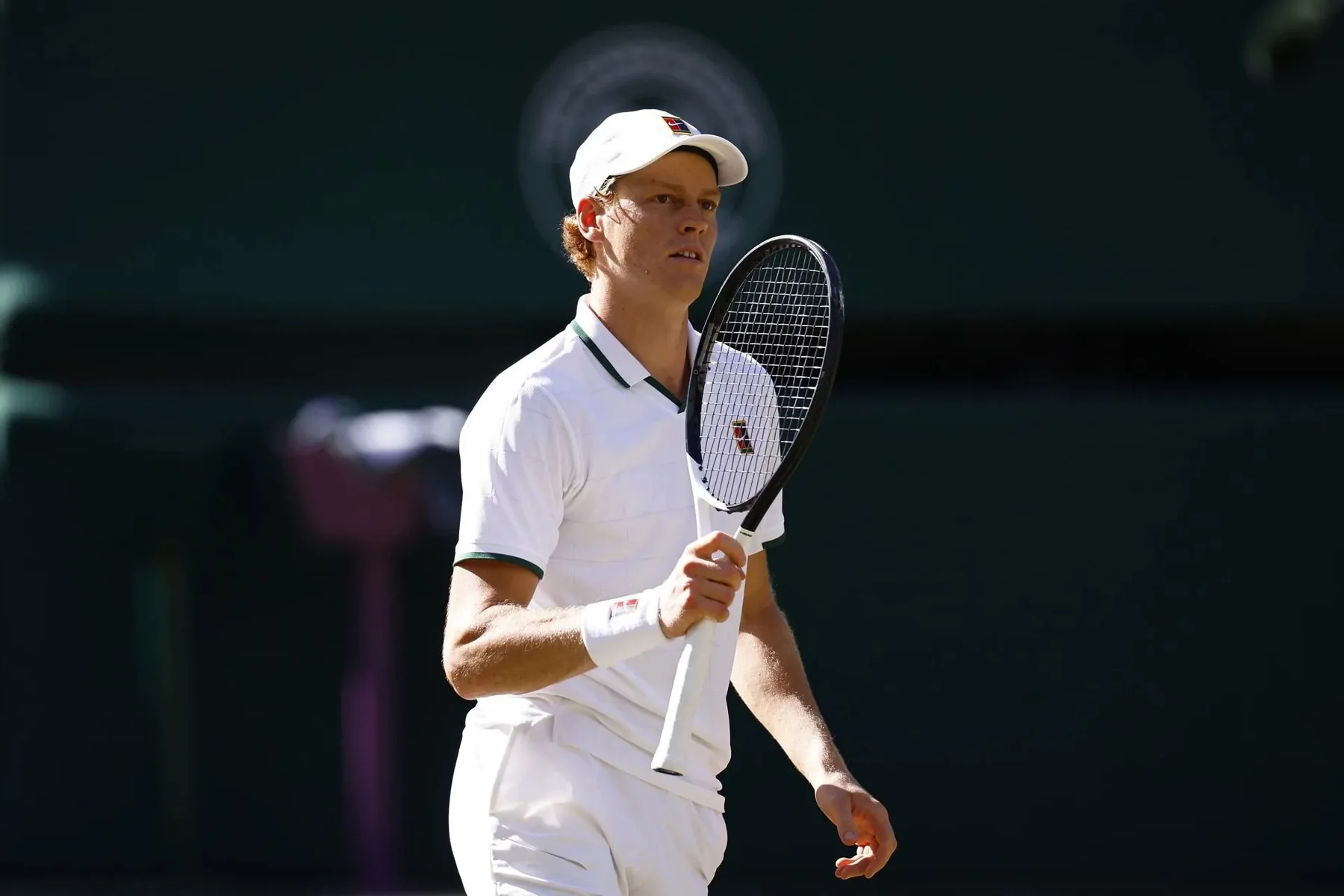
Sinner's withdrawal left the world No. 1 outside the men's singles field, and Alexander Zverev became the top seed in the upper half of the draw. Carlos Alcaraz, the defending champion, was the No. 2 seed in the lower half. The official draw preview identified that alignment when the bracket was released on August 27. It is the clearest concrete answer to how the pre-event landscape changed.
The No. 1 seed vacancy
Seeds are positions in a bracket, not automatic progress to the next round. Zverev inherited the top seed's strategic advantages: he could not meet Alcaraz, the second seed, before the final, and his possible opponents were arranged within a different half. But the withdrawal did not erase the difficulty of playing seven matches. Indeed, the official preview described a dense bottom half containing every man in the field who had previously won the US Open: Alcaraz, Novak Djokovic, Daniil Medvedev, Stan Wawrinka and Marin Cilic. A bracket can look easier in one corner and harder in another at the same time.
Before the event, the published seed projection put Ben Shelton on a possible quarterfinal course with Alcaraz. Those projections are useful maps, not predictions of results. Real matches determine which names survive. The men's singles draw is the best place to see how paths actually formed, while the score pages answer a different question: who won on court.
What the finished tournament showed
The eventual men's champion was Zverev. The US Open's champions summary records his final victory over Shelton, 6-3, 7-6(2), 5-7, 6-2, giving him a second major title. That final can be viewed as part of the post-withdrawal story, but it cannot prove that Sinner's absence caused Zverev's title. The two players did not meet in New York, and there is no factual way to fill in a hypothetical match between them.
The players themselves offered a sensible caution before the draw played out. Zverev said the seed number mattered less than whose name remained at the end of two weeks. Shelton stressed respect for the other contenders, rather than treating Sinner's absence as a free passage. Their remarks, reported by the tournament, fit the final evidence: a contender was missing, yet the title still had to be won against the players who showed up. For fans assessing the 2026 field, that is the honest balance between draw opportunity and on-court achievement.
What do his missing 2026 US Open results mean?
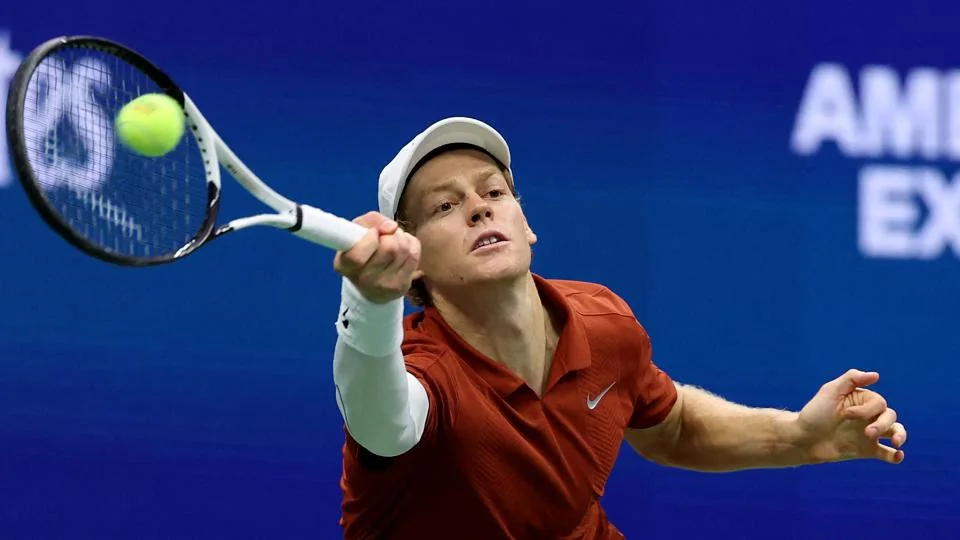
The absence of a 2026 Sinner score is accurate. He withdrew before the men's singles competition, so there is no 2026 US Open opponent, round, set score or match statistic to report for him. A player can be listed on an early entry sheet and still never appear in the completed draw. Looking only for a familiar surname in the scores can obscure that difference, especially when the player was a recent champion and finalist.
Three consecutive years tell three different stories. In 2024, Sinner won the men's singles title, defeating Taylor Fritz 6-3, 6-4, 7-5 in Arthur Ashe Stadium. The official match report describes his first US Open crown. In 2025, he reached the final but lost to Carlos Alcaraz 6-2, 3-6, 6-1, 6-4, according to the 2025 report. In 2026, the right knee issue kept him from playing at all. These are distinct outcomes: title, runner-up finish and non-participation.
The 2025 final is particularly easy to misread in a search result because it contains both Sinner and Alcaraz with a score, while 2026 searches may surface it as background. Its four set scores belong exclusively to September 7, 2025. Likewise, the 2024 Fritz score is a historical marker of Sinner's success in New York, not evidence of any 2026 win. The US Open results hub lets readers switch attention to the matches that did take place in 2026.
Even a statistical summary needs careful wording. Saying Sinner was “0-0 at the 2026 US Open” can imply he held a place in the main draw and recorded a formal win-loss line. Saying he did not play is clearer. A withdrawal before the event does not measure his hard-court form against the 2026 field. Nor should the 2025 final be used to infer how a fresh Alcaraz meeting would have played out a year later; injuries, draw positions and match conditions had changed.
For a fan tracking his record, the most informative timeline is therefore simple: champion in 2024, finalist in 2025, absent in 2026. That phrasing preserves both his recent New York pedigree and the reality of an event he could not enter.
When could Sinner return to competition?
As of September 29, 2026, Sinner had no confirmed next competitive match. A planned attempt to return during the Asian swing did not result in a Beijing appearance. On September 25 he withdrew from the China Open, saying his knee was still below the level he needed to compete. The responsible answer to “when is his next match?” is therefore that a date remains unannounced, even though later tournaments appear on the ATP calendar.
Beijing is no longer a confirmed return
When Sinner first left the US Open field, his team aimed to continue treatment in Europe and be ready for the Asian swing. That was a goal, not a guarantee. Four weeks later, he said in a video statement that he would miss the Beijing ATP 500. EFE's report confirms both the withdrawal and the continuing right knee issue. Beijing starts September 30, but a tournament's start date is no longer an Sinner start date.
The update also changes how older search results should be read. An August article saying Beijing was his likely comeback target describes a valid plan at the time it was published. It becomes misleading when presented as current after September 25. That is precisely why an injury status page needs an information cutoff. His US Open absence had already lasted through the end of the tournament; the Beijing decision extended the competitive layoff beyond the next planned event.
What to check before his next match
The Associated Press reported that Sinner did not state when he would return. It noted Shanghai's Masters event beginning October 7 and Vienna's ATP 500 beginning October 26. Those dates describe opportunities on the tennis calendar, not entries that prove he can play. A stronger confirmation would be a statement from Sinner or an event, followed by his presence in a released draw and then an order of play. Until those steps happen, “next match” remains conditional.
There is also a useful distinction between a player training and a player contesting a tour match. Sinner had already practiced in Monte Carlo before concluding he could not play the US Open. Another practice report can signal progress without settling whether his knee tolerates tournament intensity. Fans should look for the sequence of confirmed entry, draw position and scheduled opponent, then check for late changes on match day. The site's player hub and official tournament pages can orient readers, but the most recent player and event announcements take priority for health and participation.
For now, avoid reading an exact medical prognosis into silence. The public statements identify a right knee problem and a delayed return, yet do not specify the tissue involved or a recovery deadline. A definitive date would be news in its own right; the existing record does not support one.
What should fans take from the 2026 absence?
Sinner's missing 2026 US Open is an unusually large hole in the tournament's recent history, but the results still belong to the players who competed. He was the world No. 1, a 2024 champion, the 2025 runner-up and a six-title winner in the 2026 season before the knee problem. The US Open's player-reaction report notes that no top-ranked man had missed this event during the 21st century; the previous comparable No. 1 withdrawal was Pete Sampras in 1999. That makes the absence historically notable without making every later match a referendum on what Sinner might have done.
The uninterrupted run he lost was notable too. A contemporaneous PA report called it his first missed Grand Slam since his US Open debut in 2019. For a player who had been a constant feature of major draws, missing the final major of the year changes both his season record and the way fans experience the draw. The crowd cannot see the top-ranked player's shot tolerance and returning on New York's hard courts, while his rivals lose a familiar benchmark.
Alcaraz and Sinner had supplied the previous year's men's final. Alcaraz won that 2025 match in four sets, their third successive Grand Slam final according to the official recap. The absence of a 2026 rematch is a real loss for those following the rivalry. It is still only a missing possibility: both men would have needed to advance through their draws before another final could happen, and Alcaraz himself returned after a wrist layoff. Treating their 2025 meeting as a guaranteed 2026 endpoint would erase that uncertainty.
The reaction from the field showed the other side of the story. Alcaraz described the long interval without a meeting with his rival as strange. Shelton pushed back against the notion that Sinner's departure alone created a simple route to the title; Tiafoe pointed out that a champion still has to beat seven opponents. Those remarks are a useful guardrail when discussing Zverev's eventual win. A major lost one of its strongest entrants, yet the 2026 finals were decided by real players solving real matches, not by a hypothetical draw.
For followers of Sinner, the next meaningful update is a confirmed return to competition, not speculation about a missed final. For followers of the US Open, the record is already fixed: he did not play in 2026, and the men's trophy went to Zverev. Both facts can stand together. Acknowledging the weight of the absence gives the tournament its proper context; acknowledging the champion's completed route gives the competition its proper credit.
Loading comments…