Ben Shelton vs Alexander Zverev: 2026 US Open Men's Final Preview, Start Time and Head-to-Head
Ben Shelton faces Alexander Zverev in the 2026 US Open men's final at 2 p.m. ET. Compare their routes, 5-0 head-to-head, tactical keys and viewing options.
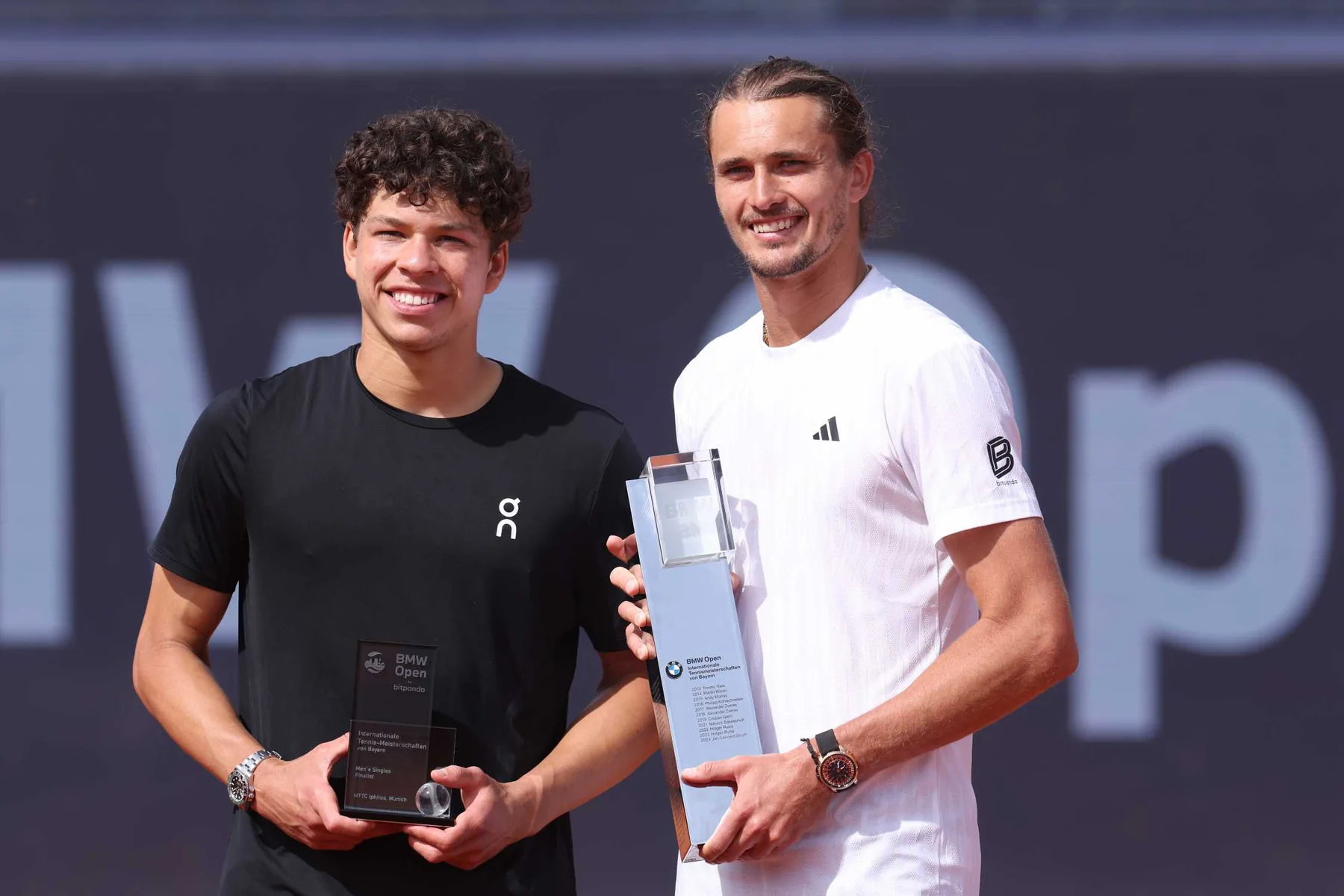
Pre-match status · checked September 12 at 10:13 p.m. ET
Ben Shelton and Alexander Zverev are still scheduled to play the 2026 US Open men's final Sunday at 2 p.m. ET on ABC. No result was posted at the final status check. This preview combines the official start information with every match in their routes, a five-meeting head-to-head, current tournament statistics and a tactical prediction that can be tested once play begins.
Shelton vs Zverev final start time, court and live status
Ben Shelton and Alexander Zverev are scheduled to start the 2026 US Open men's singles final at 2 p.m. ET on Sunday, September 13, in Arthur Ashe Stadium. That is 11 a.m. PT, noon MT and 1 p.m. CT. As of 9:55 p.m. ET on Saturday, September 12, the match had not begun, so this article remains a pre-match preview rather than a result or live-score page.
Date
Sunday, Sept. 13
First serve
2 p.m. ET
Court
Arthur Ashe Stadium
U.S. TV
ABC
For viewers outside the United States, the scheduled first serve is 7 p.m. in the United Kingdom and 8 p.m. in Central Europe. It falls after midnight in much of Asia: 2 a.m. Monday in China and 3 a.m. Monday in Japan. Those are conversions of the 2 p.m. New York listing, so any official delay shifts every local time with it.
The USTA tournament schedule lists gates opening at 11 a.m. for session 27 and flags the schedule as subject to change. In other words, 2 p.m. is the official plan, not a promise immune from weather, ceremony or operational delays. The roof protects the court from rain, but fans should still check the live US Open schedule today before traveling and use the US Open finals hub for the current championship status.
How to watch the men's final in the United States
ABC's official guide schedules its men's final preview show for 1 p.m. ET and the championship broadcast for 2 p.m. ET. The same guide says ESPN's broader tournament coverage is available across ESPN platforms, including the ESPN App for ESPN Unlimited subscribers. Digital access depends on the viewer's provider and subscription, so confirm the current route on the US Open watch-today guide rather than assuming every app login includes the final.
How Shelton and Zverev reached the 2026 US Open final
The finalists have carried almost the same workload, but accumulated it in opposite ways. Shelton has played 18 hours, 58 minutes across six matches; Zverev has played 19 hours, 38 minutes. Zverev's 40-minute excess came from five-set battles in his first two rounds, while Shelton's hardest work arrived in a 4-hour, 28-minute quarterfinal that ended at 3:33 a.m.
| Round | Shelton result | Time | Zverev result | Time |
|---|---|---|---|---|
| R1 | d. Griekspoor in 4 | 2:35 | d. Sonego in 5 | 4:53 |
| R2 | d. Hurkacz in 4 | 3:24 | d. Halys in 5 | 4:33 |
| R3 | d. Shapovalov in 4 | 3:22 | d. Tabilo in 3 | 2:26 |
| R4 | d. Tsitsipas in 3 | 1:52 | d. Darderi in 3 | 2:31 |
| QF | d. Alcaraz in 5 | 4:28 | d. van de Zandschulp in 3 | 2:17 |
| SF | d. Tiafoe in 4 | 3:17 | d. Khachanov in 3 | 2:58 |
The totals are calculated from the six completed match records in the 2026 men's singles draw. They measure court time, not recovery quality. Both men had Saturday away from competition, and there was no confirmed final-day fitness issue at this section's research cutoff.
Shelton's route: two emotional wins and a first major final
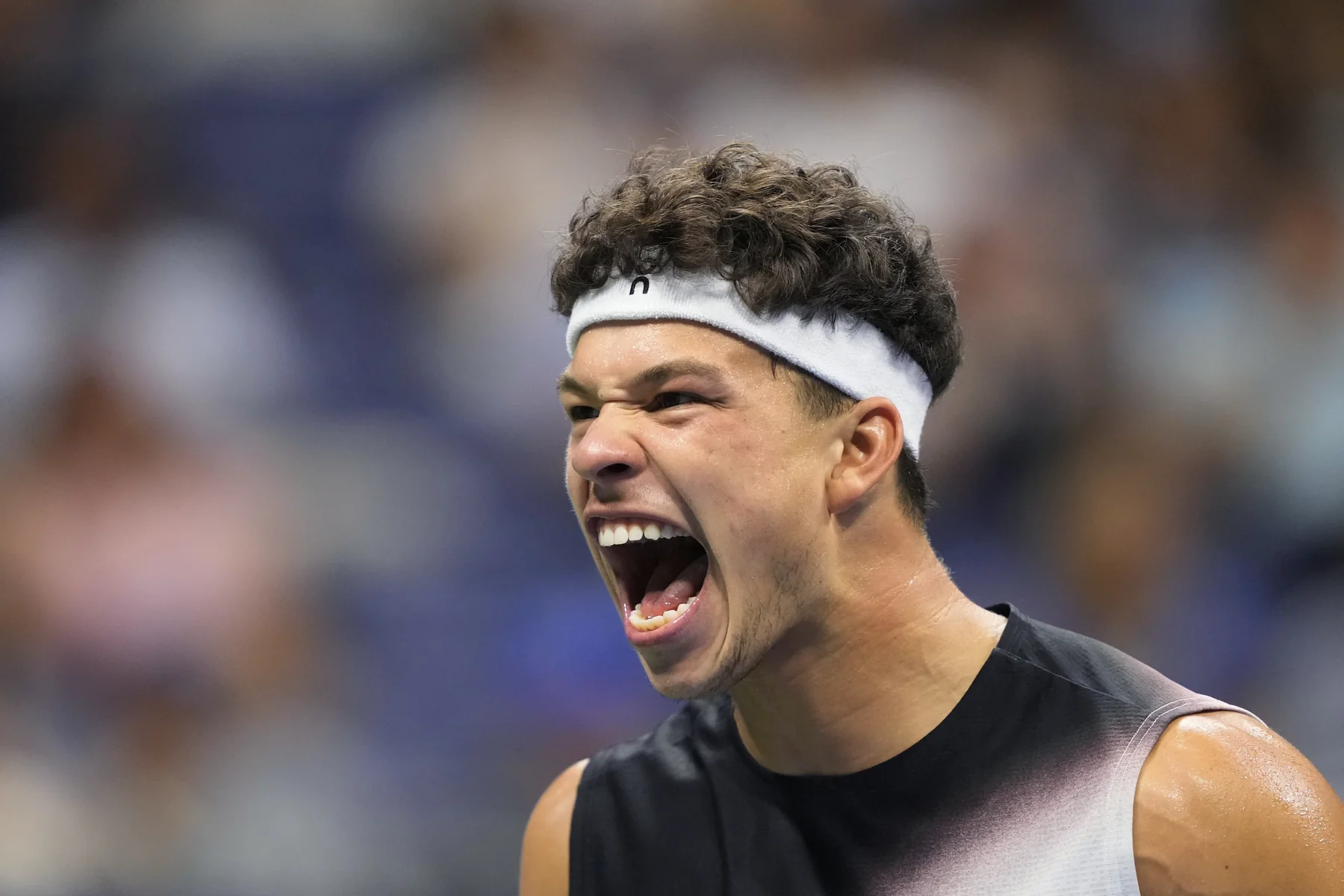
Shelton needed four sets in each of his first three rounds, then dismissed Stefanos Tsitsipas in 1:52. The run changed scale against defending champion Carlos Alcaraz: Shelton recovered after losing the opening tiebreak and a lopsided fourth set, then won the deciding 10-point breaker 10-7. Two nights later he lost the first set to Frances Tiafoe but won 4-6, 6-3, 6-3, 7-5. The official semifinal recap records 75% first serves, 20 aces and a 47-27 winner advantage—strong evidence that the late quarterfinal had not erased his first-strike game.
Zverev's route: early five-set tests, then 13 straight sets
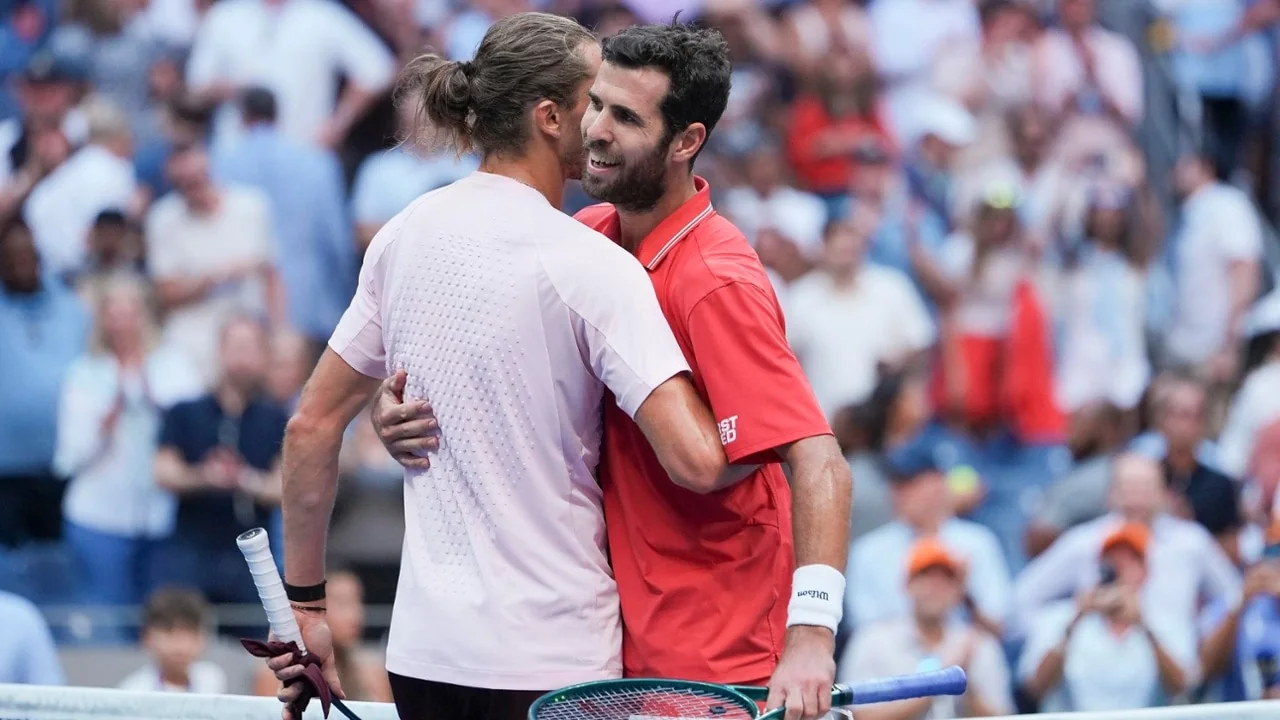
Zverev spent 9:26 beating Lorenzo Sonego and Quentin Halys, then stopped losing sets. His streak comprises the deciding set against Halys plus four straight-set wins over Alejandro Tabilo, Luciano Darderi, Botic van de Zandschulp and Karen Khachanov. The semifinal score—6-3, 7-6(7), 7-6(6)—also shows pressure efficiency: he closed both tight sets without extending the match.
So recovery is not a simple Shelton disadvantage. Zverev owns the larger total; Shelton absorbed the later, more emotional peak. The useful question for Sunday is whose serve and movement look normal in the opening games, not whose route sounds harder in one sentence. The results hub preserves the complete scores, while the Shelton–Tiafoe match page provides the semifinal detail.
What the 5-0 head-to-head really says
Zverev's 5-0 lead is more than a cosmetic statistic: he has beaten Shelton on outdoor hard, clay, grass and indoor hard courts, winning 10 of their 11 sets. It establishes a repeatable matchup advantage. It does not establish Sunday's result, because none of those meetings was best-of-five or played at a Grand Slam.
| Year and event | Surface | Round | Winner and score |
|---|---|---|---|
| 2024 Cincinnati | Outdoor hard | QF | Zverev, 3-6, 7-6(3), 7-5 |
| 2025 Munich | Clay | Final | Zverev, 6-2, 6-4 |
| 2025 Stuttgart | Grass | SF | Zverev, 7-6(8), 7-6(1) |
| 2025 Cincinnati | Outdoor hard | QF | Zverev, 6-2, 6-2 |
| 2025 ATP Finals | Indoor hard | Round robin | Zverev, 6-3, 7-6(6) |
The pressure pattern is particularly relevant. Four sets in the rivalry reached tiebreaks and Zverev won all four. At the 2025 ATP Finals, he saved three set points in the second set and took the final five points of the breaker. If Sunday's final produces only a handful of return chances, Shelton cannot assume a loud Ashe crowd or one huge serve will reverse that history by itself.
There is still room for change. Shelton won the first set of their first encounter and pushed Zverev deep into that deciding set. He is now a more complete 23-year-old arriving after victories over Alcaraz and Tiafoe. The US Open format also gives him more time to adjust serve locations, return position and net frequency than any previous meeting.
For player-by-player tournament context, see the Alexander Zverev profile and Ben Shelton profile. The H2H stays 5-0 until the final is officially complete.
The tactical matchup: first-strike power against backhand control
Zverev owns the safer neutral pattern; Shelton owns the more disruptive first strike. Shelton needs his serve to produce a forehand or volley before Zverev settles the rally. Zverev wants deep returns, backhand exchanges and one extra ball—precisely the pattern that has helped him win all five previous meetings.
| Through six matches | Shelton | Zverev | What it suggests |
|---|---|---|---|
| Aces | 71 | 87 | Both can erase pressure quickly |
| First serves in | 70% | 67% | Shelton has found strong repeatability |
| First-serve points won | 76% | 79% | Zverev has extracted more from the first ball |
| Second-serve points won | 55% | 52% | Current event gap is small |
| Service games held | 88% | 92% | Zverev has offered fewer openings |
Those are tournament-to-date figures, not a final forecast. The more warning-heavy sample is their five-match rivalry: Zverev has won 37% of return points to Shelton's 23%, while Shelton has won only 42% of second-serve points. Zverev has generated 34 break points to Shelton's five. The American therefore needs to change how the point begins.
Shelton must protect the second serve and own the first forehand
The left-hander's natural wide serve in the ad court travels toward Zverev's backhand—the German's most secure groundstroke. Pace alone can still earn free points, but repetition gives Zverev a target. Shelton should mix the body serve and T, then commit to the first forehand when the return lands short. On second serve, variation matters even more: a predictable kick lets a tall returner absorb the bounce and drive deep.
Shelton has evidence of improvement. Against Tiafoe he made 75% of first serves, hit 20 aces and produced 47 winners. He also says his return, baseline stability and service-game construction have advanced. The final tests that claim against the opponent who has exposed it most consistently.
Zverev wants depth, backhand exchanges and one extra ball
Zverev does not need to outhit Shelton on every ball. A return near the baseline can remove the easy first forehand; a heavy crosscourt backhand can absorb Shelton's lefty forehand; a timely backhand down the line can force the American to defend from his weaker corner. If points repeatedly reach that neutral phase, the matchup tilts toward Zverev's balance and tolerance.
Tiebreaks and net play could decide the margin
Four previous Shelton–Zverev sets reached tiebreaks; Zverev won all four. That history makes the American's forward play important. A serve followed by an approach can shorten Zverev's swing and keep Shelton from waiting for a baseline error. It must be selective, because Zverev's passing shots punish loose positioning.
Zverev can move forward too: he won all nine net points in the first set of his semifinal. The tactical battle is therefore not “attacker versus defender.” It is who earns the first controlled attack. Follow the Shelton–Zverev final match page for official status and eventual match statistics; none exists before first serve.
Fitness, pressure and what is at stake
Neither finalist owns a clear fatigue excuse before first serve, but they carry very different pressure. Zverev has played 40 minutes longer across the tournament and finished his semifinal earlier Friday; Shelton played later after a more punishing second week. Both had Saturday without a match, and no confirmed injury was reported by this section's cutoff.
Shelton's moment
First major final; first Black American man in a US Open singles final since Arthur Ashe in 1972; chance to end a 23-year U.S. men's major drought.
Zverev's moment
Sixth major final; third in succession in 2026; first New York final since a two-set lead disappeared against Dominic Thiem in 2020.
Court time cannot reveal soreness, sleep or recovery quality. The live evidence will be ordinary and visible: whether Shelton still drives upward through his serve, whether Zverev's legs hold their level through wide backhand defense, and how quickly each recovers after a long game. Until those signals appear, “tired” is speculation.
Shelton carries a 23-year American men's wait
Shelton is playing his first major final at 23. A victory would make him the first American man to win a major singles title since Andy Roddick at the 2003 US Open. The official semifinal recap adds another historical line: Shelton is the first Black American man to reach the US Open singles final since Ashe in 1972, on the court that bears Ashe's name.
The crowd is a resource and a responsibility. Shelton explicitly asked supporters to bring their energy Sunday, and his best tennis feeds on that exchange. Yet emotion can accelerate decision-making. Against Zverev, “going for it” should mean a committed pattern—serve location, first forehand, planned approach—not trying to finish every neutral rally with one spectacular swing.
Zverev brings major-final experience and the 2020 memory
Zverev arrives at his sixth major final and third consecutive one this season. He won his first Grand Slam title at Roland-Garros in June, beating Flavio Cobolli in five sets, then finished runner-up at Wimbledon. That successful Paris final matters because he no longer has to prove he can cross the last line at a major.
New York still supplies a specific memory. In 2020, Zverev led Thiem by two sets and a break, served for the championship in the fifth, and lost in a deciding tiebreak. Experience does not erase that collapse; it gives him a tested response to it. The pressure on Sunday is therefore not simply old trauma. It is the expectation that a major champion, top seed and 5-0 matchup leader should finish the job.
The US Open finals page provides the championship framework, while the player index connects each finalist to the wider field. In this match, history raises the stakes but does not play a point.
Prediction: Zverev has the edge, but Shelton has a real upset route
Editorial pick: Alexander Zverev. This is a tennis judgment, not betting advice, and “favorite” does not mean “certain.” Zverev's 5-0 record against Shelton, 10-1 advantage in sets and sweep of all four head-to-head tiebreaks show that his return depth and backhand stability have repeatedly survived the American's first strike. Add a 92% hold rate at this tournament and experience from five previous major finals, and the top seed has the more repeatable five-set plan.
Shelton's path is narrower, but it is real. He has already beaten Carlos Alcaraz and Frances Tiafoe in demanding New York matches, his left-handed serve can redraw a game in seconds, and the Ashe crowd can help him reset after a poor patch. Variety is essential: body serves as well as wide serves, higher forehands and low slices to interrupt Zverev's strike zone, then selective approaches behind a strong ball. Trying to trade clean backhands from a neutral position would simply accept Zverev's preferred contest.
Opening four games
Watch Shelton's first-serve percentage and, more importantly, where his second ball lands. Quick holds and a forehand struck from inside the baseline would show that he is dictating.
First pressure game
Track Zverev's return depth and who controls the center. An early Shelton break chance matters even if he misses it; it proves the German's serve is not untouchable.
After 90 minutes
Compare movement after long rallies and Shelton's willingness to finish at net. If Zverev is still planting near the baseline and owning backhand exchanges, his edge is growing.
The likeliest winning script is Zverev absorbing the early noise, placing enough first serves to avoid repeated pressure and gradually making Shelton hit one ambitious ball too many. The upset script begins with the opposite: Shelton protects at least half of his second-serve points, earns return looks before tiebreaks and turns the crowd into energy rather than haste.
Because a preview expires at first serve, use the today's US Open schedule for the latest match status. Once play ends, the US Open results page becomes the authoritative handoff. If Shelton establishes the upset indicators above, the live evidence should outrank any pre-match pick—including this one.
Bottom line
Zverev deserves the pre-match edge because he has repeatedly solved this matchup and carries the steadier return-to-backhand pattern. Shelton can overturn it if his second serve survives, his first forehand controls court position and his forward movement prevents neutral rallies from accumulating. Recheck the live schedule before first serve; after the final, use the results page instead of this forecast.
Loading comments…