Alexandra Eala's 2026 US Open Results: Every Match and the Jovic Thriller
Alexandra Eala reached the third round of the 2026 US Open after two straight-set victories. Follow every score and the key lessons from her deciding-set loss to Iva Jovic.
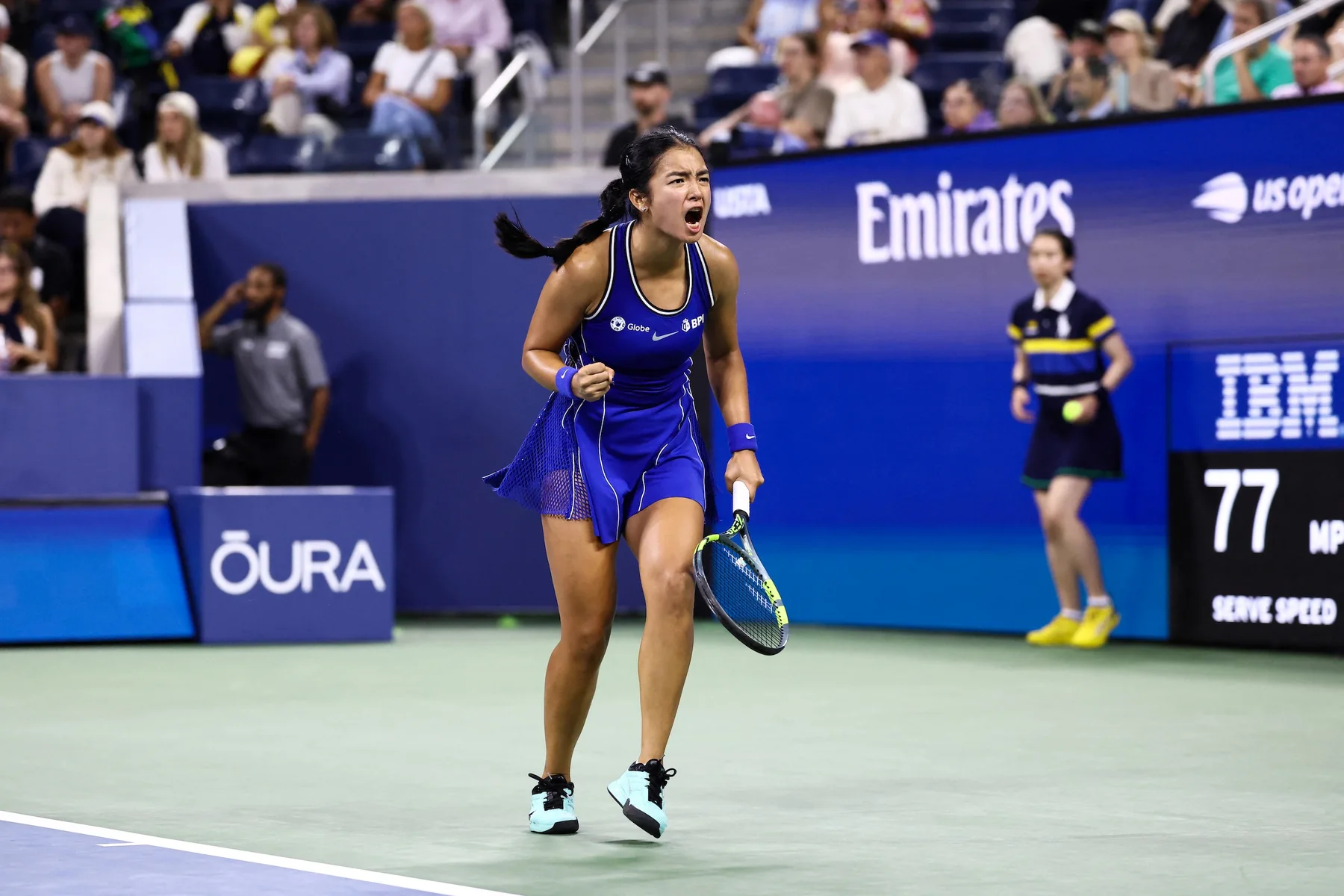
Alexandra Eala's 2026 US Open results at a glance
Alexandra Eala reached the third round of the 2026 US Open women's singles. She beat Mary Stoiana and Oleksandra Oliynykova in straight sets, then lost to Iva Jovic, 7-5, 3-6, 7-5. That September 5 defeat ended her singles campaign. This is a completed tournament review, checked through October 19, 2026.
| Round and New York date | Opponent | Result for Eala | Court |
|---|---|---|---|
| First round, September 1 | Mary Stoiana | Won 6-1, 6-2 | Louis Armstrong Stadium |
| Second round, September 3 | Oleksandra Oliynykova | Won 6-1, 6-4 | Louis Armstrong Stadium |
| Third round, September 5 | Iva Jovic | Lost; Jovic won 7-5, 3-6, 7-5 | Arthur Ashe Stadium |
The distinction between a third-round appearance and three victories matters. Eala won twice, which put her into the last 32; she needed another victory to reach the fourth round. The table gives the losing match from Jovic's perspective so that the official score cannot be mistaken for an Eala win. Across the three matches, Eala took five sets and conceded two.
She was the No. 17 seed. The world No. 18 ranking described in the tournament's pre-event feature is a separate number, rather than an alternative seed. A seed identifies her position among the seeded entrants in this particular draw; a ranking describes her standing on the tour at the relevant date.
The sequence is useful when judging her fortnight. The first two results established control without the cost of a deciding set. The third showed how close she could get against another seeded young player, while also revealing how difficult it remained to protect an advantage. Neither the two comfortable scorelines nor the final loss tells that whole story alone. For the wider tournament context, use the US Open results archive; Eala's final entry is the Jovic match, rather than an upcoming singles fixture.
Round 1: Eala handled Stoiana's early pressure
Eala's 6-1, 6-2 win over American qualifier Mary Stoiana began with a test on serve. The final margin makes the opener look uncomplicated; the pressure within the opening service games tells a more useful story. Stoiana created opportunities at the beginning of both sets, so Eala had to establish control rather than simply inherit it.
On Tuesday, September 1, Louis Armstrong Stadium supplied the setting for her first win. She pulled away early in the opening set, then kept the second from turning into a prolonged contest. The official first-round report records an important detail: she won 84% of the points behind her first serve in the first set. That is a set-specific figure, rather than a percentage for the entire match.
Six break points saved changed the match
Eala denied Stoiana on all six break points, while taking four of her own eight opportunities. Those numbers describe the difference between generating pressure and converting it. Stoiana threatened; Eala prevented that threat from becoming a break, then made her own return chances count often enough to build separation.
Six saved break points do not mean six different service games were in danger. Several opportunities can arise in the same game. That distinction keeps the analysis proportionate: this was excellent execution at critical moments, without evidence that every hold was an escape. Equally, a wide score does not erase the challenge of starting a set with an opponent already threatening a break.
For Eala, the value was getting through an opening round with her own service games intact. For an opponent, the lesson was less encouraging: producing a chance was only the first part of the job. The match was decided by what happened after the scoreboard offered an opening. This is a useful early example of why a break-point line can explain a match more clearly than the number of games won.
Round 2: Oliynykova was a different test with the same outcome
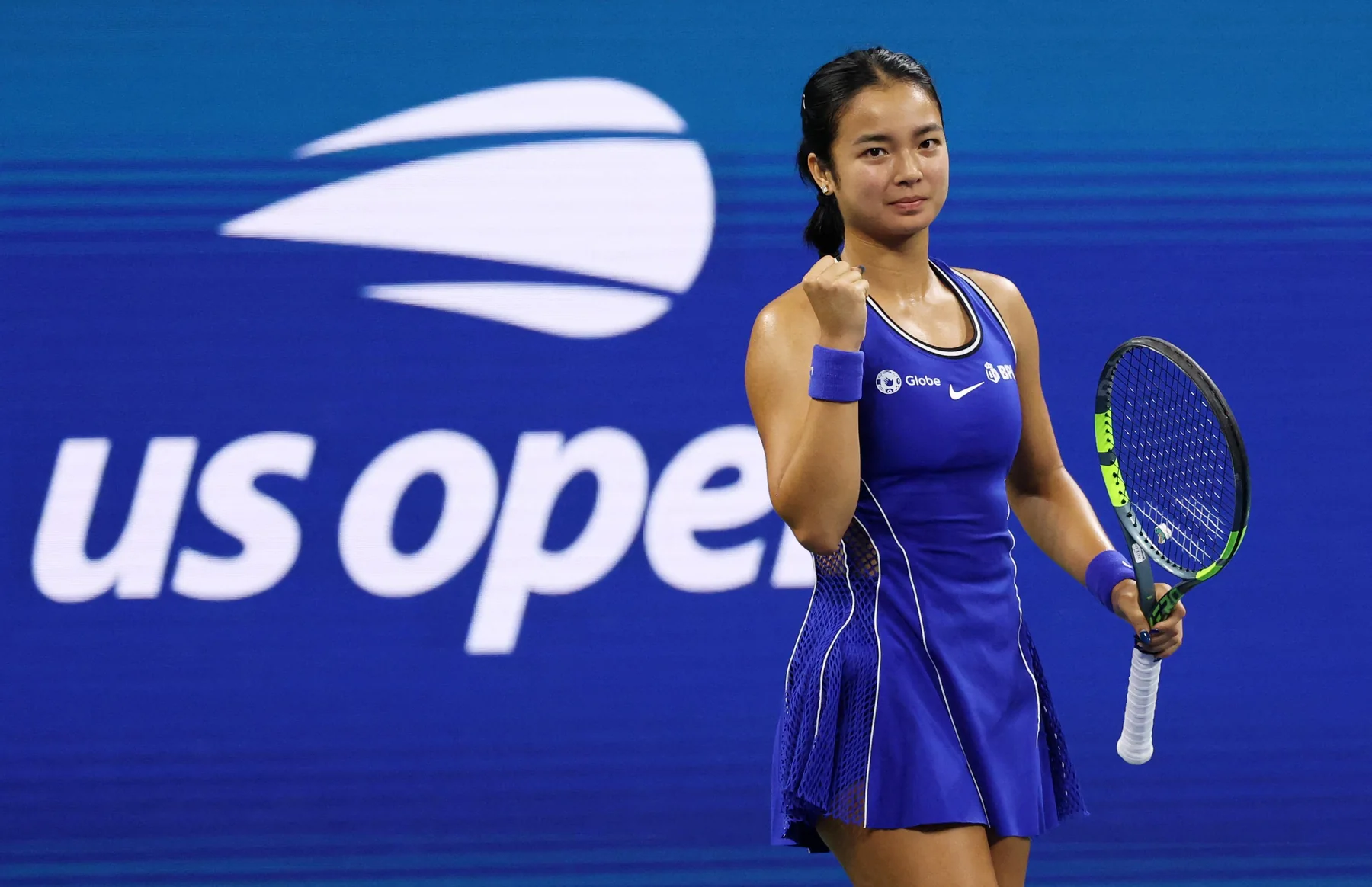
Eala's second victory was a 6-1, 6-4 win over Oleksandra Oliynykova on September 3, again in Louis Armstrong Stadium. It moved her one round further than her 2025 US Open finish and made the Jovic match possible. The score is confirmed in the tournament's Thursday results report.
This opponent brought a useful complication to the story. Oliynykova had beaten Eala in Strasbourg earlier in 2026, winning 3-6, 7-5, 6-3. Their New York meeting therefore offered an actual reversal of an earlier result, rather than a straightforward repeat against someone Eala had already solved. Knowing an opponent's game does not make the next contest predictable; it gives both players another set of problems to address.
The two US Open sets also had different margins. Eala allowed only one game in the first, then had to win a closer second set to finish. That alone does not tell us how she changed her tactics, where she served, or whether one particular shot became decisive. It does show that the match did not require a third set. She left the court with another victory and without having to spend an extra set rebuilding control.
That was an encouraging way to arrive at a seeded third-round opponent. At a major, the task is partly to play well enough to advance and partly to keep doing so as the quality of opposition changes. The Oliynykova match provided another successful step in that sequence. It did not guarantee that the same service protection or return patterns would carry over against Jovic.
Fans tracing her progress through the women's singles draw should read this as the win that earned a place in the last 32. It was an improvement in her US Open round reached, while the fourth round remained a separate target. That distinction matters when a strong run is discussed alongside the disappointment of how the next match ended: progress had already happened before the final result was decided.
Round 3: Jovic won the final six-game stretch
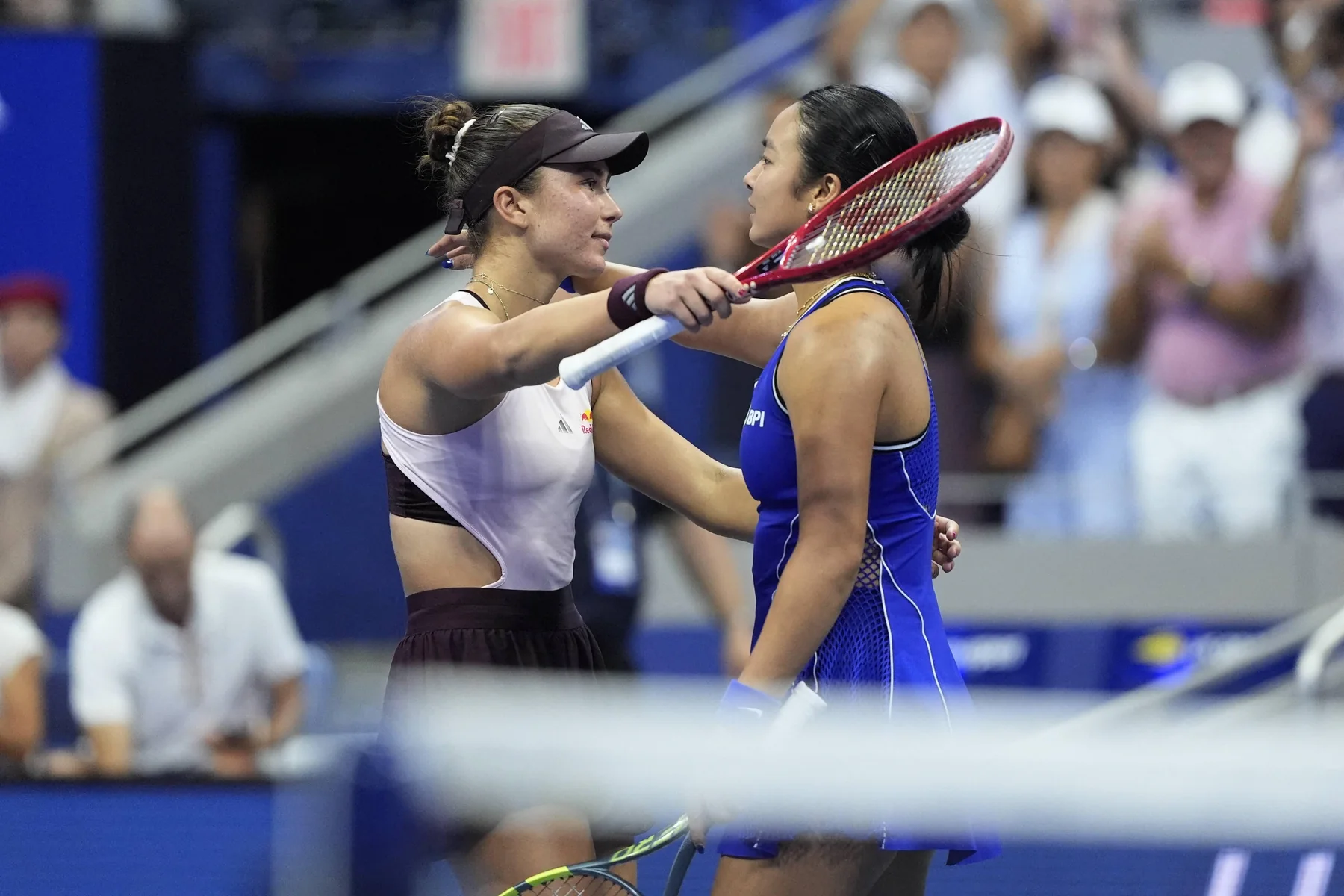
Iva Jovic ended Eala's run on September 5 in Arthur Ashe Stadium, winning 7-5, 3-6, 7-5. Jovic was the No. 14 seed and Eala the No. 17 seed, making this a meeting of seeded contenders rather than an upset of an overwhelming favorite. Their ages, 18 and 21 respectively, added to the interest, but the match demanded attention on its own terms.
Eala recovered after a tight first set
The opening set gave an early warning that a lead would not be secure. Jovic moved ahead 4-1 before Eala pulled level at 5-5. Jovic still took the set, and Eala then answered by winning the second. She had recovered from both a significant early deficit and the frustration of losing the opening frame.
That response matters when assessing the eventual defeat. Eala remained competitive after a disappointing passage instead of allowing it to settle the whole contest. The match contained more than one recovery, and each player had a turn at being forced to respond. It is too simple to describe the result as one player having the will to fight and the other lacking it.
The 4-2 lead did not become a finish line
The clearest turning point came in the deciding set. Eala held a 4-2, 30-0 advantage, but Jovic took five of the last six games to win 7-5. A useful lead had become a narrow defeat. The official match account identifies that swing as the decisive closing sequence.
A 4-2 lead is an advantage, not a match point. It still leaves work to do, especially in a contest where service games are repeatedly under pressure. Eala was close enough for the loss to hurt, but the remaining games were neither a formality nor points already won. Jovic had to take them, and did.
The fairest reading holds both ideas together: Eala put herself in position to win a significant third-round match, while Jovic played the stronger closing stretch. A detailed review should recognize the opportunity Eala created without erasing the opponent's role in taking it away. That is more informative than treating the final score as either a failure without positives or a moral victory that makes the loss irrelevant.
Seventeen breaks explain both the quality and the problem
The Jovic match contained 17 service breaks: nine for Jovic and eight for Eala. That unusually unsettled balance made a single break less reassuring than it would be in a serve-dominated contest. A lead still mattered, but it came with less protection against the next return game.
The WTA match statistics show the underlying difficulty clearly. Eala won 14 of 39 points behind her second serve, or 35.9%; Jovic won 18 of 43, or 41.9%. Neither player was winning even half of those points. Second serves repeatedly gave the receiver a realistic opportunity to put pressure on the scoreboard.
For Eala, eight breaks and 20 break-point opportunities also demonstrate that her return game stayed productive. She was not struggling simply to create a route back into the match. The problem was combining that returning threat with enough service protection to make an advantage last. That is a more precise developmental question than asking whether she could compete at this level.
Read winners and errors alongside the score
Jovic finished with 44 winners and 27 unforced errors; Eala recorded 34 and 33. Those figures support the impression of two players prepared to attack, with Jovic producing the cleaner numerical balance. They do not mean that the difference between winners and errors equals the margin of victory: forced errors and other point outcomes are part of the match too.
It is also unhelpful to treat frequent breaks as proof that the tennis lacked quality. Strong receiving can expose a serve, just as poor serving can help a receiver. Here, the return pressure and aggressive hitting created compelling exchanges while also leaving both players vulnerable. The practical takeaway for Eala is to preserve the ability to threaten return games while finding more reliable ways to begin her own points. More winners alone would not automatically solve that problem.
A better US Open finish in a stronger season
The third round was Eala's best US Open women's singles finish to that point. In 2025, she had beaten Clara Tauson before losing to Cristina Bucsa in the second round. In 2026, she advanced one round further. Her 2022 girls' singles title belongs in the story too, but it is a junior championship, separate from the senior women's draw.
The improvement was part of a wider season. Before arriving in New York, Eala had reached the fourth round at Wimbledon, beating defending champion Iga Swiatek on the way. She also won her first WTA singles title in Washington, defeating Jessica Pegula, 4-6, 6-4, 6-0. Those achievements meant she came into the US Open with a stronger body of work than a year earlier.
There are two useful limits to keep in view. First, her New York third round did not surpass the Wimbledon fourth round as her deepest major run. Second, the ranking and seeding cited before the event were a snapshot of her entry position, not a promise about where she would finish the season. The official pre-tournament feature described the progress that brought her to the draw; the actual matches determined how far she went.
That stronger starting point also changes expectations. A breakthrough player can first be celebrated for making a main draw or winning a round. A seeded player begins to be judged by how well she handles other seeds and opportunities to reach the second week. That is a demanding transition, but it is also evidence that the level of discussion has moved forward.
The Jovic defeat therefore sits inside a season of progress without becoming proof that every part of Eala's game had caught up with her ambitions. A player can improve substantially and still have a very specific weakness exposed in a close match. Her Eala player profile offers the broader player context; the US Open campaign adds a clear competitive example of where that progress stood in September.
What Eala's run leaves fans watching for
The most useful question after New York is how Eala can make her advantages more durable. The run showed enough returning quality to keep an opponent under pressure, and enough resilience to recover within a difficult match. The next step is translating more of those strong passages into a controlled finish against players who can keep threatening her serve.
Holding the advantage against stronger returners
When watching her next competitive match, follow what happens after a break rather than looking only for the next spectacular return. Does she begin the following service game with comfortable points? Does a missed first serve repeatedly leave her defending? Can she get through a tight hold without needing to win every rally in the hardest possible way? These are observation points, not a prescription that one technical adjustment will solve everything.
The Jovic statistics give those questions a concrete basis. Winning only a little over a third of her second-serve points left Eala with a difficult service task. Conditions and opponents will change, so a single percentage should not become a permanent label. The useful comparison is whether she can protect her own games more consistently while retaining the return pressure that made the contest close.
Separate official matches from exhibitions
Eala and Jovic also appeared in the build-up to the tournament around Stars of the Open during Fan Week. That entertainment setting is separate from the women's singles draw. An exhibition clip involving the same two players is not another round of Eala's official singles campaign, and its score should not be added to the three results above.
For a future US Open, wait for confirmed entries, the draw and the daily Order of Play before treating a court or start time as settled. Her 2026 campaign has already ended; there is no further Eala singles match to schedule from that draw. What remains worth carrying forward is the evidence: two wins earned a better New York finish, and a demanding third match identified a clear area in which further progress could make a difference.
Loading comments…