Why Do US Open Matches Finish So Late? The 3:33 A.M. Record Explained
US Open matches can run past 2 a.m. because two-match night sessions collide with unpredictable match lengths. See how the 3:33 a.m. record happened and which reforms could help.
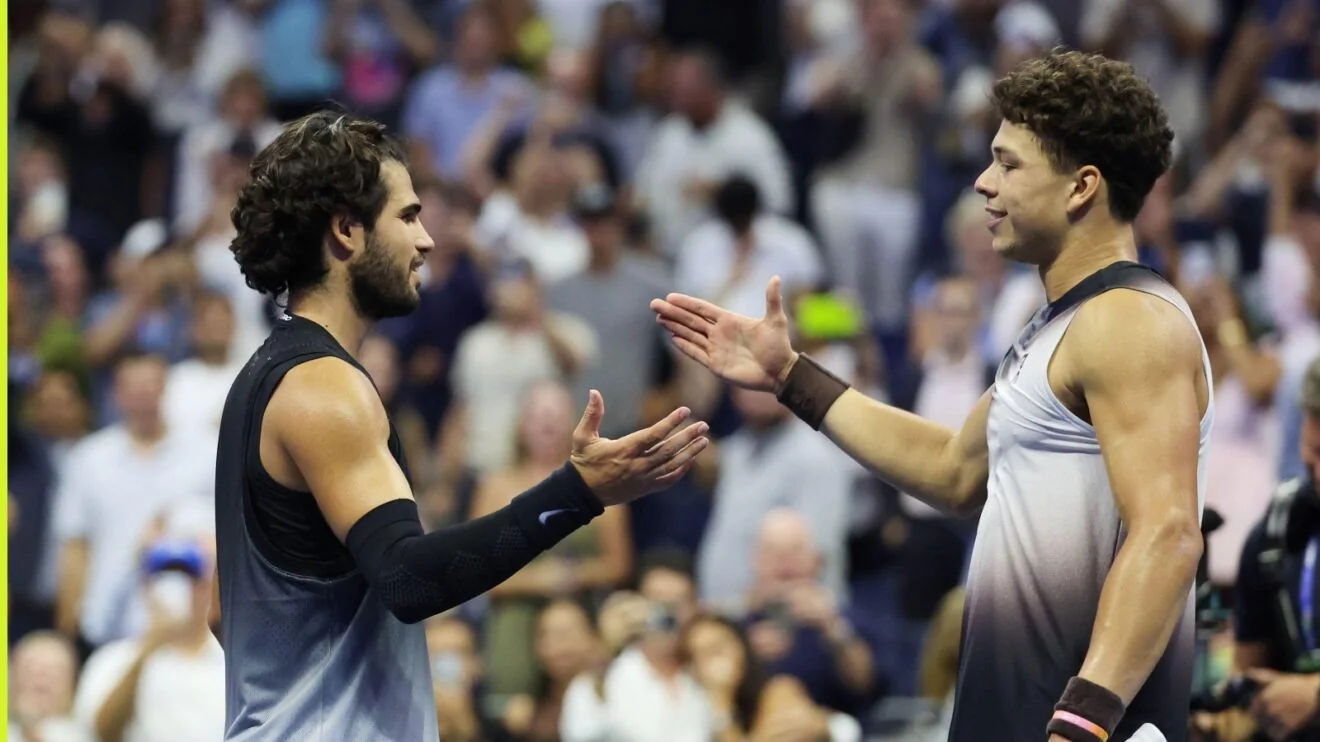
The US Open's 3:33 a.m. finish was not simply the result of one epic match. It was the end point of a long day, a delayed stadium turnover, a two-match night session and a 4-hour, 28-minute quarterfinal with no protected late-start cutoff. That combination gave New York a brilliant contest and renewed a basic fan complaint: a prime-time showcase should not require staying awake until breakfast.
This explainer reconstructs the record night, separates confirmed rules from proposals, and examines the tradeoffs behind realistic changes. Times, policies and match facts are current through September 13, 2026; future session plans can change, so use the linked live schedule tools for the day you attend.
Why US Open matches can finish after 2 a.m.
US Open matches finish so late because Arthur Ashe Stadium's night session usually puts two open-ended contests into a window that begins at 7 p.m., without guaranteeing when the second match will start. If the opener runs long, every interview, crowd change and court reset moves the second first serve deeper into the night. If that second contest then reaches five sets, 2 a.m. is no longer a freak possibility.
1. The design
A separately ticketed Ashe evening session starts at 7 p.m. and ordinarily offers a women's match followed by a men's match.
2. The variable
Tennis has no game clock. A close opener, on-court ceremony or delayed day-session turnover can erase the schedule's cushion.
3. The multiplier
US Open men's singles is best-of-five. A second match beginning around 11 p.m. can still require four hours or more.
The roof does not solve this problem. It removes rain as one source of uncertainty, but it cannot shorten rallies, sets or a deciding tiebreak. Nor can organizers know in advance whether the first match will be a 65-minute rout or a three-hour struggle. That is the crucial distinction: match length is unpredictable, but the amount of risk built into the night schedule is a choice.
The official 2026 preview made the sequence plain before the record night: Jessica Pegula against Emma Navarro was listed first at 7 p.m., with Ben Shelton against Carlos Alcaraz second. Fans planning any future session should therefore treat the listed time for match two as an estimate, not an appointment. Check the official order of play and live court sequence on the day, then watch how quickly the opener is moving.
How Shelton vs Alcaraz reached the 3:33 a.m. record
The latest finish in US Open history was built across an entire Arthur Ashe schedule. Four singles matches occupied 13 hours and 47 minutes of court time on September 8, before operational gaps are counted. By the time Ben Shelton and Carlos Alcaraz began the last one after 11 p.m., the margin for a conventional finish had disappeared.
| Stage of the day | Match | Court time | Schedule effect |
|---|---|---|---|
| Day opener | Sabalenka d. Noskova | 2:22 | Three sets |
| Day match two | Tiafoe d. Michelsen | 4:38 | Day session ran deep |
| Night opener | Pegula d. Navarro | 2:21 | Second night match slipped past 11 |
| Night match two | Shelton d. Alcaraz | 4:28 | Finished at 3:33 a.m. |
The day session used up the schedule's safety margin
Aryna Sabalenka needed two hours and 22 minutes to beat Linda Noskova in three sets. Frances Tiafoe then recovered from two sets down to beat Alex Michelsen 5-7, 3-6, 7-5, 6-3, 7-6(6) in four hours and 38 minutes. The day session therefore supplied roughly seven hours of tennis before interviews and the stadium handover. The important point is cumulative: no single player “caused” the late night.
The first night match pushed the quarterfinal past 11 p.m.
The Pegula–Navarro quarterfinal was scheduled to open the night session at 7 p.m., but the day overrun and the need to clear and refill Ashe delayed its start until after 8:30. Pegula's 3-6, 6-4, 6-3 comeback took another two hours and 21 minutes. That is a normal length for a competitive women’s three-set match; it became schedule-critical only because the session had already lost about 90 minutes.
A four-hour, 28-minute classic did the rest
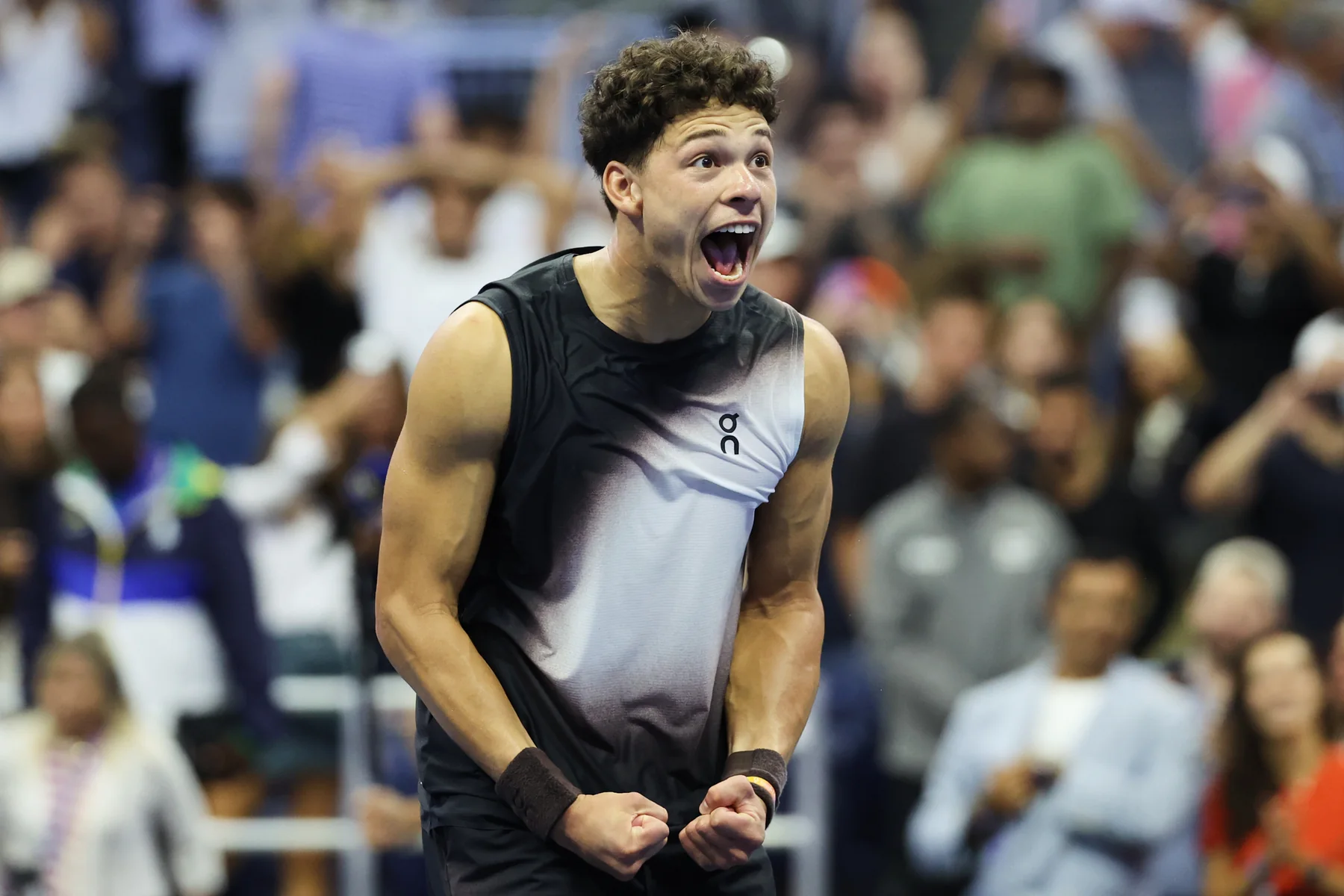
Shelton finally stopped the clock at 3:33 a.m., beating the defending champion 6-7(5), 6-1, 6-3, 1-6, 7-6(7). He won nine straight games during the middle-set surge, survived Alcaraz's fourth-set response and closed the deciding 10-point tiebreak 10-7 with a 146-mph ace. The Shelton–Alcaraz match detail preserves the pairing and round, while the official recap confirms the score, duration and record.
Alcaraz had shared the previous mark: his 2022 quarterfinal against Jannik Sinner ended at 2:50 a.m. The new record moved 43 minutes later. That gap was not created by a radically different kind of tennis; it was what happens when a major-length classic starts with almost none of the evening left. The timeline, not just the match length, explains the record.
Why the US Open keeps a two-match night session
The two-match night session survives because it is both a ticketed product and a defining part of the US Open experience. Buyers are promised a program in Arthur Ashe Stadium, generally featuring one women's singles match and one men's singles match. Removing the opener or moving the second match would change what thousands of people thought they had purchased.
One stadium supports two separately ticketed sessions
Arthur Ashe hosts a day audience and then a separate evening audience. That structure lets more fans enter the tournament's biggest stadium on the same date and gives the marquee court to both tours. The official 2026 ticket plan explicitly sells Arthur Ashe evening sessions, while also granting access to general-admission areas in Louis Armstrong Stadium, Grandstand and the outer courts.
That explains why a delayed night match is not as simple as putting it elsewhere. Seat holders bought access to Ashe, security and operations are arranged around a stadium turnover, and a move can leave one group watching a different contest from the one assigned to its session. None of those constraints makes 3:33 a.m. acceptable; they explain why an apparently obvious fix has consequences.
Prime time and New York atmosphere still carry value
Night tennis is older than Arthur Ashe Stadium. The US Open introduced it at Forest Hills in 1975, in part so people could attend after work, enjoy cooler conditions and see leading players under the lights. Its own Ashe history describes 7 p.m. sessions that generally pair women's and men's singles, with a best-of-five men’s match often last.
What the format delivers
- Two marquee matches for evening buyers
- Showcase time for both women and men
- The loud, after-dark Ashe atmosphere players celebrate
Where the format breaks
- No guaranteed start for match two
- Day-session delays carry into prime time
- The most anticipated match can peak after much of the crowd leaves
USTA chief Craig Tiley's response captured the tradeoff: he defended the women-plus-men package and the hours of entertainment it offers, while conceding that nobody wants a 3:30 a.m. ending. That is a stronger argument for preserving night tennis than for preserving every detail of the schedule. Fans can compare the live US Open schedule with the U.S. TV schedule; the real test is whether prime time still means the main event begins in prime time.
What an early-morning finish costs players and fans
An early-morning finish shifts a player's recovery cycle and makes the tournament's best tennis harder for its paying audience to complete. The harm is not proved by the clock alone, and it should not be described as an automatic injury. It is a practical loss of sleep, routine and access at the moment a major asks for peak performance.
Match point is not the end of a player's working night
After the handshake come an on-court interview, cooldown, treatment, food and hydration, media duties and transport away from Flushing Meadows. The duration differs by player, but none of it disappears because a result arrives after 2 a.m. When Shelton's earlier third-round win over Denis Shapovalov ended at 2:07, he estimated that 5 a.m. was the earliest he would sleep. That is the useful benchmark; there is no verified need to invent his bedtime after the Alcaraz quarterfinal.
The night after match point
Recover: cooldown, treatment, rehydration and food
Report: interviews and other post-match obligations
Reset: travel, sleep, then a shifted next-day routine
Aryna Sabalenka explained the knock-on effect during the same tournament: players still need their hours of sleep, so the next day begins later and the normal schedule can unravel. Shelton did have two days before his semifinal and said he expected to be all right. That buffer reduces the competitive concern in his case; it does not make the scheduling design harmless in rounds with less recovery room.
The live audience shrinks as the spectacle peaks
Associated Press estimated Ashe was perhaps one-third full when Shelton's final ace landed. The people who remained were loud enough for Shelton to credit their chants, but many ticket holders had already missed the ending. Work, children, fatigue and the journey home are not failures of fandom. Shelton's joke that he hoped his friend and sister did not have to work at 6 a.m. made the conflict unusually visible.
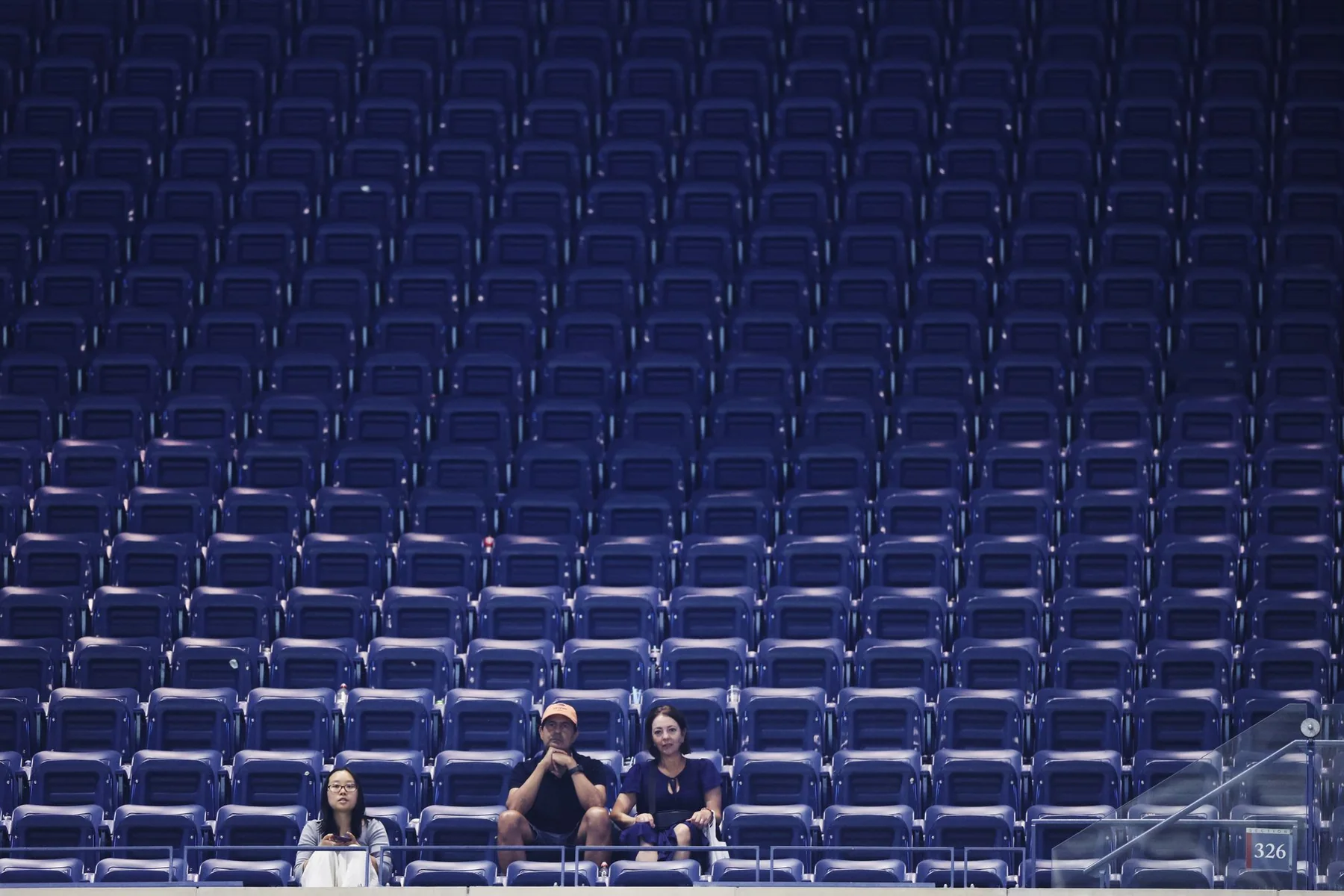
The same problem reaches home viewers on the U.S. East Coast: a showcase loses value if the decisive set arrives after the intended audience sleeps. A global audience in daytime time zones may benefit, but that is not a complete answer to local ticket holders. Fans who need to leave can keep the verified legal U.S. watch options ready; organizers should still aim to let them see match point from the seat they bought.
What rules apply, and why Wimbledon is different
There is no universal 11 p.m. tennis rule that automatically governs the US Open. The ATP Tour has a late-start policy for its tournaments, but the majors operate under the Grand Slam Rule Book enforced by the Grand Slam Board. Wimbledon is different again because its 11 p.m. limit is a local-authority curfew.
Tour rules do not automatically bind Grand Slam scheduling
The 2026 ATP Rulebook gives a useful model: at ATP Tour events, a match not on court by 10:30 p.m. is to be moved to another court at 11, and a match cannot start after 11 without approval. It also caps a court at two evening matches and recommends earlier night-session starts. Those provisions show that late scheduling can be managed. They do not mean Shelton–Alcaraz broke an ATP rule, because the US Open is governed separately as a Grand Slam.
| Model | Protection | Tradeoff |
|---|---|---|
| ATP Tour | 10:30 p.m. move trigger; 11 p.m. start limit, subject to approval | Requires a suitable alternative court |
| Wimbledon | Local 11 p.m. curfew | An unfinished match resumes later |
| Roland-Garros 2026 | One 8:15 p.m. showcase match in the night slot | A different, smaller night-session package |
A curfew creates certainty but also unfinished matches
Wimbledon's official compendium says the 11 p.m. curfew is set by the local authority. That guarantees no match will finish at 3:33 a.m., yet the clock can stop a contest already in progress. Novak Djokovic and Rafael Nadal had to return the next day to finish their 2018 semifinal. Certainty for neighbors and spectators becomes discontinuity for players, ticket holders and the next day's schedule.
Roland-Garros offers a third comparison. Its 2026 program put three day matches on Court Philippe-Chatrier, followed by one night match at 8:15. One showcase contest cannot be delayed by another night opener, although the day session can still run long. These are policy choices, not proof that one major has solved tennis timing. A sensible US Open proposal must say whether it would prevent a late start, suspend live play or reduce the night card. Fans tracking any resulting change can use the updating US Open calendar feeds rather than a one-time schedule.
Which changes could prevent another 3:33 a.m. finish?
The best first step is to begin the night session earlier and publish a protected-start trigger for its final singles match. If that match cannot begin by the stated hour, it moves to a ready show court. This does not guarantee an early finish, but it prevents a predictable delay from becoming an overnight emergency.
Start earlier and protect the final match's start time
Moving the scheduled session from 7 to 6 p.m. creates an hour of margin. On its own, however, it fails whenever an overrun delays the day-to-night turnover. A second rule is needed: review the situation around 10:30 p.m. and decide whether the last match can start in Ashe by 11. That borrows the logic of the ATP Tour model without pretending the ATP rule already governs a Grand Slam.
“Protected” should mean a published decision process, not a fictional guarantee that tennis will obey the clock. Organizers would need to identify the backup court, tell both audiences before movement begins and update the Order of Play. The gain is clarity: players stop waiting indefinitely, while fans know which signal will activate the change.
Use Louis Armstrong Stadium as an overflow court
Louis Armstrong is a credible backup because it holds 14,000 spectators and has a retractable roof. Tim Henman advocated the principle of moving a delayed match while keeping New York night sessions. Yet Armstrong is smaller, and its ticket does not normally include Ashe. A fair overflow policy must say who may enter, how assigned seats are handled and what remedy applies to someone whose Ashe match moved.
Reduce the night bill before changing best-of-five tennis
Martina Navratilova proposed one singles match plus doubles. Another option is one showcase singles match on quarterfinal nights, when the risk of a long men's contest is highest. Either version lowers expected court time but changes the quantity and mix sold to evening buyers.
| Reform | Main benefit | Main cost | Editorial priority |
|---|---|---|---|
| Earlier start + move trigger | Protects start time | Operational and ticket planning | First |
| Lighter night card | Less cascading risk | Less session content | Second |
| Hard curfew | Certain stop | Suspended matches | Situational |
| Shorter men's format | Lower maximum duration | Changes Grand Slam competition | Last |
Best-of-five created the reversals that made Shelton–Alcaraz memorable. Altering it treats the match as the problem when the schedule had already failed before first serve. The more proportionate response is to manage start exposure first. None of these ideas is confirmed USTA policy; fans should check the live US Open schedule today for actual court changes rather than assuming a proposal has been adopted.
A practical late-night plan for US Open fans
Treat the second match of an Ashe night session as a sequence, not a fixed appointment. The tournament cannot tell you how long the opener will last. You can still make a better decision by checking live progress, choosing your own departure threshold and preparing a lawful way to continue watching.
- Check the order, not only the headline time. Open the US Open Order of Play and confirm the court, session and number of matches ahead. “Second match” is meaningful; an estimated time may move.
- Watch the opener's shape. Use the live schedule today to track sets and status. A third set in the women's opener or a fifth set in the men's opener is a warning that the next first serve is sliding.
- Set a decision time before you need it. Consider work, children, fatigue and the trip from Mets-Willets Point. Decide what would make you leave before emotion and a deciding set make the choice harder.
- Prepare the handoff. Bookmark the verified U.S. TV and streaming options for today, confirm your subscription and carry enough phone battery to access tickets, alerts and a stream after leaving.
- Check transit live. The official venue guide points fans to the 7 train and LIRR at Mets-Willets Point, but special schedules and construction can alter service. Use the current MTA site or app; do not rely on an evergreen “last train” claim.
Arriving when evening gates open at 6 p.m. can make the session feel less rushed, but it cannot guarantee match point before midnight. The fix belongs to the tournament. Until the schedule changes, the best fan plan is to distinguish what is confirmed—the court and order—from what tennis never promises: the hour of the last ball.
Bottom line: the 3:33 a.m. record was spectacular tennis inside an avoidable scheduling risk. Keep New York's night-session energy, but give the final match an earlier window and a transparent move trigger. Fans should not have to choose between seeing the ending and functioning the next morning.
Loading comments…