US Open Influencer Controversy Explained: What Happened During Naomi Osaka?s Match?
A fact-checked timeline of the distraction during Naomi Osaka's first-round match, the USTA's creator-credential clarification and the etiquette lesson for fans.
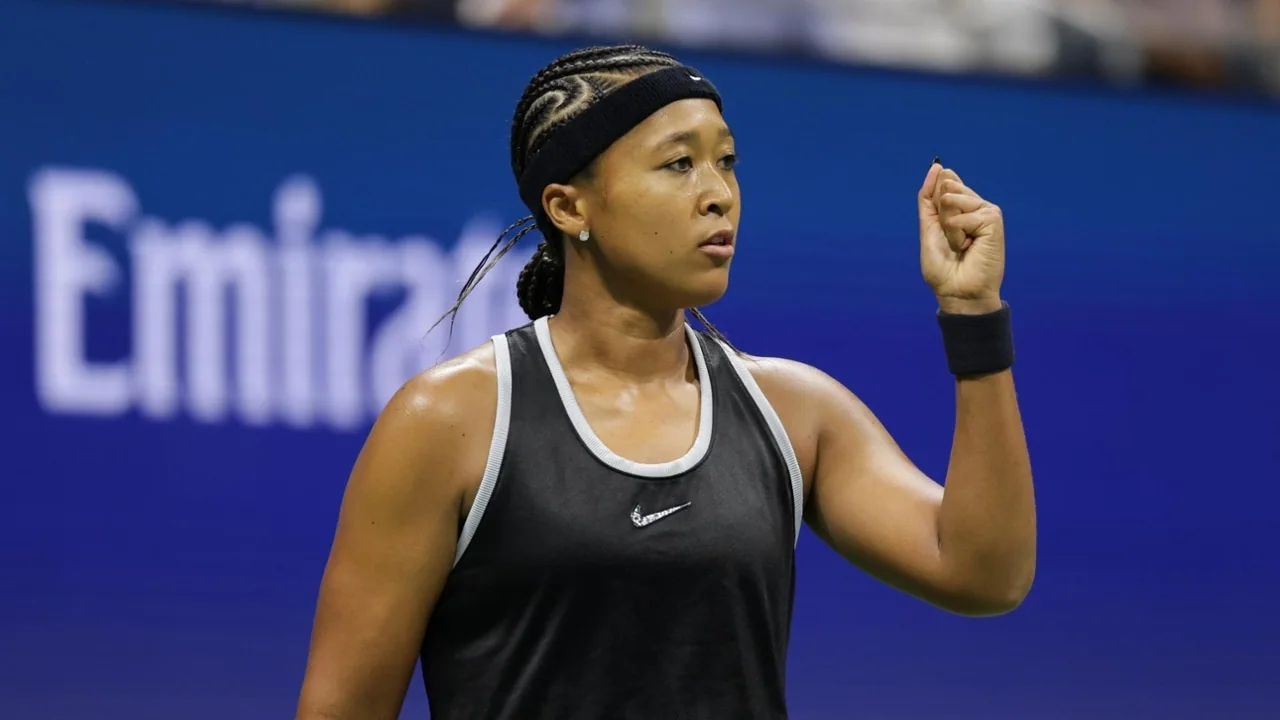
The viral “US Open influencer controversy” began when activity in a hospitality suite briefly interrupted Naomi Osaka’s 2026 first-round match—but the USTA later said the spectators involved were not using official content-creator credentials. Chair umpire Kader Nouni asked the group to sit, play resumed, and Osaka defeated Anastasia Zakharova 7-6(6), 7-6(3).
This explainer separates what the clips showed from what later reporting confirmed, then turns the episode into a practical guide for fans, creators and suite hosts. It reflects official US Open information and reporting available through September 13, 2026 at 12:00 a.m. ET. Descriptions of the suite attendees remain deliberately limited because their identities and affiliations have not been reliably established.
What Happened During Naomi Osaka’s US Open Match?
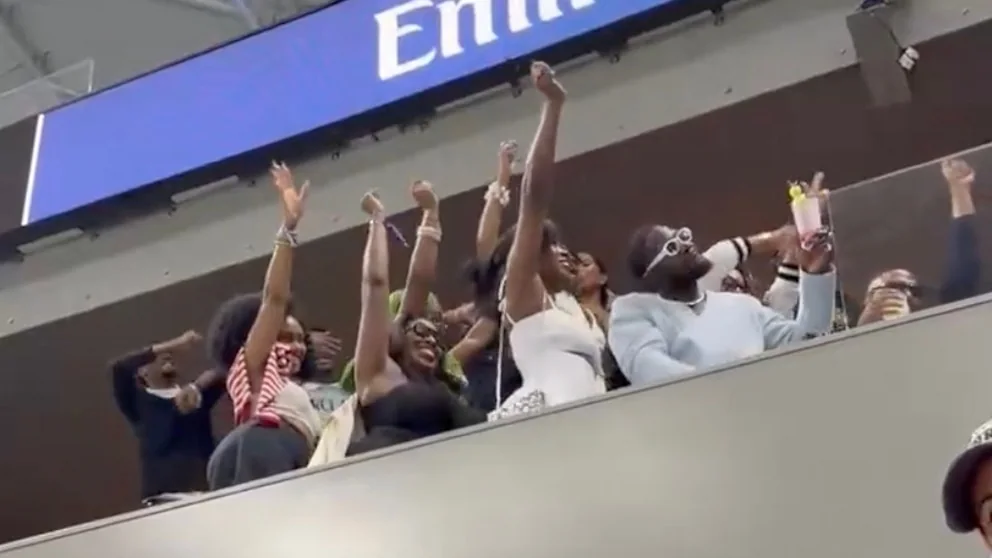
Naomi Osaka’s first-round match was briefly held while people in a hospitality suite moved around and recorded content, with a bright light also drawing attention near play. Chair umpire Kader Nouni addressed the suite and asked the group to sit. Osaka then resumed against Anastasia Zakharova and won 7-6(6), 7-6(3) inside Arthur Ashe Stadium on Monday, August 31, 2026.
The verified sequence
- 1. Osaka and Zakharova were playing a close opening-round match that ultimately required two tiebreaks.
- 2. People in a suite were seen standing, moving and making a group recording; reports also documented a bright-light photo moment.
- 3. Nouni paused the normal service sequence long enough to speak toward the suite and have the spectators settle.
- 4. Play continued, and Osaka completed the straight-sets victory in a little more than two hours.
The careful wording matters. Some viral captions said “influencers stopped the match,” while reports differed slightly over whether a clip captured action in the middle of a point or Osaka preparing to serve. The clearest shared account is that the chair briefly held play during Osaka’s service routine because the activity in the suite had become distracting. It was not a suspension, abandonment or lengthy delay, and reliable reports reviewed for this article did not say anyone was ejected.
The disturbance also should not be treated as the explanation for the result. Osaka, the No. 13 seed and a two-time US Open champion, was already navigating a tense contest. The official tournament recap credited her with 20 winners to Zakharova’s 13, while both players produced more unforced errors than winners. Osaka had to recover from uneven stretches and close each set in a tiebreak, but she remained composed enough to finish in two. Nothing in the scoreline lets viewers assign a measurable competitive effect to the suite activity, so any claim that it changed the winner would go beyond the evidence.
For the tennis context, the Osaka–Zakharova match page preserves the score and round details. The controversy came from a short courtside sequence, not from the match outcome. Just as importantly, the footage alone did not establish who the spectators were or whether they belonged to the tournament’s official creator program. That distinction became clear only after the USTA responded.
Were the Spectators Official US Open Content Creators?
No—at least not under the tournament’s creator-media credential. USTA spokesperson Brendan McIntyre told ABC News that the attendees responsible for the disruption during Osaka’s match were not among the officially credentialed content creators. Axios reported the same clarification. That statement does not reveal the attendees’ jobs, social-media followings or reason for being in the suite; it establishes only that they were not present on that specific US Open credential.
What the USTA Said About the Suite Group
The distinction corrects the most important misconception in the viral discussion. Videos and early posts frequently used influencers as a catch-all label for people filming in premium seats. Once that label spread, criticism of the suite group became criticism of the US Open’s official creator program. The available evidence does not support that jump.
What is confirmed
The people in the suite were spectators whose conduct drew an umpire intervention. The USTA says they were not using creator-media credentials. Their identities and affiliations have not been reliably established in the sources reviewed here.
It is still possible that one or more attendees creates content online in everyday life; the USTA statement cannot answer that broader question. But calling them “official US Open influencers” implies an accreditation or tournament relationship that has specifically been denied. The more accurate description is spectators in a hospitality suite. That preserves accountability for what viewers saw without attaching the behavior to a program whose credential holders were not involved.
What the Official Creator Credential Actually Covers
The credential is a formal media-access program launched in 2025. McIntyre described it as serving social-first creators and social-media channels belonging to established media brands, with guidelines covering access and content capture. USTA media operations director Jeanmarie Daly told Front Office Sports that the program was designed to reach audiences that traditional outlets and creators engage in different ways.
The scale increased quickly: the tournament approved close to 100 creator credentials in 2026, compared with 54 in its debut year. The 2025 cohort covered fields including health, fashion, food and lifestyle as well as tennis, and the USTA said its work produced more than 5.5 million social engagements. Front Office Sports also identified two separate groups: independently credentialed creators and roughly 15 to 20 creators producing work specifically for the US Open. In 2026, social teams from traditional media organizations could fit the credential category too.
Those distinctions make a simple point: a person holding a phone at the tournament is not automatically credentialed, employed or endorsed by the US Open. The expansion of creator coverage helps explain why viewers made the association so quickly, but timing is not proof. Fans who want the tennis side of Osaka’s tournament can use her player page; the conduct question should be judged by what happened in the suite, not by an unsupported label.
How Osaka Responded—and What the Match Result Was
Osaka’s response was firmer and more balanced than many of the arguments that followed online. Speaking after her second-round match, she said anyone attending a sporting event should respect the sport and learn its etiquette. At the same time, she recognized that creators can introduce tennis to their own audiences and described that wider reach as a positive—if the experience is managed so everyone understands the boundaries.
Match at the center of the story
Osaka def. Zakharova
7-6(6), 7-6(3)
What happened next
Osaka beat Katerina Siniakova 6-2, 5-7, 6-1 in round two, then answered questions about the crowd-conduct debate.
Her recollection also adds useful perspective to the video. Osaka said she normally blocks out the crowd and had not been concentrating on the spectators. She did, however, hear a stretch of shouting clearly and thought it bothered Zakharova as well. That is more precise than saying Osaka blamed the interruption for her performance. She acknowledged a distraction while refusing to turn it into an excuse.
The first-round score confirms why concentration mattered. Both sets went to tiebreaks, and the official US Open recap described a match of momentum swings rather than easy control. Osaka ultimately won in straight sets after just over two hours, so the chair’s intervention did not leave the result incomplete or contested. Readers can follow the completed line in the women’s singles draw and review Osaka’s tournament profile on her player page.
Most importantly, Osaka did not ask tennis to shut out new audiences. Her position was that promotion and respect have to coexist. A creator can showcase fashion, food, the grounds or the energy in New York without making a live point the background of a shoot. That focus on behavior also avoids blaming every credentialed creator for what a separate group of spectators did. It is the practical middle ground: welcome attention that helps the sport grow, but protect the athletes’ workplace while the ball is in play. Her answer leaves room for education before punishment while making clear that audience growth is not a license to disrupt competition.
Why Lights, Movement and Noise Matter During a Tennis Point
A tennis player is not simply waiting for quiet. A server is repeating a timed routine—setting the feet, controlling the toss and accelerating through contact—while both players track a fast ball against the surrounding visual field. An abrupt shout, a person standing nearby or a concentrated light can pull attention precisely when that sequence has begun. The problem is the sudden change and its timing, not the existence of a lively crowd.
Atmosphere Is Welcome; Sudden Distraction Is Different
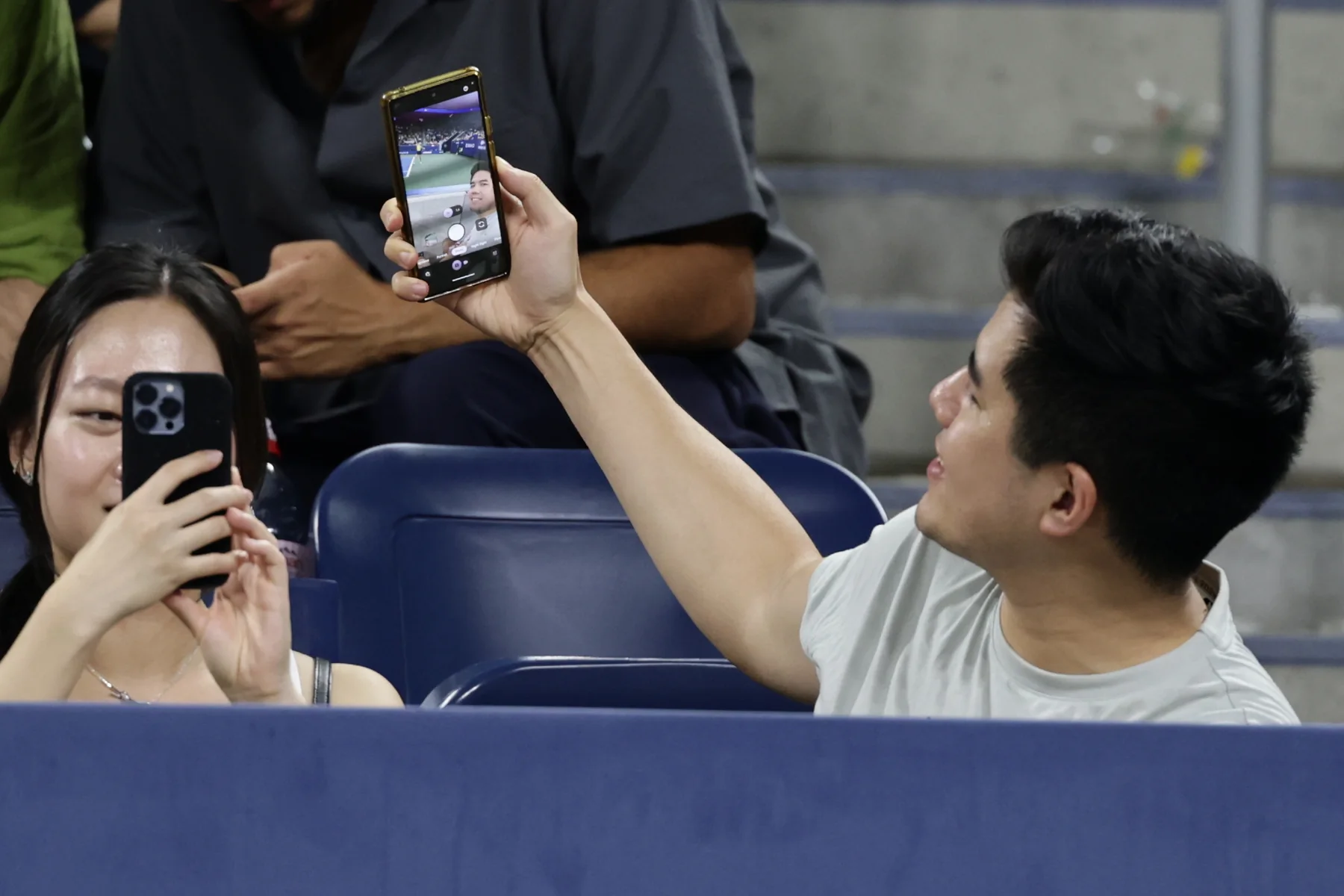
The US Open’s official 2026 visitor guidance makes that distinction plainly. It asks spectators to keep voices down while players are serving and during points, remain seated within a server’s view during the service motion, and avoid flash photography or ring lights during match play. It also encourages fans to cheer when the point ends and recommends changeovers or set breaks for photos.
Large-stadium acoustics can make the boundary hard to judge from a suite. Zakharova’s next opponent, Katerina Siniakova, later explained that people may think a high seat is too far away for a player to hear, even though sound circulates through Arthur Ashe Stadium and reaches the court. Different players may also react to different cues: Osaka said noise registers more for her, while Coco Gauff highlighted flash photography. Neither observation proves that a specific distraction changes a point, but both explain why the precaution exists.
Before or during a point
Stay seated, lower voices and keep extra lighting off.
After the point
React, applaud and enjoy the stadium’s energy.
At a changeover
Move seats or take planned photos without crossing live play.
Why the Chair Umpire Can Address the Crowd
The chair umpire manages more than line calls and the score. International officiating procedures instruct the chair to make best efforts to control the crowd, and the USTA said its umpires can address distractions when they arise. Nouni’s request that the suite take its seats therefore fits normal match management: restore playable conditions quickly, then continue.
That intervention is not evidence of a special rule for influencers, nor does it require the chair to determine a spectator’s credential status. The operative fact is conduct visible or audible from court. A longtime ticket holder, invited executive, reporter or first-time creator can all cause the same problem by standing, shouting or switching on a light at the wrong moment. Fans checking the US Open order of play can plan photos and movement around changeovers without sacrificing the atmosphere that makes New York distinctive.
How the US Open Responded After the Viral Clips
The US Open responded with broader, visible reminders rather than a creator ban. USTA spokesperson Brendan McIntyre said the tournament increased signage around the grounds and inside stadiums, contacted ticket holders and suite holders, and emphasized that flash photography, ring lights and other disruptive activity should stop during play. Stadium video-board notices carried the same message.
| Response | Who sees it | What it addresses |
|---|---|---|
| Ground and stadium signs | All visitors | Flash, ring lights and disruptive recording |
| Video-board messages | Spectators already seated | A timely reminder before or during sessions |
| Ticket-holder emails | General buyers | Expectations before arrival |
| Suite-holder notices | Hospitality hosts and guests | Conduct in premium spaces close to play |
The tournament’s September 4 visitor guide made the advice concrete: take photos during changeovers or set breaks, do not leave a seat within the server’s view during the service motion, keep voices down through serves and points, and save cheering for the point’s end. That turns an unwritten expectation into instructions a first-time visitor can follow.
There are limits to what was announced. The reviewed USTA statements did not identify or disclose a punishment for the Osaka suite group, cancel the creator credential, or introduce one code for creators and another for regular ticket holders. The USTA described disruptions as infrequent and retained the chair umpire’s ability to address them when they occur. It also did not claim that signs alone would solve every crowd issue; the measures combine advance education with real-time officiating.
That scope is important. The immediate failure was not that social content existed at the tournament; it was that recording activity crossed into match play. Better pre-session communication—especially from suite hosts who know their guest list—can prevent a repeat without flattening the US Open’s energetic character. Visitors planning a day on the grounds can consult the US Open schedule before arrival, then treat every active court as the athletes’ workplace.
A Practical US Open Etiquette Guide for Fans and Creators
The easiest rule is to make content around the tennis, not over it. You do not need years of tournament knowledge to avoid a disruption: look for a natural break, keep added lighting off, and let the players complete their routines. The same standard applies whether you bought a seat, entered a suite, received a media credential or arrived through a brand invitation.
The Best Times to Take Photos or Record
The official US Open visitor guide recommends changeovers and set breaks. Those windows are easy to recognize: the players sit, music often comes up, and spectators have enough time to move or frame a picture without racing the next serve. A point ending is a safe time to cheer, but it is not always a long enough window for a posed video; the next service routine can begin quickly.
Do
- Wait for a changeover or set break for posed photos and longer clips.
- Return to your seat before the server begins the routine.
- Keep the phone screen dim and all flash, LED and ring lights off.
- Cheer after the point, then listen for the crowd to settle.
Don’t
- Stand, cross an aisle or stage a group shot during a serve or point.
- Add a light because the stadium looks dark on your camera.
- Assume glass, distance or a suite wall makes voices inaudible.
- Keep recording after an usher or chair umpire asks you to stop.
If you are unsure, watch the players and nearby ushers rather than the phone. When players are seated, prepare the shot. When they stand and move toward the baseline, finish it and sit down. Before attending, the today schedule and order of play can help you identify session timing; viewers who mainly want close-up footage can use the US Open viewing guide instead of trying to create it from a seat.
Who Is Responsible for Setting the Boundary?
Every spectator owns their conduct, but prevention is shared. The tournament must make expectations visible and give officials and ushers a workable response. Suite holders should brief guests before play begins. Brands and agencies should include tennis etiquette in campaign instructions, not leave it as assumed knowledge. Credentialed creators should follow the access and capture rules attached to their credential.
Players made a similar point in Associated Press reporting. Coco Gauff suggested that organizations inviting newcomers could provide etiquette signs, while creator and college player Madison Appel emphasized sitting and watching once a player is ready to serve. Education should happen before a mistake; an immediate instruction should end it once it occurs.
The boundary should be enforced by behavior, not by guessing who looks like an influencer. That principle protects players and avoids unfairly assigning one suite’s actions to nearly 100 credentialed creators who were elsewhere at the tournament. The best reading of the Osaka episode is therefore narrow but useful: spectators created a distraction, the umpire intervened, the USTA clarified that they were not official creator-credential holders, and the tournament strengthened its reminders. New voices can help tennis grow without turning a live point into a backdrop.
Loading comments…