2016 US Open Winners and Results: Wawrinka and Kerber
Wawrinka and Kerber head a five-event championship recap, with the final scores, pivotal matches, historical rankings and 2016 prize awards explained.
Who won the 2016 US Open?
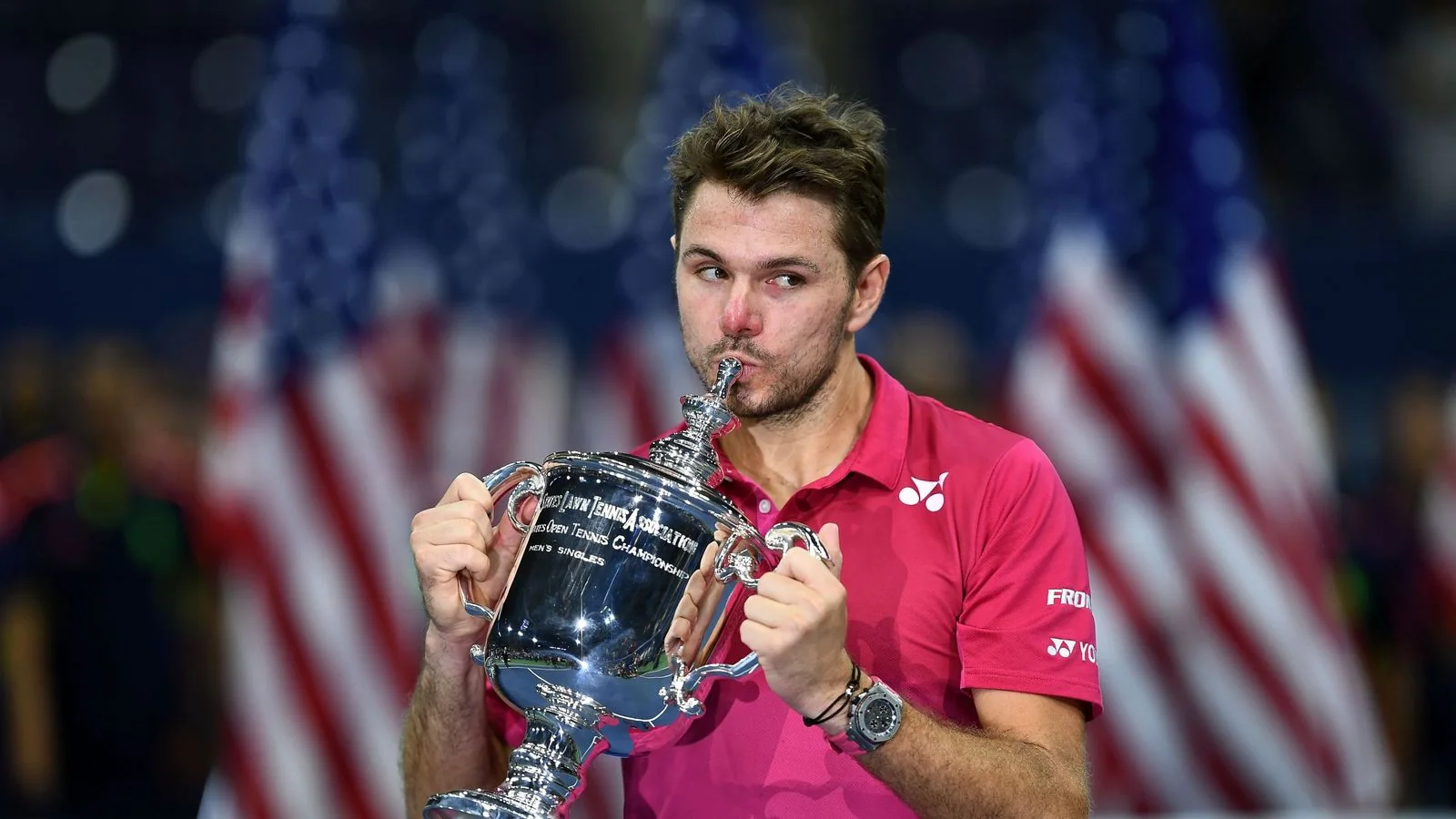
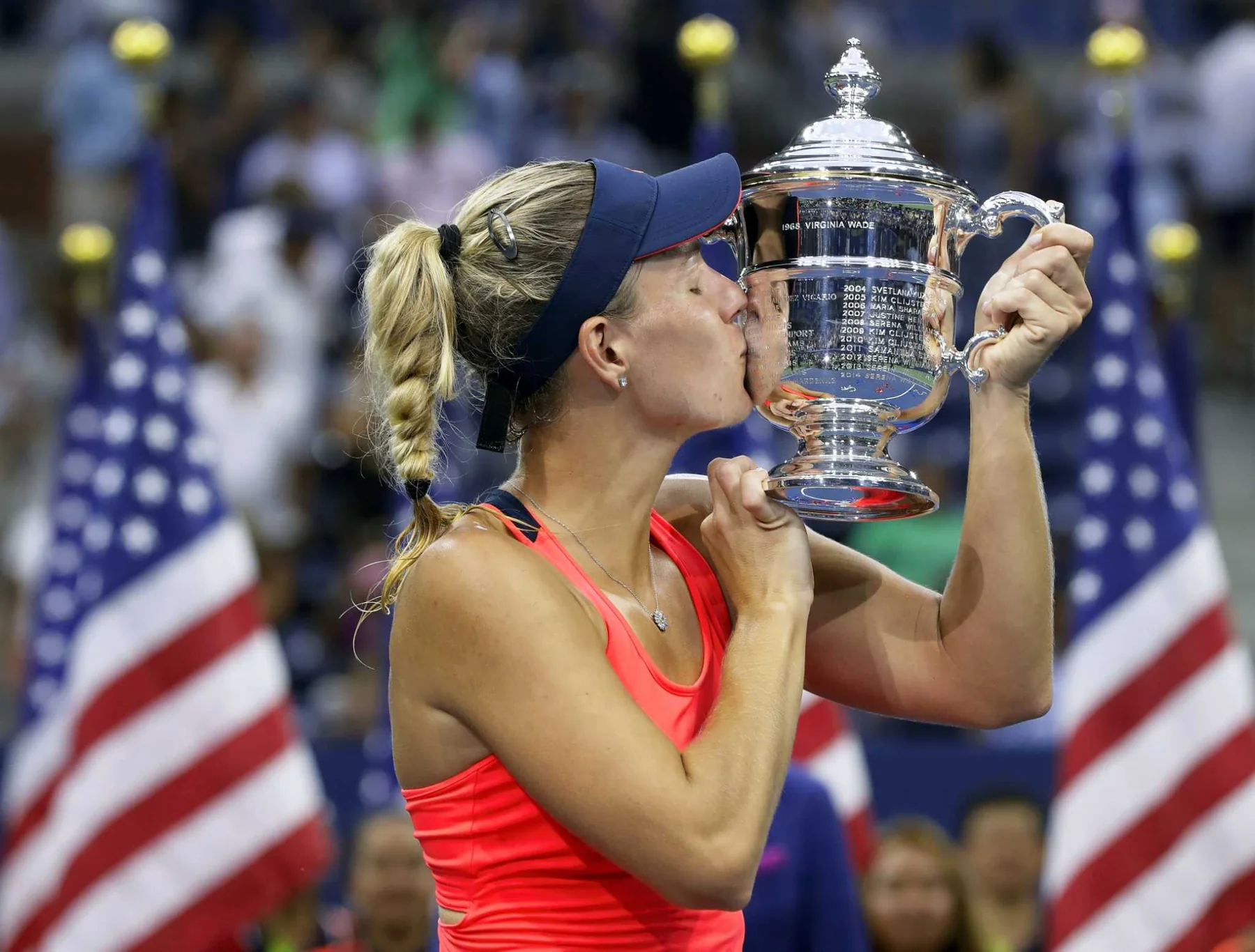
Stan Wawrinka won the men's singles title and Angelique Kerber won the women's singles title at the 2016 US Open. Wawrinka defeated defending champion Novak Djokovic in four sets on September 11; Kerber overcame Karolina Pliskova in three sets on September 10. Neither final was a straight-set procession, and both champions had to rebuild their advantage after the opponent changed the match.
The tournament ran from August 29 through September 11 at the USTA Billie Jean King National Tennis Center in Flushing Meadows, New York. The table below covers the five senior open events. Scores are presented from the champions' perspective; the parenthesis in a tiebreak set gives the losing player's or team's tiebreak points.
| Event | Champion | Runner-up | Final score |
|---|---|---|---|
| Men's singles | Stan Wawrinka | Novak Djokovic | 6–7(1), 6–4, 7–5, 6–3 |
| Women's singles | Angelique Kerber | Karolina Pliskova | 6–3, 4–6, 6–4 |
| Men's doubles | Jamie Murray / Bruno Soares | Pablo Carreno Busta / Guillermo Garcia-Lopez | 6–2, 6–3 |
| Women's doubles | Bethanie Mattek-Sands / Lucie Safarova | Caroline Garcia / Kristina Mladenovic | 2–6, 7–6(5), 6–4 |
| Mixed doubles | Laura Siegemund / Mate Pavic | CoCo Vandeweghe / Rajeev Ram | 6–4, 6–4 |
For Wawrinka, New York completed a third different major title after the Australian Open and Roland Garros. The ITF's 2016 tournament archive preserves that result. Kerber's victory gave the women's event its own equally substantial story: a champion who could absorb pace, change direction and still attack the decisive ball.
A useful way to remember this edition is to separate three questions. Who won the tournament? Who entered as the highest seed? Who held the world ranking afterward? Those answers need not be the same. The singles trophies went to Wawrinka and Kerber, regardless of how frequently Djokovic, Nadal or Serena Williams appears in a search about that season. For adjacent editions, use the year-by-year singles champions list; the sections below explain what made the 2016 results distinctive.
How Wawrinka beat Djokovic in the men's final
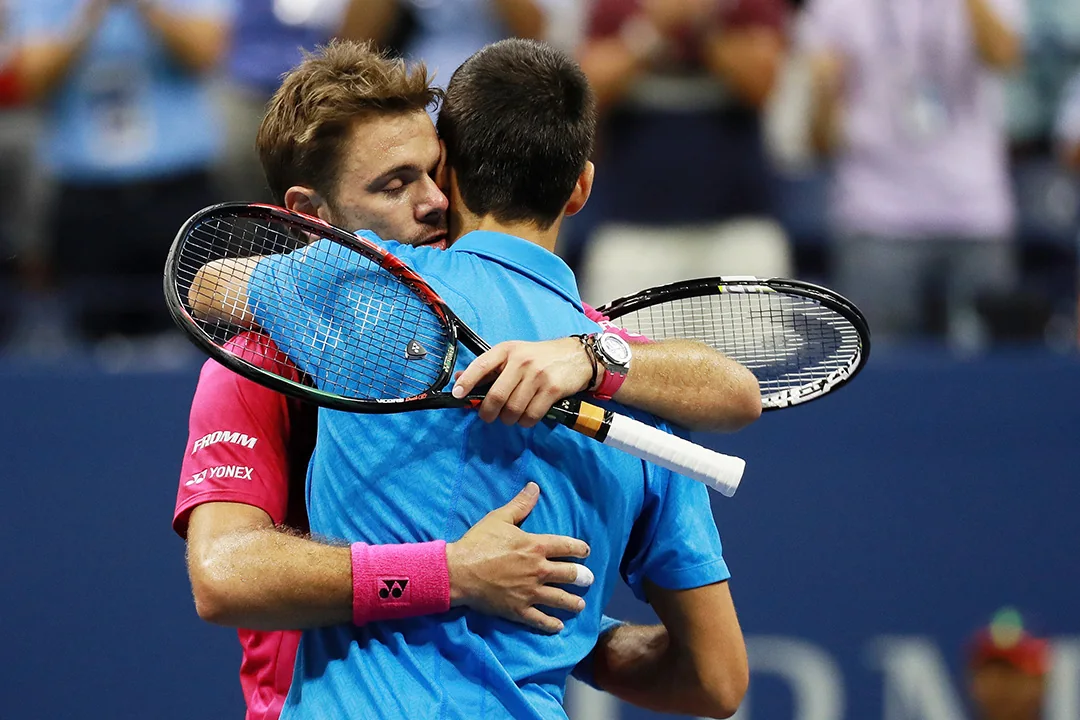
Wawrinka won by continuing to ask difficult physical questions after Djokovic took the first set. His 6–7(1), 6–4, 7–5, 6–3 victory was built around heavy ground strokes and the confidence to attack late in sets, when a missed opportunity could have changed the whole final.
The pressure points that decided the final
Djokovic's opening-set tiebreak was emphatic, but it did not settle the baseline contest. Wawrinka kept creating pressure rather than allowing the world No. 1 to turn that lead into a routine afternoon. In the second set, an early Swiss advantage disappeared before Wawrinka broke again at the finish. The third followed a related pattern: Djokovic recovered from three games down, only for Wawrinka to take the closing return game.
That repeated late-set success is the tactical detail to watch in a replay. A player can recover a break and still remain under pressure if the opponent continues striking through the court. Wawrinka's backhand gave him a way to redirect exchanges rather than merely survive them. Djokovic had to defend the width of the court while also protecting the next service game. The score consequently shifted through Wawrinka's ability to start a fresh attack after a setback.
Sky's contemporary account describes Wawrinka moving 3–0 ahead in the fourth and resisting Djokovic's attempt to recover. The prior fortnight had also been unusual: Djokovic had completed only three matches before the final because of a walkover and retirements. Less court time was no guarantee of a stronger finish. That distinction matters when judging a draw solely from hours played.
A title run that nearly ended against Dan Evans
Wawrinka's most precarious moment came much earlier. Dan Evans held a match point in their third-round encounter; Wawrinka survived and won 4–6, 6–3, 6–7(6), 7–6(8), 6–2. He subsequently beat Illya Marchenko, Juan Martin del Potro and Kei Nishikori before meeting Djokovic. The champion therefore arrived through repeated extended contests, not an uninterrupted sequence of comfortable wins.
The Australian Open's account of their rivalry connects this final with Wawrinka's 2014 Melbourne quarterfinal and 2015 Roland Garros final victories over Djokovic. The common thread is the threat he could sustain over a major's longer match format. For fans, the Evans escape and the Djokovic final belong in the same story: the level required to win the trophy developed through the tournament, while one lost point in the opening week could have erased the opportunity entirely.
How Kerber won the women's title and became No. 1
Angelique Kerber beat Karolina Pliskova 6–3, 4–6, 6–4 to win her first US Open title. She entered the final as the second seed against the tenth seed, but the contest became a much closer examination of nerve and court coverage than those numbers alone suggest.
Kerber recovered from 1–3 in the deciding set, winning five of the final six games. The important contrast was between Pliskova's ability to take time away and Kerber's ability to keep a point playable. That left the Czech needing to find another attacking ball even after an apparently strong opening shot. Once the final returned to level terms, the pressure of holding serve moved back onto both players.
The official women's draw places that finish in context. Kerber had beaten Petra Kvitova in the fourth round, Roberta Vinci in the quarterfinals and Caroline Wozniacki in the semifinals without dropping a set. Pliskova's route included wins over Venus Williams and Serena Williams. She had earned her place through serious opposition, so the comeback should not be mistaken for a favorite simply waiting for an inexperienced challenger to disappear.
As a viewing lesson, Kerber's title rewards attention to the shot after the apparent winner. Her value was not confined to retrieval: once she had made an opponent hit again, the next change of direction could become her own attacking chance. That is why describing her only as a defensive player misses the practical problem she presented.
When the ranking change actually happened
Kerber's first official day as world No. 1 was September 12, 2016, according to the WTA's career retrospective. The position had already been secured when Pliskova defeated Serena in the semifinals. Winning Saturday's final added the trophy to that achievement; it was not the match that first guaranteed the ranking.
Her broader season helps explain the distinction. Kerber won the Australian Open, reached the Wimbledon final and then won in New York, later finishing the year at No. 1. Tournament victory measures performance across one draw; a ranking reflects results across a longer period. In 2016, those two forms of success reinforced each other. Readers comparing players today can use the current US Open player directory, while keeping its present field and rankings separate from this historical edition.
The men's, women's and mixed doubles champions
The doubles events produced three separate championship partnerships. Jamie Murray and Bruno Soares won men's doubles; Bethanie Mattek-Sands and Lucie Safarova won women's doubles; Laura Siegemund and Mate Pavic won mixed doubles. Reading the partners together is essential because an individual player's success in one competition does not identify the winner of another.
Murray and Soares complete a two-major season
Murray and Soares defeated Pablo Carreno Busta and Guillermo Garcia-Lopez 6–2, 6–3 in the men's final. Their championship added New York to the Australian Open they had won earlier that season, as recorded in the official Melbourne draw. It was Jamie Murray's title with Soares; Andy Murray's singles campaign was a separate result.
The fourth seeds had also beaten defending champions Pierre-Hugues Herbert and Nicolas Mahut in the semifinals. That win gives the relatively clear final score useful context. The team had already solved a leading established partnership before facing the Spanish finalists. When revisiting their run, look beyond the last match: a strong doubles campaign depends on serving patterns, return positioning and agreement over who takes the first volley. The result rewards the pair's combined decisions, not a ranking comparison of two isolated singles players.
Mattek-Sands and Safarova recover in the final
Mattek-Sands and Safarova, seeded twelfth, beat top seeds Caroline Garcia and Kristina Mladenovic 2–6, 7–6(5), 6–4. The middle set was the hinge. Losing the first set left the eventual champions without room for another failed set, yet they stayed close enough to force a tiebreak and carry the final into a decider.
For a viewer, this match offers a different lesson from the men's final. A doubles team's early dominance can be real without being permanent. Once the trailing pair survives the second set, both teams must make decisions with the trophy only one set away. The score should be read as a full three-set contest: that final 6–4 was a set score, not a ten-point match tiebreak. Applying the format of another event or another season would misrepresent the match.
Siegemund and Pavic win mixed doubles
Siegemund and Pavic defeated CoCo Vandeweghe and Rajeev Ram 6–4, 6–4. The US Open's contemporary account explains that the unseeded partners had only just come together and did not drop a set during the tournament. Their immediate success is a useful counterpoint to the established men's champions.
Good partnership play can emerge quickly when skills and decisions fit, although one successful fortnight does not prove that preparation is unnecessary. Mixed doubles also needs its own place in the archive: Siegemund and Pavic earned a major trophy even though this competition did not award ranking points. Calling the win merely a footnote to singles would lose one of the edition's most distinctive stories.
What were the winners' rankings and prize money?
Wawrinka was the men's third seed and world No. 3. Kerber was the women's second seed and world No. 2 during the tournament, with her first official No. 1 ranking following on September 12. Thus, “the 2016 winner's ranking” has two answers by competition and a further distinction between the tournament week and the next published ranking.
Each singles champion received a base tournament prize of $3.5 million. The USTA's original 2016 distribution is the appropriate comparison, because a regularly updated prize page can now describe a later edition. The men's and women's singles awards were equal, as were the corresponding men's and women's doubles awards.
| 2016 competition | Champion award | Finalist award | Unit |
|---|---|---|---|
| Men's or women's singles | $3,500,000 | $1,750,000 | Per player |
| Men's or women's doubles | $625,000 | $310,000 | Per team |
| Mixed doubles | $150,000 | $70,000 | Per team |
The announced total was approximately $46.3 million. That headline covered the wider event, including earlier rounds and qualifying, rather than money shared only by the finalists. Most importantly, the doubles amounts in the table belong to the partnership. Listing $625,000 beside each partner individually would double the actual team award.
The singles winner's figure was twice the runner-up's. That arithmetic describes the published distribution; it does not mean the champion performed twice as well or that a player's entire season can be assessed by a single payment. A run ending in the final still required navigating six preceding rounds, and a runner-up can have beaten opponents who strongly shaped the tournament.
Likewise, a prize-money table is not a statement of personal take-home income. It records the tournament award, while sponsorship and private professional expenses belong to different accounts. Keeping those categories separate makes historical comparisons more meaningful. The same discipline applies to rankings: a seed is a position in this draw, a world ranking measures a broader results record, and a year-end ranking answers yet another date-specific question.
What happened to Nadal, Federer and the other favorites?
Rafael Nadal lost in the fourth round, Roger Federer did not play, and Andy Murray lost in the quarterfinals. Djokovic reached the final but finished runner-up. These distinctions clear up several common memory traps around the 2016 champion: a familiar name, a high seed or a previous title does not change that year's completed result.
Nadal's defeat came against Lucas Pouille, who won 6–1, 2–6, 6–4, 3–6, 7–6(6). The contemporary match report records Nadal twice recovering from a set down and then losing a break advantage in the fifth. A narrow deciding tiebreak ended his campaign. That is a very different story from being dominated for an entire match, and it explains why the result remains a memorable upset.
Federer was absent because his season had ended early to protect his knee. There was no Federer-versus-Wawrinka match in the 2016 US Open draw. When comparing Swiss champions, it is important to distinguish an absent rival from an opponent defeated on the way to the trophy.
Andy Murray's run ended against Nishikori, who won their quarterfinal 1–6, 6–4, 4–6, 6–1, 7–5. Nishikori then faced Wawrinka in the semifinals. Gael Monfils reached the other semifinal against Djokovic. This makes the men's final weekend easier to reconstruct: Wawrinka came through Nishikori; Djokovic came through Monfils. Neither semifinal was a meeting between the eventual champion and Nadal or Federer.
The women's draw also deserves that same precision. Pliskova's victory over Serena Williams helped define the fortnight, but it did not itself win the championship. Kerber still had to solve Pliskova in the final. A semifinal upset can change expectations dramatically while leaving one more, entirely different tactical test ahead.
For revisiting 2016, begin with the final scores and work backward through the rounds. That preserves both the champion's achievement and the opponents' contributions. For the latest edition, the site's current US Open results and current men's singles bracket serve a different purpose: following the present tournament. The historical record here remains fixed around Wawrinka, Kerber and the three doubles partnerships who completed their title runs in September 2016.
Loading comments…