2015 US Open Winners and Results: Djokovic, Pennetta and the Italian Final
The 2015 US Open's singles and doubles champions, with final scores and context for Djokovic's tenth major, Pennetta's breakthrough and Vinci's famous semifinal.
Who won the 2015 US Open? Five finals at a glance
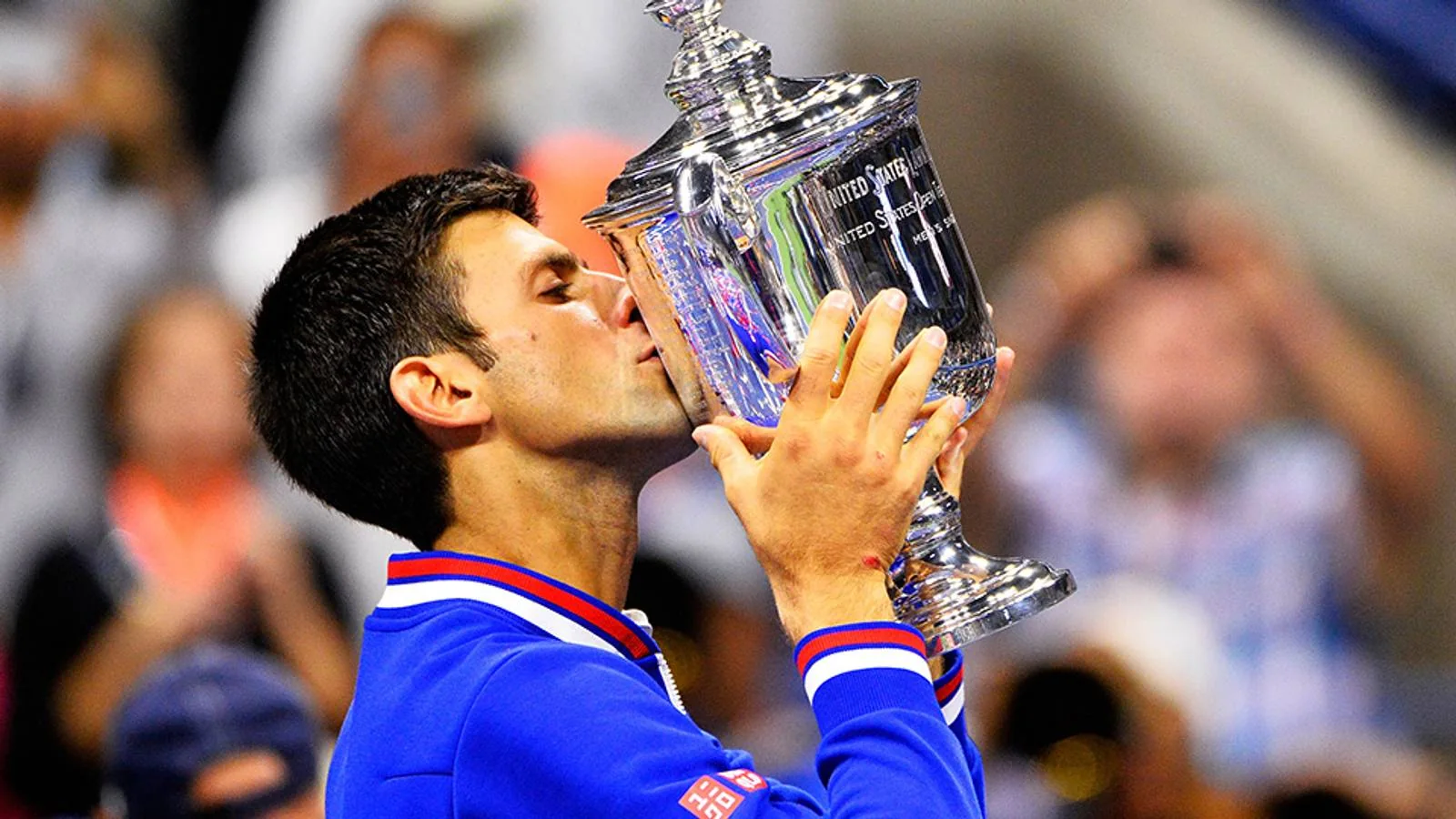
Novak Djokovic and Flavia Pennetta won the 2015 US Open singles titles. Djokovic defeated Roger Federer in four sets; Pennetta beat Roberta Vinci in an all-Italian women's final. Vinci was the player who ended Serena Williams' calendar Grand Slam bid, but Pennetta was the player who lifted the singles trophy.
The tournament ran from August 31 through September 13 at the USTA Billie Jean King National Tennis Center in New York. These are the five main singles and doubles finals. Junior and wheelchair championships had their own draws and are outside this table's scope.
| Event | Champion | Runner-up | Final score |
|---|---|---|---|
| Men's singles | Novak Djokovic | Roger Federer | 6-4, 5-7, 6-4, 6-4 |
| Women's singles | Flavia Pennetta | Roberta Vinci | 7-6(4), 6-2 |
| Men's doubles | Pierre-Hugues Herbert / Nicolas Mahut | Jamie Murray / John Peers | 6-4, 6-4 |
| Women's doubles | Martina Hingis / Sania Mirza | Casey Dellacqua / Yaroslava Shvedova | 6-3, 6-3 |
| Mixed doubles | Martina Hingis / Leander Paes | Bethanie Mattek-Sands / Sam Querrey | 6-4, 3-6, [10-7] |
Scores are shown from the winner's perspective. Pennetta's 7-6(4) means she won the opening-set tiebreak seven points to four. The brackets around the mixed doubles 10-7 identify a deciding match tiebreak, not a third set of seventeen games. These distinctions help when an older result page compresses a final into a single line. The 2015 tournament results directory also separates the other championship categories.
The names tell only part of the story. The men's winner was already established at the top of the sport, whereas the women's winner finally reached a singles milestone that had eluded her throughout a long career. Doubles supplied a third theme: a successful partnership can establish itself quickly, and one player can win with different partners in different events.
Use this article for that completed tournament. Our US Open results hub covers the current edition; its latest matches should not be read as part of the 2015 draw. The sections below explain the matches behind the five championship lines.
Djokovic beat Federer by surviving the pressure points
Djokovic's 6-4, 5-7, 6-4, 6-4 victory on September 13 looks orderly when reduced to four numbers. The match itself kept offering Federer ways back. Rain delayed the start, and a strongly pro-Federer crowd gave the final an emotional intensity that a score sheet cannot reproduce. Djokovic's achievement was to keep solving the next point when the match seemed ready to swing.
Four breaks from 23 chances
The defining statistic was Federer's conversion of four of 23 break points. Djokovic therefore saved 19, as the ITF's final report records. Federer had enough opportunities to make this a very different match. Djokovic repeatedly prevented those opportunities from becoming changes on the scoreboard.
Four divided by 23 is approximately 17 percent. That does not mean Federer lost nineteen separate return games: several break points can occur within one game. It also does not prove that every missed chance was an easy shot. A useful way to watch the final is to examine the serve, return depth and next ball on those points, rather than assuming the conversion number alone assigns responsibility for every outcome.
The late stages make that distinction concrete. Djokovic broke at 4-4 in the third set. In the fourth, his 5-2 lead narrowed to 5-4 before he finished the job. Winning an advantage and defending it were separate challenges. Federer's continuing resistance explains why the last 6-4 should not be mistaken for an uneventful procession.
A tenth major and a second New York title
The trophy was Djokovic's second US Open singles title and tenth major overall. He had also won the Australian Open and Wimbledon that season, while Stan Wawrinka beat him in the Roland Garros final. That distinction matters: three titles from four major finals is extraordinary, but it is not a calendar Grand Slam.
Sports Illustrated's contemporary account places the match against Federer's aggressive approach and Djokovic's returning. Our reading is that the final rewards attention to repeatable skills as much as spectacular winners: making another return, protecting a difficult service game and staying ready after a missed chance.
For the present tournament's championship information, use our US Open finals guide. The 2015 match belongs to an earlier chapter of the rivalry, when Djokovic was reaching double figures in major titles.
Pennetta won the all-Italian women's final
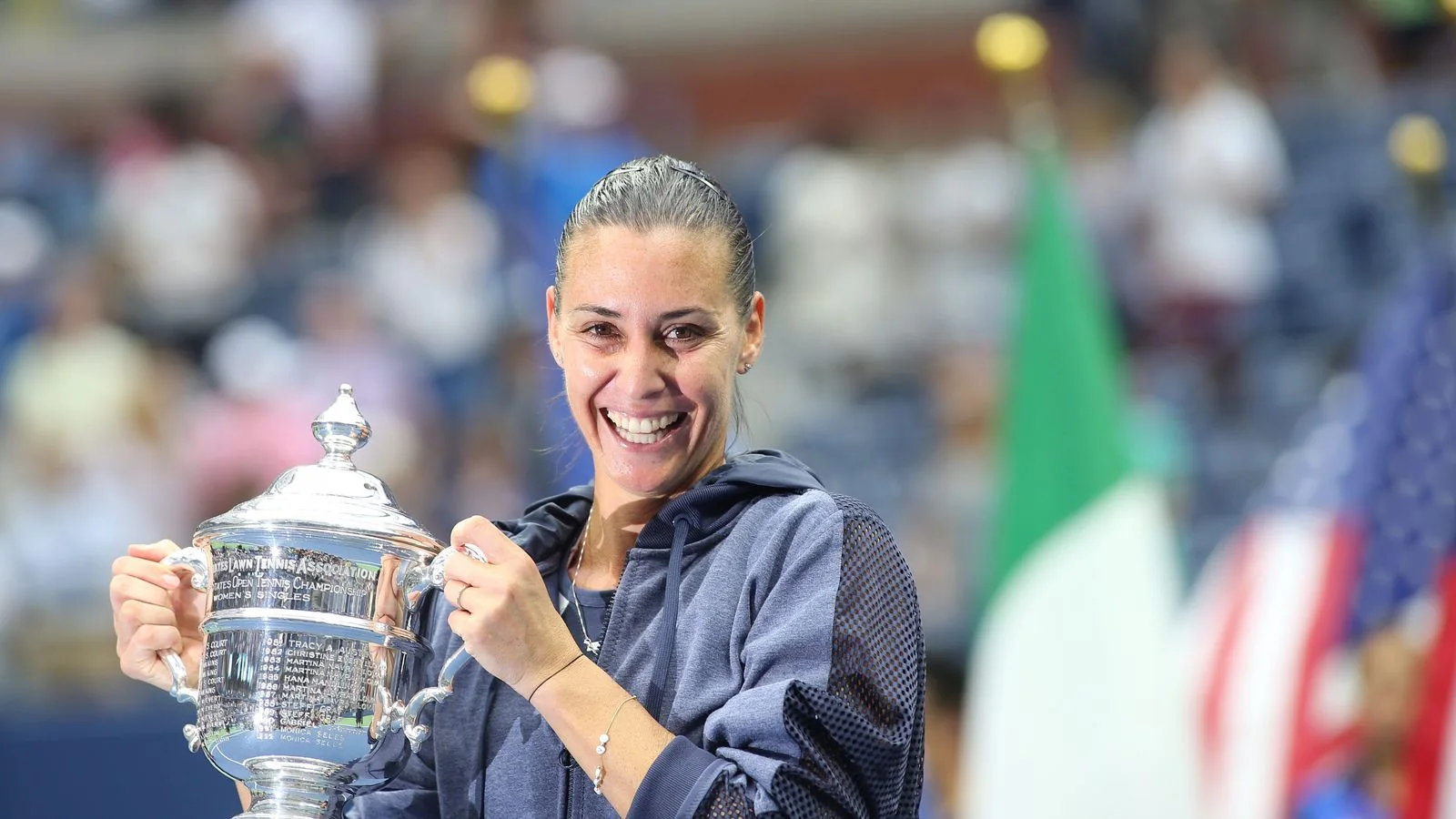
Flavia Pennetta beat Roberta Vinci 7-6(4), 6-2 on September 12 to win her first Grand Slam singles championship. Both women were contesting their first major singles final. Their shared nationality made history, but their familiarity also gave the occasion a distinctive feel: two longtime friends had reached the same enormous opportunity, and only one could take it.
Pennetta was 33. The WTA's career record identifies this as her 49th major appearance. She had already won Indian Wells in 2014 and reached No. 1 in doubles. Calling her an overnight success would therefore miss the experience behind the breakthrough. The new achievement was a singles major, not her introduction to elite tennis.
How the first-set tiebreak changed the match
The first set reached a tiebreak, which Pennetta won seven points to four. She then took the second set 6-2. Tennis.com's report from the final describes early tension for both players and a more convincing finish from Pennetta.
For a viewer revisiting the match, that first set is the best place to understand its shape. A close opening does not become irrelevant because the eventual winner takes the next set comfortably. Until the tiebreak is settled, either player can leave the opening hour ahead. Once Pennetta has the set, Vinci must win two in succession. That changes the burden of recovery even though every new game still starts at love-all.
The ceremony added a second surprise: Pennetta announced her retirement plans. The timing needs care. She was leaving at the end of the 2015 season; the US Open final was not her last competitive match that afternoon. Confusing an announcement with an immediate departure creates a more cinematic story, but an inaccurate one.
What makes this championship compelling is the combination of patience and decisiveness. A long career supplied the opportunity; Pennetta still had to play the points that secured it. For comparisons with earlier and later champions, our US Open winners by year guide places her name in the wider singles record.
Vinci stopped Serena's Grand Slam bid in the semifinal
Roberta Vinci defeated Serena Williams 2-6, 6-4, 6-4 on September 11. Serena had won the Australian Open, Roland Garros and Wimbledon that year. Two more match wins in New York would have completed the calendar Grand Slam. Instead, the semifinal ended that possibility and sent an unseeded Italian into the championship match.
The US Open's day-12 recap records that Serena had won their four previous meetings without dropping a set. Vinci was appearing in her first major singles semifinal at 32. Those facts explain the surprise without requiring a claim that one upset can be objectively ranked above every other upset in tennis history.
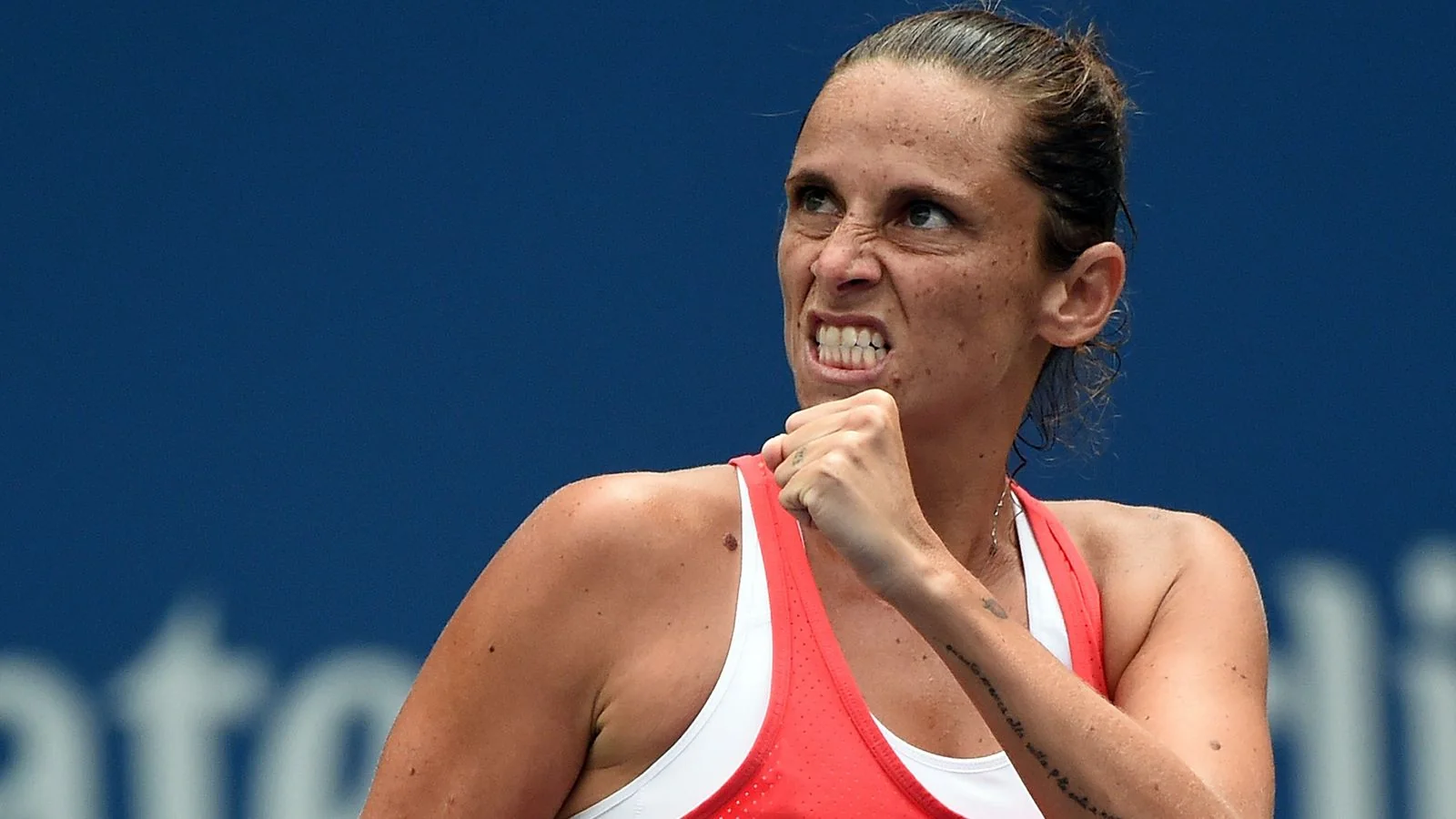
Vinci's game offered a different problem from a straightforward hitting contest. Her sliced backhand changed height and pace; her flatter forehand and willingness to move forward gave Serena different balls to solve. Tennis.com's tactical retrospective emphasizes that variation and the courage required to close the match.
One striking number is that Serena won 93 total points to Vinci's 85. Tennis, however, awards matches through sets and games rather than a running total of points. A player can win an opening set comfortably, then lose two closer sets. Extra points in games already won cannot be carried forward as credit. The result is a useful reminder to read the set score before drawing conclusions from a statistical summary.
Pennetta's route also deserves space. She beat second seed Simona Halep 6-1, 6-3 in the other semifinal. The final pairing was created by two separate victories, not by one surprise automatically promoting the other Italian. For anyone revisiting the weekend, watch the semifinals as distinct contests: Vinci disrupting a heavily favored opponent, and Pennetta earning her own place with a much shorter score line.
Serena's defeat remains central to the tournament's memory. It should coexist with the achievements of both Italians rather than obscure them. Vinci won the semifinal; Pennetta won the final. Keeping those two statements together gives the 2015 women's draw its proper ending.
Doubles champions: France's first and Hingis's double success
The doubles events deserve more than a footnote to the singles finals. One result was a national first in the men's competition; two others put Martina Hingis on the winners' list with different partners. Reading the complete pairings is essential, especially because several of these players returned to later US Opens in new combinations.
Herbert and Mahut's breakthrough
Pierre-Hugues Herbert and Nicolas Mahut defeated Jamie Murray and John Peers 6-4, 6-4. They became the first French team to win the US Open men's doubles title. The men's doubles draw places the champions as the No. 12 seeds and Murray and Peers as the No. 8 seeds.
Those seed numbers provide useful context, but they do not measure how a pair will combine on a particular day. Doubles asks different questions from singles: who covers the middle, how the server's partner reacts to a return, and whether both players commit to the same movement. For a replay, following the player without the ball can reveal as much as following the hitter. A poach or a decision to hold position can change where the next shot is possible.
The final's matching set scores make the result easy to remember. They should not be converted into an invented claim that every game followed the same pattern. The reliable record is a straight-sets championship for Herbert and Mahut, with Murray and Peers finishing runners-up.
Two trophies with two different partners
Hingis and Sania Mirza won the women's doubles final 6-3, 6-3 against Casey Dellacqua and Yaroslava Shvedova. They had already won Wimbledon together. The WTA's retrospective on their partnership confirms that their New York title came without losing a set. It was sustained control across a draw, not just a strong final afternoon.
In mixed doubles, Hingis teamed with Leander Paes. They beat Bethanie Mattek-Sands and Sam Querrey 6-4, 3-6, [10-7]. That gave Hingis and Paes three mixed majors in 2015, following Australia and Wimbledon. Their deciding segment was a match tiebreak: points replaced a full third set after the teams split the opening two.
That format gives a short sequence of returns and volleys unusually direct consequences. There is less time to recover from a poor start than in a full set, yet a lead still has to be converted into the required finishing margin. For an archive search, include both partners' names and the year. Searching only for a Hingis US Open doubles final can lead to a different pairing and a different championship.
What makes the 2015 results worth revisiting
The men's final matched the top two seeds, Djokovic and Federer. The women's final matched the No. 26 seed, Pennetta, and the unseeded Vinci. That contrast is a good starting point for understanding the tournament: one draw produced the anticipated meeting of leading contenders, while the other gave two experienced players their first major singles final.
Seed numbers are labels for a particular draw. They are not current rankings, and they should not be silently substituted for a player's ranking at the end of the event. If an archive places “26” next to Pennetta's name, it is telling you her tournament seed. If no seed appears next to Vinci, it does not mean she lacked a world ranking or entered as a qualifier.
For a fuller appreciation of Pennetta's title, look beyond the final. The 2015 women's draw shows her recovering to beat Petra Kvitova 4-6, 6-4, 6-2 in the quarterfinals. Read that result before the Halep semifinal and Vinci final. It reveals that the eventual champion had to recover from a set behind before producing her two straight-sets wins on the last weekend.
A useful viewing order, where authorized recordings are available, is Pennetta–Kvitova, Vinci–Williams, Pennetta–Vinci and Djokovic–Federer. Each raises a different question: how a player recovers, how an underdog changes the contest, how a first-time finalist handles an opportunity, and how an established champion protects a lead. The doubles finals add the separate demands of partnership. Availability of an old match report does not itself guarantee that a full video remains accessible.
When searching an archive, include “tennis,” “2015,” the event and both finalists. The U.S. Open name is also used in other sports. Current pages such as our men's singles draw are useful for following the latest edition, but are not substitutes for the historical bracket linked here.
Viewed together, these results show why a championship list benefits from context. Djokovic's title reinforced sustained excellence. Pennetta's rewarded a long pursuit. Vinci's semifinal and Hingis's two partnerships supplied achievements that a singles-only list cannot fully express. Each belongs in the account of what happened in New York in 2015.
Loading comments…