Sabalenka's 2026 US Open Cannabis Smell Complaint: What Happened and What the Rules Say
Aryna Sabalenka's brief 2026 US Open odor complaint, the smoke-free venue policy, what officials found, and why the odor's source remains unknown.
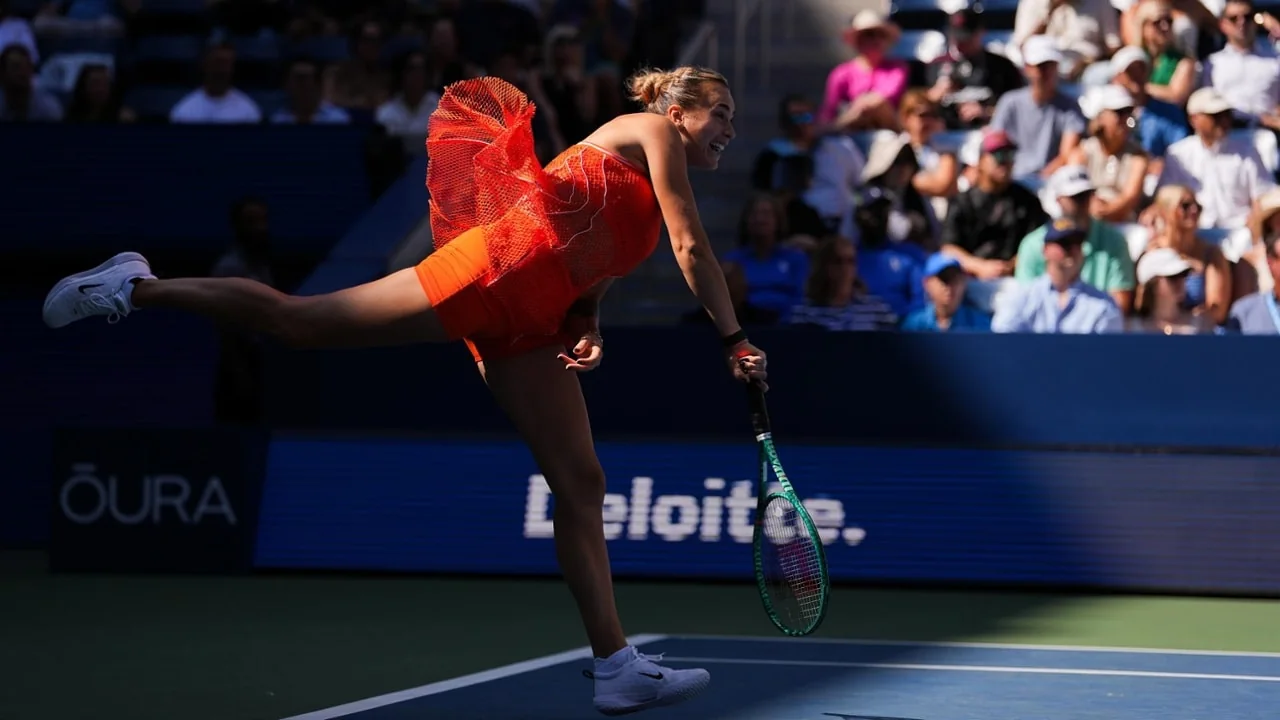
During her 2026 US Open third-round win over Kamilla Rakhimova, Aryna Sabalenka paused before serving to tell the chair umpire that a strong cannabis smell was bothering her. The moment went viral, but the verified account is narrower than many retellings: she could not identify the odor's source afterward, and no fan was reported found smoking and ejected. Here is the match timeline, the smoke-free rule and what remains unknown.
What happened during Sabalenka's match with Rakhimova?
Aryna Sabalenka briefly stepped out of her serving routine during her third-round match against Kamilla Rakhimova at the 2026 US Open because she could smell cannabis. She went to chair umpire Eva Asderaki-Moore to ask for help with an odor she found unusually strong. The conversation occurred early in the first set at Louis Armstrong Stadium on Friday, September 4. Play continued, and Sabalenka won 6-3, 6-4 to reach the fourth round. Those are the firm anchors of the incident; the identity or location of anyone responsible for the smell was not established.
The timing has sometimes been described in two ways. Reports said Sabalenka was 2-0 up and serving; the Associated Press account calls it the third game. Both are consistent: after the first two games, she was serving in game three. AP described her tossing the ball and allowing it to fall, then repeating that disrupted service motion before approaching the umpire. It was a brief disturbance during a point sequence, rather than an abandoned match or a long suspension.
Her initial message to the chair reflected what she was experiencing at court level. It did not constitute an eyewitness identification of a smoker. That distinction matters because a strong odor can reach an open-air tennis stadium without showing where it originated. Later, Sabalenka herself said she was unsure whether it came from spectators or was blown in from elsewhere. A fair account begins with the sensation and the conversation, then keeps the source question open.
The official US Open recap confirms the opponent, score, round and venue. Sabalenka was the two-time defending champion and top seed at this event, so even a short interruption to her serve attracted immediate attention. Yet the result also gives the story necessary scale: she completed a straight-sets win, and Rakhimova was not implicated in the complaint. Readers checking other matches from the same day can use our US Open results page rather than treating a social-media clip as a full match report.
The key question that remains after the score is a different one: what did Sabalenka actually say about the possible source once she had time to reflect? Her post-match explanation was more cautious than the first impression she voiced to the umpire.
What did Sabalenka say about the odor's source?
Sabalenka made two related but meaningfully different statements: an urgent report to the chair umpire while she was trying to serve, and a more careful explanation in her post-match news conference. Read together, they confirm that the odor troubled her; they do not identify a person or prove where the smell began. Keeping those statements in their proper sequence is the simplest way to understand the episode.
Her words on court
After breaking off her service motion, Sabalenka approached Eva Asderaki-Moore and said, in essence, that somebody was smoking cannabis and the odor was very strong. The Sky News report describes her gesture toward one end of the court and the chair's attention to the complaint. Her words conveyed an immediate impression from inside Louis Armstrong Stadium. They did not come with a sighting, a seat number or any other identification of a smoker.
That difference is easy to lose in a short video. Viewers can hear the player describe a strong smell and reasonably understand why she wanted an official to address it. But the statement alone cannot distinguish a spectator inside the seating bowl from smoke carried across the open air. Nor does it implicate Rakhimova, who was simply the opponent in the match. Describing the incident as a complaint about an odor is more precise than saying Sabalenka caught a fan smoking.
Her explanation afterward
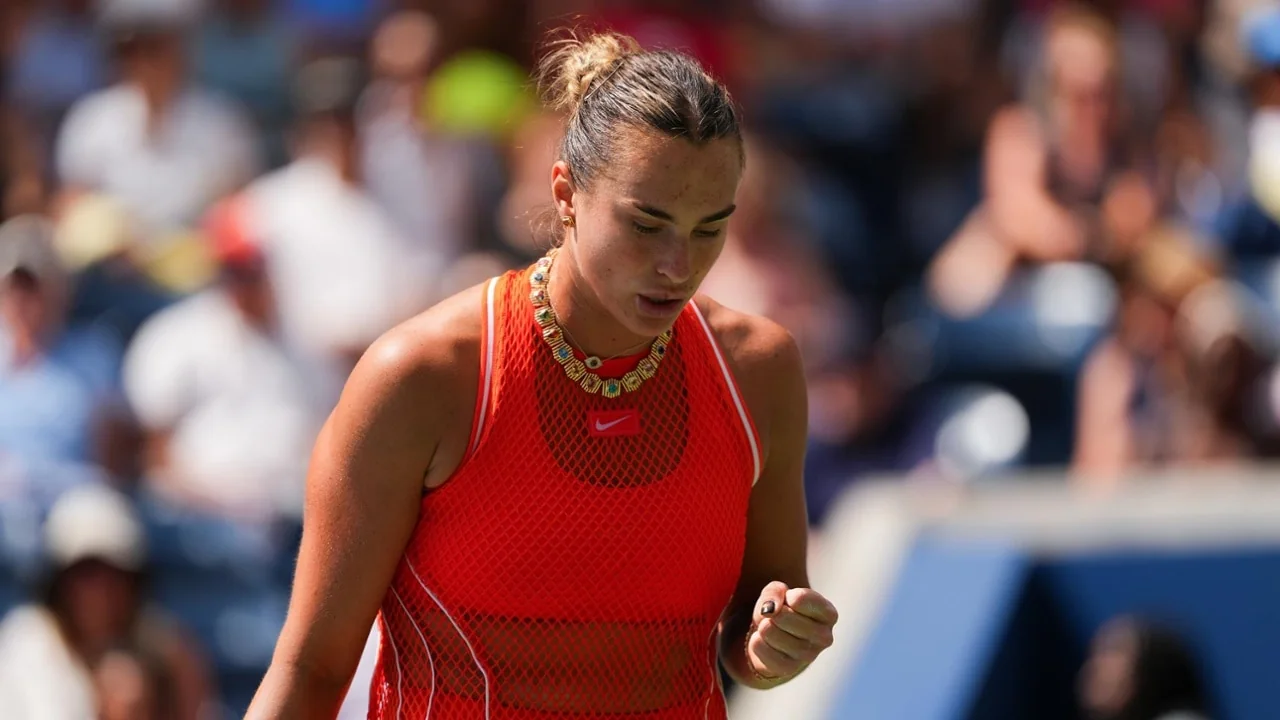
When she had time to discuss it after the win, Sabalenka said she did not know whether the odor came from the crowd or drifted in from outside with the wind. The AP account of her news conference records that uncertainty explicitly. She also said the smell was unusually strong and awkward to handle while trying to compete at her best. That is a first-person description of discomfort, not a confirmed source investigation.
Wind is a plausible mechanism around an open-air stadium, and the National Tennis Center sits within a larger urban park setting. Plausibility is not proof: no cited account supplied a measured wind path, a located source or an identified smoker. The strongest accurate summary is that Sabalenka noticed the odor on court, alerted the umpire and later declined to say where it originated. Readers following her wider tournament run can browse our player index, while the question of what venue rules apply needs its own answer.
What is the US Open smoking policy?
The National Tennis Center's rule is straightforward: it is a smoke-free facility. Adult-use cannabis being legal in New York does not override that rule. USTA spokesman Brendan McIntyre told the Associated Press that security and guest services respond when they learn someone may be smoking, and that smoking is not permitted on parks property, including the tennis center. This is the policy relevant to a spectator at Sabalenka's match.
Inside the National Tennis Center
A ticket gets a fan into a tennis event; it does not authorize smoking in a stadium seat, concourse or other part of the smoke-free grounds. McIntyre described the USTA's approach as maintaining that environment and having its teams enforce the rule when alerted. His statement also acknowledged a practical limit: venue staff can act on activity they discover on the property, while they cannot control everything beyond the National Tennis Center. The presence of an odor therefore prompts attention, but the rule alone does not prove who broke it.
It is useful to separate three things that often blur together in coverage: a player's report of a smell, the event's prohibition on smoking, and evidence of a particular violation. The first two are established here. To make the third claim responsibly would require something more concrete, such as a person being seen smoking or an official finding. AP reported no fan was found smoking and ejected in this episode. That does not weaken the smoke-free rule; it describes the limits of what the response located.
Beyond the tennis grounds
New York allows adult-use cannabis for people aged 21 or older, but the state Office of Cannabis Management makes clear that use is restricted by place. Its guidance says cannabis smoking is prohibited wherever tobacco smoking is prohibited, naming public parks as an example. Thus the common shorthand that 'cannabis is legal in New York' cannot be read as 'smoking it is legal anywhere around the tournament.' The state rules and the tournament's smoke-free policy both matter.
Nor does the possibility of odor drifting from outside prove that it came from lawful activity. Someone could be outside the event grounds yet still be in a location where smoking is prohibited; alternatively the origin could have been elsewhere entirely. Sabalenka said she could not tell whether the odor came from spectators or from beyond the stadium. Her uncertainty should be preserved instead of transformed into a confident claim about a nearby park or street.
| Question | Verified answer |
|---|---|
| Can spectators smoke at the National Tennis Center? | No. The USTA describes the venue as smoke-free. |
| Does state legalization permit use in every public place? | No. New York restricts where cannabis can be smoked, including public parks. |
| Does this policy identify the source on September 4? | No. A rule and a specific finding are different things. |
Fans planning a visit can consult the US Open schedule for match timing, while the venue's current visitor information remains the place to check entry and conduct rules before attending.
Did officials find someone smoking at the stadium?
There is no reported identification of a smoker in the National Tennis Center during Sabalenka's match. The Associated Press reported that no fan was found smoking and ejected from the grounds. That is narrower, and more useful, than either of two confident claims circulating around the episode: that a spectator was caught in the stadium, or that investigators conclusively traced the odor to a place outside it. Neither conclusion follows from the reporting.
There was a response on court. The Independent's account says chair umpire Eva Asderaki-Moore spoke over her radio and made a smoking gesture to someone nearby. Sky News reported that staff went into the crowd looking for the source. These details establish that the complaint was conveyed to personnel. They do not amount to a finding that someone in the seating bowl had lit up.
A negative search result has limits as well. An odor may be temporary, may move with the air, and may be detected after the behavior that caused it ends. Those are general possibilities, not an account of what happened on September 4. The only warranted conclusion from the available match reporting is that staff responded and no fan was reported found smoking and removed. Sabalenka's own post-match uncertainty about crowd versus outside wind remains intact.
It is also important not to treat the absence of an ejection as proof the complaint lacked merit. A player can accurately perceive a strong smell without knowing its origin. The USTA's smoke-free policy explains why a report matters to the chair and venue staff; the AP's account explains what, in this case, they did not publicly establish. A reader should hold both points together rather than using one to erase the other.
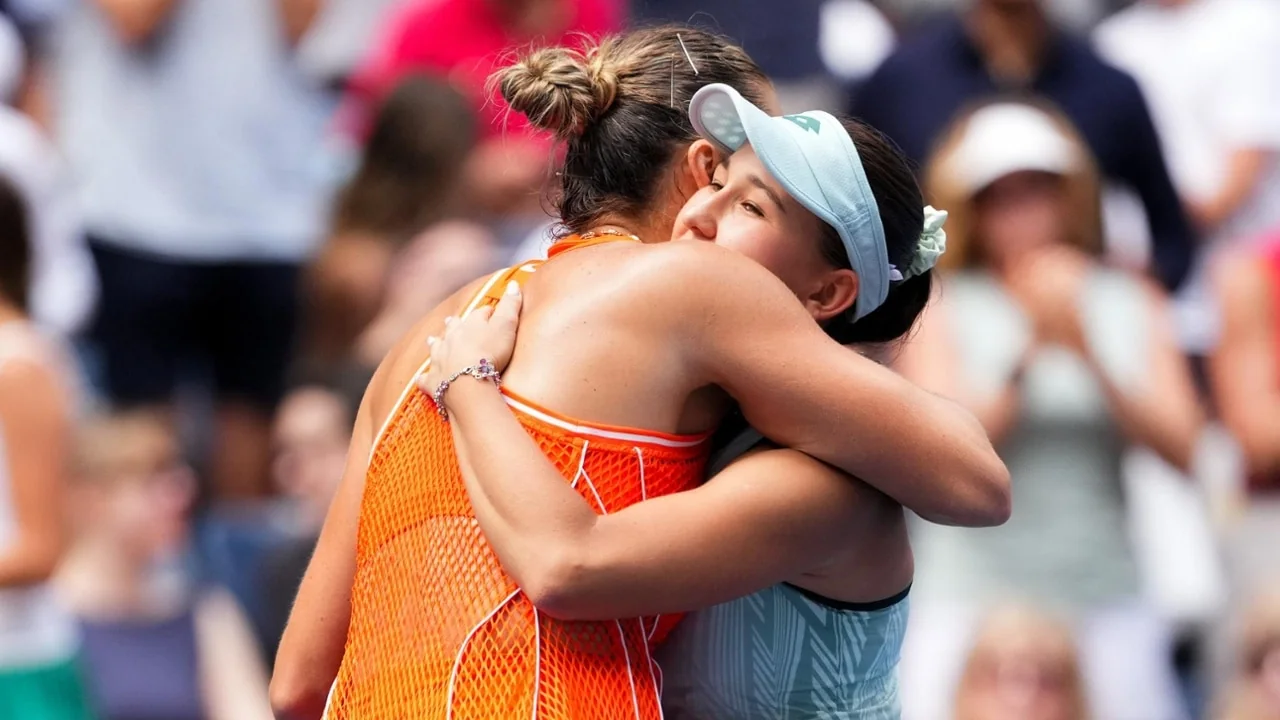
The event ended as a completed tennis match between Sabalenka and Rakhimova. Nothing in the cited reports implicates Rakhimova or supplies an image of a person smoking. For those checking how the players reached this point in the event, the order of play is separate from the evidence about the odor. That separation helps keep a brief stadium incident from becoming a stronger accusation than the facts support.
Did the interruption change the match?
The odor complaint interrupted Sabalenka's serving routine, but it did not stop the contest or keep her from winning in straight sets. The official match report records a 6-3, 6-4 victory over Kamilla Rakhimova. That score is a result, not a laboratory measure of distraction. A strong finish cannot prove the smell had no effect on her concentration, just as the complaint cannot prove it changed any game.
The score and service numbers
Sabalenka's serve remained highly effective in the match record: the USTA credited her with 10 aces and said she faced no break points. In the 35-minute first set, she hit four aces without a double fault and won 81% of points behind her first serve. Those numbers matter because the complaint itself arose while she was trying to serve. They show that her game remained productive over the set and match, even though one early service sequence was visibly disrupted.
Rakhimova was not a passive participant. The USTA account credits her defensive play and varied shots, particularly in the second set. At 4-4 she had already saved five Sabalenka break chances. Sabalenka converted her sixth opportunity, then held serve to finish 6-4. Describing that passage as merely a consequence of the odor would erase Rakhimova's tennis and invent a causal connection that no cited source establishes.
| Match marker | Official record | What it tells us |
|---|---|---|
| Final score | Sabalenka 6-3, 6-4 | She advanced to Round 4. |
| Aces | 10 | Her serve produced winners across the match. |
| Break points faced | 0 | Rakhimova never reached a break chance on return. |
| Second-set break | Sabalenka converted her sixth chance at 4-4 | The set still required late pressure and execution. |
What the evidence can and cannot show
Sabalenka said the strong smell was awkward to handle while trying to compete at her best. Her experience should be taken as reported; it is the reason she spoke to the chair. But neither the AP incident account nor the USTA statistics provides a counterfactual: how she would have served, rallied or felt if the odor had never appeared. There is no reported medical diagnosis here, and no basis to state that a particular point was won or lost because of the smell.
The responsible conclusion is deliberately modest. It was a real on-court complaint, followed by a completed match and convincing serving numbers. Fans can examine her route through the women's singles draw without turning an unusual moment into either a decisive competitive explanation or a non-event. The score and the player's report answer different questions, and both belong in the story.
What should fans take from the incident?
The most useful lesson is a factual one: Sabalenka reported a strong cannabis odor; officials responded; no smoker was reported found and ejected; the source remained unconfirmed. She then completed a 6-3, 6-4 third-round victory. Each part of that sentence comes from either the Associated Press account or the official match recap. Leaving any of them out makes the story easier to exaggerate.
For spectators, the conduct rule does not depend on this mystery being solved. The USTA says the National Tennis Center is smoke-free, and its security and guest services teams address reported smoking. New York's adult-use cannabis law does not authorize smoking at the venue, and the state cannabis office also describes restrictions in public parks. Fans should treat an event's posted rules and staff directions as the operative guidance when attending, rather than assuming statewide legalization gives blanket permission. Reporting a problem to an usher or guest-services team is the route the USTA statement itself points to.
For readers of short clips, a separate rule of thumb helps: a spoken impression is evidence of the speaker's experience, not necessarily a verified account of someone else's act. Sabalenka had every reason to tell the chair what she smelled. Her later statement that the odor could have come from the crowd or outside deserves equal attention. It prevents a small but important jump from 'the player smelled cannabis' to 'a named group of spectators smoked in the stadium.' The AP's report of no ejection keeps that limit visible.
| Established | Still unknown |
|---|---|
| Odor complaint during Sabalenka's early service game | The exact origin of the odor |
| Chair and staff responded | Whether anyone was smoking inside the stadium |
| Venue was smoke-free | Whether wind carried smoke from elsewhere |
| Sabalenka won 6-3, 6-4 | Any measurable point-by-point effect |
The incident has a clear ending as a tennis result and an open question as an odor investigation. The distinction protects both the player's account and the accuracy of the public record. For the rest of the tournament, use our results and schedule pages to follow what happened on court; neither should be mistaken for proof about an unseen source in the stands or outside the grounds.
Sabalenka's request was about competing through an unusually strong odor, and the match record shows she still advanced 6-3, 6-4. The National Tennis Center's no-smoking policy is clear; the origin of the smell is not. Keeping those two facts separate gives fans a more accurate understanding of both the incident and the venue rule.
Loading comments…