Ben Shelton, Zverev and the US Open Second-Serve Rule Debate
Ben Shelton's complaint about Alexander Zverev's second-serve routine, the exact 2026 Grand Slam rule, and the limits of a proposed clock change.
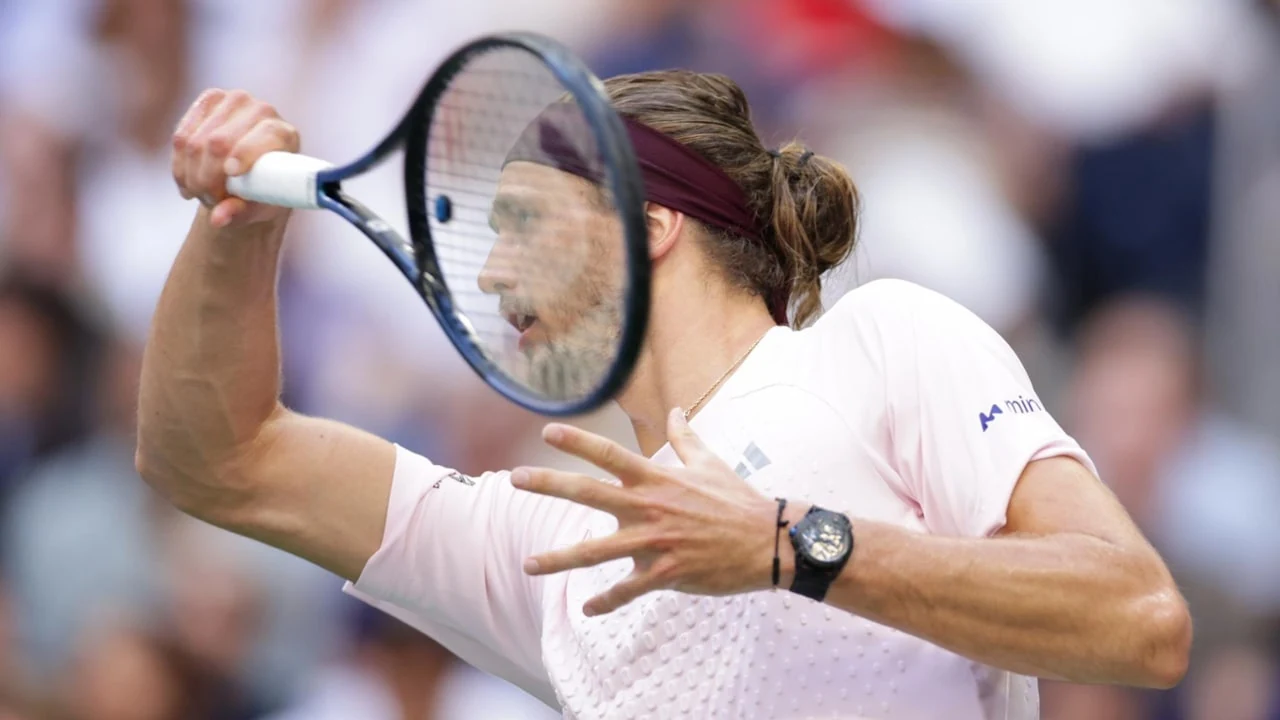
Ben Shelton left the 2026 US Open final with a specific concern about the pause between Alexander Zverev?s first-serve faults and second serves. The issue turned on two parts of tennis law that are easy to conflate: a visible 25-second period before the first serve of a new point and the instruction to deliver a second serve without delay. Here is what happened, what the code actually says and why the receiving player?s position mattered.
What did Ben Shelton object to after the 2026 final?
Ben Shelton's complaint after the 2026 US Open men's final concerned the time Alexander Zverev spent bouncing the ball before serving, particularly when Shelton was already set to receive a second serve. Shelton wanted a clearer time limit for that part of the point. He was raising a question about the rhythm and administration of play, not asking officials to change the result of a match that Zverev had won.
The dispute had a conspicuous setting. Zverev beat Shelton 6-3, 7-6(2), 5-7, 6-2 on September 13 in Arthur Ashe Stadium to claim the title, as the official US Open match report records. The German's service games were difficult for Shelton to enter, and a receiver needs to decide when to bend, watch the toss and prepare a split step. An unusually long or unpredictable pause before the delivery can make that preparation feel awkward even if the eventual serve itself is fair.
During the final, chair umpire Marijana Veljovic told Shelton to be ready to receive while Zverev continued his extensive pre-serve bouncing, according to the Independent's account. Shelton's objection was therefore as much about the receiver's obligation as the server's routine. A player may be ordered into position, yet still be unable to know whether the ball will be struck after the next bounce or many bounces later. From the stands or on television, the exchange can look like a simple impatience dispute. On court, it is a small but consequential timing problem attached to a very fast first shot.
In his post-match comments, Shelton suggested there should be some sort of rule limiting the time before a second serve, while admitting he was unsure exactly how it should be written. The detailed report of those remarks also makes clear that he did not blame the waiting for his fatigue. That distinction matters. It is possible to think a procedure needs attention without claiming it cost a player a Grand Slam final. Zverev's serve, his returns and the rallies still decided the points; the disputed routine raised a separate question for rulemakers.
Fans can consult our US Open results for the score and other match outcomes. The more difficult question left by this final is what the existing time rule actually says when a first serve lands out.
What does the 2026 Grand Slam rulebook actually say?
The 2026 Grand Slam rulebook does regulate the time around both deliveries. It gives the server a measurable limit before a first serve and requires a second serve to follow a fault without delay. The common shorthand that a server has unlimited time before a second serve is therefore inaccurate. What is missing is a separate numerical second-serve deadline that a player, umpire and spectator can all see in the same way.
The clock before a first serve
Under the 2026 Grand Slam Rulebook, no more than 25 seconds may pass from the end of one point until the first serve of the next point is struck. The relevant action is the ball being hit, not the beginning of a routine. A player who walks to the line quickly but spends the remaining period bouncing has still used the same point-to-point window. The rulebook also requires continuous play and prohibits an unreasonable delay of a match.
The ITF Rules of Tennis reinforce that interpretation. Rule 29 identifies the 25-second period as running to the next point's first service, while Rule 20 addresses a second service after a fault. These are separate stages of one point, and the wording is deliberate. A first serve is the start of a new point, following time needed to retrieve balls and recover from the previous rally. After a first-serve fault, the same point is still awaiting its second delivery.
The rule after a fault
For the second serve, both rulebooks use the phrase “without delay.” They do not say “within 25 seconds” again, nor do they grant a fresh 25-second clock. They also do not set a permitted number of bounces. This leaves an official to judge when a routine has crossed from normal preparation into delay. A player who says the second serve is not subject to a separate visible countdown is describing a real difference; a player who says the server may wait indefinitely is overstating the rule.
That distinction is the heart of Shelton's proposal. A stricter written number could make enforcement more predictable, but it would have to handle ordinary interruptions, such as a stray ball, a broken string or a receiver who is genuinely unready. The present rule gives the chair umpire room to account for circumstances. That flexibility is useful until two players disagree sharply about whether a lengthy pause was reasonable. The issue in the 2026 final was therefore not the absence of all regulation; it was the difficulty of applying a qualitative standard to a conspicuous routine.
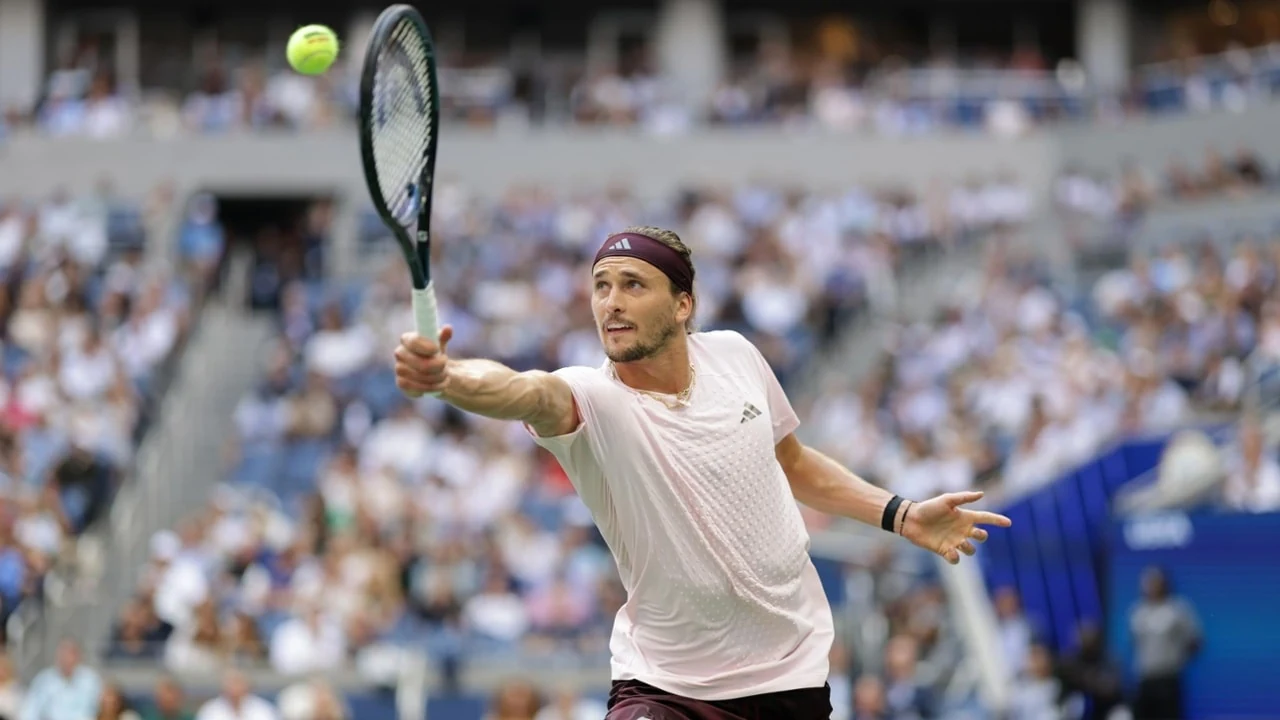
Our men's singles draw provides the route that brought the two players to that final. The published code explains why the exchange at the baseline remained a live officiating question once they got there.
Why did the receiver's ready position become the flashpoint?
The receiver's stance became the focus because Shelton had to be available for Zverev's serve without knowing exactly when Zverev's extended bouncing would end. Against a powerful server, readiness is not merely a matter of standing somewhere behind the baseline. The returner watches the ball, sets weight on the feet and times a split step to the toss and contact. Repeatedly setting that sequence, then holding it, can be uncomfortable and can disturb timing. Those practical concerns do not automatically make a server's routine a violation; they explain why the exchange mattered to the player waiting across the net.
The written rules place obligations on both sides. The 2026 Grand Slam Rulebook says a receiver plays to the reasonable pace of the server and is ready within a reasonable time of the server being ready. It also permits a time violation against a receiver before the 25-second limit expires if the receiver delays that reasonable pace. The ITF's Rule 21 adds the other half: a server must not deliver while the receiver is not ready. A player who attempts a return counts as ready, but if the receiver is demonstrably unready, that service cannot be called a fault.
These clauses are not contradictory. They are meant to prevent either player from using readiness as a device to control the other. The server should not rush a legitimate receiver, and the receiver should not refuse to prepare once the server is reasonably ready. In the 2026 final, the reported exchange with chair umpire Marijana Veljovic showed how hard it can be to apply those principles when a server's starting routine is exceptionally long. Asking Shelton to assume his returning position addressed one side of the obligation; assessing whether Zverev's delay was reasonable addressed the other.
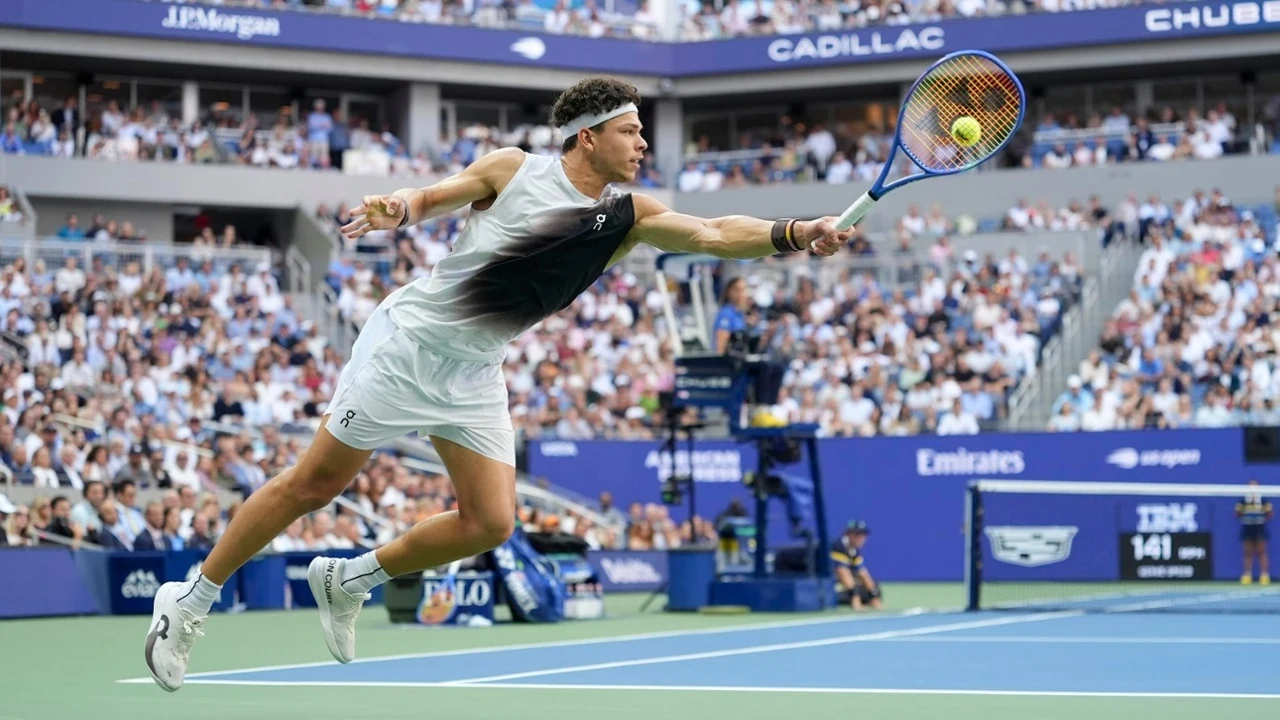
There is a distinction between observing a long pause and proving that a particular pause was unreasonable under the code. A bounce count alone is not a ruling, because the code sets no bounce quota. An umpire must consider the actual interval, whether there was an interruption, and both players' behavior. For a fan watching a replay, the useful question is therefore not simply “How many bounces?” It is whether the sequence followed a first-serve fault, how much time passed, and what the official did in response.
Our US Open player directory gives broader context on both finalists. The rule dispute itself turns on their roles at that moment: one preparing to deliver, the other obliged to receive at a reasonable pace.
How did Zverev and other players respond?
Zverev acknowledged that his pre-serve routine had become more pronounced during the 2026 US Open. Other players and a coach described a different side of the same scene: the receiver repeatedly preparing for a delivery that did not immediately come. Their comments are useful because they were made at different points in the event, before and after Shelton's loss, rather than all arising from one post-final grievance.
Zverev's explanation
After the tournament, Zverev conceded that the amount of bouncing had been extreme by his own standards, SABC Sport reported. Earlier, after beating Karen Khachanov in the semifinal, he had said he was not trying to reach a chosen bounce count. Sports Illustrated's pre-final account described him noticing the routine had grown and then sometimes forgetting to shorten it. That explanation does not settle the officiating question, but it cautions against treating a familiar ritual as proven gamesmanship without evidence of intent.
SABC also reported that Zverev was called for a time violation during the final. A time-violation call is an official response to a specific delay; it is stronger evidence than a fan's estimate from television. It still does not establish that every other long-looking sequence deserved the same call. An umpire assesses the actual play and context point by point. Zverev's own acceptance that his routine had grown unusually long sits alongside his belief that he was mostly working inside the permitted time. The published Grand Slam rule remains the standard against which those views must be judged.
The wider player reaction
Khachanov's criticism came before the final, after he lost to Zverev in the semifinal. He focused on the difficulty of deciding when to set his feet and make the split step as the bouncing continued. He also recognized that a chair umpire, rather than the opposing player, must decide whether a serve has exceeded the rule's allowance. That is a notable distinction: a routine can be disruptive to a receiver even when an individual point is not penalized.
Bryan Shelton, Ben's father and coach, voiced a related concern while the final was underway. According to Puntodebreak's account of his television remarks, Bryan thought the repeated bouncing could interrupt concentration. Ben's later suggestion to limit second-serve time addressed the structure behind that discomfort. Andy Roddick, speaking separately before the final, also argued for a second-serve clock. These are not identical proposals, and none was a formal rule change in September 2026.
For fans following the US Open finals, the useful takeaway is that several people saw a pace problem, while the precise remedy remained unsettled. Reporting that disagreement is more informative than casting either player as simply right or wrong.
Did the serving routine decide the match?
There is no sound basis for saying Zverev's bouncing decided the 2026 final. Shelton himself rejected the idea that standing and waiting caused his tiredness. He pointed instead to the cumulative load of a demanding two-week run into his first Grand Slam final. That does not make his request for a clearer second-serve rule insincere. It means his complaint should be understood as a proposal about future play, separate from an explanation of Sunday's result.
The official match account gives a substantial tennis explanation. Zverev won 68 of 80 points behind his first serve, 85%, and took the first five points of the second-set tiebreak. Shelton's returning challenge was not just the wait between deliveries; when the first serve landed, he often could not make a meaningful start to the rally. Zverev's pace and location created that problem, and the German's steadiness from the baseline added pressure when Shelton did get into exchanges.
| What the record shows | Why it matters |
|---|---|
| Zverev won 6-3, 7-6(2), 5-7, 6-2 | The title was settled across four contested sets, not by a single disputed interval. |
| 68/80 first-serve points won by Zverev | The first delivery was a dominant weapon in its own right. |
| Shelton broke late in set three | He still found a path into Zverev's service games and extended the final. |
Shelton's third-set surge is important to the story. He broke as Zverev tried to force another tiebreak, ending a run of 66 consecutive Zverev service holds in their head-to-head series, according to the same US Open report. That showed the American could change the match's direction with more aggressive returning and shotmaking. Zverev then answered immediately in the fourth set, broke early and lost only four points on his serve in that set. The sequence points to an opponent who recovered control after being challenged, not to a result explained by an officiating argument.
Shelton's account of his fatigue is the best safeguard against overreading the controversy. He described the long tournament and the new experience of playing a major final, while saying the waiting was not the reason he felt tired. We cannot replay the match with a different timing procedure, so no one can measure the counterfactual effect of one. The verified score, service numbers and player's own words support the more restrained conclusion: the rule question is real, but the final remains Zverev's tennis win.
The completed US Open results show that outcome plainly. The lasting policy debate is about how the next receiver and server should be guided, rather than revising the winner of this match.
What would a workable second-serve change require?
A workable change would need more than the instruction “serve faster.” It would have to say precisely when a second-serve interval begins, what stops or resets it, how the receiver's readiness is judged and what happens when a player exceeds it. The 2026 Grand Slam rule already demands a second serve without delay, so the live policy question is whether a numerical limit would make that requirement easier to apply consistently.
A number officials can apply
Andy Roddick suggested a short second-serve clock in the days before the final, according to Sports Illustrated's account of his proposal. He discussed an interval of roughly four or five seconds after a fault and floated the idea of crediting time a server had not used before the first delivery. Those are ideas from an analyst and former champion, not the rule in force at the 2026 US Open. Shelton's own post-final request was less prescriptive: he wanted a limit but acknowledged that the mechanics needed thought.
A clock could make one thing clear to everyone: the same number would be visible for each routine. Yet even a simple-looking timer needs a starting signal. Does it begin when the first serve lands out, when the fault is called or when the ball is retrieved? What if a returner is genuinely not ready, a ball rolls across court or an official must inspect equipment? A rule that ignores ordinary interruptions could rush a fair second delivery. A rule full of discretionary resets might recreate the uncertainty it was supposed to solve.
A standard both players can see
The other option is to keep the existing Grand Slam language but clarify its enforcement for officials and players. The code already combines “without delay” with a receiver's duty to follow reasonable server pace. Written examples could distinguish a normal few seconds of preparation from a repeated, unexplained pause, and clarify what an umpire should communicate when both players believe the other is holding up play. That approach preserves flexibility for unusual circumstances but leaves more judgment with the chair.
| Possible approach | Main benefit | Question to resolve |
|---|---|---|
| Separate second-serve timer | Visible, consistent target | Start signal and justified pauses |
| Clarified “without delay” guidance | Keeps room for context | Consistent calls across officials |
The ITF's 2026 rules describe a process for considering and, when approved, trialing variations. A trial could measure second-serve intervals and examine whether the change reduces pauses without increasing disputes over receiver readiness. Until a governing body adopts anything new, spectators watching future matches on the US Open schedule should read the existing rule accurately: the first serve has a 25-second point-to-point maximum; after a fault, the server must deliver the second without delay. The Shelton-Zverev final made the gap between a written standard and a visibly predictable one impossible to miss.
The final score stands on Zverev?s performance, while Shelton?s request remains an open rules question. A useful reform would have to help both players know when the next serve should come and give officials a standard they can apply in real time.
Loading comments…