Ben Shelton Beats Frances Tiafoe in 2026 US Open Semifinal
Ben Shelton defeated Frances Tiafoe 4-6, 6-3, 6-3, 7-5 in the 2026 US Open semifinal. See the turning points, decisive stats and final outlook.
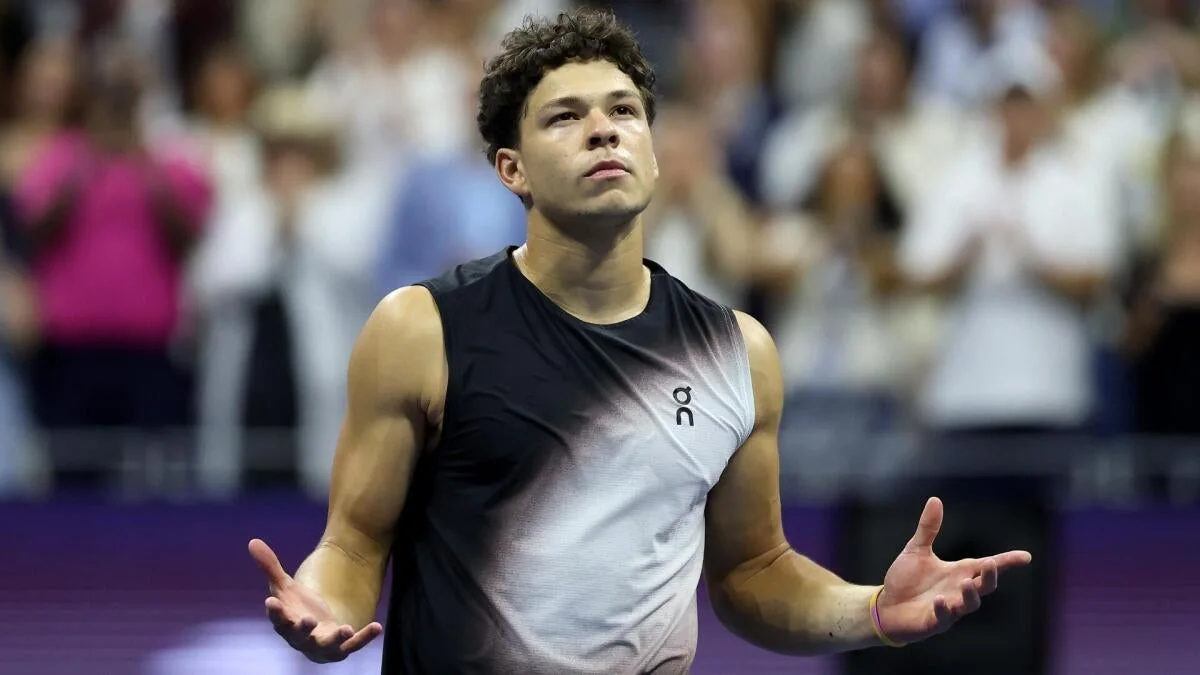
Ben Shelton is through to his first Grand Slam final after beating Frances Tiafoe 4-6, 6-3, 6-3, 7-5 in the 2026 US Open semifinals. Tiafoe controlled the opener, but Shelton sharply reduced his errors, landed 75% of his first serves and won five return games to complete the comeback in 3 hours, 17 minutes.
This analysis combines the production match record with the official US Open statistics and completed reporting available on Sept. 12. It explains the score, the turning points, the decisive serve-and-return gap, the rivalry's place in tournament history and what is known before Shelton's Sunday final against Alexander Zverev.
Shelton vs Tiafoe US Open 2026 result at a glance
Ben Shelton defeated Frances Tiafoe 4-6, 6-3, 6-3, 7-5 in the 2026 US Open men's singles semifinal. The No. 8 seed recovered from losing the opening set, won the next three and reached the first Grand Slam final of his career. The match was completed at Arthur Ashe Stadium in 3 hours, 17 minutes, with No. 11 seed Tiafoe finishing as the runner-up in their all-American semifinal.
Final score
Shelton def. Tiafoe
4-6, 6-3, 6-3, 7-5
Match details
- Round: Men's singles semifinal
- Court: Arthur Ashe Stadium
- Duration: 3 hours, 17 minutes
Tiafoe's 6-4 opener gave him the only lead in sets. Shelton answered with matching 6-3 scores in the second and third, then denied Tiafoe the chance to reset in a fifth set by breaking at 6-5 in the fourth. The four-set line therefore tells two stories at once: Tiafoe was sharp enough to put the favorite behind, but Shelton was the player who sustained his level once the match moved beyond its opening phase.
Shelton won 23 games to Tiafoe's 17, but the more important shape of the result was the response to an untidy first set. Tiafoe had the early control and the first break; Shelton then found a repeatable serve-plus-first-ball pattern and made more progress on return. That is why the four-set score was not merely a late escape. Shelton controlled the middle of the match and still produced the decisive return game when the fourth set threatened to reach a tiebreak.
The victory booked Shelton a Sunday championship match against top seed Alexander Zverev. That final had not been played at this article's September 12 information cutoff. Fans can review the set-by-set score and complete statistics on the full Shelton–Tiafoe match page, or follow every completed match through the 2026 US Open results hub.
How Shelton turned the semifinal after losing the first set
Shelton changed the match by keeping his aggression while removing the rushed errors that had given Tiafoe the opener. The comeback was not instantaneous: Tiafoe answered Shelton's first break in the second set, and the fourth stayed on serve through 11 games. Yet from the middle of set two onward, Shelton repeatedly made Tiafoe play from a more defensive court position and found his best returns in the games that carried the greatest weight.
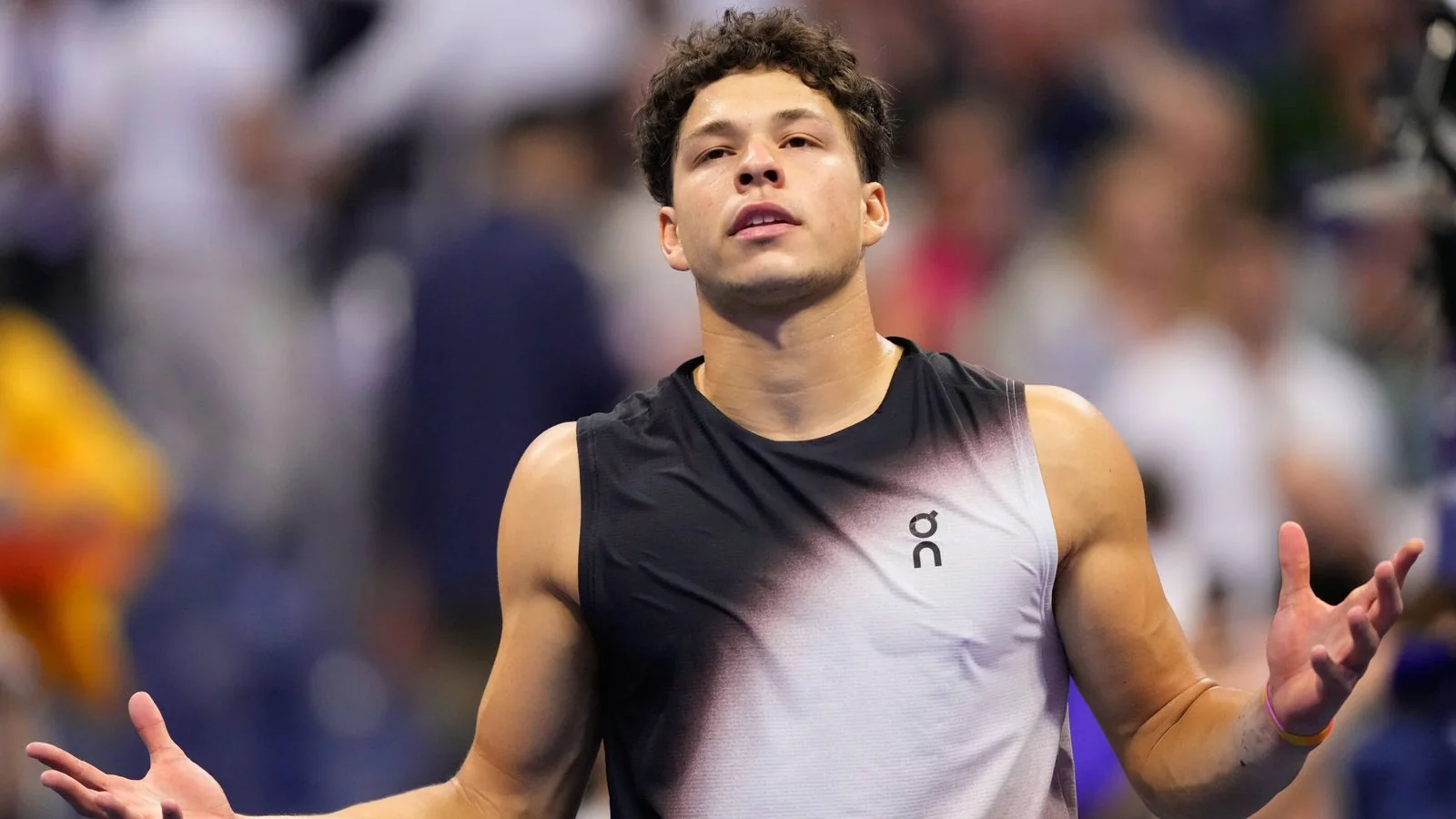
Tiafoe punished the loose opening set
For eight games, neither player created separation. Tiafoe then broke in the ninth game and served out the set at love for 6-4. His advantage was clarity rather than superior raw pace: he committed only three unforced errors in the set, while Shelton made 14. Shelton still landed 75% of his first serves, but he won only 20 of 32 service points and offered Tiafoe the errors that a returner normally has to force.
That was a smart opening from Tiafoe. He absorbed Shelton's first strike, changed height and direction when the rally allowed it, and waited for the younger American to overreach. The danger for Tiafoe was that the margin depended on Shelton continuing to miss. Once Shelton gave himself a little more space over the ball, the same power began to produce pressure without the same error bill.
Shelton seized the middle two sets
Shelton broke for 2-0 in the second set, only for Tiafoe to break straight back. That response could have preserved the first-set pattern. Instead, Shelton won three consecutive games from 3-3 to take the set 6-3. The statistical change was sharp: 13 winners against four unforced errors, compared with seven winners and 14 unforced errors in the opener. He was still attacking, but the first ball after serve was being struck from better balance.
The third set made that improvement durable. Shelton allowed no break point, won 17 of 22 service points and forced Tiafoe through a punishing final service game. Tiafoe saved several chances, but Shelton converted the fourth break point of a game that lasted roughly 15 minutes to take another 6-3 set. Across the second and third sets, Shelton broke four times and lost serve only once. Those numbers describe sustained control, not a brief hot streak.
The fourth set was decided at the last possible moment
Tiafoe's best opening arrived immediately: three break points in Shelton's first service game. Shelton saved all three. That hold mattered because it prevented Tiafoe from turning resistance into an early scoreboard lead, and the pair then protected serve through the first 11 games. At 5-6, Tiafoe was serving to force a tiebreak, not merely to prolong a routine set.
Shelton produced his last return surge at exactly that point. He moved to 0-40, giving himself three match points, and converted the second to close the set 7-5. The ending was abrupt, but the pressure behind it had accumulated since set two: Shelton had made Tiafoe face repeated return games with little room for a loose first serve. The set-by-set match detail preserves the full score and statistics behind that progression.
The serve and return numbers that decided Shelton vs Tiafoe
Shelton won the serve-and-return contest because he reached his first serve much more often, then attacked Tiafoe's second serve more successfully. The striking comparison is not the first-serve points-won rate: Tiafoe actually led that category 78% to 77%. It is the frequency of those points. Shelton landed 86 first serves in 114 attempts, while Tiafoe landed 69 in 121.
| Match statistic | Ben Shelton | Frances Tiafoe | Why it mattered |
|---|---|---|---|
| Aces | 20 | 3 | More free points for Shelton |
| First serves in | 86/114 (75%) | 69/121 (57%) | Shelton played more points behind his best ball |
| First-serve points won | 66/86 (77%) | 54/69 (78%) | Quality was close when the first serve landed |
| Second-serve points won | 15/25 (60%) | 20/50 (40%) | Tiafoe faced twice as many playable second serves |
| Break points converted | 5/11 | 2/7 | Shelton created and finished more return chances |
| Winners | 47 | 27 | The official count reflects Shelton's higher attacking volume |
Shelton combined pace with an unusually high first-serve rate
The 20-3 ace gap was substantial, but 75% first serves in was the more transferable advantage. A server hitting with Shelton's pace normally accepts a lower margin for accuracy. Here he combined both. His official maximum was 149 mph, compared with Tiafoe's 137 mph, and he won 81 of 114 total service points. The stadium display briefly showed 158 mph during the match; reports later identified that reading as a misread, so it should not replace the official number.
That volume reduced Tiafoe's chances to establish a neutral rally on return. Even when Tiafoe read the direction, the pace often left him blocking the ball rather than driving it. Shelton could then take the next shot from inside or near the baseline. His player page provides the broader context for a weapon that is most dangerous when placement and percentage accompany speed.
Tiafoe's second serve became the pressure point
Tiafoe won 20 of 50 points behind a playable second serve; Shelton therefore won the other 30, a 60% second-serve return rate. By comparison, Shelton won 15 of 25 behind his own second serve. Double faults are excluded from those denominators, which is why the numbers differ from a simple subtraction of first serves from total service points.
The consequence appeared in the pressure totals. Shelton won 47 receiving points to Tiafoe's 33 and converted five of 11 break points; Tiafoe converted two of seven. That is the cleanest statistical explanation of the result: Tiafoe was effective when his first serve landed, but Shelton made him play too many second-serve points and repeatedly turned those points into break opportunities. The full category breakdown is available on the match statistics page.
The tactical adjustments behind Shelton's comeback
Shelton's most important adjustment was to make his power repeatable. He created a better first shot with the serve, accepted more net clearance from the baseline and attacked Tiafoe's shorter second serves from inside the court. That preserved his upside while cutting the loose misses that had allowed Tiafoe to lead.
A left-handed first strike changed Tiafoe's return position
The left-handed delivery creates geometry before the rally begins. A serve pulling a right-handed returner toward the sideline can open the next forehand into the opposite half; a body serve can crowd the return. The checked data do not provide a direction-by-direction serve map, so the evidence is the outcome: Shelton landed three quarters of his first serves and followed them with cleaner attacking tennis from set two onward.
The contrast between the opening two sets is especially useful. Shelton moved from seven winners and 14 unforced errors in the first to 13 winners and four unforced errors in the second. He did not need more raw force. He needed the first serve to create time and a controlled forehand to use it. Once those two shots worked as a sequence, Tiafoe could no longer wait behind the baseline for the same volume of errors.
That shift also affected the return games. Tiafoe put only 57% of first serves in, so Shelton saw 50 playable second serves. Starting closer to the baseline against those deliveries shortened Tiafoe's recovery time and made the first neutral ball harder to reach. This was an important sign of progress for a player long defined more by his serve than his return. Fans can compare that development with Shelton's broader tournament record on his current player profile.
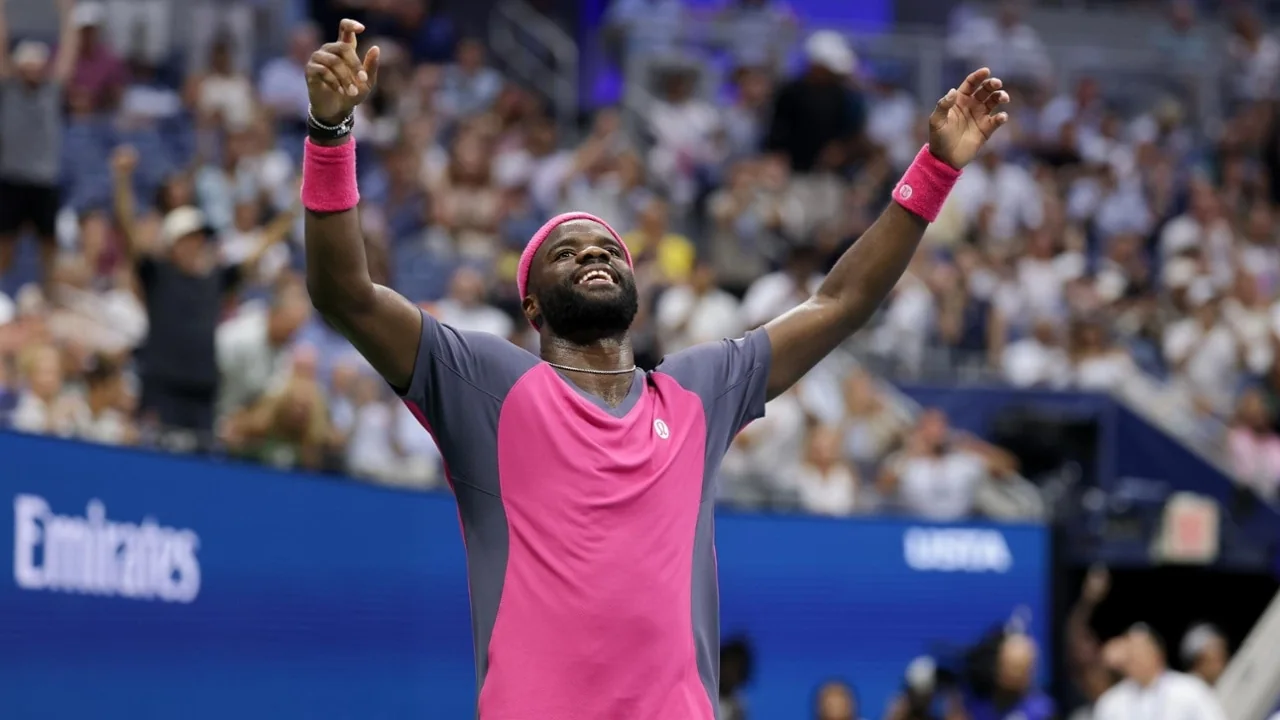
Tiafoe's variety could not protect enough service games
Tiafoe was not tactically ineffective. He won 30 of 43 net points, a 70% success rate, and used changes of pace and forward movement to keep Shelton from settling into one baseline rhythm. Those numbers matter because they prevent an overly simple reading of the defeat. Tiafoe found a productive finishing position when he could build the point on his terms.
The problem was how often he received that opportunity. With the first serve missing on 52 of 121 attempts, Tiafoe began too many points under return pressure. A second serve attacked at the baseline can force a defensive next shot, making an approach lower-percentage or preventing it altogether. Tiafoe held 15 of 20 service games; Shelton held 18 of 20.
Set four showed both sides of the matchup. Tiafoe stayed level by competing well in longer, varied games, but Shelton won 22 of 26 first-serve points and saved all three break points against him. Tiafoe could not build enough return pressure to offset his own vulnerable service games. His player profile remains the better place to judge the full tournament run; this loss was specifically a first-strike matchup problem, not evidence that his all-court game had disappeared.
What the rivalry and this semifinal mean in US Open history
Shelton and Tiafoe have already produced a rare three-part New York story. Their US Open meetings have moved deeper, reversed direction and then returned to Shelton at the most consequential stage. The 2026 semifinal raised Shelton's career head-to-head lead from 3-1 to 4-1, but their tournament series is closer at 2-1. That distinction matters: the overall number favors Shelton clearly, while the US Open chapters show why the matchup still feels competitive.
2023 quarterfinal
Shelton won 6-2, 3-6, 7-6(7), 6-2. At 20, he handled his first US Open quarterfinal against Tiafoe and announced that his serve-and-forehand game could survive a major-night spotlight.
2024 third round
Tiafoe answered 4-6, 7-5, 6-7(5), 6-4, 6-3. The five-set reversal showed his experience, variety and resilience, preventing the rivalry from becoming a one-way result in New York.
2026 semifinal
Shelton won 4-6, 6-3, 6-3, 7-5. This time the reward was his first Grand Slam final, earned after solving the early error problem and breaking Tiafoe in the last return game.
The progression also explains why the semifinal carried meaning beyond one rivalry. It was the first Grand Slam men's semifinal contested by two Black American players. By winning, Shelton became the first Black American man to reach a US Open singles final since Arthur Ashe in 1972 and the first to reach any major singles final since MaliVai Washington at Wimbledon in 1996. Those are specific representation milestones, not a claim that Black players had been absent from the sport or that the broader American drought had ended.
That broader distinction is important. Taylor Fritz reached the US Open final in 2024, while Andy Roddick's 2003 title remains the latest men's singles major won by an American. Shelton had earned a chance to change the second fact, but the 2026 final was still ahead of him at this article's cutoff. The semifinal result stands on its own: it placed a new name in a line that connects Ashe, Washington and the present generation without assigning a trophy before the final.
For Tiafoe, the loss does not erase his role in making this stage possible. He had reached the US Open semifinals in 2022 and 2024 before returning in 2026, and he won the most physically demanding match in this three-year sequence. For Shelton, the win marks development: the 2023 breakthrough relied heavily on explosive shot-making; the 2026 victory required recovery after a poor first set, disciplined serving and late-match patience. Readers can follow the three runs in context through the men's singles draw.
What comes next for Ben Shelton and Frances Tiafoe
The semifinal closed one result but opened two different questions. Shelton has less than two days to recover for the biggest match of his career. Tiafoe has to separate a strong tournament from the specific patterns that stopped him one round short. Neither story should be treated as finished on Sept. 12: the men's title has not yet been decided, and one defeat does not define Tiafoe's season.
Shelton faces Alexander Zverev in the men's final
Alexander Zverev advanced through the first semifinal by beating Karen Khachanov 6-3, 7-6(7), 7-6(6). The championship match is scheduled for Sunday, Sept. 13, and the men's singles draw shows the final path: Shelton's comeback over Tiafoe after Zverev's straight-set win.
The matchup is difficult for a reason beyond Zverev's ranking. He leads Shelton 5-0 in their previous meetings and can absorb pace with one of the tour's most stable backhands. Shelton's semifinal formula still gives him a credible route: land a high share of first serves, prevent Zverev from settling into return games and use the first forehand without rushing. The danger is assuming 20 aces will be enough. Zverev generally makes opponents hit an extra neutral ball, so Shelton will need the patience he found after set one against Tiafoe.
Recovery is another live variable rather than a ready-made excuse. Zverev's semifinal lasted 2 hours, 57 minutes. Shelton spent 3 hours, 17 minutes against Tiafoe after winning a five-set quarterfinal over Carlos Alcaraz earlier in the week. There is no public measure that can turn those minutes into a fitness forecast. They simply make sleep, treatment and efficient service games more important. The New York crowd can provide energy; it cannot shorten a long rally for him.
Tiafoe leaves New York with progress and a clear problem to solve
Tiafoe's third US Open semifinal reinforces how consistently he performs at his home major. He survived difficult matches, reached the final four again and played a sharp opening set against an opponent who had just eliminated the defending champion. That is meaningful progress even though it did not become a first major final.
The useful offseason question is also unusually clear. Tiafoe put 57% of first serves in against Shelton, won only 20 of 50 playable second-serve points and faced 11 break points. Improving first-serve percentage cannot mean guiding the ball in and surrendering pace; it means finding a repeatable delivery that reduces how often an aggressive returner can step inside the baseline. Better second-serve location and a stronger first groundstroke would then help him reach the net on chosen terms.
That diagnosis should remain match-specific. Tiafoe's variety, movement and crowd connection helped carry him to another deep run, and his 30-for-43 net record in the semifinal was a strength. His player profile will track what follows. The immediate conclusion is narrower: against an elite first-strike player, he needs more service points that begin in control.
The semifinal's lasting lesson
Shelton did not win simply because he served faster. He won because he combined elite pace with a 75% first-serve rate, turned Tiafoe's second serve into repeatable return pressure and stayed composed after losing the opening set. Tiafoe supplied a strong first chapter and productive net play, but he could not protect enough service games once Shelton settled.
The score is final; the larger 2026 US Open story is not. Shelton now carries the American challenge into Sunday's final against Zverev, while Tiafoe leaves another deep New York run with a precise area to improve.
Loading comments…