Anna Kalinskaya's 2026 US Open Line-Call Error: What Happened and Why Review Failed
The 2026 Anna Kalinskaya line-call error against Anna Blinkova, the USTA's two-part explanation, and the match result that followed.
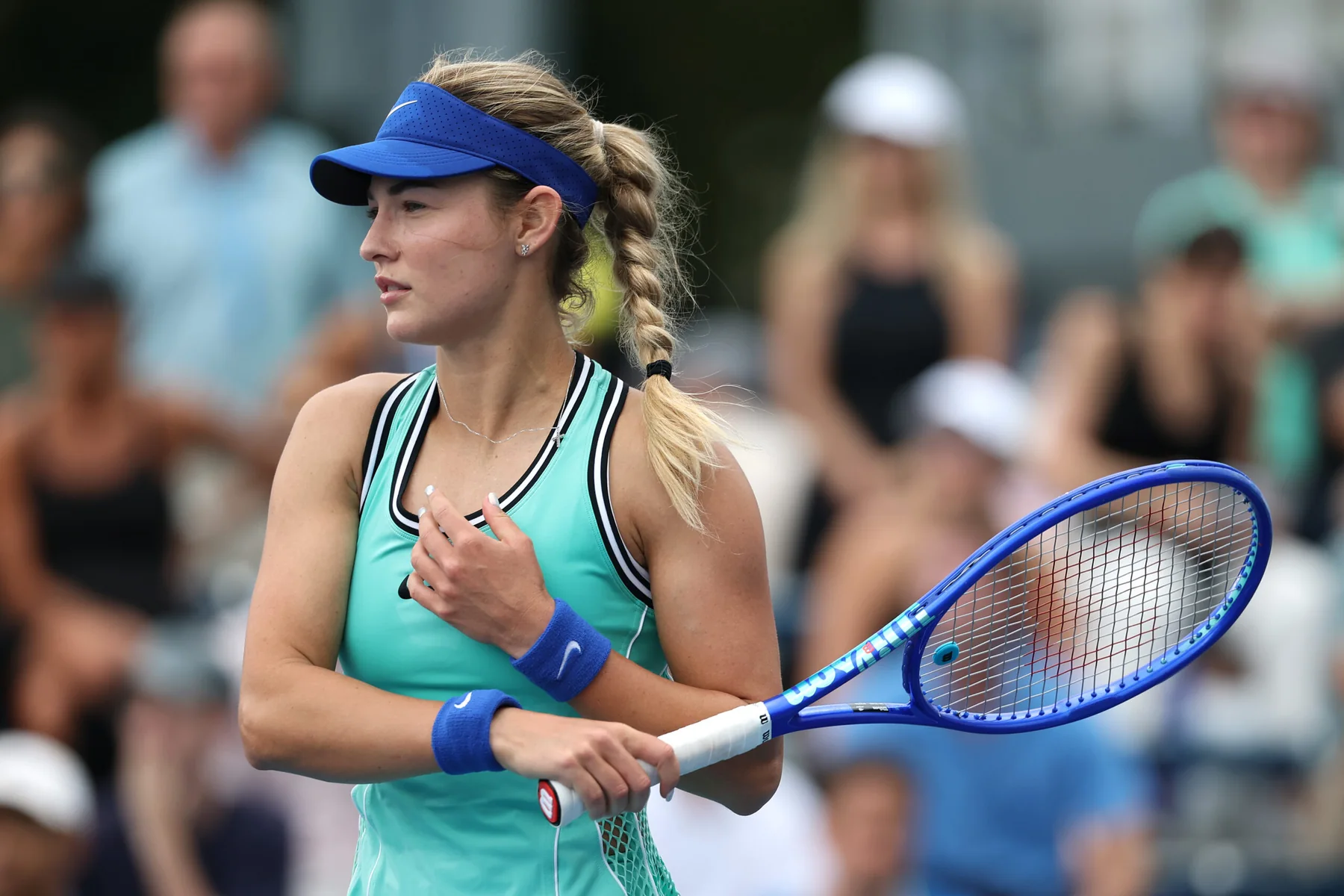
Anna Kalinskaya won her 2026 US Open first-round match against Anna Blinkova, but a faulty electronic out call and an unrelated replay cost her a service game on the way. The USTA later acknowledged both a malfunction and a missed chance to use video review. Here is the exact sequence, what each piece of technology did, and how Kalinskaya's tournament ultimately ended.
What happened in Anna Kalinskaya's 2026 US Open match?
An electronic line-calling error wrongly took a point from Anna Kalinskaya in her first-round match against Anna Blinkova, but Kalinskaya still won 6-4, 6-3. The disputed point came on August 31, 2026, on Court 5. Kalinskaya, the No. 21 seed, had won the first set and was serving at 2-2, 40-15 in the second. Her crosscourt forehand landed inside the singles sideline, yet the ELC Live system announced it out. Instead of closing the game at 3-2, she had to keep playing it and was eventually broken.
The crucial distinction is between what happened on one point and what the match record says. The call went against Kalinskaya at a game point. It did not give Blinkova the match, and it did not erase the set Kalinskaya had already won. The WTA's official scorecard lists Blinkova with four games in the opening set and three in the second; Kalinskaya has six in each. The same record shows Kalinskaya winning 73 of the match's 127 points to Blinkova's 54. Those numbers establish the completed sporting result independently of the clip that circulated afterward.
A statement from a USTA spokesperson, reported by The Athletic and repeated by contemporary outlets, acknowledged that an ELC Live malfunction caused the inaccurate out call. The organization also said the full protocol had not been followed and that video review should have been available in this situation. This makes the incident more specific than a player merely disagreeing with a close call: the tournament recognized both a machine error and a failed chance to correct it during play.
Kalinskaya protested, the on-court display failed to provide the relevant point, and play resumed under the wrong ruling. Those steps deserve separate attention because an automatic voice, a replay graphic and a separate video review are different parts of the process. A screen showing something does not itself prove it showed the disputed shot. The sections below track the score, the attempted replay and the USTA response in order.
For a quick answer after the tournament, Kalinskaya was the winner of this match, and the incorrect call cost her a point and ultimately that particular service game. The results page gives a route to completed US Open scores. It should be read alongside the incident account rather than replaced by an isolated video clip or an undated headline. The tournament result is certain; the internal reason why ELC Live failed beyond the USTA's acknowledgement has not been publicly established in the sources reviewed here.
How did one wrong call turn a game in Blinkova's favor?
The disputed point was a game point, not a break point. Kalinskaya led 6-4, 2-2, 40-15 and was one correctly judged rally away from holding for 3-2 in the second set. Instead, the automated out call gave Blinkova the point. The score moved back toward deuce, the argument over the display interrupted the game, and Blinkova ultimately broke. That is why the error had a visible scoreboard consequence even though Kalinskaya won the match.
The forehand at 40-15
Kalinskaya hit a crosscourt forehand after a short rally. Contemporary reports from Eurosport and TennisActu describe the ball landing inside the singles line. Kalinskaya turned as if the game had ended, then heard the electronic “out” announcement. That moment is easy to misread in a short clip: the apparent winner would have closed the game, but the official scoring at the time credited Blinkova with the point. Kalinskaya's immediate surprise was a response to a ruling that contradicted what she had seen from the baseline.
There is no need to infer the landing spot solely from a player's reaction. Broadcast video was reported to show the shot in, and the USTA later acknowledged that ELC Live had incorrectly called Kalinskaya's ball out. Those two pieces of evidence support the factual conclusion that the live decision was wrong. They do not identify which camera, sensor or software component failed, so assigning a technical root cause would go beyond the public record.
The unrelated replay and the chair's decision
Kalinskaya asked to see a replay of the forehand. The on-court display did not immediately show the requested point. When an image appeared, reporters identified it as a replay of an earlier serve, not the disputed rally. An image of a ball far from a line is meaningless if it belongs to a different shot. The visual problem therefore did not settle the objection; it created a second question about whether the right event had been selected for review.
Kalinskaya gestured toward the court and argued that her ball was comfortably in. The chair umpire said she could not determine the landing with confidence and maintained the automated call. Reports also say Kalinskaya asked for a supervisor and that the request was refused. The USTA's later statement describes a missed video-review procedure, which is different from saying that the incorrect screen graphic was itself a valid review. Keeping these stages separate explains why the player could remain unconvinced after a display had appeared.
The game Kalinskaya lost afterward
Play resumed with the wrong point ruling. Blinkova came back from the 40-15 deficit to break serve, so a game that should have ended with Kalinskaya ahead 3-2 instead ended with Blinkova ahead 3-2. That is a counterfactual only for the correctly judged game point; the break actually happened. The completed Court 5 match card records the final 6-4, 6-3 Kalinskaya win, which means the lost service game did not decide the match.
We do not have a fully verified public point-by-point log of every rally after the bad call in that game, so the responsible description stops at the documented break. Its significance is still clear: an incorrect out call at game point forced the server to play points she should not have needed, and the opponent converted the extra opportunity. The game's outcome made the mistake consequential without turning it into a claim that Blinkova won the set or that Kalinskaya's eventual victory was inevitable. The site's results hub preserves the final match outcome.

What did the USTA acknowledge, and why was video review not used?
The USTA acknowledged two separate mistakes after the match. First, ELC Live malfunctioned and announced Kalinskaya's shot out when it was in. Second, officials did not follow the full procedure that would have made video review available after the incorrect electronic replay failed to resolve the dispute. A USTA spokesperson supplied that explanation to The Athletic; contemporary reports from EssentiallySports and TennisActu preserve its two-part substance. The distinction matters: the wrong call originated in the live system, but the missed chance to inspect the correct video involved the officiating response.
The ELC Live malfunction
ELC Live is the electronic line-calling system that makes an immediate in-or-out decision during play. In the fifth game of the second set, with Kalinskaya ahead 40-15, it signaled that her forehand was out. The tournament later acknowledged that this particular shot was called inaccurately because the system malfunctioned. This official admission is stronger evidence than merely observing a player's protest or comparing a camera angle with a sound from a viral clip. It identifies the call as an error within the match's own event operations.
The statement did not establish exactly why the technology failed. A reader may reasonably wonder whether a camera, ball-tracking calculation, operator selection or display connection caused it; none of those explanations is confirmed by the cited statement. The safest description is the one the USTA gave: a malfunction produced a wrong out call. The resulting point was scored for Blinkova at the time and was not retroactively changed after Kalinskaya finished the match.
The missed review procedure
The failed graphic made the next step important. Reporting from the court says an image eventually displayed was of an earlier serve, not the contested forehand. An irrelevant animation cannot answer whether that forehand landed in. According to the USTA spokesperson's statement, officials did not follow the complete protocol, so a separate video review was not used even though it should have been applicable in this case. The procedural admission does not mean that a normal, correctly displayed ELC result could always be challenged in the same way; it applies to this documented malfunction and the failure to show the right point.
Video review could have provided a way to inspect the actual rally rather than rely on the automatic voice or an unrelated display. The statement, as reported, says the review route was available and should have been used. It does not name a particular official as solely responsible, describe any sanction, or publish a detailed technical fault report. Those omissions matter when assigning blame. It is fair to say the tournament recognized a missed safeguard; it is not fair to present speculation about personnel or software as an established finding.
The retrospective statement did not change the scorebook. Kalinskaya had already lost the service game and later won the match 6-4, 6-3. Fans can therefore hold both facts at once: the recorded result is valid as a completed win, while the USTA acknowledged a call and a review process that failed during it. The practical lesson of the incident is that an automated ruling still needs a reliable path to the correct evidence when the system visibly malfunctions.
What do ELC Live and video review each do?
ELC Live supplied the immediate “out” call on Kalinskaya's forehand; a replay graphic was supposed to show the tracked ball from that same point; video review was a separate route that could have examined the actual play after the display failed. These are related tools, but they did not perform the same job on Court 5. The distinction explains how viewers could see footage of an in ball while the ruling on court remained out.
An automatic call is not the same as a correct replay
The International Tennis Federation's classification distinguishes live electronic line calling, which makes decisions on ball bounces as play happens, from electronic review systems used to answer requested challenges. The US Open's live system announced its decision during the rally. That voice was the operative line call, even though the tournament later acknowledged it was wrong on this shot. A screen graphic shown after the rally is an explanation of a selected tracked bounce; it is useful only if the selected bounce belongs to the disputed point.
In Kalinskaya's case, reporting by Eurosport says the display eventually showed an earlier serve. That was not a close-call image of her forehand, and its apparent ball position could not validate the “out” announcement. The mismatch matters more than the usual debate over whether a graphic is visually persuasive. Even a precise graphic answers the wrong question if it represents another shot. The USTA's general electronic line-calling explainer describes technology that tracks where balls land; it does not establish why this particular event's call and display diverged.
Where a separate video check would have helped
Television footage reportedly showed the forehand landing in, but those broadcast pictures were not the same as the unrelated animation presented during the on-court dispute. Video review would have addressed the actual rally through a different evidence channel. As reported by EssentiallySports, the USTA said that review should have been available under the applicable procedure once the electronic process malfunctioned. The chair did not invoke it. This account describes the documented exception in this match, not a universal right to challenge every live electronic call.
| Evidence channel | What it was meant to answer | What happened here |
|---|---|---|
| ELC Live voice | Was the ball in or out during play? | It announced “out”; the USTA later acknowledged an error. |
| On-court graphic | Where did the disputed ball land? | The image shown was reportedly an earlier serve. |
| Video review | What does footage of the actual point show? | The applicable review was not used, according to the USTA's reported statement. |
Neither the public statement nor the general ITF guidance identifies the faulty component, the software vendor, or a guaranteed result from a hypothetical review. The useful conclusion is narrower: an automated ruling and its explanatory replay can each fail to answer the same factual question, so a correctly applied independent check matters when the wrong point is displayed. For readers following the wider tournament draw, this incident is an officiating explanation, not a change to Kalinskaya's recorded match result.
Did the error change Kalinskaya's match or tournament result?
The wrong call changed a game, but it did not change the recorded winner of the match. Kalinskaya lost the service game that contained the disputed forehand and still defeated Anna Blinkova 6-4, 6-3 in the first round. The WTA's official scorecard confirms that two-set result. The USTA's later admission of an incorrect call explains why the game is controversial; it did not overturn the match or award a different score.
The rest of Kalinskaya's singles run also has a clear official record. She advanced through two further rounds and reached the second week before Emma Navarro ended her tournament. The sequence matters because a reader seeing only the incident clip might assume Kalinskaya lost to Blinkova or was eliminated by the error. Neither happened. Her 2026 US Open singles record was three wins and one defeat, with a fourth-round finish.
| Round | Opponent | Kalinskaya's result | Why it matters here |
|---|---|---|---|
| First round | Anna Blinkova | Won 6-4, 6-3 | The disputed call occurred in this match; she won anyway. |
| Second round | Wang Xinyu | Won 7-5, 2-6, 6-3 | She continued after the line-call incident. |
| Third round | Elina Svitolina | Won 6-3, 2-6, 6-3 | Her first US Open fourth-round berth followed. |
| Fourth round | Emma Navarro | Lost 4-6, 2-6 | This was her actual exit from the singles draw. |
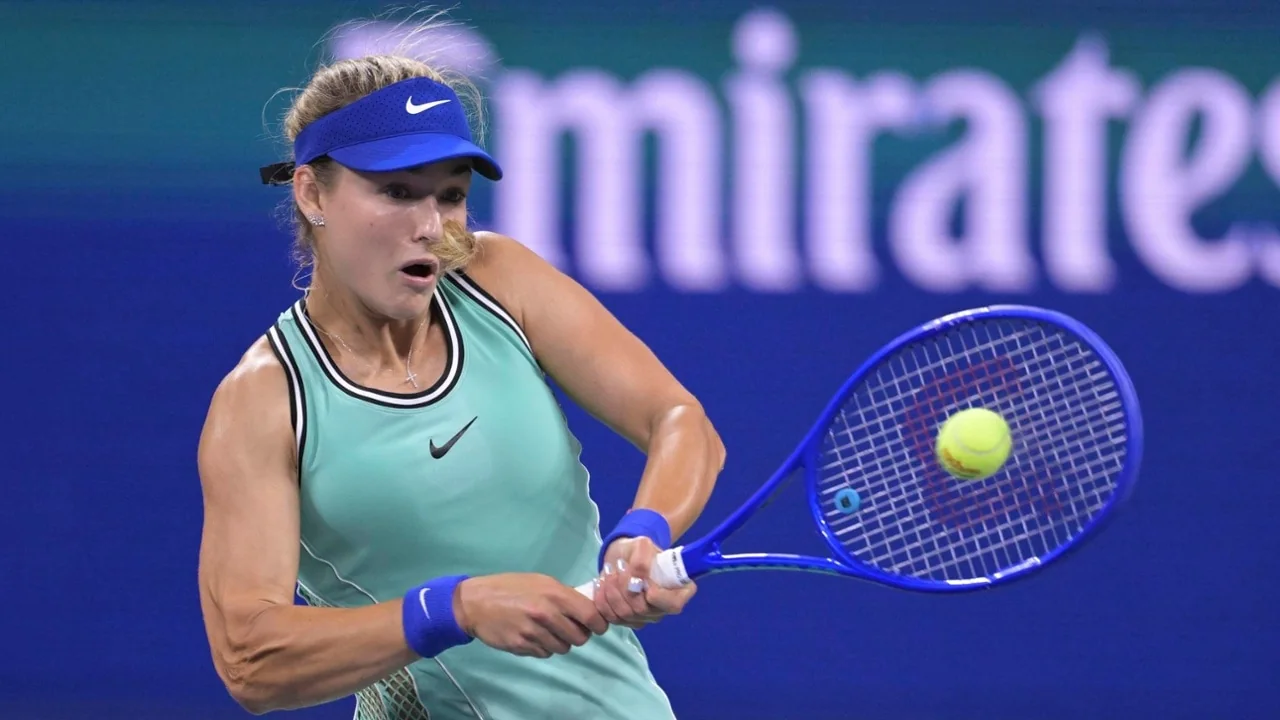
The WTA's second-round match page records the three-set win over Wang. The US Open's third-round report confirms the Svitolina score and says it was Kalinskaya's first trip to the fourth round in New York. In the deciding set against Svitolina, she trailed 2-3, then won four straight games. That is a separate match story, not evidence that the Blinkova error somehow improved her play. The tournament's later results recap records Navarro's 6-4, 6-2 fourth-round victory.
We can say the erroneous point deprived Kalinskaya of a correct game-point decision against Blinkova. We cannot rerun the rest of the set as if the call had been fixed and claim a guaranteed alternate final score. Her win in that match, later progress, and eventual loss to Navarro are observed outcomes; any different path is speculation. The site's results and draw pages provide the broader tournament context for those four rounds.
Where can fans check the result and see the incident?
Start with the WTA's Blinkova–Kalinskaya scorecard for the completed first-round result: Kalinskaya won 6-4, 6-3 on Aug. 31. The US Open's SlamTracker page independently lists Court 5, a 1-hour-28-minute match and the same winner. Those pages are the right references when checking the recorded score or ordinary match statistics. They are not technical incident reports, so a scorecard alone cannot establish why the automated voice called a particular ball out.
For the visual dispute, Eurosport's incident video page is the more targeted link. Its description identifies the forehand, the 6-4, 2-2, 40-15 score and the failure to apply the correct checking procedure; the page labels its clip as just over three minutes. Playback may depend on location or browser support. The official US Open Round 1 highlights offer a shorter overview of the match. Its public listing does not confirm that the disputed rally appears in that specific edit, so viewers should not rely on the highlight title as proof of the call.
Read these sources in order of the question you have. If the question is who won, consult the official score pages and the site's results hub. If the question is what the player and on-court display showed, consult the dedicated incident coverage. If the question is who or what caused the technology failure, the available footage cannot answer it; the USTA's reported acknowledgment supports a malfunction and an omitted review procedure, without identifying a component. That separation keeps a real officiating error from turning into an invented technical explanation.
The final record remains Kalinskaya's first-round win and eventual fourth-round exit. The specific call deserves scrutiny because it wrongly altered one service game and the available safeguard was not used. Seeing the correct score and the actual incident side by side gives a fuller account than either a viral clip or a result line can provide on its own.
Loading comments…