2026 US Open Qualifying Results: All 32 Qualifiers and Main-Draw Matchups
The complete 2026 US Open singles qualifying recap, with all 16 men and 16 women, decisive results, main-draw opponents and the best first-round storylines.
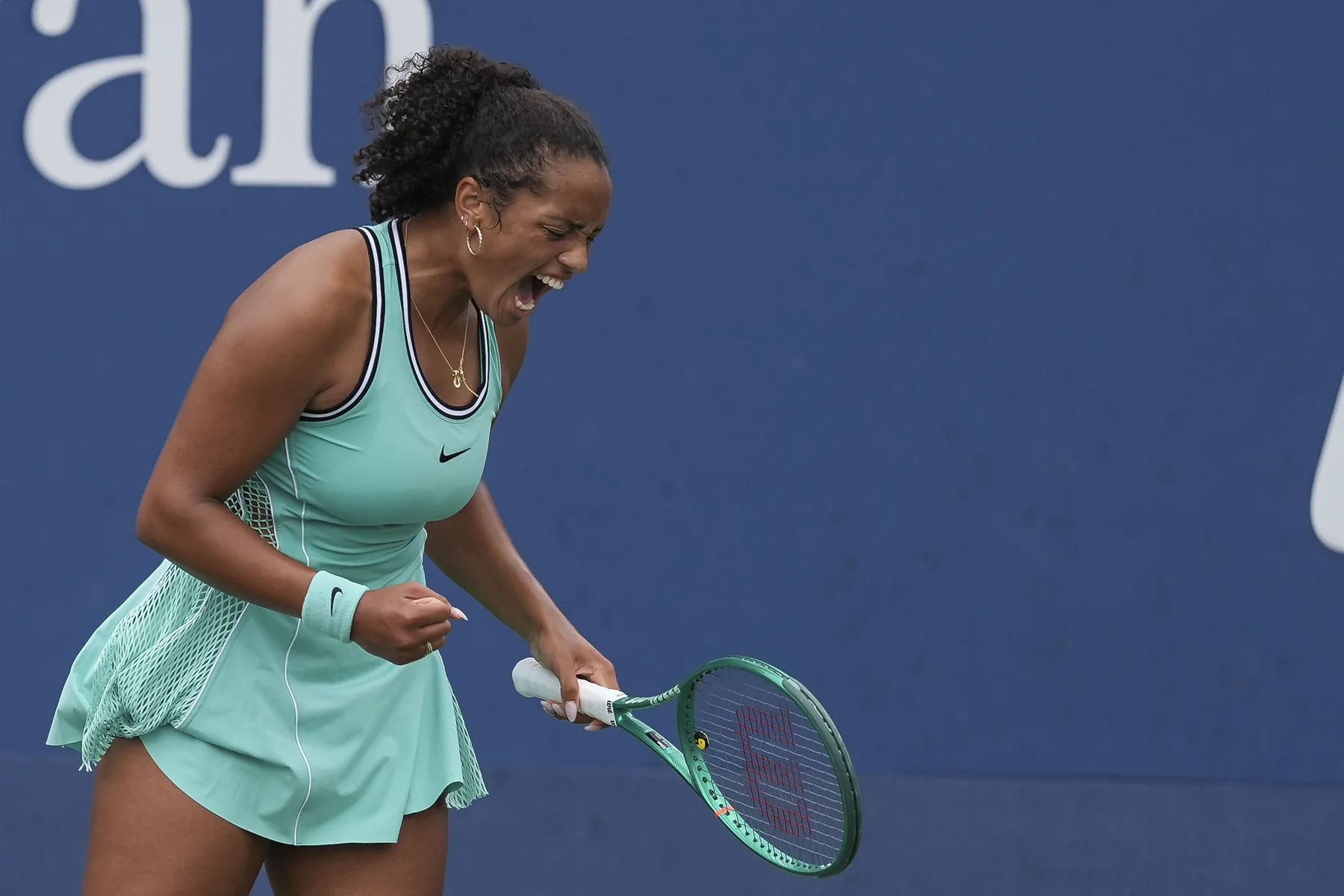
Thirty-two players earned singles main-draw places through 2026 US Open qualifying: 16 men and 16 women. This guide records the completed qualifying results, every qualifier's first-round opponent, the rain-adjusted finish and the matchups most worth following. Information is current through August 30, 2026; use the linked tournament tools for scores and schedule changes after main-draw play begins.
2026 US Open Qualifying Results at a Glance
The 2026 US Open singles qualifying tournament is complete: 16 men and 16 women earned main-draw places. Play began at the USTA Billie Jean King National Tennis Center on Monday, August 24, and finished on Friday, August 28. That final date matters because the published schedule originally ended on Thursday. Rain interrupted the last round, leaving many players to return a day later to settle the remaining places.
Starting field
256 singles players: 128 men and 128 women.
Places won
32 main-draw berths: 16 in each singles draw.
Route through
Three rounds separated an entrant from qualification.
That format makes “qualified” more meaningful than a label beside a player's name. Every standard qualifier survived three best-of-three-set matches across five days of a compressed Grand Slam audition. Players had to recover quickly, adapt to different opponents and protect their level while the main-draw field was already preparing nearby. Grigor Dimitrov advanced from his qualifying final by walkover after Otto Virtanen withdrew, but he had already won his first two matches; the route is recorded accurately rather than pretending every qualifier completed three wins on court.
The rain delay also explains an apparent mismatch in contemporary pages. Official previews list qualifying as August 24-27, while final recaps say it concluded Friday afternoon. Both are correct: one is the planned schedule, the other the actual result. Thursday produced a limited group of qualifiers before the unfinished finals rolled into August 28.
This article freezes the qualifying picture as of August 30, before completed main-draw results are folded into the story. The tables below identify all 32 players and the first-round opponent each drew. Once those matches begin, use the site's latest US Open results for live tournament progress rather than treating this qualifying recap as a live scoreboard.
All 16 Men's Qualifiers and Their First-Round Opponents
Sixteen men came through qualifying, and one first-round pairing—Nishesh Basavareddy against Tristan Schoolkate—guarantees that a qualifier will reach Round 2. At the other extreme, Andrea Guerrieri and Hugo Gaston drew top-eight seeds immediately. “Ret.” below means the opponent retired after play began; Dimitrov's walkover came before his qualifying final started.
| Qualifier | Qualifying-final result | Main-draw R1 opponent |
|---|---|---|
| Nishesh Basavareddy (USA) | def. Arthur Gea 6-3, 6-1 | Tristan Schoolkate (Q) |
| Coleman Wong (HKG) | def. Dusan Lajovic 6-4, 6-3 | (20) Tommy Paul |
| Hugo Gaston (FRA) | def. Colton Smith 1-6, 6-4, 6-2 | (7) Daniil Medvedev |
| Jurij Rodionov (AUT) | def. Jacob Fearnley 4-6, 6-4, 6-4 | Giovanni Mpetshi Perricard |
| Toby Samuel (GBR) | led Cristian Garin 4-6, 6-4, 5-0, ret. | Tomas Machac |
| Francesco Passaro (ITA) | def. Shintaro Mochizuki 6-4, 6-2 | Jesper de Jong |
| Dalibor Svrcina (CZE) | def. Mackenzie McDonald 4-6, 6-2, 7-5 | Valentin Royer |
| Grigor Dimitrov (BUL) | walkover vs. Otto Virtanen | Alexei Popyrin |
| Federico Cina (ITA) | def. Buyunchaokete 3-6, 6-4, 7-5 | Alex Michelsen |
| Zsombor Piros (HUN) | level with Christopher O'Connell 5-7, 7-6(3), ret. | Mattia Bellucci |
| Harry Wendelken (GBR) | def. Vilius Gaubas 6-7(3), 7-6(5), 7-6(5) | (21) Luciano Darderi |
| Lloyd Harris (RSA) | def. Pablo Llamas Ruiz 7-6(3), 6-3 | (WC) Jack Kennedy |
| Tomas Barrios Vera (CHI) | def. Daniel Rincon 6-4, 6-3 | (28) Alexander Blockx |
| Andrea Guerrieri (ITA) | def. Aziz Dougaz 6-2, 6-4 | (6) Alex de Minaur |
| Rei Sakamoto (JPN) | def. Kei Nishikori 6-4, 7-6(3) | Aleksandar Vukic |
| Tristan Schoolkate (AUS) | def. Liam Draxl 4-6, 7-5, 7-6(7) | Nishesh Basavareddy (Q) |
The draw gives momentum very different tests. Basavareddy removed the top qualifying seed in straight sets, yet his reward is the unusual safety of an all-qualifier first round. Wong, who reached Round 3 after qualifying in 2025, has a much steeper assignment against No. 20 seed Tommy Paul. Gaston's changes of pace meet former champion Daniil Medvedev, while Grand Slam debutant Guerrieri faces No. 6 seed Alex de Minaur's speed and relentless court coverage.
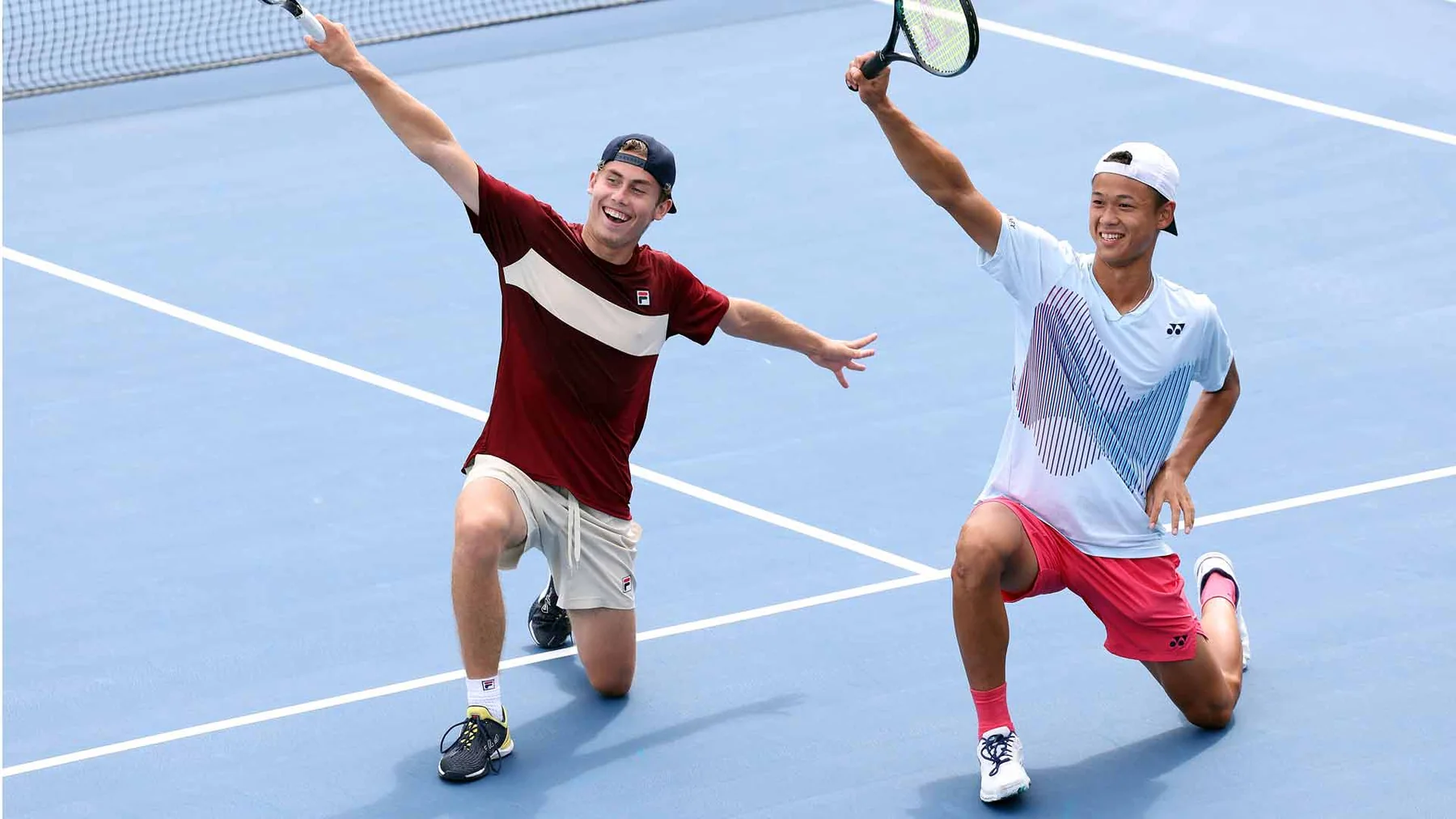
The most revealing final was not necessarily the biggest upset. Wendelken survived three tiebreak sets after losing the first, while Schoolkate recovered from a set down and edged a deciding match tiebreak. Those are useful pressure signals, but they do not guarantee main-draw success after a short turnaround. Use the live US Open draw to follow each player's actual progress and any late placement changes.
All 16 Women's Qualifiers and Their First-Round Opponents
The women's qualifying class also produced 16 players, with Zheng Qinwen against Kristina Liutova guaranteeing one qualifier a place in Round 2. The label covers a remarkably broad field: an Olympic champion returning from injury, established tour players, a former doubles No. 1 and several women making a Grand Slam main-draw debut.
| Qualifier | Main-draw R1 opponent | Useful qualifying context |
|---|---|---|
| Robin Montgomery (USA) | (32) Maria Sakkari | Rallied past Carson Branstine, 2-6, 6-2, 6-2 |
| Lucie Havlickova (CZE) | Anna Bondar | First Grand Slam main draw |
| Francesca Jones (GBR) | Magda Linette | Qualified in New York for a second straight year |
| Storm Hunter (AUS) | (11) Marta Kostyuk | Beat No. 4 qualifying seed Darja Semenistaja en route |
| Arantxa Rus (NED) | Leolia Jeanjean | Tenth US Open main-draw appearance |
| Harriet Dart (GBR) | Peyton Stearns | Needed three sets in all three qualifying wins |
| Polina Iatcenko | Renata Zarazua | Beat Andrea Lazaro Garcia 7-5, 6-1 |
| Elvina Kalieva (USA) | Lanlana Tararudee | Beat Vendula Valdmannova 5-7, 6-4, 6-4 |
| Lucrezia Stefanini (ITA) | Dayana Yastremska | Did not drop a set in qualifying |
| Tamara Zidansek (SLO) | Maria Timofeeva | Beat Bianca Andreescu 2-6, 6-3, 6-4 |
| Gabriela Knutson (CZE) | Eva Lys | First Grand Slam main draw; no set lost |
| Himeno Sakatsume (JPN) | Anhelina Kalinina | First US Open main draw |
| Mary Stoiana (USA) | (17) Alexandra Eala | Beat Yuan Yue 6-3, 4-6, 6-4 |
| Zheng Qinwen (CHN) | Kristina Liutova (Q) | Beat Elena Pridankina 6-4, 3-6, 6-0 |
| Anouk Koevermans (NED) | Caty McNally | First Grand Slam main draw; no set lost |
| Kristina Liutova (CZE) | Zheng Qinwen (Q) | Beat Martyna Kubka 6-4, 6-0 |
Zheng is the clearest warning against ranking a matchup only by the “Q” beside a name. She reached world No. 4 and won Olympic singles gold before a right-elbow problem kept her out of the 2025 US Open and 2026 Australian Open. Her final-round response—winning the deciding set 6-0—showed competitive authority, but Liutova enters with a different kind of momentum: the 16-year-old extended her winning run after claiming the Memphis title as a qualifier.
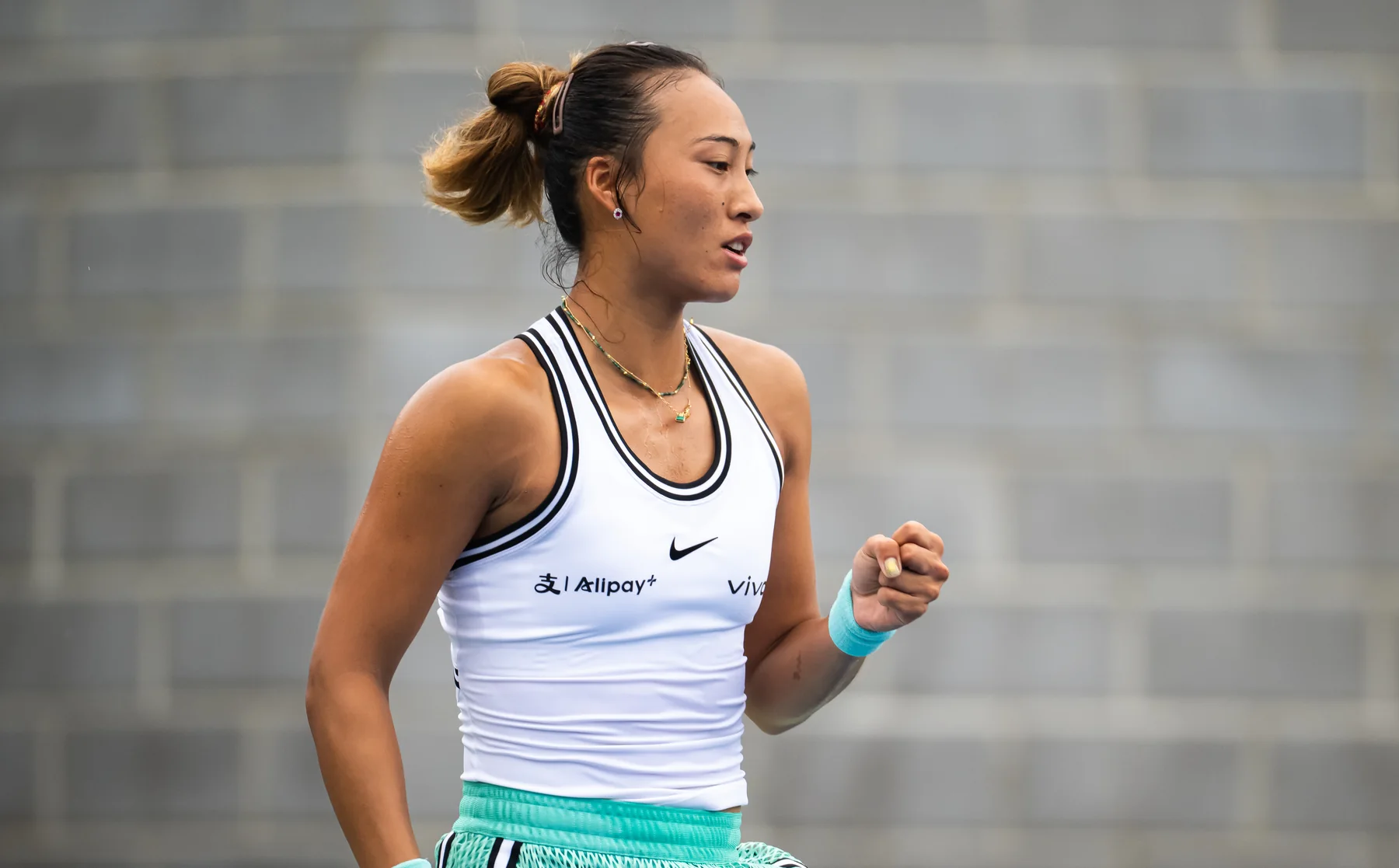
Elsewhere, the draw's risk is uneven. Hunter and Stoiana face seeded players immediately; Montgomery meets No. 32 seed Maria Sakkari after a three-set comeback; Knutson, Havlickova, Iatcenko, Stoiana and Koevermans step into a major main draw for the first time. Those debuts bring energy but also new pressure, larger courts and less recovery time. Follow placements in the live US Open draw, and use current results once first-round play is complete.
The Qualifying Stories That Changed the Main Draw
The most important qualifying result was not simply that 32 names advanced; it was which kinds of players survived. A former world No. 4 returned from a long injury interruption, two teenagers carried breakthrough form into a major, and four Americans earned their places through three rounds. Those paths make the opening draw more complicated than a seed-versus-outsider reading suggests.
Returners with real ceilings
Zheng Qinwen missed the 2025 US Open and 2026 Australian Open while recovering from right-elbow surgery. She closed her qualifying final with a 6-0 set. Robin Montgomery, back after a nine-month wrist layoff, overturned a one-set deficit in her decisive match. Grigor Dimitrov won two straight-sets matches before a final-round walkover.
Teenagers who earned the stage
Federico Cina, 19, and Kristina Liutova, 16, were the only teenage qualifiers. Cina recovered from 3-6 down against Buyunchaokete and won 7-5 in the third. Liutova extended a nine-match winning streak after taking the Memphis title as a qualifier. Their results show repeated pressure wins, not speculative “future star” billing.
Four home qualifiers
Nishesh Basavareddy, Mary Stoiana, Elvina Kalieva and Montgomery were the Americans who advanced. Kalieva and Stoiana reached a Grand Slam main draw for the first time. Their progress matters because it adds home interest without confusing a qualifying achievement with a discretionary main-draw wild card.
The misses sharpen those stories. Three former Grand Slam finalists entered qualifying—Zheng, Bianca Andreescu and Kei Nishikori—but only Zheng came through. Sakamoto ended Nishikori's farewell qualifying run in straight sets, while Tamara Zidansek recovered to beat Andreescu. Reputation attracted attention; current execution decided the places.
There was also no single national pipeline. The 32 qualifiers represented 15 nations, drawn from an event that staged 223 matches. Nine contests across both draws went to a deciding-set match tiebreak, evidence of how narrow the final margins could become. That volume gives qualifiers useful match sharpness, yet it also extracts physical and emotional energy immediately before Round 1. Momentum and fatigue arrive together.
For fans, the correct takeaway is not “back every qualifier.” It is to look behind the label. Zheng's ranking reflects interrupted availability; Liutova and Cina bring rapidly changing levels; Dimitrov carries major-stage experience; a debutant may be seeing this scale for the first time. Browse the site's US Open players hub for broader context, then judge each matchup on opponent, recovery time and style rather than entry route alone.
Five First-Round Matchups to Watch
Start with Zheng Qinwen versus Kristina Liutova, then circle two seeded tests and two men's matches shaped by very different kinds of qualifying momentum. These are watch recommendations, not winner predictions. The evidence comes from confirmed draw placement, qualifying results and relevant New York history; court and start time should always be checked against the daily order of play.
- Zheng Qinwen (Q) vs. Kristina Liutova (Q). One qualifier is guaranteed to advance, but the matchup is anything but routine. Zheng brings an Olympic title and a former No. 4 ceiling after elbow surgery; Liutova brings a nine-match winning streak and the fearlessness of a 16-year-old who just won a tour title from qualifying. Watch whether Zheng's first-strike power controls the middle quickly or whether Liutova can extend exchanges and make the returning favorite manage repeated pressure.
- Coleman Wong (Q) vs. (20) Tommy Paul. Wong is not seeing this stage for the first time: he qualified in 2025 and reached Round 3 before a five-set loss. He also won six consecutive sets after dropping his first set of this year's campaign. Paul supplies a seeded benchmark. The useful question is whether Wong can carry that clean finishing level into longer men's main-draw conditions.
- Robin Montgomery (Q) vs. (32) Maria Sakkari. Montgomery recovered from 2-6 down in her qualifying final and is rebuilding after a nine-month wrist absence. She also won her first WTA title on grass in June. Sakkari's seed makes this an immediate step up, but Montgomery arrives with competitive repetitions. Pay attention to how well the American protects service games after the emotional and physical qualifying load.
- Grigor Dimitrov (Q) vs. Alexei Popyrin. The “Q” is especially deceptive here. Dimitrov is a former world No. 3, a 2019 US Open semifinalist and a 2024 quarterfinalist. He won his first two qualifying matches in straight sets, then advanced by walkover. That reduced final-round workload may help recovery, although it also denied him one more full match. Popyrin faces an experienced opponent, not a conventional lower-ranked newcomer.
- Nishesh Basavareddy (Q) vs. Tristan Schoolkate (Q). Basavareddy dismissed top qualifying seed Arthur Gea 6-3, 6-1; Schoolkate survived a three-set final decided by a match tiebreak. One arrives from an efficient close, the other from a pressure escape. Because the draw guarantees a qualifier in Round 2, this is also the cleanest match for measuring which type of qualifying route translates better.
Do not lock a viewing plan to an early listing. Weather, prior-match length and television choices can shift courts or times. Check the current US Open schedule, then confirm the published Order of Play before the session begins.
How US Open Qualifying Worked—and What “Tickets” Meant in 2026
Singles qualifying used two 128-player draws to award 16 men's and 16 women's main-draw places, while ordinary fan admission was free with a required Fan Access Pass. That distinction answers two different questions hidden inside searches for “US Open qualifying tickets”: how a player entered the main draw and how a spectator entered the grounds.
The player route
- Round 1 reduced each 128-player field to 64.
- Round 2 reduced 64 players to 32.
- The qualifying final produced 16 main-draw qualifiers.
Each gender therefore supplied 16 qualifiers after three rounds. A walkover or retirement can complete a route without three full match wins, as Dimitrov's and other result lines show.
The spectator route
- Register for the free 2026 Fan Access Pass.
- Use it for Fan Week grounds entry.
- Watch singles qualifying on the field courts.
The pass cost nothing, but “free” did not mean walk in without registration. The pass was a 2026 admission requirement and could be constrained by availability.
The planned singles qualifying dates were August 24-27. Rain moved unfinished final-round matches to Friday, August 28, which is why a live daily schedule mattered more than the original event calendar. The delay did not add another round; it only moved the remaining matches. It also did not change the size of the prize: 16 places in each singles main draw.
Free pass is not the same as an all-event ticket. The 2026 Fan Week program included separately ticketed experiences, including the Roger Federer exhibition, Stars of the Open and selected mixed-doubles championship matches. Mixed doubles qualifying in Grandstand was also a distinct competition and is not part of the 32 singles qualifiers listed here.
Because this is a completed 2026 recap, treat the access details as a record—not a promise for 2027. Registration systems, capacity and ticketed events can change. For ongoing tournament planning, start with the full US Open schedule, verify court assignments on the Order of Play, and save useful dates through the site's calendar tool.
The qualifying tournament has done its job: the names above are now part of the 128-player singles draws. The most reliable next step is to pair this completed recap with the live draw, results and Order of Play, especially after a week in which weather already showed how quickly a published schedule can change.
Loading comments…