Why Were There Empty Seats at the 2026 US Open?
A careful look at the 2026 US Open empty-seat debate, from late finishes and seat access to ticket prices and unproven resale claims.
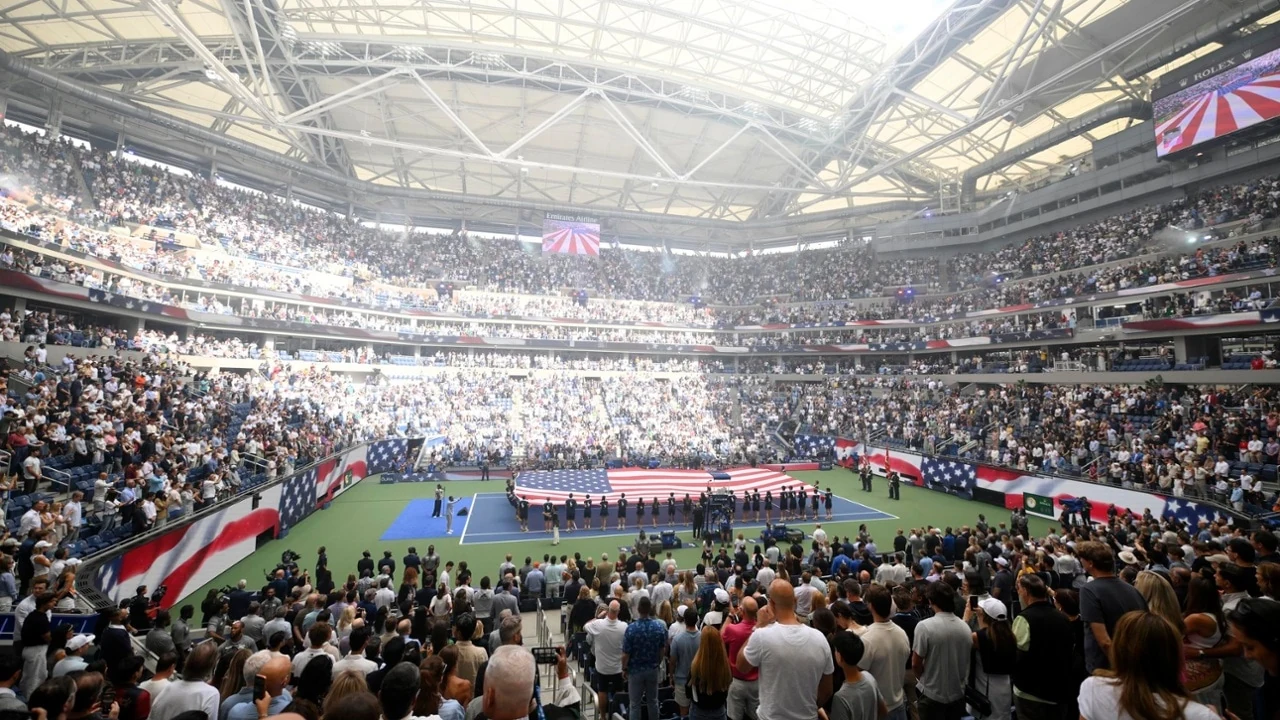
Some 2026 US Open television shots showed empty stadium seats at the same event that generated intense ticket-price complaints and crowded grounds scenes. The images deserve an explanation, but a vacant chair is not a complete ticket-sales report. The evidence points to several mechanisms: assigned seat holders can be elsewhere, resale listings can discourage buyers, and very late matches can outlast spectators. Each mechanism has a different level of support in the available record.
What did the 2026 empty-seat images actually show?
Photographs and broadcasts from the 2026 US Open showed visibly unoccupied seats in Arthur Ashe Stadium at some moments. That observation is real. What a single frame cannot show is how many tickets were sold for the session, whether the absent ticket holders were elsewhere on the grounds, or why particular people did not return to their places. The first step in understanding the empty-seat debate is to separate a seat's occupancy at one time from ticket inventory and total tournament attendance.
The strongest example of a visibly thinning stadium came during the men's quarterfinal between Ben Shelton and Carlos Alcaraz. A reporter watching inside Ashe described spectators leaving as the match moved through the night; it began at roughly 11:05 p.m. and ended at 3:33 a.m., according to the published eyewitness account. The pictures from late in that match support a simple conclusion: many seats were empty while extraordinary tennis was still being played. They do not establish the fraction of the venue's tickets that went unsold. Nor should an observer's rough percentage estimate be treated like a turnstile count.
At the other end of the visual range, the official gallery from the men's final shows a heavily populated Ashe before Zverev played Shelton. The cover photo for this article is from that pre-match scene. It is deliberately a contrast, not a claim that the late-quarterfinal camera shots were false. Different rounds, opponents, session times and moments in a match produce different stadium views. A panoramic pre-final ceremony and a close television shot after 2 a.m. answer different questions.
The US Open's own ticket guide supplies another basic distinction. Ashe is a reserved-seat stadium. Someone can hold an assigned seat there and still spend part of the session on an outer court, in Louis Armstrong Stadium, or away from the court altogether. The empty place on camera is then real, but it does not automatically represent an unsold seat. The same logic applies to people who leave early: their tickets were used even though the chair is vacant at the end.
Fans who want to judge a particular scene should first consult the US Open schedule and identify the session, court and approximate time. Without that context, “empty seats at the US Open” compresses several different situations into one image and invites a cause that the image itself cannot prove.
How can a ticketed seat be empty during a busy session?
A US Open stadium ticket identifies a place a spectator may use, not a promise that the person will remain in that chair throughout the session. Arthur Ashe tickets assign a seat in the main stadium while also granting access to much of the rest of the National Tennis Center. A visitor may watch a set in Ashe, walk to another court, visit a concession, meet a companion and return later. From a television camera's point of view, each of those ordinary choices leaves a visible empty seat.
A seat holder can leave without giving up the ticket
The USTA's 2026 ticket guide says an Ashe ticket includes an assigned stadium seat and first-come access to Louis Armstrong Stadium, Grandstand, Stadium 17 and the field courts. That matters because an empty Ashe chair need not be unsold. Its owner could be watching another match to which the same ticket grants admission. The seat can also remain empty during a food break, a queue for a restroom or a trip around the grounds. During a lengthy match, some owners simply leave and do not come back; their purchased or scanned ticket does not vanish when they depart.
None of this proves why a specific photographed chair was vacant. It establishes a category of possible explanation that is built into the ticket design. To prove that most empty seats in a section were held by people elsewhere would require access-control or seat-use information that a spectator cannot infer from an image. The fair description is narrower: the visible seat and the sale status are different measurements.
One grounds crowd, several different courts
The US Open runs many matches at once in the early rounds. A detailed New York fan guide encourages visitors to treat an Ashe day ticket as a pass to roam other courts, sometimes at a similar cost to a grounds pass. A ticket buyer interested in doubles, a rising player, or a more intimate view may make exactly that choice even while holding a reserved stadium place. This is part of what makes Flushing Meadows attractive: a fan is not confined to a single stage.

The pattern changes as a tournament narrows. In the first week, a visitor can leave a stadium and find singles, doubles, juniors or other competition elsewhere. On final weekend, fewer simultaneous matches may be available, so an empty main-stadium seat is less easily explained by watching another show-court match. Food, arrival and departure still matter, but the mix of causes is not constant. The daily schedule helps a reader see how many alternatives actually existed at the moment under discussion.
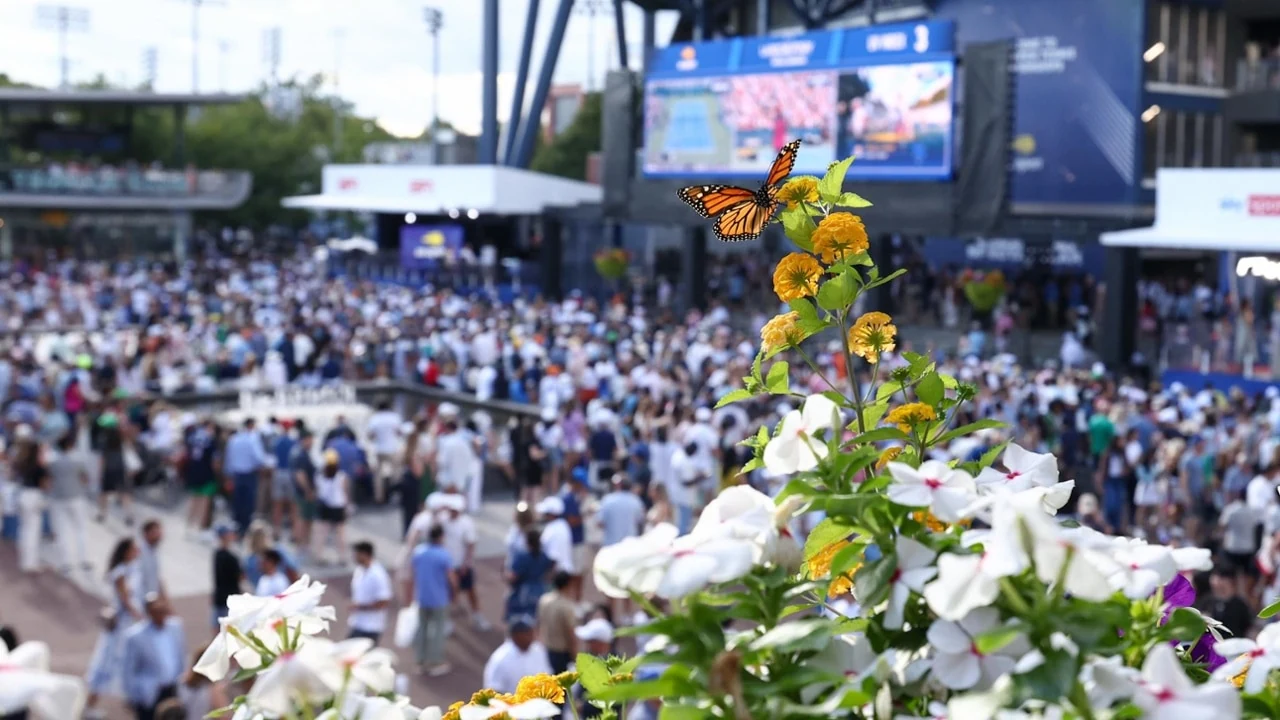
That is why a full grounds plaza and a patchy stadium section can coexist. They measure where people chose to be, not simply how many wanted to attend the event.
How did prices and resale shape the argument?
Ticket prices made the 2026 empty-seat photographs especially provocative. Fans who saw a vacant run of chairs naturally asked why people eager to attend were facing expensive listings. There is a plausible connection between access and occupancy, but a listing on a resale site is not a completed sale or a seat-level attendance record. The responsible account is that price and resale contributed to the public debate; the precise role they played in a particular empty section remains unmeasured.
Face value and live listings are different numbers
The Guardian reported a $65 official grounds-pass price and, during one late-August check, a pass listed for $321 on the secondary market. Those numbers describe different transactions. The first is a price at which some primary inventory was offered; the second was a seller's asking price at one moment. Neither is a universal price for all sessions or a guarantee that a buyer actually paid that amount. A high listing can fall as a match approaches, remain unsold, or be replaced by a different offer.
The same distinction applies to an Ashe seat. Original inventory, subscriber allocations, premium packages and individual resale listings can have different prices and different buyer behavior. A photograph cannot tell which channel supplied the chair in the frame. It is also risky to compare a grounds pass directly with a reserved Ashe seat: the former does not grant admission to Ashe. For a family planning a day of tennis, those ticket categories and access rights matter as much as a headline number.
What resale can and cannot explain
Resale can plausibly keep a seat from a willing buyer when an owner posts it at a price no one accepts. It can also allow a buyer who can no longer attend to transfer the ticket to someone else. Which effect dominated a particular 2026 session would require inventory and transaction data, plus evidence of whether the eventual ticket holder entered the stadium. We do not have those linked data. Therefore, saying “resellers caused the empty seats” as a blanket fact goes further than the evidence permits.
There is a real economic question nonetheless. Sports Illustrated reported the USTA's statement that it receives a share of fees from verified Ticketmaster resales, while saying that the organization does not receive the resale price itself. The official ticket FAQ identifies Ticketmaster as the verified resale marketplace. The structure gives fans a reliable way to check authenticity, but it also makes live secondary prices a prominent part of the buying experience. Public criticism focused on the gap between affordable entry in principle and what a fan could actually find for a desired day.
One clear way to judge the issue is to ask for separate measures: how many standard seats were released, how many were resold, what buyers paid rather than merely listed, and how many holders actually reached their seats at a given match. The order of play adds the timing context. Until those measures are connected, resale remains an important candidate explanation, alongside people moving around the site and very late finishing times.
Did the late schedule visibly thin Arthur Ashe?
Yes, in one conspicuous 2026 example. The Shelton–Alcaraz men's quarterfinal moved through the early hours of September 9 and finished at 3:33 a.m., the latest finish in US Open history, according to the official match report. A reporter in Arthur Ashe described spectators leaving as the match continued. That sequence provides a direct explanation for the stadium looking thinner near the end than it did when the match began. It does not settle the reason for every empty seat seen at other matches or earlier in the event.
The final score, 6-7(5), 6-1, 6-3, 1-6, 7-6(7) to Shelton, is important because this was not a dull match chasing viewers away. It lasted four hours and 28 minutes, featured a deciding tiebreak and gave the home crowd a major upset. A person leaving before the fifth set could be responding to the clock, transport, a household obligation or simple exhaustion; the evidence does not let us assign a reason to each departure. It does show that an exciting contest and a sparse late-night lower bowl can coexist.
Reported sequence in Arthur Ashe, September 8–9: the first ball was struck at about 11:05 p.m., according to the eyewitness account; play crossed midnight and went to a fifth set; Shelton struck the winning ace at 3:33 a.m., as the USTA confirmed. The time difference matters more than any unverified seat count.
The spectator experience is not the same as the television experience. A viewer at home can watch until the final point and go straight to bed. Someone in Queens may have to get home, work the next morning or care for others. Even fans holding expensive seats may decide that staying through 3 a.m. is impractical. Thus a late start can reduce the occupied-seat count without implying that those seats lacked buyers. The on-court atmosphere still mattered to Shelton; the official report described the remaining Ashe crowd as loud and supportive through the end.
Ashe sessions also have ticket boundaries. The USTA ticket guide describes separate day and evening sessions on relevant dates, and a day ticket does not become an evening reserved seat. It would be inaccurate to say anyone present for a crowded daytime match could simply fill a late-night evening vacancy. The order of play helps fans identify which matches were planned for each session and how delays accumulated.
The lesson is specific: an extreme finish is a well-supported reason the stands may look emptier as the match advances. It is a stronger explanation for the 3:33 a.m. images than a claim about resale made from the same image alone. Other sessions require their own timing and ticket evidence.
Why do Ashe, Armstrong and grounds passes tell different stories?
These ticket types grant different rights, so a crowded path outside a stadium cannot simply be compared with the number of people sitting inside it. Arthur Ashe is the main reserved-seat venue. A grounds pass lets its holder see substantial tennis elsewhere but does not open an Ashe gate. Louis Armstrong Stadium and Grandstand have their own reserved and general-admission arrangements. Understanding those boundaries is essential both for judging a crowd photograph and for purchasing the right session.
The Ashe seat is reserved
The official 2026 ticket explanation says an Ashe ticket comes with an assigned seat in the main stadium and access to other courts on a first-come basis. The seat belongs to that ticket holder for the designated session, but there is no obligation to remain in it. Another fan with only a grounds pass cannot ordinarily move into an apparently empty Ashe seat to make a television shot look fuller. That is a reason visible vacancies may persist even while many people circulate nearby.
Ashe day and evening sessions are also distinct on dates with both. An expensive ticket for one does not automatically give a reserved chair at the other. Fans who hear that the grounds were busy earlier in the day should therefore ask whether the image is from the same session and whether those people had access to Ashe at that time. Without matching the ticket and the session, a comparison of crowd sizes can be false even when both observations are accurate.
Grounds admission reaches other courts
A grounds pass is designed for exploring. The USTA describes first-come access to general-admission areas in Louis Armstrong, Grandstand, Stadium 17 and the field courts, while explicitly excluding Ashe. An Armstrong or Grandstand reserved ticket offers its own assigned seat plus access elsewhere, but also does not become an Ashe ticket. The venue works as a network of courts with different admission rights, not one giant interchangeable seating bowl.
| Ticket type | Reserved seat | Arthur Ashe entry |
|---|---|---|
| Ashe session | Yes, in Ashe for that session | Yes |
| Armstrong session | Yes, in Armstrong | No |
| Grandstand session | Yes, in Grandstand | No |
| Grounds admission | No assigned stadium seat | No |
A longtime local fan's 2026 buying guide recommends comparing Ashe day tickets with grounds passes in early rounds because a reserved Ashe seat can sometimes come at a similar listed price while also allowing court-hopping. That is practical advice, not a fixed price promise: inventory and resale change. The USTA's ticket-plan descriptions likewise tie access to specific sessions.
The point for an empty-seat claim is simple. A photograph inside Ashe is about Ashe occupancy at that moment; a report of a packed Louis Armstrong queue is about a different space and set of ticket holders. Both may be true. During play, the today schedule can show which courts have concurrent matches, making the comparison more meaningful.
What should fans check before calling a session empty or buying a ticket?
Start with the exact claim being made. “Those chairs were empty at 2:30 a.m.” is an observation that a clear photograph may support. “Those tickets never sold because of resale prices” is a causal claim requiring very different evidence. A careful reader can separate the two with a few checks, and the same checks help a buyer avoid paying for access that does not match the match they want.
- Identify the session and clock time. Look up the court and planned order of play, then note whether the photograph was taken before play, during a changeover, near the end of a long match or after midnight. The 2026 Shelton–Alcaraz quarterfinal illustrates how much a crowd view can change between the first ball and 3:33 a.m.
- Identify the ticket right. The USTA ticket guide makes the central distinction plain: grounds admission does not include Ashe, while an Ashe ticket includes an assigned seat there and access to other courts. A packed grounds walkway cannot directly fill or explain a reserved Ashe section.
- Separate a price tag from a purchase. A resale listing is an ask, not a completed transaction. Check whether a quoted price was a primary offer, a resale listing, or what a buyer actually paid, and note the date and session. Without that distinction, comparisons may sound dramatic but say little about actual ticket use.
- Ask what the evidence measures. Ticket sold, ticket scanned at the grounds gate, person seated during a point and people counted across the entire event are four different numbers. A picture normally speaks only to the third. A precise causal claim would require a linked dataset, not just a photograph.
For someone planning a future trip, the practical move is to compare ticket types before comparing prices. The independent 2026 fan guide notes that an early-round Ashe day seat can sometimes cost about the same as a grounds pass and provide more options, though live prices vary. Confirm whether the desired match is in the day or evening session and whether the ticket gives access to that stadium. The USTA's ticket FAQ identifies its official verified resale channel for checking legitimacy; a cheap listing on an unrelated site needs closer scrutiny of terms and fees.
Finally, use the schedule and order of play to see which matches are simultaneous and when play is due to start. Future court assignments and ticket conditions should be checked when announced; the 2026 facts are an explanation of what happened, not a promise about a later tournament. The best account of empty seats allows more than one cause: a ticket can be costly, a holder can go elsewhere, and a late finish can thin a crowd even when the contest is compelling.
The most defensible answer is specific to each session and time. Look at where the match was played, which tickets granted access, what prices were actually paid and when the photograph was taken before attributing all visible vacancies to one cause.
Loading comments…