2026 US Open Draw and Predictions: Men's and Women's Bracket Picks
A draw-by-draw 2026 US Open preview with projected paths, upset risks, dark horses and transparent men's and women's singles picks.
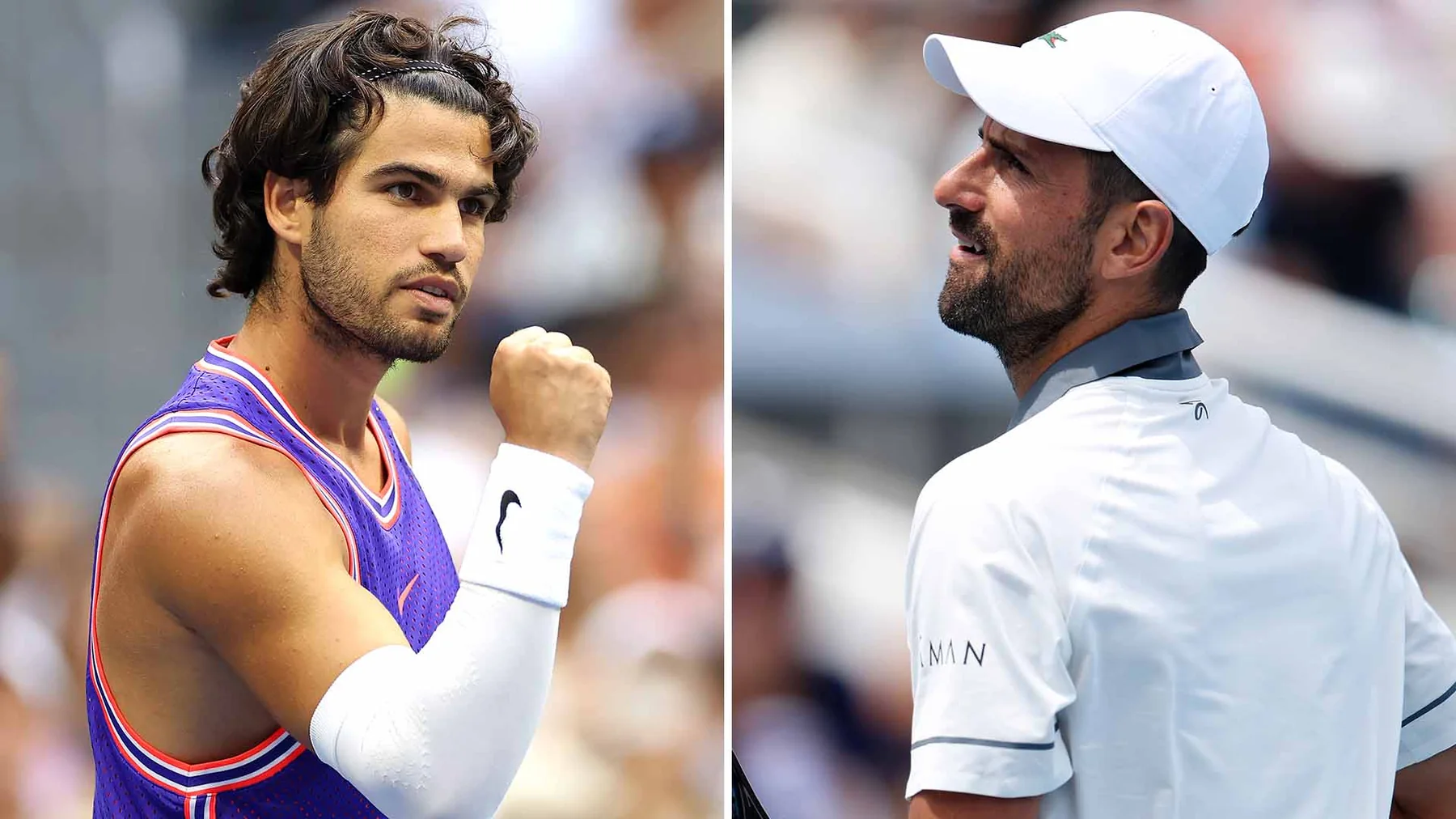
The 2026 US Open singles draws are set, and the bracket asks two very different questions. The men's field has lost its world No. 1 and concentrated its former champions in one half; the women's field offers depth, recent champions and fewer safe projections. This preview is based on information checked before main-draw play on August 30, 2026. It separates confirmed placement from projected meetings and gives every champion pick a clear reason it could fail.
The 2026 US Open draw at a glance
The clearest pre-tournament read is that the men’s draw is lopsided, while the women’s draw is deep rather than predictable. That conclusion is based on the bracket released on August 27 and information checked before main-draw play on August 30. It is not a claim that any projected matchup will happen. A draw shows where players have been placed; it does not remove the seven matches a singles champion still has to win.
Men’s bracket headline
World No. 1 Jannik Sinner withdrew with a right knee injury after compiling a 44-3 record in 2026. Alexander Zverev therefore anchors the top half as the No. 1 seed. Defending champion Carlos Alcaraz is the No. 2 seed at the bottom, in the same half as Novak Djokovic, Daniil Medvedev, Stan Wawrinka and Marin Cilic. Every former men’s US Open champion in this field is on that lower side.
Women’s bracket headline
Aryna Sabalenka is the top seed and two-time defending champion, but the leading contenders are less separated. Elena Rybakina, Jessica Pegula and Coco Gauff anchor the other quarters, with Iga Swiatek, Mirra Andreeva, Naomi Osaka and Madison Keys creating difficult routes beneath them.
One useful check comes from Opta’s 10,000 tournament simulations. Its model made Alcaraz the men’s favorite at 13.2% and Sabalenka the women’s favorite at 9.6%. Those modest percentages are the point: even the leading pick loses in the great majority of simulations. The same model assigned 33.1% of all men’s title probability to Alcaraz’s quarter, a warning that his section contains more danger than its seed numbers alone suggest.
Throughout this guide, “projected” means the meeting produced if the relevant seeds keep winning. “Our pick” means an editorial judgment based on route, hard-court fit, recent form and physical uncertainty. Neither label means confirmed. Keep the site’s live US Open draw open as play begins, because one upset can erase several paragraphs of pre-tournament logic. The value of a prediction is not pretending to know the winner; it is identifying which tests are most likely to decide the bracket.
Men's top half: Zverev has the route, not a free pass
Alexander Zverev owns the most favorable route to the men’s final on paper. He opens against Lorenzo Sonego and is projected by seeding to meet No. 6 Alex de Minaur in the quarterfinal. That is preferable to sharing a quarter with the two most recent Masters 1000 champions, as Alcaraz does, but “favorable” should not be confused with soft. Rafael Jodar and 2022 finalist Casper Ruud are other possible last-eight opponents, and each would ask a different question of the top seed.
The strongest reason to trust Zverev is not the number beside his name. It is how much sturdier his second serve has become. ATP data puts him at 57.7% of second-serve points won in 2026, third on tour, with 2.1 double faults per match. In his 2020 US Open final season, he won only 45% behind the second delivery. That difference matters in New York: when a first serve deserts a player during a noisy night session, a reliable second ball prevents returners from stepping inside the baseline and taking immediate control.
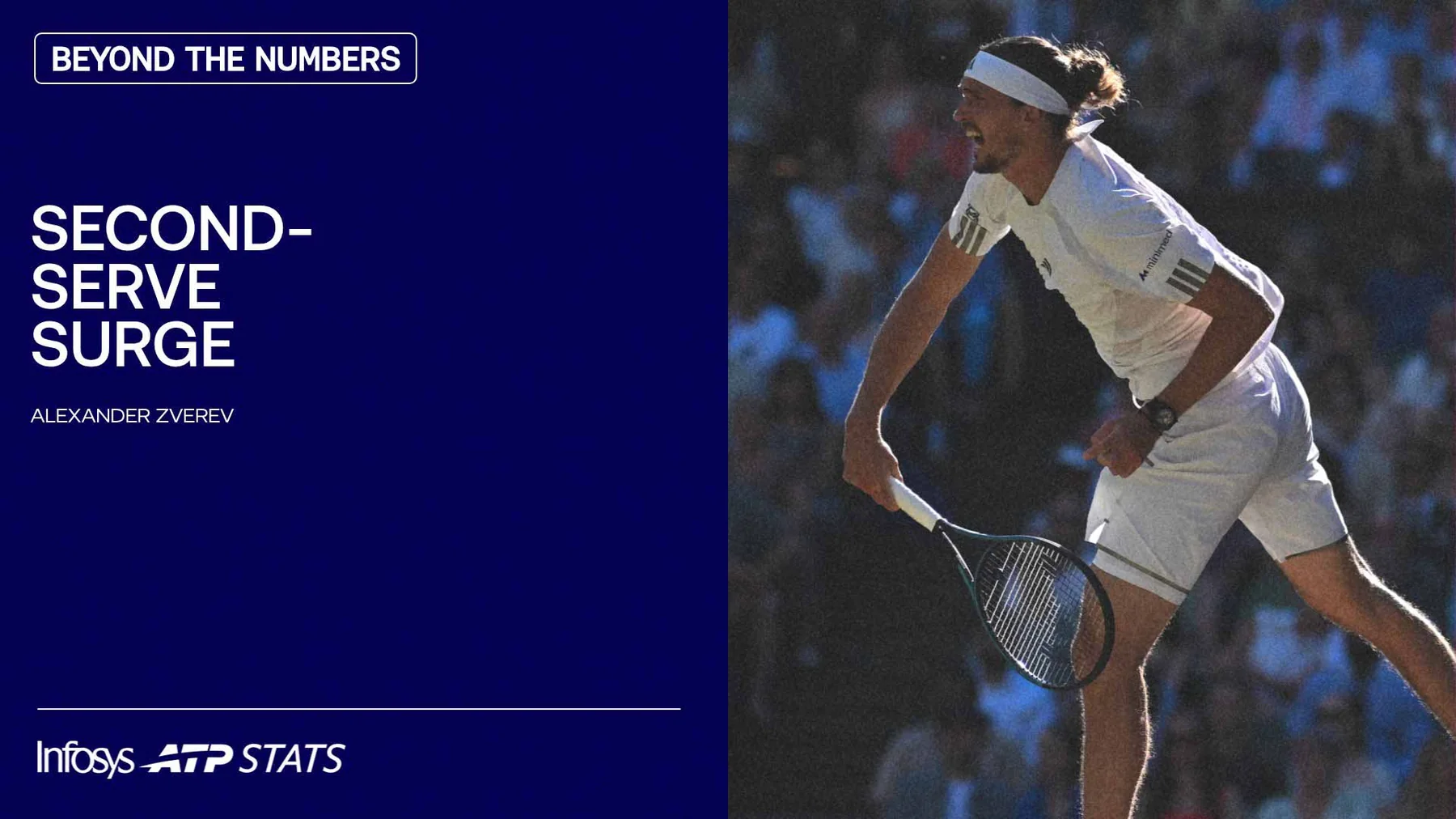
His major résumé this season supports the case. Zverev arrives 18-2 at Grand Slam level after winning Roland Garros and reaching the Wimbledon final. In Paris he recovered from losing a fourth-set tiebreak to beat Flavio Cobolli in five sets, saving all four break points he faced in the decider. It was evidence that he can reset after a missed closing opportunity—the precise weakness that defined his loss from two sets up in the 2020 US Open final.
The other top-half quarter is where the forecast can turn. No. 3 Felix Auger-Aliassime has made both of his career major semifinals in New York and reached the last eight at Roland Garros and Wimbledon this year. No. 5 Cobolli already has a major final on his 2026 ledger, while Taylor Fritz is a possible fourth-round opponent for the Italian. If that group produces a long, physical quarterfinal, Zverev could arrive at the semifinal with the fresher legs.
Our top-half pick: Zverev to reach the final. The route and serve trends justify it. The warning is return position: a quick opponent who blocks the first serve deep and forces repeated forehand movement can make Zverev play more passively than his seeding suggests.
Follow the actual survivors in the men’s singles draw; every projected opponent here remains conditional.
Men's bottom half: Alcaraz owns the ceiling and the hardest road
Carlos Alcaraz is our men’s champion pick, but he is the least conventional favorite in the bracket. He was 22-3 through April, won the Australian Open and Doha, and is the defending US Open champion. He also has not played a singles match since April 14 because of a right wrist injury. His ceiling is supported by seven major titles and a complete hard-court game; his floor is impossible to measure until the wrist, legs and decision-making are tested in a best-of-five match.
The first test is not ceremonial. Roman Safiullin beat Alcaraz in straight sets at the 2023 Paris Masters and can flatten returns and backhands early in rallies. Alcaraz should still be favored, but watch his forehand commitment rather than the score alone. Is he accelerating through the ball when stretched? Can he serve wide and then drive the next forehand without protecting the wrist? Does his return land deep enough to stop Safiullin taking the first strike? Those clues will be more predictive than an uncomplicated opening set.
The quarter becomes more dangerous later. Ben Shelton won Montreal and brings a left-handed serve that can compress return games into a handful of points. Arthur Fils won Cincinnati only six days before the US Open, reached at least the quarterfinal at five Masters 1000 events in 2026 and entered New York 10-0 in deciding sets. Fils and Shelton are seeded to meet before a possible quarterfinal with Alcaraz, so they must spend energy eliminating each other. Yet the survivor will arrive with live hard-court timing that Alcaraz cannot manufacture in practice.
Novak Djokovic is the projected semifinal opponent. Their ATP head-to-head is 5-5, with Alcaraz winning the 2026 Australian Open final. Djokovic’s route contains former champions Daniil Medvedev, Stan Wawrinka and Marin Cilic, so pedigree is concentrated throughout this half even if current levels vary. A Djokovic-Alcaraz semifinal would therefore reward the player who preserves serve and legs through the first five rounds, not simply the bigger reputation.
The historical caution is stark: since the tournament moved to Flushing Meadows and permanently adopted hard courts, no men’s singles champion has won without first playing at least one North American hard-court event that summer. Alcaraz is trying to become the first.
Why pick him anyway? At his best, Alcaraz can change return position, defend into offense, finish at net and survive poor serving stretches better than any remaining man. We accept the fitness risk because his tactical range offers more escape routes. Treat the pick as conditional: if his forehand speed drops or he avoids serving patterns that load the wrist, Zverev becomes the safer champion call. The site’s player hub is the better place to recheck form as the tournament develops.
Women's top half: Sabalenka is favored, but Pegula can change the final
Aryna Sabalenka is the right pick to win the women’s top half, not because her route is empty, but because her New York level is the most repeatable. The world No. 1 is chasing a third consecutive US Open singles title, something no woman has achieved since Serena Williams. She has reached eight major singles finals since the start of 2023 and entered this tournament in her 99th consecutive week at No. 1. Those are sustained-pressure credentials, not a two-week hot streak.
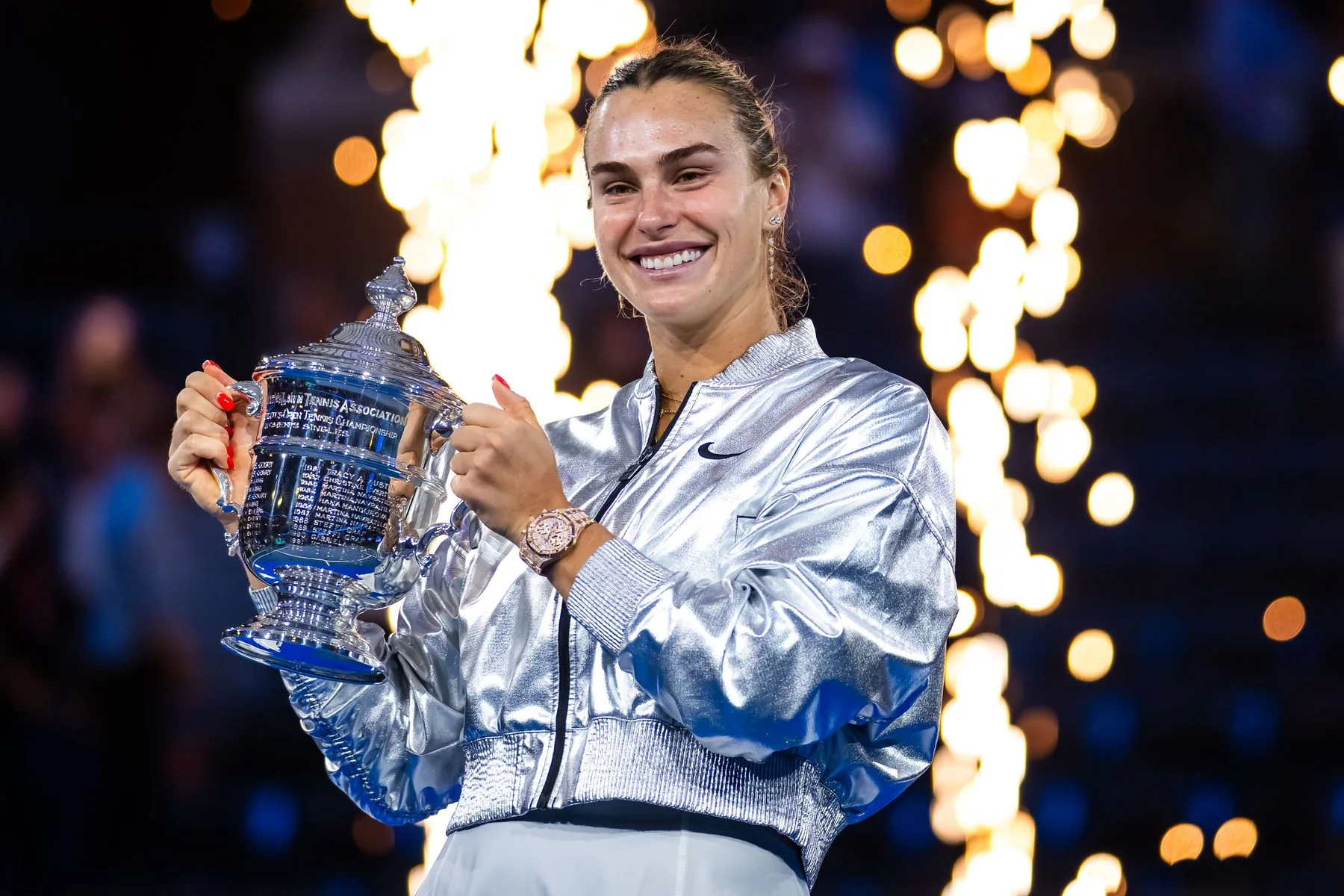
Sabalenka starts against Camila Osorio. Barbora Krejcikova could appear in the third round, followed by Diana Shnaider or Maja Chwalinska in the fourth. The projected quarterfinal is Linda Noskova, the 2026 Wimbledon champion. Noskova’s presence prevents us from calling the quarter easy. Her first serve and clean, compact groundstrokes can keep a power match on her terms, and she has already shown she can close against elite opposition: in June she beat Jessica Pegula 6-4, 4-6, 6-3 in the Berlin final and improved to 3-1 in that matchup.
The tactical hinge for Sabalenka is the quality of her first two shots. When the first serve creates a short return, her forehand can finish the point before a defender establishes shape. When the first-serve percentage falls, a composed returner can make her hit an extra ball and invite errors. Osorio’s movement, Krejcikova’s variety and Noskova’s pace present distinct versions of that problem. A successful three-peat requires adjustment rather than constant red-line hitting.
The second quarter is less settled. No. 3 Jessica Pegula and No. 7 Karolina Muchova are projected to meet in a replay of their 2024 US Open semifinal, won by Pegula. Elina Svitolina, Sorana Cirstea, Emma Navarro and 2021 finalist Leylah Fernandez add proven New York experience. Pegula’s early ball-striking can redirect Sabalenka’s pace without a long swing, while Muchova can disturb rhythm with changes of height, slice and net approaches. Either would make a more tactical semifinal than a pure baseline shootout.
Our top-half forecast: Sabalenka over Pegula in the semifinal. Sabalenka’s serve-plus-one pattern gives her the higher ceiling, but Pegula has the return timing to make the match close if she reaches it with fresh legs.
The women’s field is too deep to write these names into permanent slots. Check the women’s singles draw after every round; the value here is the matchup map, not a promise that seeds will obey it.
Women's bottom half: Rybakina, Swiatek and Gauff face the deeper maze
Coco Gauff has the most stable route through the bottom half, even though the greatest concentration of famous champions sits below her. The No. 4 seed enters on a six-match winning streak after beating Jessica Pegula 6-2, 6-4 for the Cincinnati title. She is projected to face No. 5 Mirra Andreeva in the quarterfinal and owns a 5-0 record in that matchup. Gauff’s speed and return pressure make Andreeva earn repeated clean attacks; that is a valuable structural edge, not a guarantee.
Her third quarter has more depth than the projected pairing implies. Amanda Anisimova can take time away with a compact backhand, while Iva Jovic, Alexandra Eala and Cincinnati semifinalist Sara Bejlek arrive with less expectation and enough aggression to disrupt a favorite. Gauff’s first-week test is second-serve protection. If double faults or short second deliveries give an opponent immediate forehands, her defensive skill may be spent recovering from a poor first strike rather than controlling the rally.
The fourth quarter is the heavyweight maze. No. 2 Elena Rybakina and No. 8 Iga Swiatek are projected to meet, but Belinda Bencic, Naomi Osaka and Madison Keys all have the first-strike quality to break that seed line. Swiatek wants to hold the baseline, take returns early and make opponents defend consecutive corners. Rybakina wants fewer neutral exchanges: a big serve, a deep next ball and a finish before Swiatek can impose movement patterns.
Fitness makes that theoretical quarterfinal especially uncertain. Rybakina retired against Swiatek in Cincinnati while trailing 4-1 after a left ankle problem affected her push-off on serve. Earlier in Toronto she had rallied past Gauff 5-7, 6-2, 6-2, evidence of how forceful her hard-court game is when her base is sound. Fans should watch the landing after her serve and her first recovery step, not just ace totals. Reduced leg drive can lower pace and leave the next ball exposed.
| Contender | Route advantage | Main risk |
|---|---|---|
| Gauff | Cincinnati momentum; 5-0 vs. Andreeva | Second-serve volatility |
| Rybakina | Serve can shorten every round | Left ankle response |
| Swiatek | Return position and baseline control | Multiple first-strike champions in quarter |
Our bottom-half pick is Gauff. Rybakina may have the more destructive peak, but current health uncertainty matters across seven rounds. Gauff’s return, movement and immediate form provide more ways through imperfect matches. Use the latest US Open results to test that judgment as soon as evidence replaces projection.
Our bracket picks, dark horses and upset alerts
Our champion picks are Carlos Alcaraz and Aryna Sabalenka. Alcaraz is the higher-variance call because of his four-month layoff; Sabalenka is the more stable call because her New York performance has held across multiple seasons. Alexander Zverev is our men’s finalist and the immediate replacement pick if Alcaraz’s wrist or match fitness looks compromised. Coco Gauff is our women’s finalist because the Cincinnati champion combines the cleaner quarter with elite return and defensive coverage.
| Draw | Champion pick | Finalist | Confidence | What breaks the pick |
|---|---|---|---|---|
| Men | Carlos Alcaraz | Alexander Zverev | Low-medium | Restricted forehand/serve or slow recovery after long matches |
| Women | Aryna Sabalenka | Coco Gauff | Medium | Second-serve exposure against a clean early returner |
Dark horses with a real route
Arthur Fils belongs above novelty-dark-horse status after winning Cincinnati and going 10-0 in deciding sets, but his first-round match with Stefanos Tsitsipas makes the route expensive from day one. Rafael Jodar is 36-14 in 2026 after reaching the Roland Garros quarterfinal and Montreal semifinal; his movement and lack of fear make him dangerous in Zverev’s section. On the women’s side, Washington champion Alexandra Eala and Cincinnati semifinalist Sara Bejlek have already beaten top-level opposition this summer. Eala defeated Pegula in the Washington final, while Bejlek beat Sabalenka and Keys in Cincinnati.
Opening-round alarms
Alcaraz-Safiullin is the obvious men’s alarm because their head-to-head is 1-1 and Safiullin reached Wimbledon’s fourth round this year. Gauff’s first meeting with Zeynep Sonmez is subtler: Sonmez reached the Australian Open third round after beating then-world No. 11 Ekaterina Alexandrova. An unfamiliar opponent with no head-to-head pattern can make a favorite spend a set solving pace and geometry.
A good bracket is a living forecast. After each day, replace reputation with evidence: first-serve percentage under pressure, second-serve points won, return depth, break-point creation, movement late in sets and recovery after long matches. Use the US Open schedule for the next test and the results page for completed evidence. If a pick survives for the wrong reasons—an opponent retires, or the serve repeatedly escapes break points—lower confidence even when the name advances.
Loading comments…