2023 US Open Winners and Results: Gauff and Djokovic's Title Runs
Complete 2023 US Open champions and final scores, with expert analysis of Coco Gauff's comeback and Novak Djokovic's title run.
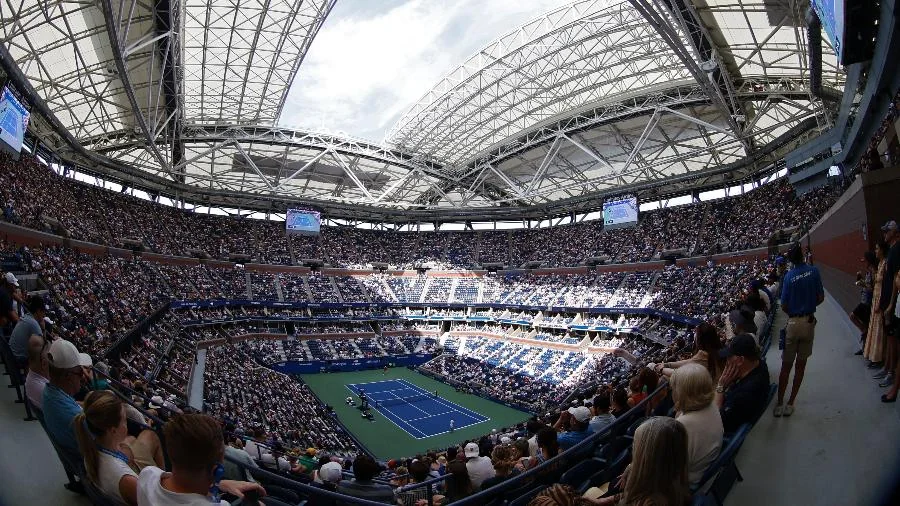
Complete 2023 US Open Champions and Final Scores
Coco Gauff and Novak Djokovic were the 2023 US Open singles champions. Gauff defeated Aryna Sabalenka 2-6, 6-3, 6-2, and Djokovic beat Daniil Medvedev 6-3, 7-6(5), 6-3. Those headline results belong beside three able-bodied doubles championships and six senior wheelchair championships. Keeping the events separate matters: each had its own draw, partners or classification, and competitive story.
| Event | Champion(s) | Runner(s)-up | Final score |
|---|---|---|---|
| Men's singles | Novak Djokovic | Daniil Medvedev | 6-3, 7-6(5), 6-3 |
| Women's singles | Coco Gauff | Aryna Sabalenka | 2-6, 6-3, 6-2 |
| Men's doubles | Rajeev Ram / Joe Salisbury | Rohan Bopanna / Matthew Ebden | 2-6, 6-3, 6-4 |
| Women's doubles | Gabriela Dabrowski / Erin Routliffe | Laura Siegemund / Vera Zvonareva | 7-6(9), 6-3 |
| Mixed doubles | Anna Danilina / Harri Heliovaara | Jessica Pegula / Austin Krajicek | 6-3, 6-4 |
Wheelchair champions
- Men's singles: Alfie Hewett def. Gordon Reid, 6-4, 6-3.
- Women's singles: Diede de Groot def. Yui Kamiji, 6-2, 6-2.
- Quad singles: Sam Schroder def. Niels Vink, 6-3, 7-5.
- Men's doubles: Stephane Houdet / Takashi Sanada def. Takuya Miki / Tokito Oda, 6-4, 6-4.
- Women's doubles: Kamiji / Kgothatso Montjane won by walkover after de Groot / Jiske Griffioen withdrew.
- Quad doubles: Schroder / Vink def. Andy Lapthorne / Donald Ramphadi, 6-1, 6-2.
In this notation, the number in parentheses gives the losing player's points in a standard set tiebreak. A walkover is different: the wheelchair women's doubles final was not played, so assigning a fictional score would turn a title record into misinformation. “Quad” identifies the wheelchair classification for athletes whose impairment affects at least three limbs; it is not another term for mixed doubles. Junior championships are also outside this senior list.
The table already hints at the tournament's range. Gauff and Sanada won first major titles in their respective disciplines. Djokovic and de Groot extended extraordinary major records. Ram and Salisbury completed a rare New York three-peat. The next four sections explain the decisions, pressure and history behind those results. During a live edition, use the site's US Open results page for current scores rather than this historical snapshot.
How Coco Gauff Turned Defense into Her First Major Title
Gauff's 2-6, 6-3, 6-2 comeback was not a story of waiting for Sabalenka to miss. It was a contest over how many high-quality attacks the incoming world No. 1 could sustain. Sabalenka broke three times in the first set because her return and first forehand repeatedly took the ball away from Gauff. The American's forehand shortened, her second serve sat up, and eight games were enough for the favorite's power to look overwhelming.
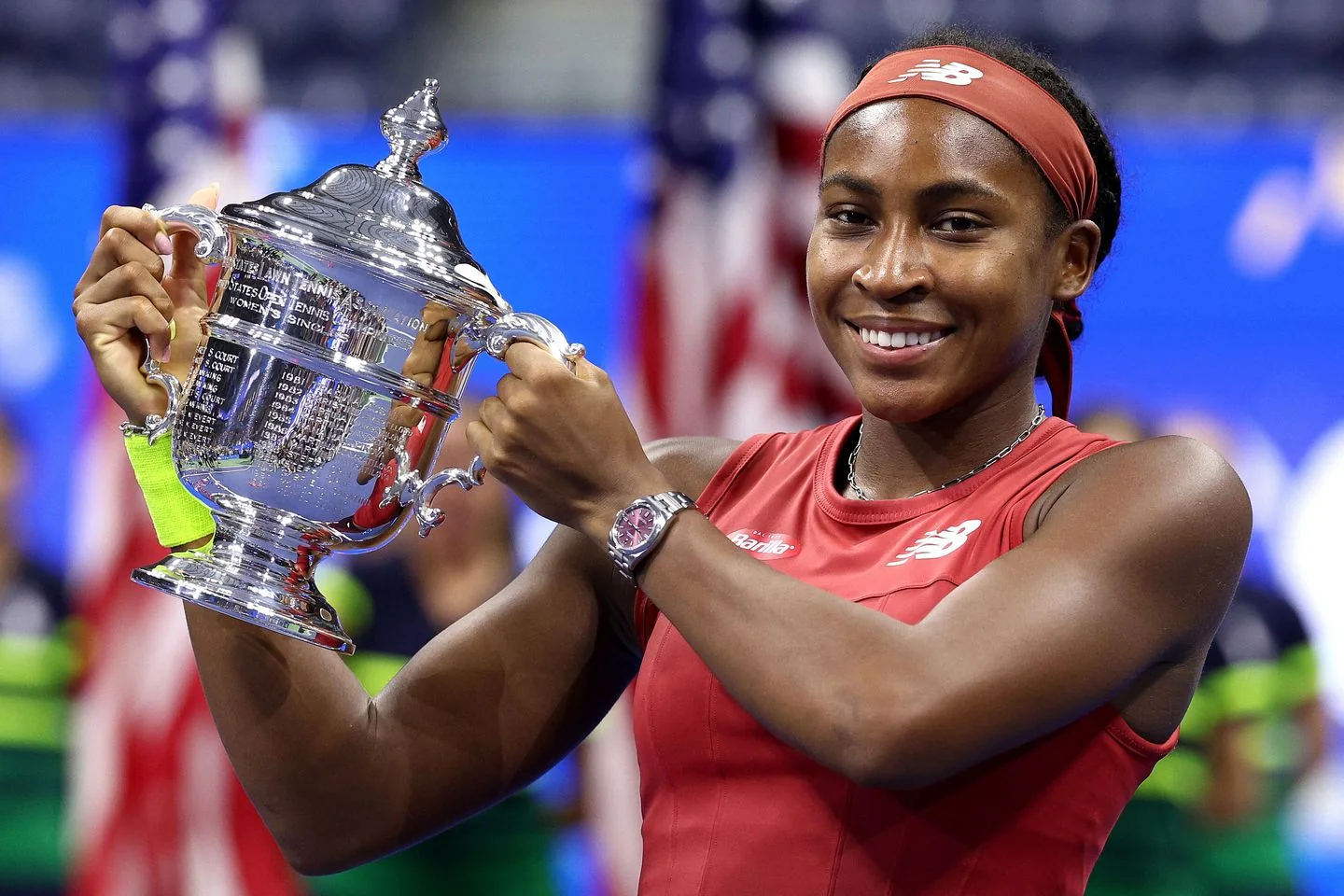
The reset began before the spectacular retrieving. Gauff saved two break points in the opening game of set two, avoiding an immediate repeat of the first-set pattern. She then sent more neutral balls deep through the middle instead of trying to beat Sabalenka's pace with a riskier angle. That choice reduced the Belarusian's open court, made her generate the next angle herself and gave Gauff a fraction more time to use the best court coverage in the match. When Gauff broke for 3-1, the scoreboard finally rewarded the tactical shift.
Defense became pressure because every extra retrieval asked Sabalenka a different technical question. One attack demanded an overhead, another a forehand while moving forward, the next a ball struck from behind the baseline. Sabalenka still produced 25 winners, but she also made 46 unforced errors. Gauff's line—13 winners and 19 unforced errors—looks modest only if tennis is judged as a clean-hitting exhibition. In the deciding set she made five winners against just two unforced errors while sprinting into positions that turned apparent winners into another swing.
Opening problem
3 breaks
Sabalenka repeatedly attacked Gauff's serve in set one.
Turning run
9 of 11 games
From 1-1 in set two to a 4-0 deciding-set lead.
Third set
2 errors
Gauff's unforced-error total when the title was decided.
The route had trained her for that discomfort. Four of Gauff's seven matches went three sets. She came from a set down against Laura Siegemund and Elise Mertens, then navigated a three-set fourth round with former No. 1 Caroline Wozniacki before repeating the comeback against Sabalenka. That sequence is more instructive than calling her simply “clutch.” She had encountered net rushing, changes of pace and first-strike power, and learned that the match did not need to feel clean for her legs, backhand and competitive patience to remain reliable.
The editor's read
Sabalenka's error count belongs in the explanation, but not as an excuse that erases Gauff. Depth, speed and scoreboard pressure altered the difficulty of the next shot. Gauff won by making a power player reproduce precision until precision cracked.
At 19, Gauff became the first American teenager to win the US Open women's title since Serena Williams did it at 17 in 1999. The comparison identifies historical company, not identical games or careers. This was Gauff's own method: absorb the first strike, improve the next ball, and attack once the geometry changed. Fans can follow each opponent and score in the site's US Open draw, where the four deciding sets make the championship's resilience visible.
How Novak Djokovic Reversed the 2021 Final Against Daniil Medvedev
Djokovic's 6-3, 7-6(5), 6-3 victory was called revenge for 2021, but the useful comparison is tactical rather than emotional. Two years earlier, Medvedev's deep return position, flat counterpunching and refusal to miss had smothered a visibly burdened Djokovic one win short of a calendar Grand Slam. In 2023, Djokovic did not try to prove he could outlast the same wall indefinitely. He broke in his first return game, established a 3-0 lead and kept looking for ways to make Medvedev defend closer to the baseline or pass from far behind it.
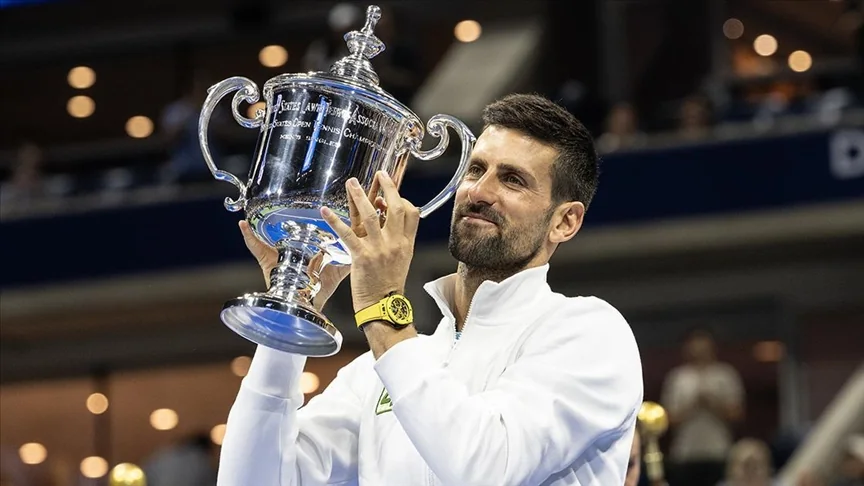
The first set showed the clean version of that plan. Djokovic served into locations that prevented Medvedev from taking a full cut, then attacked the open space before the Russian could settle into his preferred long exchanges. He also served and volleyed five times, winning four. That was not nostalgia for an older style. Medvedev's return position often left him near the back wall, so Djokovic used the distance against him: a controlled first volley could land before the returner recovered enough court to create a comfortable passing angle.
The 104-minute second set tested whether the plan would survive fatigue. The final contained 54 points of nine or more shots, and through two sets Medvedev led those extended rallies 26-18. Djokovic fell to the court after a 31-shot exchange at 3-3, visibly paying for every change of direction. Instead of pretending his legs were fresh, he shortened the problem. He won all 11 serve-and-volley points he tried in the set, mixed in drop shots and continued forward even when an imperfect approach risked a pass.
The point that protected No. 24
At 6-5, Medvedev held set point and saw a backhand passing lane. He chose crosscourt rather than down the line; Djokovic reacted at net and put the volley into the open court. The tiebreak followed. One brave reflex did not decide the whole match, but it preserved the two-set margin that made Medvedev's attrition far harder to sustain.
The numbers confirm how far Djokovic moved from a baseline-only contest. He won 84% of 44 net approaches—more approaches than he had made across his quarterfinal and semifinal combined. Medvedev eventually broke once in the third set, but Djokovic broke back and again denied him a lasting foothold. The straight-sets score therefore conceals a match that almost changed shape in set two. Win that set and Medvedev owns momentum; lose it after 104 minutes and he must climb through three more sets against the sport's most experienced major closer.
Djokovic had already demonstrated survival in round three, recovering from two sets down to beat Laslo Djere 4-6, 4-6, 6-1, 6-1, 6-3. The final required a different kind of recovery: adapting inside points before the scoreboard became desperate. At 36 he became the oldest US Open men's champion, earned a fourth New York crown and reached 24 major singles titles. Those records matter, but the editorial verdict is more precise. Longevity remained possible because his tennis was not frozen. He answered an opponent built for long hard-court rallies with return pressure, first-strike direction and 44 trips forward. Fans can compare championship matchups on the site's US Open finals hub.
Doubles, Mixed Doubles and Wheelchair Winners
Ram and Salisbury's 2-6, 6-3, 6-4 comeback shows why a settled partnership can survive an ugly opening set. Bopanna and Ebden returned aggressively and controlled the front court early, but the defending champions did not treat one broken pattern as a reason to reinvent every role. They improved first serves, tightened the space around the middle and made the challengers pass under greater pressure. A third consecutive US Open men's doubles title followed—the first New York men's three-peat since Tom Okker and Marty Riessen from 1970 through 1972.
The women's champions represented the opposite partnership timeline. Dabrowski and Routliffe were playing only their fourth tournament together and arrived with a 4-3 team record. They beat three higher-seeded pairs, including 2020 champions Siegemund and Zvonareva in the final. No team broke serve in the opener; Dabrowski and Routliffe then saved two set points in a tense tiebreak before taking it 11-9. Their 7-6(9), 6-3 victory was each player's first women's doubles major, evidence that quick chemistry can work when return assignments and net movement are communicated clearly.
Danilina and Heliovaara formed even later, joining at the sign-in deadline, yet beat top seeds Pegula and Krajicek 6-3, 6-4 for a first major title apiece. The result was not a lottery-ticket pairing. Both were established doubles players, and their complementary positioning appeared immediately: Heliovaara's serve created the first short ball; Danilina's closing volley ended the championship. The upset made Heliovaara the first Finnish man and Danilina the first Kazakh player to win a US Open mixed doubles title in the Open Era.
Partners, then opponents
Hewett beat regular doubles partner Reid 6-4, 6-3 for his fourth US Open wheelchair singles crown. In quad, Schroder beat doubles partner Vink 6-3, 7-5, one day after they secured a third consecutive New York doubles title together.
Dynasties and firsts
De Groot's 6-2, 6-2 win over Kamiji delivered a sixth straight US Open and third straight calendar Grand Slam. Houdet's 20th major doubles title came beside Sanada's first, a striking partnership of accumulated craft and breakthrough belief.
The wheelchair doubles finals reinforced that range. Houdet and Sanada defeated Miki and Oda 6-4, 6-4 after eliminating top seeds Hewett and Reid in the semifinal. Schroder and Vink broke serve eight times in an emphatic 6-1, 6-2 quad final against Lapthorne and Ramphadi. Kamiji and Montjane received the women's doubles title by walkover when Griffioen withdrew from the scheduled final with de Groot. That last result should be recorded without a score: no championship match was played.
These events reward skills that singles coverage can obscure—poaching cues, shared return lanes, communication after a missed ball and the ability to compete against a partner a day later. The 2023 honor roll includes enduring teams, emergency combinations and rivals who could switch from collaboration to opposition overnight. None is adequately summarized as “also won doubles.” The site's US Open results hub keeps those draws and classifications separate during current tournaments, which is the right way to read their achievements.
What the 2023 US Open Results Mean in Context
The easy headline is a 19-year-old breakthrough followed by a 36-year-old masterwork. The better interpretation is that elite tennis can reward opposite career phases at the same event. Gauff arrived with a first major still to prove and learned inside four deciding sets. Djokovic arrived with almost every record already attached to his name and still changed his court position to solve Medvedev. One title announced a new American champion; the other showed why longevity requires continuous tactical editing.
Breakthrough: Gauff at 19
She became the first American teenage women's champion in New York since Serena Williams in 1999 and rose to a then-career-high No. 3. The title converted years of public expectation into a result without pretending her game was finished.
Endurance: Djokovic at 36
His 24th major completed a season of three major titles. He became the first man to win three majors in one year four separate times, then finished as the oldest year-end ATP No. 1 and did so for a record eighth time.
Gauff's victory also landed during the 50th anniversary of equal prize money at the US Open. The historical numbers prevent the milestone from becoming vague branding. Billie Jean King earned $10,000 for winning in 1972 while men's champion Ilie Nastase received $25,000. In 1973, after King's campaign and pressure for change, the US Open became the first major to pay men and women equally, with each singles champion receiving $25,000. In 2023, King presented Gauff with the trophy and both singles champions earned $3 million.
That ceremony did not hit a forehand for Gauff, and it should not be used to turn sport into a predetermined parable. It supplied the institutional stage on which her result acquired extra resonance: a Black American teenager winning her home major, receiving the same champion's prize as Djokovic, at a tournament publicly measuring fifty years of policy change. The competitive achievement remains hers—the depth under pressure, the recovery after a lopsided first set, the disciplined deciding set. History explains why the scene traveled beyond a scoreline.
How a fan should read 2023
- Start with the score: it establishes who won and whether a comeback occurred.
- Add the route: Gauff's four three-setters and Djokovic's Djere escape reveal accumulated strain.
- Identify the adjustment: defense became pressure for Gauff; net play shortened attrition for Djokovic.
- Keep event labels intact: singles, doubles, mixed and wheelchair classifications carry different records.
The wider honor roll strengthens that reading. Ram and Salisbury's three-peat was sustained partnership excellence. De Groot's third consecutive calendar Grand Slam was a dynasty operating alongside, not beneath, the able-bodied draws. Sanada, Routliffe, Dabrowski, Danilina and Heliovaara reached new major milestones through different partnership histories. The 2023 US Open mattered because several clocks ran at once: first titles, defended territory, revived matchups and record totals. More tournament history and editorial analysis is available in the site's US Open blog.
Loading comments…