2021 US Open Winners and Results: Raducanu and Medvedev's Historic Runs
Complete 2021 US Open champions and final scores, plus expert analysis of Emma Raducanu's and Daniil Medvedev's historic title runs.
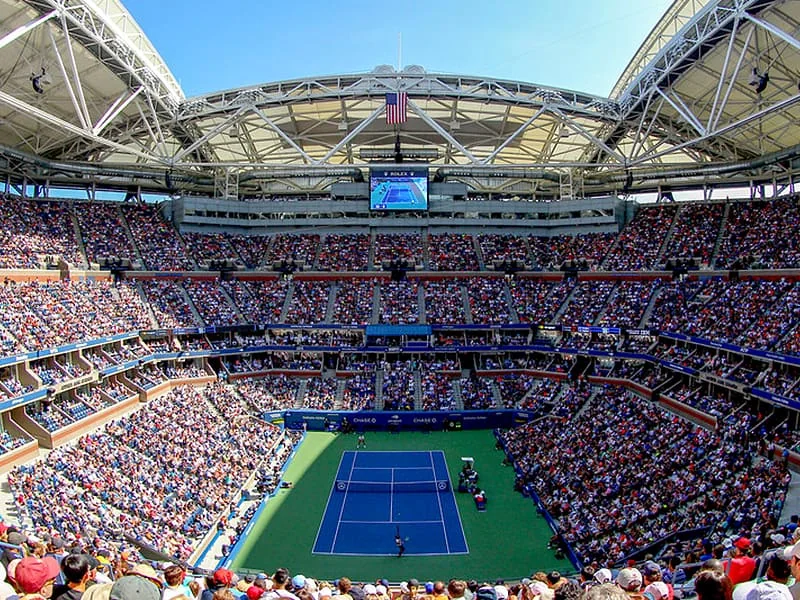
Complete 2021 US Open Champions and Final Results
The two headline 2021 US Open tennis winners were Emma Raducanu and Daniil Medvedev, and each collected a first major singles title. Raducanu defeated Leylah Fernandez 6-4, 6-3 in the women's final. Medvedev beat Novak Djokovic 6-4, 6-4, 6-4 in the men's final. Those scorelines are the quickest answer to the search, but they capture only part of a championship weekend that also crowned three doubles teams and six senior wheelchair champions.
| Event | Champion(s) | Runner(s)-up | Final score |
|---|---|---|---|
| Men's singles | Daniil Medvedev | Novak Djokovic | 6-4, 6-4, 6-4 |
| Women's singles | Emma Raducanu | Leylah Fernandez | 6-4, 6-3 |
| Men's doubles | Rajeev Ram / Joe Salisbury | Jamie Murray / Bruno Soares | 3-6, 6-2, 6-2 |
| Women's doubles | Samantha Stosur / Zhang Shuai | Coco Gauff / Caty McNally | 6-3, 3-6, 6-3 |
| Mixed doubles | Desirae Krawczyk / Joe Salisbury | Giuliana Olmos / Marcelo Arevalo | 7-5, 6-2 |
The wheelchair competition had three singles divisions and three doubles divisions. Shingo Kunieda retained the men's singles title by beating Alfie Hewett 6-1, 6-4. Diede de Groot defeated Yui Kamiji 6-3, 6-2 in women's singles, while Dylan Alcott beat Niels Vink 7-5, 6-2 in quad singles. De Groot and Alcott completed the rare Golden Slam—all four majors plus Paralympic singles gold in the same calendar year—so these results belong in the main historical account, not in a footnote.
Wheelchair doubles champions
- Men: Alfie Hewett / Gordon Reid def. Gustavo Fernandez / Shingo Kunieda, 6-1, 6-2.
- Women: Diede de Groot / Aniek van Koot def. Yui Kamiji / Jordanne Whiley, 6-1, 6-2.
- Quad: Sam Schroder / Niels Vink def. Dylan Alcott / Heath Davidson, 6-3, 6-2.
Two labels prevent common misreadings. Raducanu was a qualifier, which means she won three qualifying matches before the seven-round main draw; it does not mean the final itself was a qualifying match. And “mixed doubles” is a separate able-bodied event from the wheelchair quad division: in quad tennis, the classification relates to functional impairment, not player gender. Junior results are outside this senior-results guide. With the categories straight, the 2021 honor roll reveals its real scale: breakthrough singles champions, established doubles specialists and three distinct strands of wheelchair history all converged in one New York fortnight. For live editions of the tournament, use the site's US Open results hub.
Emma Raducanu's Ten-Match Run from Qualifying to the Trophy
Raducanu's championship cannot be understood as an ordinary seven-match major. Ranked No. 150, the 18-year-old first had to win three qualifying rounds simply to enter the 128-player main draw. She then won seven more matches and all 20 sets she played. No qualifier, woman or man, had previously won a major singles title. She did it without even being pushed to a tiebreak and surrendered 50 games across the full ten-match journey—16 in qualifying and only 34 in the main draw.
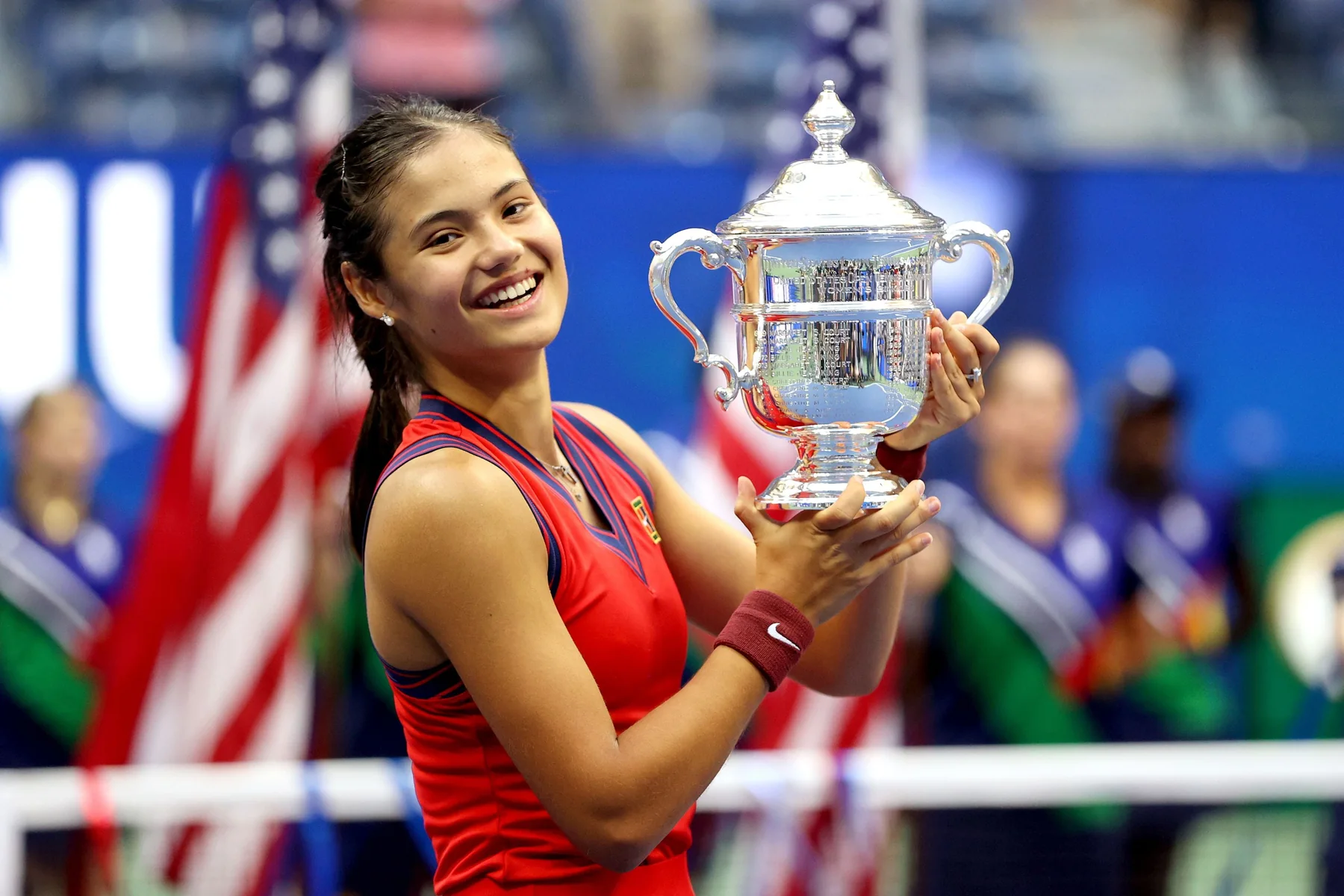
The efficiency came from repeatable geometry. Raducanu met the ball early, especially on return, and redirected pace before opponents could recover toward the center. Her backhand could change direction without a large preparation, while her forehand was most dangerous when she took it inside the baseline. That court position shortened points, but the more important benefit was psychological: opponents rarely received a neutral rally after a soft second serve. Raducanu was not merely hitting hard; she was continually removing reaction time.
The final against Leylah Fernandez was tighter than 6-4, 6-3 may look. Fernandez erased an early break in the first set and moved ahead by a break in the second. Raducanu answered immediately, then broke for 4-2 after reading a forward move and threading a forehand pass. At 5-3, a sliding lunge left her knee bleeding and required a medical timeout on break point. She returned, saved the danger and finished the championship with an ace. That sequence distilled the run: disruption arrived, but it never altered her next-point routine.
Matches
10-0
Three in qualifying, seven in the main draw.
Sets
20-0
No deciding set and no tiebreak required.
Ranking
150 → 23
The title transformed her place in the game.
Fernandez deserves equal respect for the difficulty of her route. The 19-year-old defeated Naomi Osaka, Elina Svitolina and Aryna Sabalenka—then ranked the No. 3, No. 5 and No. 2 seeds—in consecutive rounds, repeatedly surviving three-set pressure. The final was therefore not an established favorite against a lucky outsider; it was an all-teen contest between two different kinds of competitive momentum. Fernandez thrived in turbulence. Raducanu denied turbulence the chance to form. That distinction is why a fan watching the run back should notice the spaces between the spectacular winners: the early contact, centered recovery and calm score management were the real foundation of the fairytale. The current US Open draw hub shows how qualifying feeds into the seven-round bracket.
How Daniil Medvedev Stopped Novak Djokovic's Calendar Slam
Djokovic arrived at the men's final one victory from winning the Australian Open, Roland Garros, Wimbledon and the US Open in the same season. No man had completed that calendar-year Grand Slam since Rod Laver in 1969. A 21st major would also have moved Djokovic ahead of Roger Federer and Rafael Nadal at the time. Medvedev did not survive that history; he took control of it, breaking in the first game and winning 6-4, 6-4, 6-4 in two hours and 15 minutes.
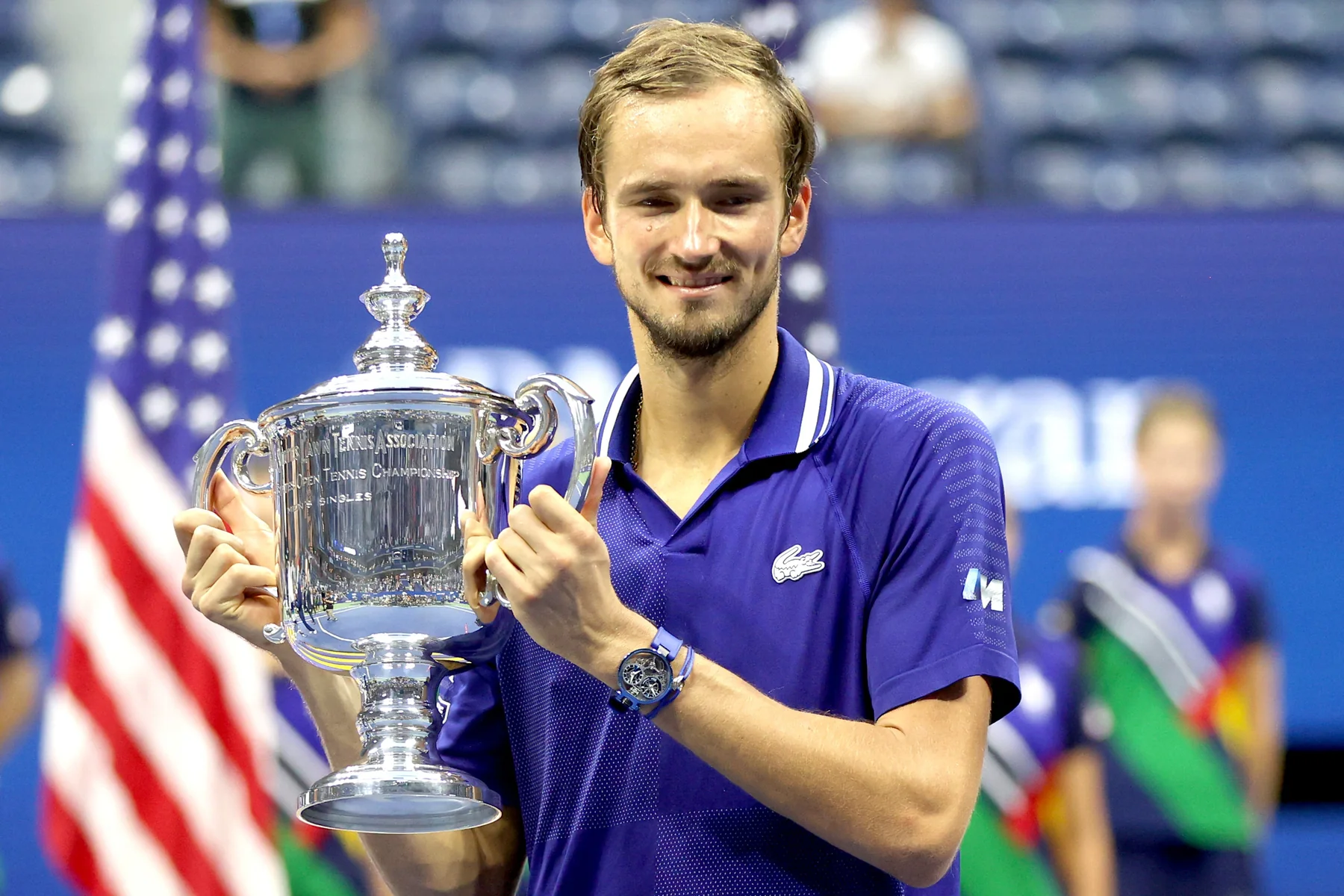
The serve created the platform. Medvedev won 41 of 51 first-serve points and 58% behind his second delivery; Djokovic won the same 80% of first-serve points but only 40% on seconds. That gap meant Djokovic faced pressure whenever his first ball missed, while Medvedev could withstand return games that might otherwise have changed the match. He saved five of six break points. The most revealing escape came early in the second set, when Djokovic reached 0-40 but could not convert. Medvedev followed a backhand line winner with a heavy serve during the next danger game, and the window closed.
His familiar return position, several meters behind the baseline, was an aggressive choice expressed through space. From there he could make a full swing, absorb the serve and send a low, deep ball back through the middle. Once rallies began, his unusually flat strokes and long reach kept Djokovic from opening sharp angles. The Serbian came forward 47 times—far more than Medvedev's 12—but that was partly a symptom of being denied comfortable baseline control. Medvedev finished with 38 winners against 31 unforced errors; Djokovic's line was 27 and 38.
Final pressure numbers
Medvedev saved 5 of 6 break points and converted 4 of 8. Djokovic saved 4 of 8 and converted only 1 of 6. In a straight-sets score with one break separating each set, those points were the match.
There was still a final emotional examination. Serving at 5-2 in the third, Medvedev double-faulted on championship point, was broken for the first time and then double-faulted on another match point at 5-3. The Arthur Ashe Stadium crowd sensed a comeback. He reset and served it out on the next opportunity. That composure mattered because Djokovic had already won five consecutive matches in New York after dropping the opening set; opponents had learned that a lead against him was not the same as a finish. Medvedev allowed no fourth set and lost only one set in the entire tournament.
This was not a Golden Slam denial. Djokovic had lost in the Tokyo Olympic semifinals, so the live pursuit in New York was the calendar-year Grand Slam. The precise term makes the achievement clearer, not smaller. Medvedev stopped a 27-match major winning streak, prevented the first men's sweep in 52 years and became the third Russian man to win a major. The straight-set score was emphatic, but the deeper lesson was tactical discipline under historical noise: serve to locations, return for depth, refuse low-percentage changes and make a legendary closer play every extra ball. The site's US Open finals hub is the practical companion for the current championship matches.
Doubles, Mixed Doubles and Wheelchair Champions
The supporting finals were not filler around the singles show. Joe Salisbury left New York with two trophies, first partnering Rajeev Ram in men's doubles and then Desirae Krawczyk in mixed. Ram and Salisbury lost the opening set to Jamie Murray and Bruno Soares after being broken twice, but they did not chase a wholesale tactical change. Their serve-and-first-volley patterns became cleaner as the light shifted across Arthur Ashe Stadium, and they broke four times across the final two sets. A line of 52 winners, 10 aces and 14 unforced errors explains the 3-6, 6-2, 6-2 reversal better than the word “comeback” alone.
Salisbury's 7-5, 6-2 mixed victory with Krawczyk was a different exercise. The champions did not drop serve and saved five break points, controlling the first set until they could break Giuliana Olmos at 5-5. Krawczyk thereby won her third mixed doubles major of 2021—Roland Garros and the US Open with Salisbury, Wimbledon with Neal Skupski. Salisbury became the first man since Bob Bryan in 2010 to win the men's and mixed titles at the same US Open. Even the runners-up made history: Marcelo Arevalo became the first man from Central America to contest a major final.
Samantha Stosur and Zhang Shuai brought the most patient piece of problem-solving. Coco Gauff and Caty McNally forced a third set with their speed and instinct at net, but the veteran pair rebuilt control through heavier first balls and clearer ownership of the middle. Their 6-3, 3-6, 6-3 win delivered a second major together after the 2019 Australian Open. For fans accustomed to singles, that match is a reminder that doubles momentum can turn on positioning before it turns on shot quality: half a step closer to net or one poach threat can change both opponents' targets.
Three different wheelchair milestones
- Diede de Groot: women's singles champion and women's doubles champion; her singles victory completed all four majors plus Paralympic gold in 2021.
- Dylan Alcott: quad singles champion and the other 2021 Golden Slam winner, achieved by beating 18-year-old Niels Vink in the New York final.
- Alfie Hewett and Gordon Reid: the first men's wheelchair doubles team to sweep all four majors in a calendar year.
Those labels should remain exact. De Groot and Alcott completed Golden Slams because their four major singles trophies were joined by Paralympic gold. Hewett and Reid completed the calendar Grand Slam in men's doubles; they had earned silver at the Tokyo Paralympics, so “Golden” does not apply. Meanwhile, Kunieda's 6-1, 6-4 win over Hewett was his eighth US Open men's wheelchair singles crown and 25th major singles title. Sam Schroder and Vink won quad doubles, while De Groot and Aniek van Koot won women's doubles. Taken together, the non-singles competitions made 2021 one of the densest championship weekends in US Open history: established partnerships solved tactical problems, individual greats extended records, and two athletes reached a five-event standard that wheelchair tennis had never seen. Event-by-event updates are organized on the results page.
Why the 2021 US Open Still Matters
The 2021 tournament remains vivid because it joined radically different kinds of pressure. Raducanu faced the unknown: every round extended a run no qualifier had ever completed. Medvedev faced someone else's history: most of Arthur Ashe Stadium wanted to see Djokovic finish the calendar Slam. De Groot and Alcott carried season-long Golden Slam pursuits from Tokyo to New York with only days to recover. Hewett and Reid had a four-major sweep at stake. The champions did not solve one shared problem; they showed several ways elite tennis players make a huge occasion playable.
It also restored the sound that defines the US Open. The 2020 tournament had been completed without spectators because of the pandemic. In 2021, fans returned to the Billie Jean King National Tennis Center, and the late stages repeatedly became conversations between court and crowd. Fernandez drew energy from turbulence. Djokovic received an emotional surge as Medvedev tried to close. Raducanu narrowed her attention after a medical interruption. That atmosphere is more than background color. New York rewards players who can use noise without surrendering their decision-making to it.
Breakthrough did not mean the same thing
Raducanu won her first tour-level title in only her second major main draw. Medvedev, by contrast, was already world No. 2 and had lost two major finals. One arrived almost without a public résumé; the other converted years of hard-court excellence into the missing trophy.
History extended beyond singles
The two wheelchair Golden Slams and the men's wheelchair doubles sweep were not parallel trivia. They were central competitive achievements, compressed by the four-day turnaround from the Paralympics to New York.
For a fan revisiting results, four questions make the scores more useful. First, how difficult was the route? Fernandez's three seeded giants and Djokovic's repeated four- and five-set recoveries matter. Second, was the winning pattern repeatable? Raducanu's 20 straight sets and Medvedev's one lost set say yes. Third, what happened on pressure points? Medvedev saved five of six break chances; Krawczyk and Salisbury saved all five they faced. Fourth, which event and record are being discussed? A calendar Grand Slam, Golden Slam and career Grand Slam are different achievements, as are mixed doubles and quad wheelchair tennis.
That framework guards against two lazy summaries. The women's title was not simply a fairy tale: Raducanu produced sustained technical clarity over ten matches, while Fernandez beat a sequence of the game's best players. The men's final was not simply Djokovic feeling history: Medvedev served, returned and defended with enough quality to deny him solutions. Likewise, the wheelchair champions were not an inspiring sidebar; they set competitive standards that had never been reached in their sport.
The lasting image of 2021 is therefore not one trophy pose. It is a tournament in which possibility widened while standards stayed severe. A qualifier could win 20 straight sets. A world No. 2 could refuse the role of supporting actor in a calendar-Slam ceremony. Two wheelchair singles champions could complete Golden Slams hours apart. Doubles specialists could turn teamwork into records of their own. Read with that breadth, the 2021 US Open winners and results still explain why New York is tennis's most volatile major: the city amplifies a story, but the player must still find the court through all the noise. More historical and tactical guides live in the US Open blog.
Loading comments…