Elena Rybakina Wins the 2026 US Open: Final Score, Match Analysis and Sabalenka Reaction
Elena Rybakina won her first US Open title in three sets over Aryna Sabalenka. Here is the verified score, decisive data, tactical story and both finalists' reactions.
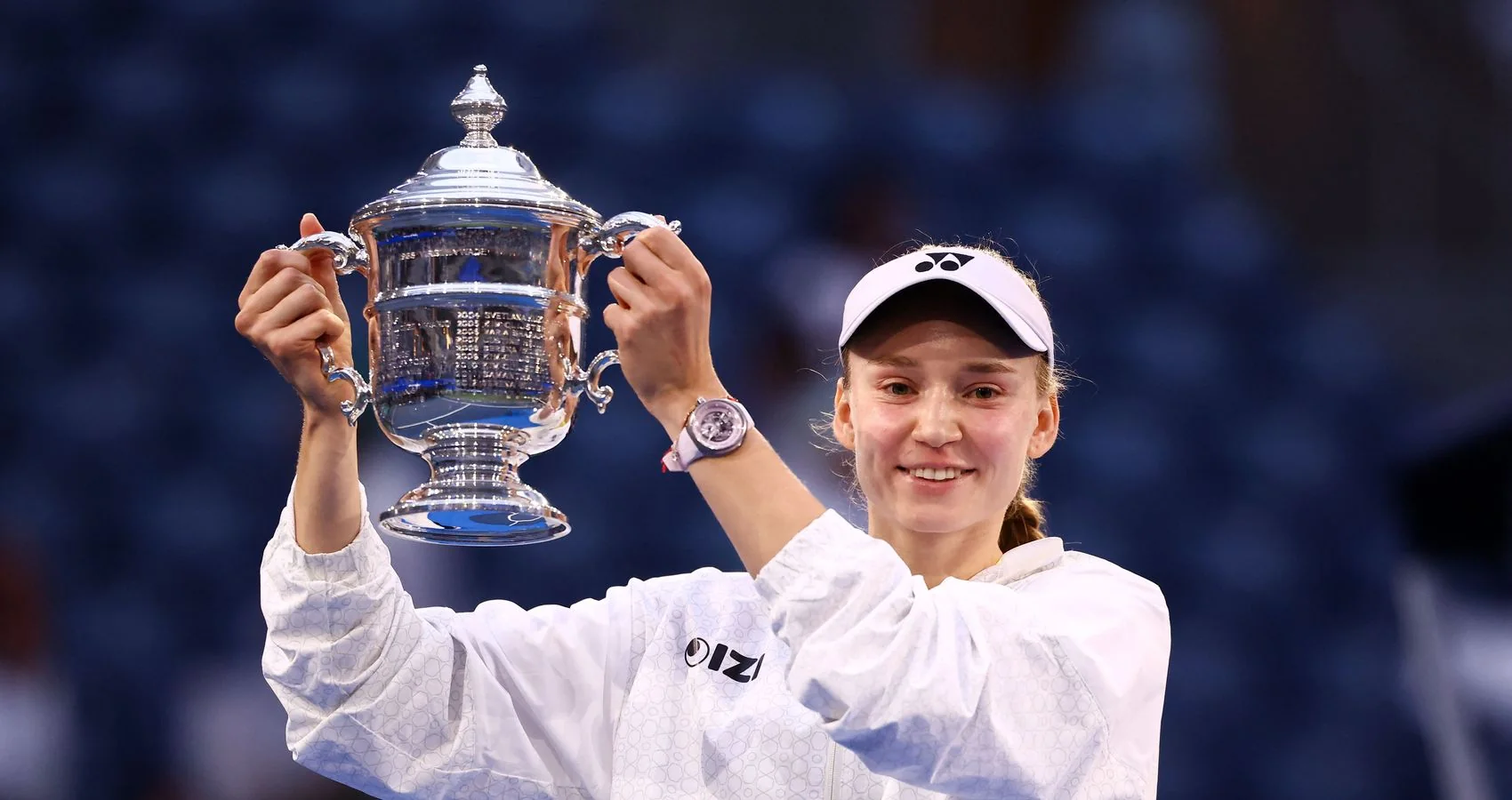
Elena Rybakina is the 2026 US Open women’s singles champion after defeating Aryna Sabalenka 6-4, 5-7, 6-2 in 2 hours and 21 minutes. Her first New York title is the third major of her career and completes a 2026 sweep of the Australian Open and US Open women’s trophies.
This analysis uses the WTA’s finished match record and completed-final reporting available through September 12, 2026 at 10:00 p.m. EDT. It separates the title result from the ranking timeline: Rybakina had already secured the next world No. 1 ranking before the final began.
Elena Rybakina’s 2026 US Open Final Result at a Glance
Elena Rybakina defeated Aryna Sabalenka 6-4, 5-7, 6-2 to win the 2026 US Open women’s singles title. The final finished on Saturday, September 12, inside Arthur Ashe Stadium after 2 hours and 21 minutes. It was Rybakina’s first championship in New York and the third Grand Slam singles title of her career.
Champion
Elena Rybakina
6-4, 5-7, 6-2
Runner-up
Aryna Sabalenka
Two-time defending champion
Match time
2 hours, 21 minutes
Three completed sets
Stage and venue
Women’s singles final
Arthur Ashe Stadium, New York
This page treats the championship as a completed result. The score and match statistics come from the WTA’s finished match record, while the tournament narrative is checked against the WTA’s final report and independent wire coverage. The three-set score matters because Sabalenka did answer Rybakina’s opening-set win; this was not a straight-sets dismissal disguised by a compressed headline. Readers who arrived from a live-score search can use our US Open results hub for the wider tournament picture or the US Open finals page for championship-round context.
Rybakina’s victory also ended a formidable title defense. Sabalenka entered the night trying to become the first woman since Serena Williams to win three consecutive US Opens, and she carried a 19-match winning streak at this tournament. Rybakina stopped both runs, but the ranking story needs one important qualification: she had already secured the next world No. 1 ranking before walking onto court for the final. The trophy crowned that rise; the final itself was not the match that mathematically clinched it.
For Rybakina, the title joins Wimbledon 2022 and the 2026 Australian Open on her major résumé. It also gives her a major on grass and two on hard courts, a much broader achievement than a single hot fortnight. The Elena Rybakina player page tracks her US Open record, while the sections below explain how she won this final: surviving a low first-serve percentage, creating far more return pressure and resetting immediately after Sabalenka forced a third set.
How the Final Swung Across Three Sets
The scoreline describes a competitive final, but it does not show how abruptly the pressure moved. Rybakina won the first set despite landing unusually few first serves. Sabalenka took the second with one late break. Rybakina then made the deciding set feel entirely different by holding with authority and getting on top of the return games early.
Rybakina Won the First Set Without Her Best First Serve
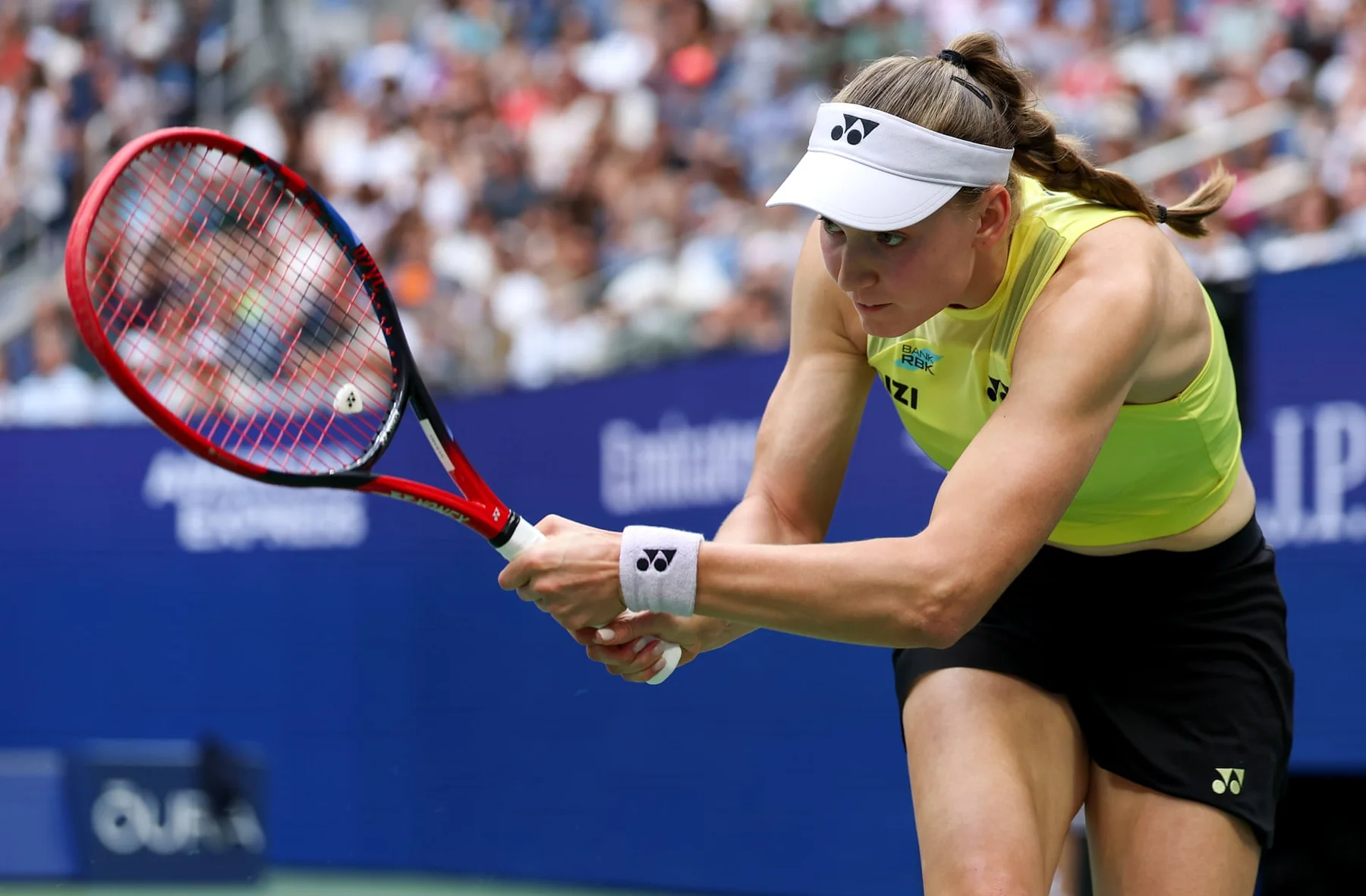
Rybakina landed only 27% of her first serves in the opening set, according to the WTA’s match report. That number would usually invite an elite returner to step inside the court and dictate. Instead, Rybakina kept the scoreboard moving because the rest of her first-strike game stayed clean. CBS recorded six winners and no unforced errors from her through the first six games. She was not waiting for a perfect serving day; she was making useful first shots from imperfect starting positions.
The first separation came when Rybakina broke for 3-2. From there, she protected the advantage rather than chasing a spectacular second break. Her second serve survived well enough, and her flatter groundstrokes prevented Sabalenka from consistently turning neutral balls into attacking forehands. The 6-4 set therefore carried an important warning: first-serve percentage alone was not measuring who controlled the first two shots of the rally.
Sabalenka Forced the Decider With a Late Return Surge
The second set was less a long Sabalenka takeover than a contest she solved at the last possible moment. Rybakina raised her first-serve rate to 61%, yet she could not turn either of her two break points into a lead. Both players held through 5-5, so one sharp return game was always likely to decide whether the match ended in two sets or continued.
At 6-5, Sabalenka finally found that game. She applied more immediate pressure to the serve and closed the set with a backhand return winner, taking it 7-5. That shot mattered tactically as well as emotionally: it rewarded her for continuing to look for the first aggressive position even when Rybakina had made more first serves. It also stopped Rybakina from serving her way through a set in which her return opportunities had gone unused.
The decider was deserved, but the late timing is crucial. Sabalenka had not established a broad return advantage across the entire set. She concentrated her best returning into the twelfth game. Rybakina therefore entered the third needing a reset, not a complete reconstruction of her game.
Rybakina Took Control Immediately in the Third
Rybakina’s response was the clearest stretch of the final. She lost only three points on serve in the deciding set, according to CBS, and broke Sabalenka for 2-1. That early lead changed the geometry of the match. Rybakina could strike freely behind her serve, while Sabalenka had to protect every service game knowing there was little space on return.
The leader never gave the break back. Rybakina created another opening at 5-2, converted it, and then reached match point with the championship already in her hands on serve. Her 12th ace ended the contest—a precise final image for a set in which Sabalenka could no longer touch enough service points to build sustained pressure.
Seen in sequence, the women’s draw ended with three distinct contests: Rybakina’s resourceful opening set, Sabalenka’s late second-set strike and Rybakina’s dominant service reset. The finals page records the destination; those changes in serve-and-return control explain the route.
The Serve and Return Numbers That Decided the Final
Rybakina did not win because every serving metric looked better. She won because the points that followed her serve were substantially more effective, and because her return games generated repeated pressure. The official WTA box score makes that distinction visible.
Why Rybakina’s 47.1% First-Serve Rate Was Misleading
Rybakina put only 41 of 87 first serves in play, a 47.1% rate. Sabalenka landed 62 of 106, or 58.5%. Read alone, that comparison suggests Sabalenka owned the safer service platform. Read with the points won, it says almost the opposite. Rybakina won 85.4% of points behind her first serve, compared with Sabalenka’s 69.4%, and she also led 58.7% to 50.0% behind the second serve.
| Official match statistic | Rybakina | Sabalenka |
|---|---|---|
| Aces / double faults | 12 / 5 | 6 / 3 |
| First serves in | 41/87 (47.1%) | 62/106 (58.5%) |
| First-serve points won | 35/41 (85.4%) | 43/62 (69.4%) |
| Second-serve points won | 27/46 (58.7%) | 22/44 (50.0%) |
| Break points converted | 3/12 | 1/3 |
| Total points won | 103/193 (53.4%) | 90/193 (46.6%) |
Even with five double faults, Rybakina won 71.3% of all her service points; Sabalenka won 61.3%. She also struck twice as many aces, 12 to six. So 47.1% was a real imperfection, not a fake statistic—but it measured how often the first serve landed, not the damage it did when it landed or how well the second serve held up.
The denominators add another clue. Sabalenka had to play 106 service points, 19 more than Rybakina. That difference grew from longer and more frequently contested service games. Raw point counts should not be compared as though both women served the same number of times, but the extra workload reinforces the pattern: Sabalenka spent more of the match defending her delivery.
Twelve Break Chances Reveal the Bigger Difference
The break-point conversion line requires the same care. Sabalenka converted one of three chances, while Rybakina converted three of 12. Sabalenka’s conversion rate was technically higher. Yet Rybakina created four times as many opportunities and won 41 return points to Sabalenka’s 25. That 38.7%-to-28.7% return-points edge shows which player was more often reaching threatening positions.
Sabalenka deserves credit for saving nine break points; those escapes kept the final close enough for her second-set strike. But repeatedly defending break points consumes scoreboard margin. Rybakina needed only three conversions because she protected her own serve so well, particularly in the third set. Sabalenka needed more return access than she could create.
The 13-point overall gap—103 to 90—confirms a meaningful match-level advantage without erasing the close middle set. Tennis scores reset after each set, so a player can lose a compact cluster of points and still take the set. That is exactly why the total belongs beside the set-by-set account, not in place of it.
The shortest statistical explanation
Rybakina won a higher share of points behind both serves, created nine more break opportunities and finished with a 13-point overall advantage. The official-results context supplies the score; these rates explain why the third set moved decisively in her direction.
Statistics source: WTA official completed-match page. Percentages are calculated and displayed by the WTA from the 193 points played.
Why Rybakina’s Composure Mattered Against Sabalenka
“Composure” can become an empty compliment unless it is tied to choices. Rybakina’s most convincing evidence was not a neutral facial expression; it was her willingness to keep using productive patterns after the match changed. A 27% first-serve rate did not make her guide the ball in. Two missed break points in the second set did not make her abandon the return position that had created them. Losing serve at 6-5 did not make her begin the decider cautiously.
Opening problem
Few first serves landed
She protected the second serve and kept attacking the next ball.
Middle setback
Sabalenka broke at 6-5
Rybakina treated it as a lost set, not a reason to rebuild the whole plan.
Deciding response
Serve control returned
Only three service points were lost in the third set.
Technically, that steadiness appeared in direct first-strike tennis. Rybakina won 85.4% of first-serve points and 58.7% behind the second serve, then finished with 36 winners against 24 unforced errors. Her flatter groundstrokes repeatedly shortened the time Sabalenka had to organize. Those figures do not prove what she felt; they show that her decision quality survived imperfect execution.
Sabalenka’s power still shaped the contest. She earned the late second-set break and forced Rybakina to play a third. But her three break chances were concentrated in that narrow window, while Rybakina immediately rebuilt separation by breaking for 2-1 in the decider. Once Rybakina’s holds became brief, Sabalenka had to serve with almost no scoreboard cushion.
Return pressure strengthened the effect. Rybakina created 12 break chances across Sabalenka’s service games, even though nine were saved. That repeated access meant she did not need to manufacture a reckless winner whenever one opportunity disappeared. She could keep returning to the same depth and direct pace, trusting that another pressured game was likely to arrive.
That is the useful contrast between the new champion and the two-time defending champion: not calm versus chaos as a personality judgment, but one player preserving her effective patterns for longer. Rybakina continued accepting calculated risk—five double faults make that clear—while winning enough first and second-serve points to keep the risk affordable.
None of this means temperament alone decided the trophy. Serve quality, return depth and the execution of the next groundstroke did the scoring. Composure mattered because it allowed those technical strengths to remain available after the second-set disappointment.
What Sabalenka Said After the Loss
Sabalenka’s reaction had two phases, and both belong in an accurate account. On court, the disappointment was unmistakable. The WTA reported that she hit a ball out of the stadium in frustration during the first set and bounced her racket more than once. AP then reported that, after greeting Rybakina at the net, she struck the racket against the court. Those were real moments, but they were not her complete response.
During play
Frustration surfaced while Rybakina controlled the opening set and denied regular return chances.
At the finish
The racket incident followed the net greeting, not an act directed at Rybakina.
In reflection
Sabalenka credited the champion and focused on improving her own level.
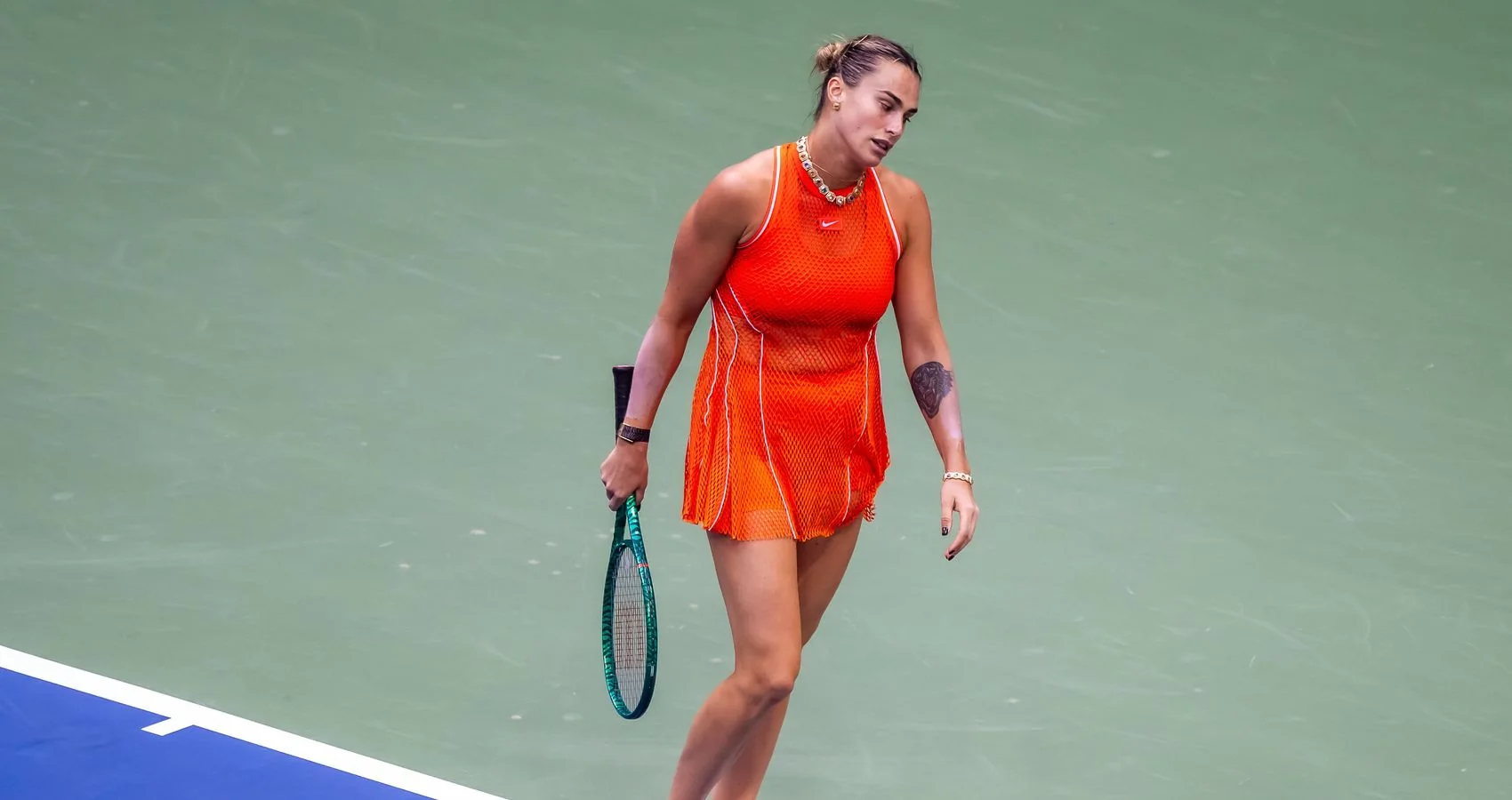
When she assessed the tennis, Sabalenka did not hide behind the atmosphere or the ranking change. She called her own performance “not good enough,” praised Rybakina’s serving and aggression, and said her rival was “simply a better player” on the night. The official numbers support that judgment: Rybakina hit 12 aces and 36 winners against 24 unforced errors, while Sabalenka finished with more errors than winners and found only three break opportunities.
She did acknowledge the strong backing from the Arthur Ashe Stadium crowd, which the WTA described as roughly 23,000 spectators. Her point was not that support had been insufficient. It was that she wished she had played well enough to extend the experience and reward it with another title.
She also looked forward. Sabalenka said there was plenty to take from another run to the final and framed the defeat as material for improvement. Losing No. 1 did not remove the target; Rybakina had already secured the ranking before the final, and Sabalenka indicated that the pursuit would continue regardless of the number beside her name.
That perspective matters after a failed three-peat bid. Sabalenka’s 19-match US Open winning streak ended, but she leaves New York as a two-time champion who reached a third consecutive final. The fairest reading of the Sabalenka reaction includes the flash of frustration and the accountability that followed, without turning either into a verdict on her character.
What the Title and World No. 1 Ranking Mean
One final did not settle the future of women’s tennis, but it did connect several major milestones. Rybakina leaves New York with the trophy, the next No. 1 ranking already secured and a second hard-court major in the same season. Each achievement is substantial; keeping their timelines separate makes the story stronger, not smaller.
A Third Major and a New Hard-Court Benchmark
The US Open title is Rybakina’s third major, joining Wimbledon 2022 and the 2026 Australian Open. Winning Melbourne and New York in the same season puts her in rare recent company: the WTA identifies only Angelique Kerber in 2016 and Sabalenka in 2024 as having completed that hard-court-major double since 2000. Rybakina also beat the same opponent in both 2026 finals.
Major résumé
Wimbledon 2022
Australian Open 2026
US Open 2026
2026 milestone
Both hard-court majors
Third title of the season and 14th tour title overall.
Roland Garros is now the only major missing from a possible career Grand Slam, but that is a horizon rather than a forecast. The immediate conclusion is enough: the Rybakina career page now belongs to a three-time major champion whose biggest results span grass and hard courts.
The No. 1 chronology is equally important. Rybakina secured the ranking with her quarterfinal win over Zheng Qinwen, before she beat Coco Gauff in the semifinal and before this final began. The trophy did not mathematically make her No. 1; it allowed the already assured new No. 1 to begin her reign as US Open champion. Sabalenka’s consecutive stay at the top ends at 99 weeks, the sixth-longest such run in the Open Era according to the WTA.
The Rivalry Still Favors Sabalenka Overall—but Not in Finals
The completed head-to-head now reads Sabalenka 10, Rybakina 8. That overall edge prevents an easy declaration that Rybakina “owns” the rivalry. The title-match record points in the other direction, however: Rybakina leads 5-2 when they meet with a trophy at stake.
Two records, two honest conclusions
Overall: Sabalenka leads 10-8. Finals: Rybakina leads 5-2. Sabalenka has been stronger across all settings; Rybakina has more often won their championship matches.
Rybakina’s three latest wins in the series came in the 2025 WTA Finals title match, the 2026 Australian Open final and this US Open final. That pattern establishes a genuine big-final edge without closing a rivalry that has already reached 18 meetings. It also supplies the most durable meaning of the New York result: Rybakina repeatedly found her best serve-and-return balance against the era’s leading hard-court opponent when the prize was largest.
For the full tournament record, use the US Open results and the Sabalenka player page. The final verdict here is narrower: Rybakina won 6-4, 5-7, 6-2, earned her first New York crown and added a defining result to a rivalry that remains active rather than resolved.
Loading comments…