Djokovic's 2026 US Open Result: How Mariano Navone Won in Five Sets
Mariano Navone defeated Novak Djokovic in five sets in the 2026 US Open first round. See the exact score, turning points and Djokovic's reaction.

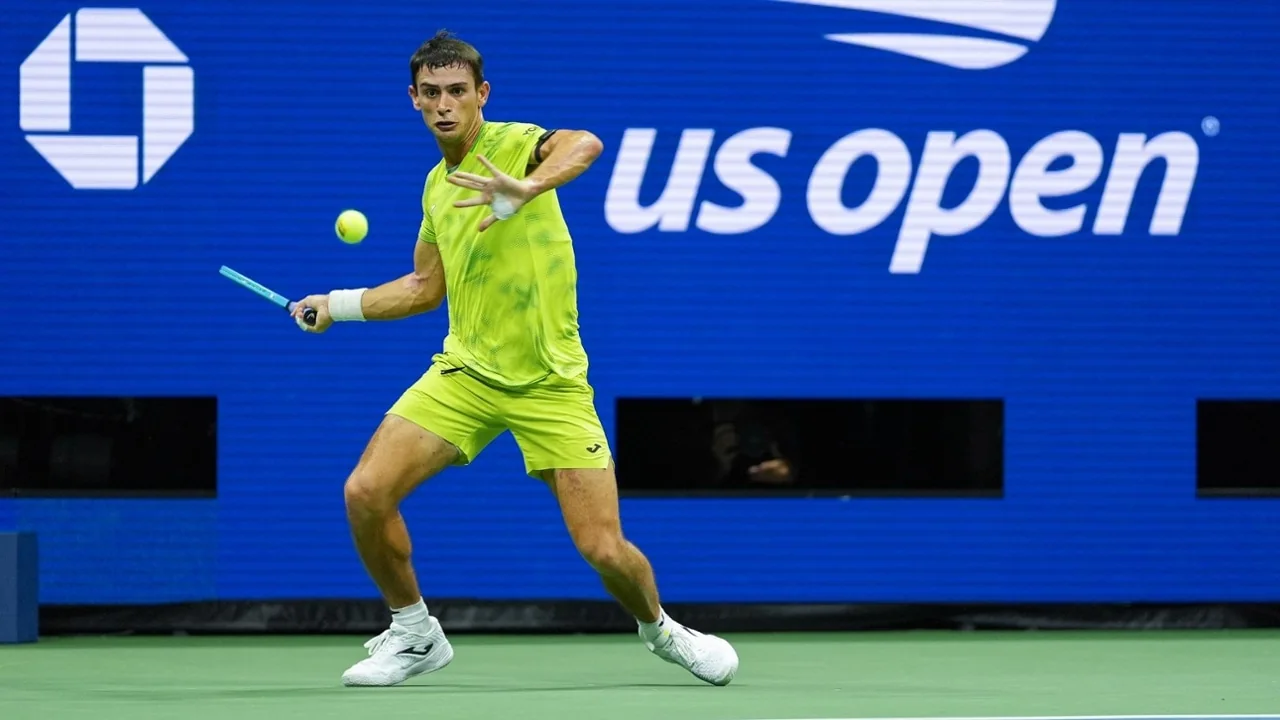
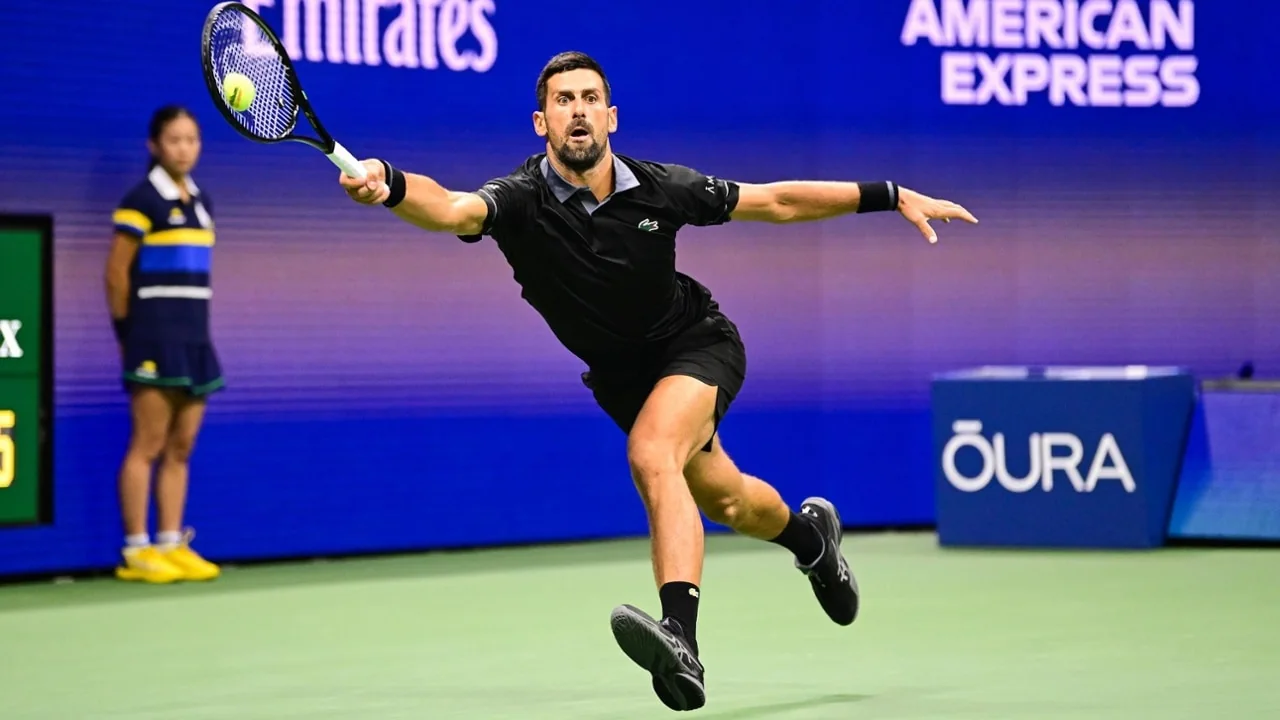
Mariano Navone beat Novak Djokovic 7-6(5), 5-7, 4-6, 6-2, 6-1 in the first round of the 2026 US Open. Djokovic led two sets to one and a break in the fourth before Navone's comeback at Arthur Ashe Stadium on August 30. As of September 29, 2026, this is the settled result of Djokovic's New York campaign. The match lasted four hours and 36 minutes, ended his chase for a fifth US Open title, and brought his first major opening-round defeat since 2006. Here is the score, the five-set turning point, what both players said, and the official place to watch it.
What was Djokovic's 2026 US Open result?
Novak Djokovic lost in the first round of the 2026 US Open. Mariano Navone of Argentina defeated him 7-6(5), 5-7, 4-6, 6-2, 6-1 on Sunday, August 30, at Arthur Ashe Stadium. The five-set match lasted four hours and 36 minutes. The score is written from Navone's perspective because he was the winner: Djokovic took the second and third sets, then lost the last two. This was a completed men's singles result, not a withdrawal before the tournament or a retirement during the match.
2026 US Open men's singles, Round 1: Mariano Navone def. [4] Novak Djokovic, 7-6(5), 5-7, 4-6, 6-2, 6-1. Venue: Arthur Ashe Stadium, New York. Duration: 4 hours 36 minutes. Date: August 30, 2026.
The result needs that full line because a bare phrase such as “Djokovic lost in five” misses the match's essential shape. He did not simply fall behind and chase for the rest of the evening. After dropping a first-set tiebreak, he recovered to lead two sets to one. He then held an early break in the fourth. At that point, a familiar Djokovic escape still looked possible. Navone overturned that position and controlled the finish, taking the final two sets 6-2 and 6-1. Anyone checking the US Open results page should read the five numbers in sequence, rather than assume the third-set leader won the match.
The defeat ended the fourth seed's bid for a fifth US Open singles crown and a 25th major singles title. Djokovic had arrived as a four-time New York champion, so the opening-night loss was consequential even before the history books were consulted. For Navone, an unseeded player appearing in his first Arthur Ashe Stadium match, it was the defining win of his career to that date. He earned it against a player who had previously made it past his first US Open match in every visit to the event.
The tournament's match report confirms both the score and the venue. What follows explains the on-court reversal, the physical problems Djokovic described himself, and Navone's contribution to a result that cannot be reduced to one player's discomfort.
How did Navone win after Djokovic led two sets to one?
Navone won by surviving Djokovic's middle-match recovery, then changing the direction of a fourth set that appeared to be slipping away. The scoreboard's central fact is Djokovic's two-sets-to-one lead, but the decisive moment came later: he broke early in the fourth and reached 2-1, only for Navone to respond with more pressure on return. From there the Argentine took the fourth 6-2 and the fifth 6-1. That sequence explains why this is an upset with a dramatic reversal rather than a routine five-set loss.
A first-set tiebreak after Djokovic's early lead
Djokovic began like the expected winner, moving to 3-0 in the opening set. Navone did not allow that early deficit to define the match. He recovered the break, stayed close through a short interruption while the Ashe roof was closed, and took the set into a tiebreak. The official US Open account records 17 Djokovic unforced errors in that set; the final one came on set point. The Argentine won the breaker 7-5. In tennis terms, that opening set gave Navone proof that Djokovic's early advantage did not make his serve or groundstrokes untouchable.
The next two sets displayed why a premature conclusion would have been unwise. Djokovic did not dominate the second, but he found a late break at 5-5 and served it out 7-5. In the third, he again waited until the closing games, broke for 5-4 and held to move ahead two sets to one. Those two late breaks were classic score management: even while struggling for fluency, Djokovic converted brief openings into complete sets. The player's official match account confirms the timing. At that point the fourth seed was only one set from the second round, and his accumulated Grand Slam experience still counted heavily.
The fourth-set reversal and one-sided decider
Djokovic's early fourth-set break for 2-1 made the match appear to be back on his terms. Navone's response was the hinge. He reclaimed control of rallies and broke Djokovic repeatedly, turning a 2-1 deficit into a 6-2 set win. Djokovic later confirmed that he had been a break up before his body deteriorated further. Navone, speaking to the tournament, said his own game improved from that moment. These accounts are complementary: the Serb's condition mattered, and the Argentine still had to produce enough quality and concentration to seize the opportunity.
After a medical timeout before the fifth, there was no final Djokovic rescue. Navone won it 6-1 and completed the result in four hours and 36 minutes. The two late set scores show how sharply the match moved, but they can hide the effort required to reach that point. Navone had already fought through a lost second and third set, played his first match against Djokovic under the Ashe lights, and refused to retreat after falling behind a break in the fourth. The completed men's singles draw records his progression; the five-set chronology explains it.
What happened to Djokovic physically, and what did he say?
Djokovic reported vomiting, cramping and pain, with back and shoulder problems worsening late in the match. Those are his own descriptions after the loss; they are not a public diagnosis of a specific illness. He also said the trouble began as early as the fourth game, long before Navone completed his comeback. That timing matters because the second- and third-set wins can make it appear that Djokovic was fully comfortable until the final stretch. His account says otherwise.
Symptoms and treatment during the match
On court, the match gave visible signs of distress. The Associated Press reported that Djokovic used an ice pack during a pause for the roof to close, vomited at least once, and later appeared to cramp. He received medical attention between the fourth and fifth sets, including work on his lower back. The official match report also records that Navone had taken the fourth 6-2 before the medical timeout. Djokovic returned and finished the fifth set, which Navone won 6-1. A completed five-set score should not be described as a walkover or a retirement.
There is a tennis consequence as well as a medical one. When a player cannot move and recover normally between shots, a defender on the other side can extend rallies and make each service game costly. Djokovic's condition did not automatically hand Navone points, but it narrowed the options available to the fourth seed. The 70 unforced errors recorded by the official tournament report are one measure of a performance that became increasingly unstable. They are a match total, not a clinical measure and not proof that every error came from physical trouble.
What his postmatch account does and does not establish
In the US Open's postmatch account, Djokovic described the evening as an awful physical experience. He said he had considered stopping earlier, but winning the second and third sets kept him in the contest. He acknowledged that he led by a break in the fourth before he could no longer sustain his level. He also credited Navone's fight, avoiding any suggestion that the Argentine's win should be erased from the record because Djokovic was hurting.
The available evidence supports a narrow, careful conclusion: physical problems were a significant part of the late collapse, and Djokovic spoke openly about symptoms affecting him across the season. It does not establish a named medical condition, a recovery date or a final career decision. The player himself said he was trying to understand and address what was happening. For fans following his player history, this distinction is practical. A score line tells you who advanced; a postmatch account explains what the player experienced; neither authorizes a prediction about every future event.
Djokovic also thanked the crowd for urging him on and said its response at the end moved him. That closing scene belongs in the story because it explains why the match was painful for him without turning an athletic result into a medical rumor. Navone's win and Djokovic's difficulties are both parts of the same evening.
What did Navone do well besides outlasting Djokovic?
Navone made Djokovic defend his service games and kept competing after the moments that usually settle an opening-round match for a champion. The official match report credits the Argentine with six breaks from 17 opportunities, against Djokovic's four breaks from 12. Their conversion percentages were similar, but Navone generated five more chances on return and ultimately broke twice more. Those are concrete measures of pressure applied across the match, not merely evidence of Djokovic's physical troubles.
His first-set recovery is a useful example. Djokovic led 3-0, then had a chance to stretch the gap, yet Navone stayed in the exchanges long enough to get the break back and force a tiebreak. Djokovic's 17 first-set unforced errors mattered, but an opponent still has to keep enough balls in play and threaten on return for those errors to change the score. Navone's speed and defensive coverage, noted by the tournament report, made it harder for Djokovic to end points cheaply.
The fourth set demanded a different kind of resilience. Many lower-ranked opponents would find it difficult to respond to losing two straight sets against Djokovic, especially after he broke early in the fourth. Navone did respond. In the tournament's interview with him, he described sensing his own game improve from that break deficit and concentrating on the strategy discussed with his coach. That is more informative than treating the comeback as if it happened by itself. He noticed a possible opening, stayed with the planned patterns, and made Djokovic continue to earn points even as the Serb struggled.
The setting raised the difficulty. The 25-year-old Argentine was ranked No. 49 at the time and had never played Djokovic. It was also his first match in Arthur Ashe Stadium and, by his own account, the first five-set victory of his career. Navone grew up on clay and told the tournament he did not start playing on hard courts until 2021 or 2022. That background does not make a hard-court win impossible, but it makes the particular stage, opponent and format a substantial step beyond a familiar tour match.
There is a limit to what statistics alone can show. Six breaks from 17 chances does not prove one specific shot pattern without point-by-point evidence; 70 Djokovic errors do not give every rally to Navone. The sounder editorial reading is that Navone combined consistent return pressure, movement and mental composure with the opportunity created by Djokovic's worsening condition. His place in the 2026 men's draw was earned by winning the played match, including the critical fourth-set turnaround. Both parts of the story deserve to be visible.
Why was this first-round loss historic?
It was Djokovic's first opening-round defeat in 20 US Open appearances and his first opening-round defeat at any Grand Slam since the 2006 Australian Open. A first-round loss is unusual for any contender; for a four-time New York champion with two decades of opening-match success, it changed the meaning of the tournament's first night. The US Open's official report also identifies this four-hour, 36-minute battle as the longest first-round match of Djokovic's major career.
Djokovic had never previously gone out before the third round in New York. He won the singles title in 2011, 2015, 2018 and 2023 and had been a regular presence in the final-week conversation even in seasons when he did not lift the trophy. His 2026 campaign instead ended after one match. The distinction matters: the record is about his first match at the US Open, not a claim that he had always won the tournament or had never suffered another disappointing loss here. Even the greatest long-term run has limits, and this one was unusually long.
Across all four majors, Navone joined a very short list. According to the tournament's Navone profile, Marat Safin beat Djokovic in the first round of the 2005 Australian Open and Paul Goldstein did so at the 2006 Australian Open. No opponent managed it in the next two decades, until Navone at Flushing Meadows. CBS Sports counted 78 consecutive major first-round wins entering this 2026 match. That figure is about successful opening matches, not a consecutive-major-attendance claim. It captures the routine Djokovic had made of getting started, even when the rest of a tournament later became difficult.
The title stakes were equally clear. Djokovic arrived with 24 major singles titles and was seeking a 25th, a number that would have stood alone in the sport's all-time singles tally. The Navone result ended that attempt at the first hurdle. It also denied him a fifth New York title. Fans looking through the site's US Open finals archive can see the four years in which he finished the job; this year belongs on a different line of the record.
There is no need to turn a historic result into a definitive career obituary. Djokovic was 39 and spoke afterward about significant physical problems, but he did not announce that the 2026 first round would be his last professional match or his last US Open. The verified story is powerful enough: a man who had repeatedly made the opening round look like a formality was beaten by an unseeded opponent making his first appearance on Ashe. That is why this single score travelled so far beyond the men's draw.
Where can fans check the match and watch official highlights?
The most direct replay is the US Open's extended Navone–Djokovic highlights. The tournament also posted a shorter official highlight video on its verified YouTube channel. Both identify the players and the 2026 first round. An edited highlight package is useful for seeing key rallies and the atmosphere on Ashe, but it does not show every point in a four-hour, 36-minute contest. Use the official match account as the stable reference for the final score.
If you watch with the five-set story in mind, start with the opening set. Djokovic's 3-0 lead and Navone's recovery show that the Argentine could keep applying pressure after a poor start. The 7-5 tiebreak then gave him the first set despite Djokovic's initial control. In the middle of the video, look for Djokovic's late breaks in the second and third sets; those passages explain why he was ahead two sets to one. The key sequence is early in the fourth, when Djokovic moved 2-1 with a break before Navone reversed the set. The closing clips show how different the pace and Djokovic's movement looked in the fifth. This is a viewing guide, not a claim that every broadcast angle reveals a medical cause.
For a result rather than a replay, use the site's US Open results and men's singles draw. They answer the practical question of who advanced: Navone, in five sets. The official report and postmatch interview add the richer explanation, including the players' own accounts. Keep the dates straight when comparing pages: Djokovic's 2026 US Open ended on August 30 in Round 1; his four New York championships belong to earlier seasons.
That separation is also useful for any future headline about Djokovic. This result establishes an extraordinary loss and a difficult physical evening. It does not, on its own, establish a retirement announcement, a medical diagnosis or his next confirmed tournament. For those questions, check a current official player or tournament update. For the 2026 US Open record, the answer is settled: Mariano Navone defeated Novak Djokovic 7-6(5), 5-7, 4-6, 6-2, 6-1.
Loading comments…