Carlos Alcaraz's 2026 US Open Results: Every Match and the Shelton Quarterfinal
Carlos Alcaraz won four matches at the 2026 US Open before Ben Shelton stopped him in a five-set quarterfinal. Follow every score and the key turns.
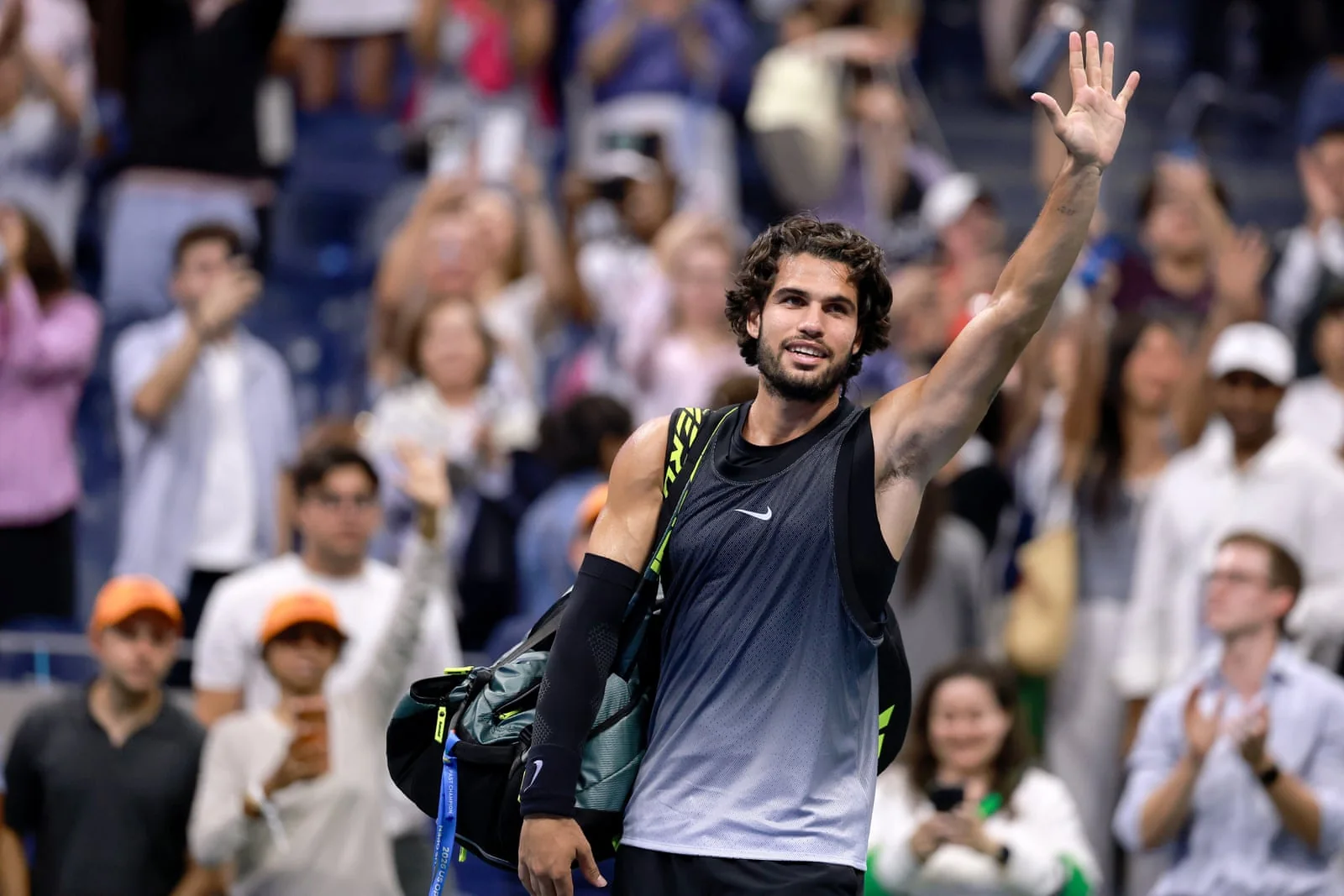
Carlos Alcaraz returned to the 2026 US Open after a long wrist-injury layoff and won four men's singles matches. His title defense ended when Ben Shelton beat him in a five-set quarterfinal. Here is the complete round-by-round scorecard, the turning points behind each stage of the run, and the distinction between his 2025 championship and his 2026 result.
What were Carlos Alcaraz's 2026 US Open results?
Carlos Alcaraz reached the 2026 US Open men's singles quarterfinals, winning four matches before Ben Shelton beat him in five sets. The defending champion opened with three straight-set victories in four rounds; Jaime Faria took the only set he lost before the quarterfinal. Shelton then ended his title defense 6-7(5), 6-1, 6-3, 1-6, 7-6(7). These are completed results as of September 29, 2026, not a projected draw or a live match listing.
| Round | Opponent | Alcaraz result | Score, winner first |
|---|---|---|---|
| First | Roman Safiullin | Win | 6-4, 6-4, 6-4 |
| Second | Jaime Faria | Win | 4-6, 6-0, 6-3, 6-2 |
| Third | Wu Yibing | Win | 6-3, 6-4, 6-1 |
| Fourth | Tommy Paul | Win | 6-4, 6-3, 6-4 |
| Quarterfinal | Ben Shelton | Loss | Shelton: 6-7(5), 6-1, 6-3, 1-6, 7-6(7) |
The table follows the conventional winner-first score format. That distinction is especially useful for the quarterfinal: the first 6-7 belongs to Shelton, because Alcaraz won the opening-set tiebreak. Shelton won the next two sets, Alcaraz forced a fifth, and Shelton took the deciding match tiebreak. A result line copied without a winner's name can easily reverse the story. The official tournament report confirms the five-set result, while the US Open results index is the practical starting point for checking other completed matches.
Four wins and a last-eight appearance represented a substantial run in Alcaraz's first tournament after a long absence, but they did not extend his 2025 championship into a repeat title. His route grew harder in stages: a controlled return against Roman Safiullin, a set lost and recovered against Jaime Faria, convincing wins over Wu Yibing and Tommy Paul, then an unusually demanding night against Shelton. The scorecard tells fans where the run ended; the sections below explain how it developed and why the final match turned.
The round names also settle a common search-result ambiguity. “Alcaraz US Open 2026 result” might refer to one day's score, his most recent match, or his eventual tournament finish. His most recent match was the Shelton loss, and his tournament finish was the quarterfinal. There was no Alcaraz semifinal or final in the 2026 singles draw. For a fan tracing the bracket, the four earlier wins are the path to that final result, not separate evidence that the title defense continued after the last-eight match.
How did Alcaraz start after four months away?
Alcaraz began with two different kinds of win. He controlled his first match back against Roman Safiullin in straight sets, then recovered from a set down against Jaime Faria. The pair of results gave a more useful picture of his return than either score alone: he could manage a tight opener and respond when an opponent took the initiative. They did not, by themselves, settle how his body would hold up deeper into a major.
A straight-sets return against Roman Safiullin
On August 31, Alcaraz played his first professional men's singles match in 139 days after a wrist injury interrupted his season. He beat Safiullin 6-4, 6-4, 6-4 at Arthur Ashe Stadium. The three identical set scores suggest simple control, but the tournament's account describes a player finding match rhythm rather than one operating at an automatic peak. Safiullin broke him once; Alcaraz made 27 errors and five double faults, while winning 66% of points behind his first serve.
The key was that Alcaraz remained effective on the important points. A break in the seventh game helped him take the first set, and he kept enough depth and speed in rallies to make Safiullin hit another ball. That is meaningful after a long layoff: winning without perfect timing can buy the competitive repetitions that practice cannot reproduce. Alcaraz later described feeling nervous before the match and said his wrist and arm felt pain-free during it. Those are valuable first-person observations about that afternoon, not a prediction that every remaining match would feel the same.
Jaime Faria's opening set and the response
Faria posed a sharper early question on September 2. He earned the only break of the first set to move ahead 4-3, then served it out 6-4. Alcaraz faced two break points at 15-40 in the opening game of set two. Instead of allowing the match to become a two-set chase, he held serve and won eight consecutive games. The eventual 4-6, 6-0, 6-3, 6-2 score records both the setback and the decisive reset.
According to the official second-round report, Alcaraz hit 43 winners to Faria's 27 and converted seven of 12 break points. Those figures show why the score moved so abruptly after the opening set: pressure on the Faria serve became sustained, not a single fortunate break. For fans following the men's singles draw, this match was the first proof that the defending champion could correct course mid-match. It still left a longer question unanswered: whether the restored rhythm would last against stronger opposition later in the fortnight.
What did the Wu Yibing and Tommy Paul wins show?
The third and fourth rounds showed Alcaraz settling into repeatable patterns. He beat Wu Yibing 6-3, 6-4, 6-1, then Tommy Paul 6-4, 6-3, 6-4. The two scorelines were straight-set wins, but the more revealing detail is how often he made each opponent defend a service game. His return game had become a continuing source of pressure, a useful sign after the tentative moments of his first two matches back.
Wu Yibing's baseline test
Wu brought hard-court familiarity and attacking intent to their September 4 match on Arthur Ashe Stadium. Alcaraz nevertheless broke him in the opening game and kept testing the serve throughout a two-hour, 19-minute contest. The official third-round report credits Alcaraz with converting seven of 15 break points. Wu finished with 12 winners against 40 unforced errors. Those numbers belong to this match; they show a player unable to maintain enough clean offense while repeatedly facing pressure.
The final set, 6-1, also matters. It did not require Alcaraz to navigate another long deciding-set battle, leaving him with a fourth-round match to prepare for rather than a recovery problem immediately after round three. That does not mean Wu offered no resistance: a 6-4 middle set and 15 break chances spread across the match show that individual games could be competitive. Alcaraz won enough of the extended exchanges and the points that opened break opportunities to separate on the scoreboard.
Return pressure against Tommy Paul
Paul was a stronger check of how much Alcaraz's game had returned. The American struck an early ace and winners off both wings, yet Alcaraz created 14 break-point chances in their September 6 fourth-round match. He converted four and won 6-4, 6-3, 6-4 in two hours, 21 minutes. Four conversions in 14 attempts can look inefficient without context. The repeated opportunities are the important part: Paul rarely had the freedom to serve through an entire set without Alcaraz threatening to take it away.
Alcaraz explained to the tournament's reporters that he changed his return position, sometimes moving back and sometimes stepping forward. The shift made Paul account for a different return look rather than settle into one service pattern. It is a concrete tactical explanation for the pressure, although the article does not provide shot-by-shot data proving which position won each point. The match was a more persuasive test of Alcaraz's competitive rhythm than the opening round because Paul could make him defend and adjust under fourth-round stakes.
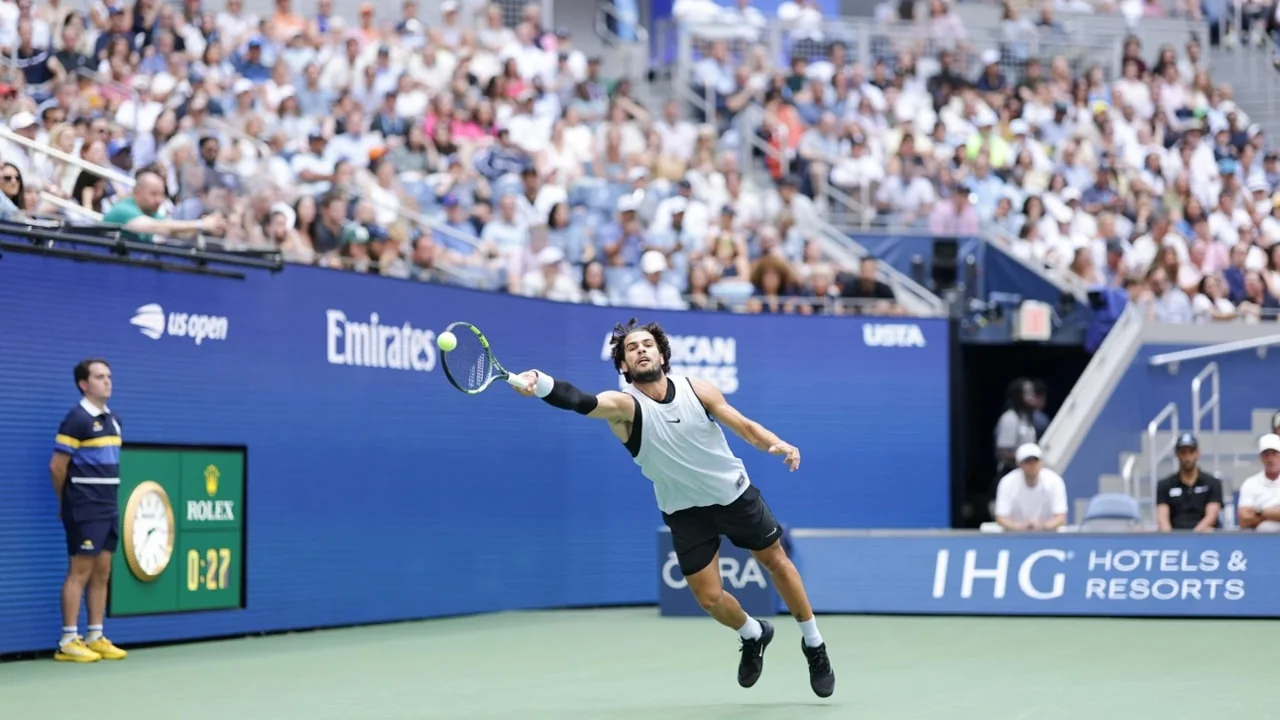
After those two wins, Alcaraz had dropped only one set through four rounds. The Alcaraz player page gives fans a place to follow his wider tournament record. The immediate tennis question, though, was sharper: could the return pressure that worked against Paul survive Shelton's serve and his willingness to attack the next ball?
How did Ben Shelton win the quarterfinal?
Shelton won by recovering from a first-set tiebreak loss, taking control of two middle sets, and surviving a forceful Alcaraz response. The final score was Shelton def. Alcaraz 6-7(5), 6-1, 6-3, 1-6, 7-6(7). The last 7-6 was settled by a 10-point match tiebreak, which Shelton won 10-7. In four hours and 28 minutes, both men had stretches of command; Shelton owned the final few points.
Nine straight games after Alcaraz won the opener
The opening set offered little warning of the size of the coming reversal. Shelton led its tiebreak 5-3, only for Alcaraz to win four consecutive points and take it 7-5. Shelton did not allow that escape to define the match. He broke Alcaraz three times in set two, won it 6-1, and opened set three 3-0. The USTA account records a run of nine straight games for Shelton across the middle of the contest.
That sequence is the clearest explanation for why Alcaraz's earlier straight-set form did not simply carry him into the semifinals. Shelton was doing more than serving through short games: he was taking Alcaraz's serve repeatedly and finishing points from aggressive return positions and angled groundstrokes. Alcaraz, usually able to turn defense into attack, missed shots he normally makes in the third set. The score moved from a set lead for Alcaraz to a two-sets-to-one lead for Shelton, a bigger swing than the 6-1 and 6-3 figures reveal in isolation.
The fourth-set recovery and final tiebreak
Alcaraz broke in the second game of the fourth set and took it 6-1, making the fifth a fresh contest rather than a simple continuation of Shelton's earlier surge. Shelton had break points with the score 4-4 in the decider, but neither player broke serve. In the deciding tiebreak, Shelton moved ahead 3-1, Alcaraz turned it to 5-3, and the score reached 6-6. Shelton then found the late points and ended the match with a 146-mph ace. The final point came at 3:33 a.m. New York time on September 9, the latest finish in US Open history according to the tournament.
Alcaraz specifically identified Shelton's serve as a decisive weapon in the match tiebreak, where one unreturned delivery can change the margin quickly. He also said he was physically tired after the third set. Those comments help explain the tension he faced, but they should not be turned into a claim that his wrist injury returned. Shelton still had to win the points after Alcaraz recovered and led midway through the breaker. The result was an earned upset, not a match decided by one simple physical explanation.
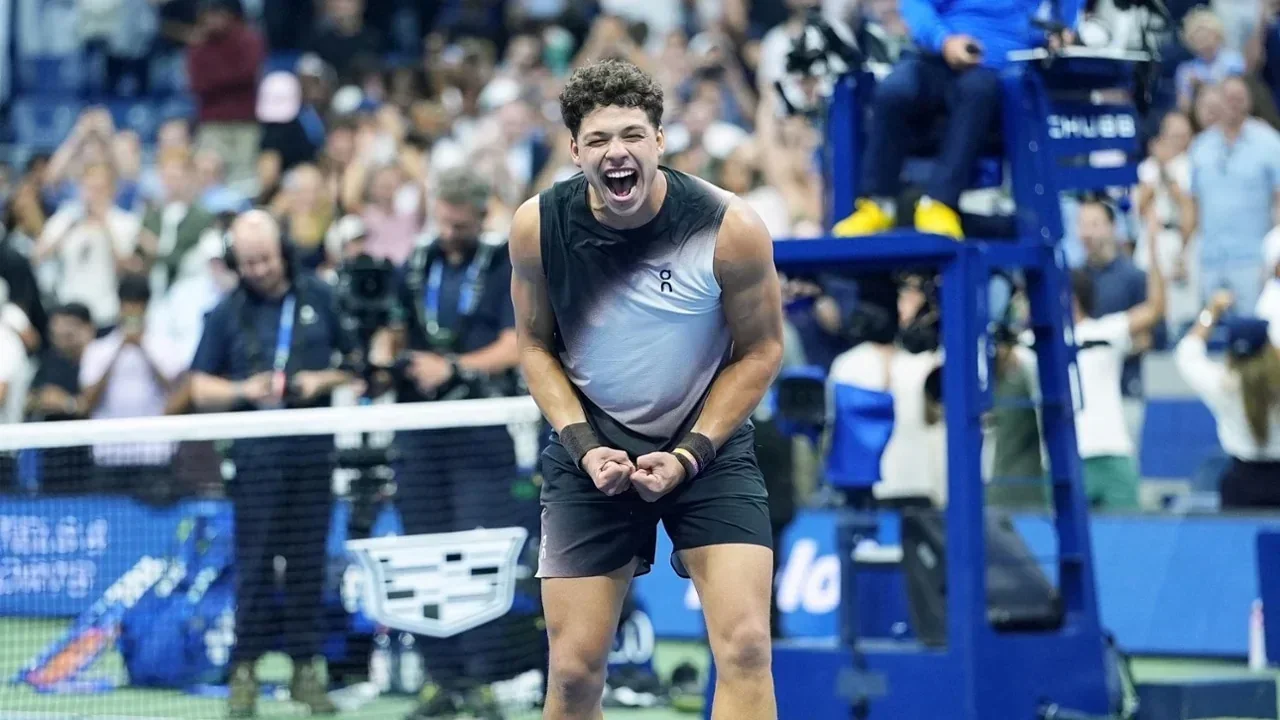
The completed results show who advanced, while the set sequence explains why this was among the defining men's matches of the tournament. Shelton would meet Frances Tiafoe in the semifinals; Alcaraz's 2026 singles run ended at the quarterfinal. The match also broke Alcaraz's 18-match winning streak at major tournaments, a reminder that an impressive opening week could still be undone by one opponent at a sustained high level.
What did the return from a wrist injury reveal?
The 2026 US Open showed that Alcaraz could return to best-of-five singles, win four matches and play a demanding fifth. It also showed the limits of reading too much into either a string of wins or one defeat. His right wrist injury had kept him away from professional singles for 139 days before the Safiullin match. The tournament provided visible competitive evidence, while Alcaraz's own reports described how he felt at particular moments. Neither form of evidence supplies a medical forecast.
Before the main draw, he acknowledged the difficulty of making a major his first singles event in four months. In an official pre-tournament interview, he described long, intense practice sessions meant to see how the wrist responded on and after demanding days. That preparation could test his confidence in training, but practice does not recreate the changing tempo of a five-set match, the pressure of a break point or the recovery required between rounds. His choice to play therefore carried an understandable element of uncertainty even though he believed he was ready.
The first match offered an encouraging answer to a narrower question. After beating Safiullin in three 6-4 sets, Alcaraz said his arm and wrist felt pain-free over the two-hour, 22-minute contest. He also admitted to unusual nerves before playing. Those comments sit together: physical comfort did not instantly erase the feeling of returning to match day after a long break. The later wins over Faria, Wu and Paul added four rounds of evidence that his shots, movement and return choices were working under competition conditions. Just one set was lost across those first four matches.
Shelton's quarterfinal changed the physical demand. It lasted four hours and 28 minutes, extended into a fifth-set tiebreak and finished at 3:33 a.m. Alcaraz said he felt physically tired after the third set, yet rallied to win the fourth and briefly led the deciding breaker. Afterward he described himself as healthy and proud of his effort. A fair reading of the post-match remarks is that his comeback had passed several substantial match tests, while a fresh opponent at a high level and the extreme duration remained formidable. The available record does not establish that the wrist flared up again, and it would be wrong to turn fatigue into that claim.
For fans, the practical lesson is to read injury-return coverage with a time stamp and a clear subject. A player can report feeling good after round one, win repeatedly, and still find a quarterfinal physically draining. The Alcaraz player page offers a way to follow future results. His 2026 New York run itself should be judged as a four-win return ending against Shelton, with no invented diagnosis attached to the loss.
What is the final 2026 record, and where can fans check it?
Alcaraz finished the 2026 US Open men's singles tournament 4-1, exiting in the quarterfinals. The four wins came against Roman Safiullin, Jaime Faria, Wu Yibing and Tommy Paul. Shelton handed him the only loss, in a five-set last-eight match. Those numbers describe his 2026 main-draw singles run; they do not include earlier seasons, mixed doubles, exhibitions or any tour match outside New York.
The year matters because Alcaraz entered as the defending champion. In 2025, he beat Jannik Sinner 6-2, 3-6, 6-1, 6-4 in the men's singles final and lifted his second US Open trophy. In 2026, he never reached the title match. Shelton advanced from their quarterfinal and eventually played Alexander Zverev for the championship. The official champions page records Zverev as the 2026 men's singles winner after a four-set final over Shelton. A search snippet calling Alcaraz a “US Open winner” can therefore be true as history while being wrong as an answer to who won in 2026.
Fans can verify the path in three steps. Start with the men's singles draw to see the round and opponent, then use the results page for the completed score. For the end of the tournament, the finals page identifies the championship pairing. The official quarterfinal report is especially useful when a score is displayed in compressed form: it names Shelton as the winner and spells out the two tiebreaks. Those checks prevent the common mistake of reading a winner-first score from Alcaraz's perspective.
What should a reader take from the completed run? The four early wins showed an effective return to major competition after a long absence, and the Paul match offered the clearest evidence that his return game had sharpened. The Shelton defeat showed the level required to sustain that momentum against an opponent who could attack serve and finish a decisive tiebreak. Both observations can stand together. A quarterfinal loss does not erase the comeback, just as four wins do not rewrite the final placing into another championship.
As of September 29, 2026, there is no next US Open match for Alcaraz to wait for in this draw. His final result is the Shelton quarterfinal loss. Readers looking for a current match schedule should use the appropriate later event listing rather than a stale “Alcaraz today” search result from the New York fortnight.
Loading comments…