Alexander Zverev's 2026 US Open Title Run: All Seven Results and the Shelton Final
Alexander Zverev's seven 2026 US Open match scores, two opening five-set tests, and four-set championship victory over Ben Shelton.
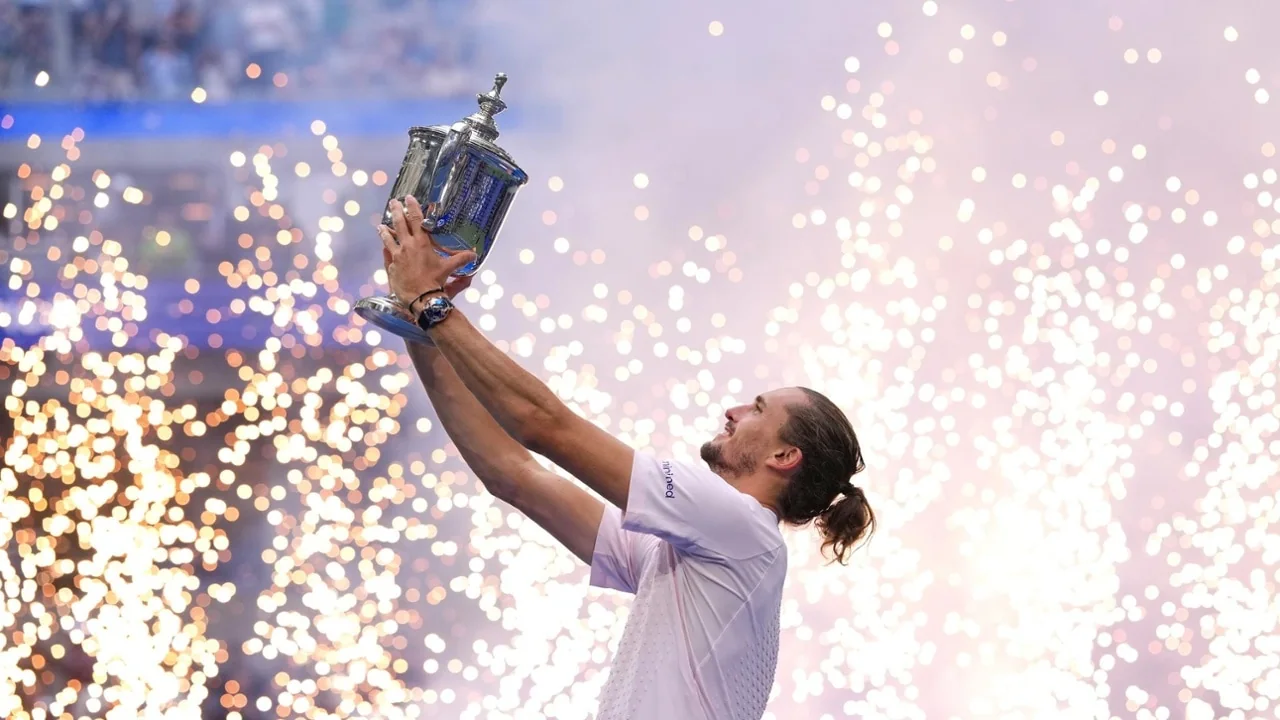
Alexander Zverev won the 2026 US Open men's singles title, beating Ben Shelton in four sets after an opening week that nearly ended his campaign twice. Here are all seven scores, the turning points from each phase of the draw, and the match details behind his first New York trophy.
Did Alexander Zverev win the 2026 US Open?
Yes. Alexander Zverev won the 2026 US Open men's singles title. The top seed beat Ben Shelton 6-3, 7-6(2), 5-7, 6-2 in the September 13 final at Arthur Ashe Stadium. It was his first New York championship and his second major singles trophy. He finished the main draw with seven wins and no losses, but the title route was far less smooth than a champion's final record might suggest.
| Round | Opponent | Zverev's winning score |
|---|---|---|
| First | Lorenzo Sonego | 6-4, 3-6, 6-7(7), 7-5, 6-4 |
| Second | Quentin Halys | 6-4, 4-6, 7-6(3), 6-7(3), 6-3 |
| Third | Alejandro Tabilo | 6-2, 7-6(2), 6-2 |
| Fourth | Luciano Darderi | 6-2, 6-2, 7-6(3) |
| Quarterfinal | Botic van de Zandschulp | 6-2, 7-5, 6-1 |
| Semifinal | Karen Khachanov | 6-3, 7-6(7), 7-6(6) |
| Final | Ben Shelton | 6-3, 7-6(2), 5-7, 6-2 |
Each score is written from the winner's perspective. The number in parentheses after a 7-6 or 6-7 set shows the points won by the player who lost that tiebreak. For example, Zverev lost the third set to Sonego 6-7(7), meaning Sonego won that breaker while Zverev reached seven points. This convention matters when scanning a list of results without a separate W/L column. The completed results page and men's singles draw let readers verify the path round by round.
The shape of the seven wins is the story. Zverev needed five sets against both Sonego and Halys, spending almost ten hours on court in his opening two matches. He then won four consecutive rounds in straight sets, including a semifinal with two pressure-filled tiebreaks, before Shelton took the third set of the final. The official championship account confirms the final and trophy. The scorecard explains why this was an adjustment-filled run rather than one fortnight of uninterrupted control.
For fans searching after the event, there is no pending Zverev 2026 US Open match. Shelton was the final opponent and Zverev the champion. The sections below separate the early survival tests, the more decisive middle rounds and the four-set final, so the final result is anchored to the seven matches that actually produced it.
The route also helps distinguish match wins from titles. Beating a player in a semifinal earns a final place; it does not itself settle the championship. Likewise, the five-set escapes of week one did not guarantee that Zverev would remain fresh enough for week two. He earned the title only after closing the last service game against Shelton. That sequence is why a complete result page should show rounds, opponents and scores together instead of repeating a single headline about the trophy.
How did Zverev survive two five-set matches in the first week?
Zverev's first week was a survival exercise before it became a display of control. Lorenzo Sonego took him to a fifth set and came within two points of winning their opening match. Quentin Halys forced another five-set contest two days later. Only against Alejandro Tabilo in round three did Zverev finish in straight sets, and even there he had to save set points. The champion's eventual scorecard is easier to understand when these early margins are kept in view.
Five sets with Lorenzo Sonego and Quentin Halys
Against Sonego, Zverev won the first set 6-4 but lost the next two, the third in a 9-7 tiebreak. Sonego was two points from a first-round upset in set four. Zverev found the break he needed late in that set, took it 7-5, then broke for 3-2 in the fifth after a Sonego double fault. The final 6-4, 3-6, 6-7(7), 7-5, 6-4 line took four hours and 53 minutes. Zverev converted five of 22 break opportunities, according to the official first-round report. That fraction explains why the match remained unsettled for so long: creating chances was easier than taking them.
The Halys meeting posed a different endurance test. Zverev led one set to none, split the next two, and lost the fourth-set tiebreak, requiring another decider. His 6-4, 4-6, 7-6(3), 6-7(3), 6-3 win lasted four hours and 33 minutes. Halys even led the third set 4-1 before Zverev recovered to take its breaker. Zverev hit 29 aces but also eight double faults; he could rely on power without treating the service game as automatic. A break for 3-2 in the fifth proved enough to separate the players.
Together, those matches required nine hours and 26 minutes on court. The tournament's Halys account describes Zverev dissatisfied with his level but satisfied that he found a way through. That is a more precise reading than calling the early rounds dominant. Fans tracking the men's singles draw should see two five-set wins as warning signs and resilience tests at once: the same match can expose errors and show a player's ability to win despite them.
The straight-sets reset against Alejandro Tabilo
Tabilo was the first opponent against whom Zverev could leave the court without a fifth set. The German won 6-2, 7-6(2), 6-2 on September 5. The middle score prevents an overly tidy interpretation: he saved two set points before securing that tiebreak. Had Tabilo taken either, the match would have demanded at least a fourth set after the punishing first two rounds. Zverev instead kept the lead and finished the third 6-2.
For the title route, the change was meaningful. He had not suddenly become immune to pressure, but he was winning the close set before another long contest developed. The completed scores show the result; the saved set points explain its value. The top seed moved into the second week with five-set endurance already tested and a more economical win finally on the board.
What changed against Luciano Darderi and Botic van de Zandschulp?
The fourth round and quarterfinal replaced Zverev's early five-set survival with two straight-set wins. He defeated Luciano Darderi 6-2, 6-2, 7-6(3), then Botic van de Zandschulp 6-2, 7-5, 6-1. Those results shortened the route through the second week and showed better control of the scoreboard. Neither match was entirely frictionless: Darderi forced a third-set breaker, and van de Zandschulp threatened to level their second set. Zverev closed both moments before they became another long match.
Darderi and the late tiebreak
Against Darderi, Zverev took the first two sets by identical 6-2 margins. The official fourth-round account records 13 Zverev aces, a 72% first-serve rate and four conversions from 17 break chances. Darderi received only one break opportunity and did not convert it. That imbalance explains the first two sets better than a generic claim that the top seed suddenly played perfectly: Zverev won service points often enough to limit Darderi's routes into his games, while keeping pressure on the Italian serve.
Darderi found more pace and resistance in the third. Its 11th game lasted 11 minutes and 33 seconds, a stretch long enough to change the feel of a set even when no earlier set has been close. Zverev won the tiebreak 7-3 and ended the match in three sets. In the context of his opening two rounds, that mattered as much as the first-set margin. He had already spent nine hours and 26 minutes against Sonego and Halys; resolving a close third set avoided adding a fourth or fifth to that week's workload.
A clearer quarterfinal against van de Zandschulp
Van de Zandschulp had reached the last eight through a demanding route of his own, but he still gave Zverev a real second-set check. After losing the first 6-2, the Dutchman earned two late break points and moved within two points of leveling the match. Zverev held, then took the set 7-5 before running through the third 6-1. The straight-set score tells the outcome; the threatened break shows why the middle set was the match's most important hinge.
The tournament's quarterfinal report lists 21 Zverev winners and 28 unforced errors, along with five double faults in the opening set. That is not a spotless statistical line. The practical difference was that he still won the decisive service game when van de Zandschulp had a route back in. It is an example of scoreboard management: avoid allowing an opponent's best passage to turn a manageable match into a new set and fresh uncertainty.
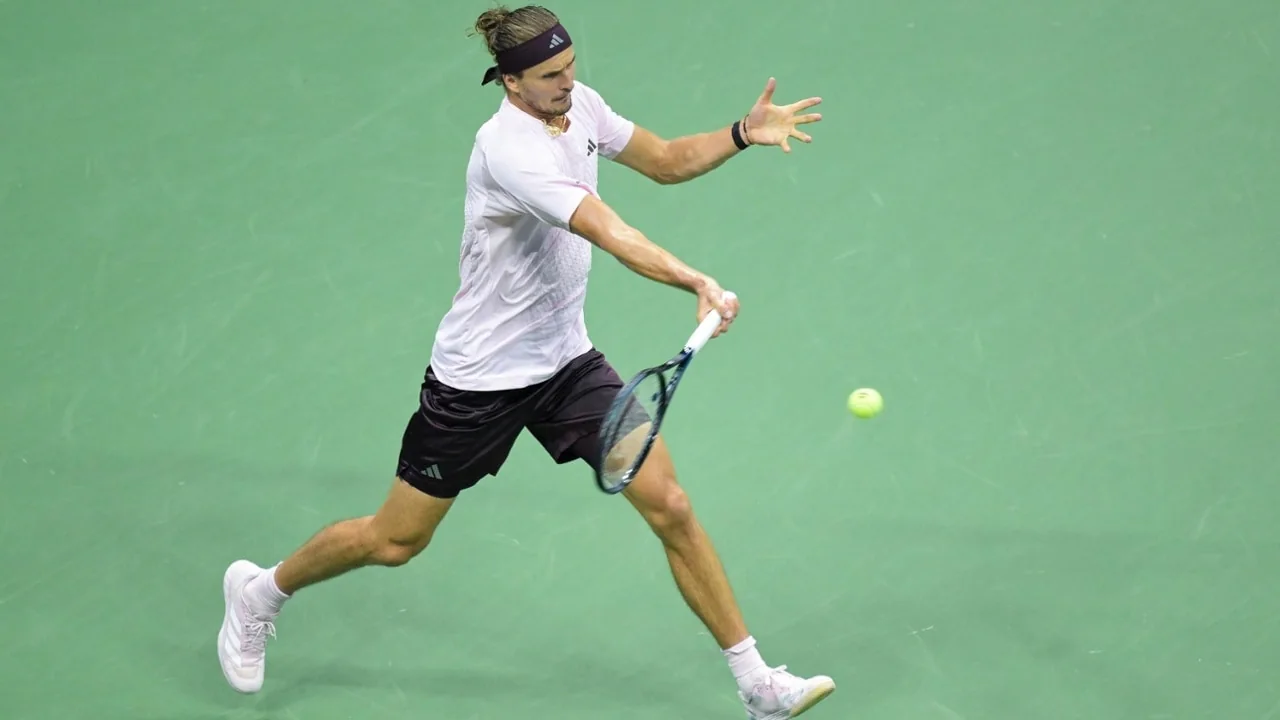
Four wins now separated Zverev from his first New York trophy, and his last two had come without dropping a set. The draw shows the match sequence, while the player directory gives context for the opponents. The semifinal would ask a different question: could Zverev win two close tiebreaks against Khachanov rather than simply dominate early sets?
How did Zverev get past Karen Khachanov in the semifinal?
Zverev beat Karen Khachanov 6-3, 7-6(7), 7-6(6) in the September 11 semifinal, but the straight-set result does not describe an easy afternoon. The men finished only three points apart: 107 for Zverev and 104 for Khachanov. One break settled the opener; the next two sets came down to tiebreaks. Zverev's reward was a second US Open final, six years after his loss to Dominic Thiem in the 2020 championship match.
The official semifinal report identifies the first set's decisive game. With Khachanov serving at 3-4, Zverev converted the match's first break point and then held for 6-3. He won nine of nine points when he came to net during that set. Neither player was simply waiting for errors: both were trying to control the baseline, and Zverev took the first real opening before Khachanov had a comparable chance.
The second set was less orderly. Each player broke once early, after which neither could separate himself in regulation games. Zverev hit two aces in the tiebreak and survived a 22-shot rally; he also let two set points go before converting a third. He won the breaker 9-7. That passage mattered because a single lost point near the end would have left Khachanov with a set apiece and Zverev facing still more work after the long opening week.
The third-set tiebreak was closer still. There had been no break in the set, and Khachanov raced to a 5-2 lead in the breaker. At 6-4, he held two set points. Zverev won four consecutive points instead, taking it 8-6 and ending the match. This is the pivotal detail for anyone reading the result later: the score says three sets, but two points could have extended it to a fourth. The USTA's account of Khachanov's reaction records his acknowledgement that he had chances in both late sets.
Zverev had logged 16 hours and 40 minutes in his first five rounds, compared with Khachanov's 12 hours and 30 minutes. The workload made a short semifinal valuable, but the numbers alone cannot tell us how tired either player felt on a particular point. What the match does show is Zverev serving and returning well enough when both breakers tightened, including after Khachanov's third-set surge. From there, the final would test whether those pressure points could turn into a title against Ben Shelton.
How did Zverev beat Ben Shelton in the final?
Zverev defeated Ben Shelton 6-3, 7-6(2), 5-7, 6-2 on September 13 to win the 2026 men's singles title. The four-set score captures a strong start, an American comeback and a decisive fourth-set answer. It was not a match in which Shelton simply vanished after the first set. He forced Zverev to protect a two-set lead, then broke him late in the third. Zverev's response in the first game of the fourth made the difference between a threatened comeback and a championship finish.
The first two sets and Zverev's serve
The opening game set the pattern. Zverev earned a break immediately, then broke again when Shelton double-faulted on set point at 5-3. According to the USTA final report, Shelton did not win a point against Zverev's first serve until eight games had been played. He had some success against second serves, but too few looks at them to erase the early gap. The opener was over 6-3, with Zverev already dictating the points that began on his preferred delivery.
Shelton found a firmer foothold in the second set. He held serve and extended some of the rallies, while Zverev could not find a break. The set reached a tiebreak, the kind of short sequence that can change a final even when neither player has yielded a service game. Zverev took its first five points and won it 7-2. Rather than treating that as automatic because of their previous meetings, it is more useful to see how he acted at 0-0 in the breaker: he secured a large lead before Shelton could draw on the crowd or his own serve to make it tight.
Across the four sets, Zverev won 68 of 80 points behind his first serve, an 85% success rate. The same official account records a serve reaching 147 mph. Speed was part of the picture, but the result also rested on placement and on holding his standard through the tense second set. A big first-serve percentage of points won made it harder for Shelton to create break chances, even when the American played a better set than the opener. Readers can see the full result alongside the other New York scores.
Shelton's third-set break and the immediate reply
Shelton did get the opening he needed in the third. Serving at 5-6, Zverev faced break points and sent a forehand volley wide at 15-40, giving Shelton the set 7-5. That was the first time Shelton had broken Zverev in this final, and the USTA reported that it ended a run of 66 consecutive Zverev service holds across their meetings. The American had changed the contest's direction for a moment; a two-set deficit no longer told the whole story.
The first game of the fourth set reversed it again. Zverev broke Shelton at once, then added another break later in the set. He lost only four points on serve in that final frame and closed the match with an unreturned serve. The third-set wobble therefore lasted one set, not the rest of the final. Shelton's post-match account confirms the late break and the immediate fourth-set reversal.
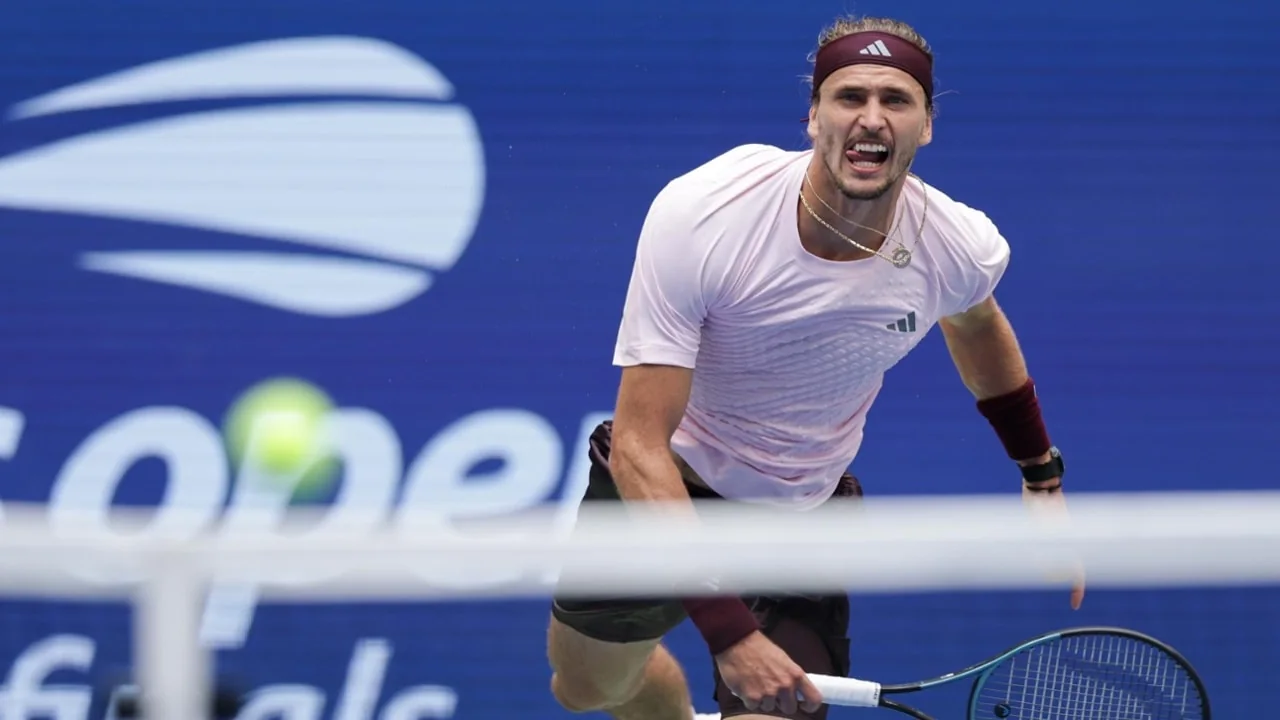
For Zverev, the final completed a route that had begun with two five-set escapes. For Shelton, his first major final and third-set resistance were meaningful achievements despite the defeat. The finals page places this match in the tournament's championship lineup; the distinguishing men's result is that Zverev took his first US Open title by recovering quickly when Shelton finally broke him.
Why does the 2026 New York title matter?
The win over Shelton gave Zverev his first US Open title and his second Grand Slam singles championship. His first had come only three months earlier at Roland Garros, where he beat Flavio Cobolli in five sets. The two trophies changed the answer to a long-running question about whether Zverev could convert repeated major final appearances into titles. By September 2026, he had done it on clay and then on a hard court, with the New York result completing a seven-match route rather than a single spectacular final.
The place matters as much as the count. In the 2020 US Open final, Zverev led Dominic Thiem by two sets but lost in a fifth-set tiebreak. That is a specific sporting memory, not merely a vague story of disappointment. Six years later, he reached another New York final and again took the first two sets. Shelton took the third, so there was a recognizable threat that the lead might shrink further. Zverev broke in the opening game of the fourth and closed the championship. The situations were not identical, but the completed 2026 result gives a clear answer to the unfinished 2020 one.
There is also a national milestone. The official tournament gallery identifies him as the first German man to win the US Open men's singles title since Boris Becker in 1989. That span helps explain why the title was notable even for a player who had already won Roland Garros. It does not mean German tennis had lacked major champions in other events; the distinction here is the men's singles trophy in New York.
The route makes the result more distinctive than the headline alone. Zverev needed five sets against Lorenzo Sonego and Quentin Halys in his first two rounds. He then beat Alejandro Tabilo, Luciano Darderi, Botic van de Zandschulp and Karen Khachanov without dropping a set before Shelton took one in the final. The men's draw is the simplest way to trace that sequence. It describes a tournament that nearly ended in its opening week, then became more controlled, without pretending that every later set was easy.
The USTA's season review reports a 25-2 match record for Zverev across the 2026 majors. That figure provides a wider frame, although this article's main claim is narrower: he won the 2026 US Open and did so against six named opponents before Shelton. The separate pre-final preview on this site asked what might happen against the American; the final score now settles it. Fans looking for the other completed matches can use the site's results page alongside this round-by-round account.
Loading comments…