US Open Labor Day Weekend: Tennis First, Football in the Gaps
Use the 2026 middle weekend to understand rounds, court schedules and ticket access, then fit one college football game around the tennis you want to watch.
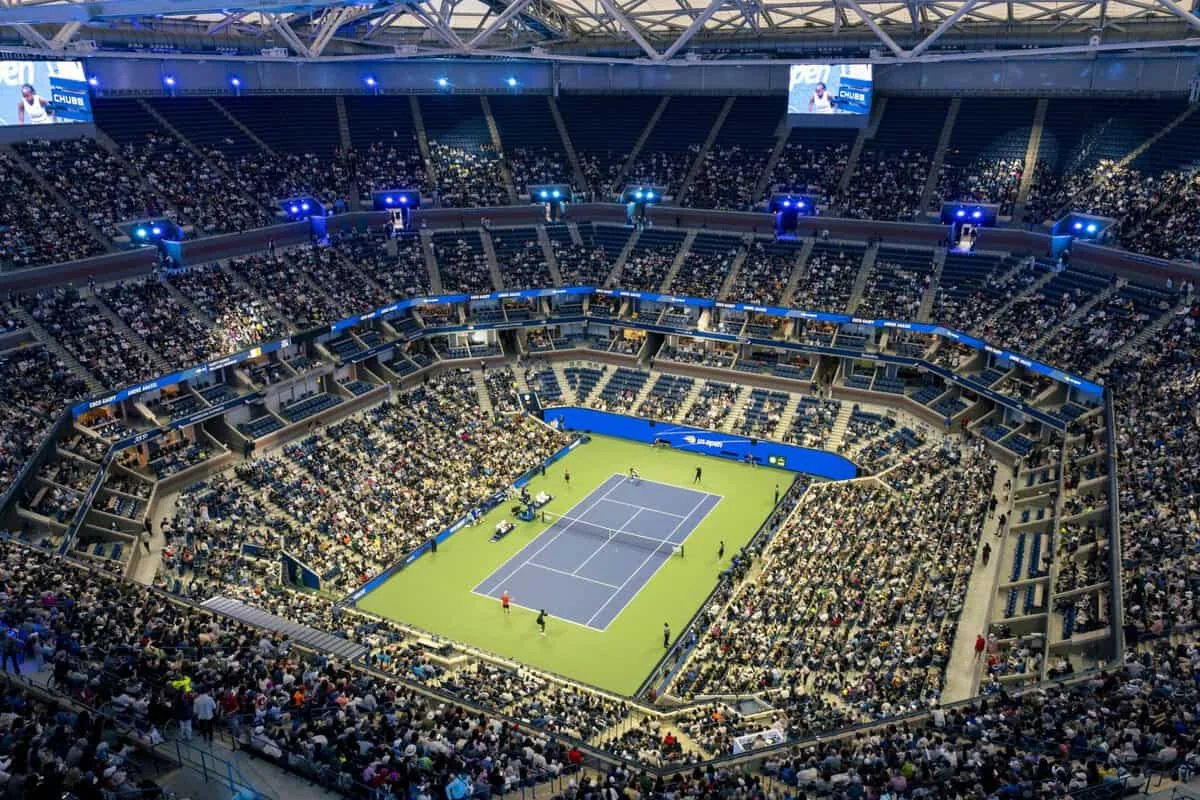
Labor Day weekend rewards a little planning at the US Open: the draws are narrowing, several matches compete for attention, and college football may be sharing your screen. This guide puts tennis first and uses the completed 2026 tournament as a worked example. Dates, ticket products and U.S. viewing details were checked on October 23, 2026; confirm the relevant edition before making new plans.
Which rounds fall on Labor Day weekend?
Labor Day weekend is the middle of the US Open, not finals weekend. In the 2026 edition, Saturday, September 5 belonged to the third round of the singles draws; Sunday, September 6 and Labor Day, Monday, September 7 carried the round of 16. The women’s and men’s singles finals followed on September 12 and 13. That distinction is the first thing to settle before arranging a long weekend around tennis.
| 2026 date | Singles round | What to plan around |
|---|---|---|
| Saturday, September 5 | Third round | Several competing match choices |
| Sunday, September 6 | Round of 16 | The first group of quarterfinal places |
| Monday, September 7 | Round of 16 | The remaining quarterfinal places |
The round labels and dates are documented in ESPN’s 2026 tournament coverage schedule. They are a historical example for planning, not a timetable to reuse unchanged for another year. Start each edition with the US Open schedule, then narrow your attention to the day you will actually watch.
For a tennis fan, the attraction of this weekend is the choice. A round-of-16 match settles a place in the last eight, while a third-round match can still bring a favorite into danger before that stage. You can follow the main contenders, watch a player whose style interests you, or stay with a close contest that was not on your original list. None of those decisions requires pretending that the championship matches have arrived early.
Television listings add another layer. ABC’s 2026 listing, for example, placed its Sunday, September 6 round-of-16 coverage at 3 p.m. Eastern, or noon Pacific. That was an afternoon coverage window, not a statement that the entire tennis day began then. A reader who bookmarks only that broadcast could overlook earlier action.
Use the table to establish the weekend’s shape, then resist assigning a favorite to a particular afternoon before the daily order of play appears. The draw tells you who could meet; it does not reserve a television slot. This is also why a tennis-first plan works better than filling every hour in advance: leave room to choose the match you actually want once the tournament has supplied the missing details.
Build the day around matches, not broadcast blocks
The useful unit for a tennis viewing plan is the match on its assigned court. A television block may move between courts, and a match listed later in a stadium’s order depends on what happens before it. Write down the player, opponent, court and scheduling language together. A start time copied without those details can give a misleading sense of certainty.
There is a concrete Labor Day example. The US Open’s preview of Learner Tien against Karen Khachanov assigned their September 7, 2026 fourth-round match to Louis Armstrong Stadium, not before 4 p.m. Eastern. “Not before” is a lower limit: it tells you not to expect the match earlier. It does not promise that a preceding contest will finish conveniently enough for a precise 4 p.m. start.
Look at the singles draw first to identify the match’s stakes and possible next opponent. Then check the day’s court order and the completed results to see how far that court has progressed. If the previous match is still early in a deciding set, the scheduled lower limit is less useful than the live situation. Avoid treating an estimated start from a search result as an appointment guaranteed by the tournament.
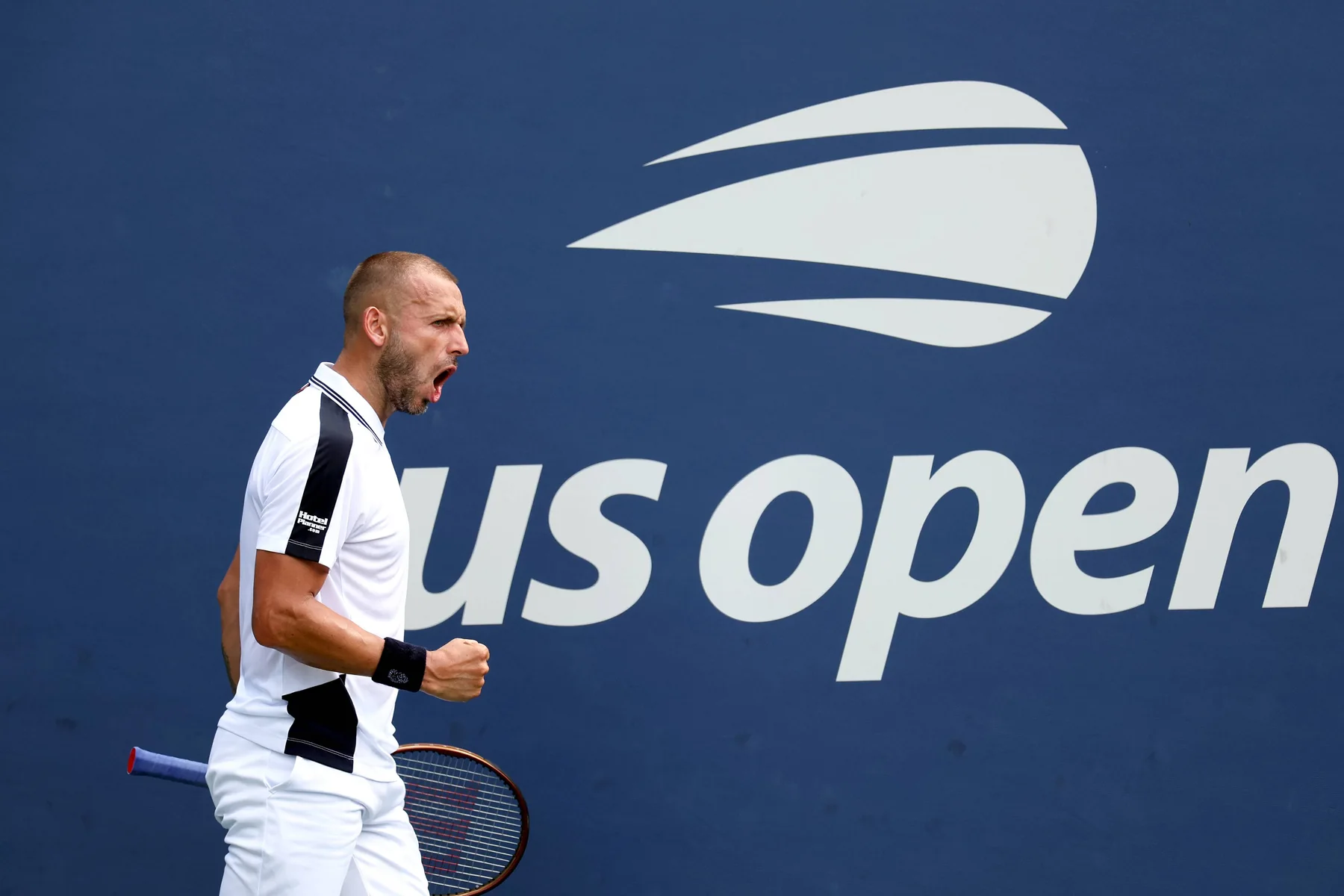
For a historical warning against fixed end times, consider Evans against Khachanov in the first round of the 2024 US Open. The LTA’s account describes Evans recovering from 0–4 in the fifth set, winning six straight games and completing a match that lasted more than five hours on Court 6. This was not a Labor Day 2026 contest; it illustrates why even an apparently decisive lead cannot serve as your cue to schedule the next activity.
Choose a primary match and a flexible alternative. Stay with the primary match when the score is tight, a favorite is fighting to survive, or a style contrast is producing the tennis you came to watch. Use the alternative when the original selection finishes or loses your interest. This simple ranking is more helpful than promising to watch every marquee player, and it gives any college football viewing a realistic place in the day.
What your ticket actually lets you watch
For an on-site visit, decide which tennis experience matters before comparing tickets. A grounds pass and a reserved stadium seat solve different problems. Neither the phrase “Labor Day weekend” nor a photograph of Arthur Ashe Stadium on a sales page tells you exactly where your ticket allows you to sit. Read the named court, date, session and admission conditions together.
The USTA’s 2026 ticket explanation makes the key distinction clear: grounds admission provides first-come access to general-admission areas in Louis Armstrong Stadium, Grandstand, Stadium 17 and the field courts, but excludes Arthur Ashe Stadium. A reserved Armstrong ticket also excludes Ashe. An Ashe ticket includes its assigned stadium seat and access to the other courts’ general-admission areas. Access to a court is not the same thing as a reserved seat there.

That makes a roaming day attractive if you enjoy discovering matches beyond the main stadium. It is less suitable if the entire visit depends on watching one player assigned to Ashe. Even then, check the correct day or evening session: the date alone is not enough. For the historical 2026 products, our grounds-pass guide provides a closer look at the access distinctions. Verify the next edition’s actual terms before making a new purchase.
General admission also changes how you use a break. Leaving an unreserved area to eat, explore or check football does not turn that place into your personal seat for the afternoon. Treat the choice to move as a tradeoff, especially when the match you want is attracting attention. A reserved seat offers a more definite base; roaming offers variety. Choose for the experience you want rather than assuming one option is automatically better value for everyone.
Keep the journey outside the tennis timetable. The official transport guide identifies the 7 subway and Long Island Rail Road services to Mets-Willets Point and directs fans to the MTA for current details. It also points to gate-wait information in the US Open app. Allow for walking, entry and the trip back; a session’s advertised time is not your hotel arrival time. If college football is part of the evening plan, make it a flexible follow-up to the match you paid to see.
Add college football without losing the tennis thread
If you also follow college football, choose one game to fit around the tennis you care about. Labor Day is a natural point of overlap, but that does not mean the two schedules politely take turns. The most useful question is not how many games you can put on a screen. It is which event gets your attention when both become interesting at once.
For the football side, CollegeFootballSchedule.net brings dates, opponents, kickoff times and television information together. It is a related site from the same project as US Open Tennis Schedule. We recommend it here as a practical companion for this specific planning task, rather than as an independent ranking of football tools. Its college football weekend schedule is a convenient starting point when you want to narrow the choices to the days you are watching tennis.
Read the time zone before transferring anything into a personal plan. The football site labels its times Eastern. A school may announce the same kickoff in its own local zone. For example, Wisconsin announced its September 6, 2026 opener against Notre Dame at Lambeau Field for 6:30 p.m. Central on NBC and Peacock. That was 7:30 p.m. Eastern, or 4:30 p.m. Pacific. It overlapped the US Open’s Sunday evening coverage; it was not a free slot after tennis had finished.
A useful two-sport note has four fields: the tennis match and court; the football game and confirmed kickoff; the time zone used for both; and which event you will watch live if they overlap. Add the channel or streaming service beside each, because one login should not be assumed to cover everything.
For a household watching together, make the priority explicit before kickoff. One person may want the tennis on the main screen and football scores on a phone. Another may prefer the game live and a tennis replay later. Both are workable choices; constant switching can be the least satisfying option when it means missing the rallies and drives that explain the score.
Keep an unannounced kickoff marked TBA until the school, conference or broadcaster confirms it. Do not replace it with the time a team played the previous year. The same restraint applies to tennis estimates: a likely gap is useful for a snack or a score check, but too uncertain for a promise that you will catch an entire football quarter. Let the actual match situation decide when the second sport comes into the foreground.
Make a viewing plan that survives a long match
A good plan has a fallback before you need one. Test the service on the screen you intend to use, choose the event that gets live audio, and decide whether the other event belongs on a second screen, in a later replay or in a quick score check. Those are different ways to follow sport, not interchangeable promises of watching everything.
In its 2026 US Open announcement, ESPN specified all-court streaming for Unlimited subscribers and described start-from-beginning and catch-up features. Those options can help when a match overlaps another commitment. Check the actual event listing and your access before relying on a replay; a tournament announcement is not a guarantee that every older match remains available indefinitely.
Multiview needs the same practical check. ESPN’s support explanation describes combinations selected by ESPN, rather than a layout that users can freely customize. Its separate device-support page lists compatible platforms and app versions. Do not assume you can place any tennis court beside any football broadcast, particularly when the football game is carried by another network. Open the available layout before the match, not at break point.
If you choose a delayed tennis replay, turn off the score alerts that would spoil it. If you choose live tennis with occasional football updates, check the game during a changeover rather than halfway through an important rally. And if you deliberately switch to football, remember where you left the tennis: the set score and server are more useful notes than “about an hour in.” These are small choices, but they keep a fragmented afternoon comprehensible.
At the venue, the phone has a different job. The USTA’s visitor guide describes the official app’s itinerary and player-location information. It also asks spectators to keep quiet during points and avoid movement that distracts a server. Use a football update in a genuine break without bringing another broadcast’s sound into the match around you.
- Before play: confirm the court, session, time zone and viewing access.
- During play: let the live score and preceding match guide any switch.
- Afterward: use the US Open results to catch up on the matches you chose not to follow live.
The aim is a weekend with a few matches you remember clearly. Protect the tennis that matters to you, give football a deliberate place, and let everything else remain optional.
Loading comments…